







Mumbai/New Delhi
In a move that reflects the growing national debate over the demand to delist Scheduled Tribe (ST) members who convert to other religions, the Maharashtra government has constituted a 27-member committee to examine whether such individuals should continue to receive reservation and other welfare benefits available to ST communities.
The committee, constituted through a Government Resolution issued by the Tribal Development Department on July 16, will be headed by Tribal Development Minister Ashok Uike. It has been entrusted with studying the constitutional and legal position governing reservation and welfare benefits for Scheduled Tribes following religious conversion, reviewing policies adopted by the Union government and various states, and recommending an appropriate policy framework for Maharashtra.
The Uike-headed panel includes Minister of State for Tribal Development Indranil Naik, Food and Drug Administration Minister Narhari Zirwal, legislators representing tribal constituencies and the Commissioner of the Tribal Research and Training Institute (TRTI), Pune, who will serve as the member secretary.
The committee’s formation comes at a time when demands to “delist” tribals who convert to Christianity or Islam have gathered momentum in several parts of the country. It also follows an assurance given by the Mahayuti government during the 2025 Monsoon Session of the Maharashtra Assembly after BJP legislators alleged large-scale religious conversions among tribal communities in Nandurbar district and questioned whether converts should continue to enjoy reservation benefits earmarked for Scheduled Tribes.
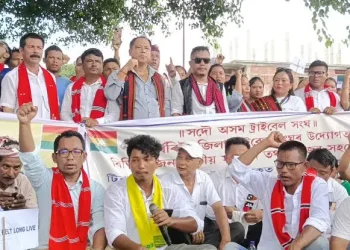
A couple of months ago, the Janjatiya Suraksha Manch (JSM), supported by the RSS-affiliated Vanvasi Kalyan Ashram, submitted memoranda to President Droupadi Murmu and Prime Minister Narendra Modi seeking the removal of converted tribals from the Scheduled Tribe list. The organisation also demanded that such converted tribals should not continue to enjoy constitutional safeguards meant for indigenous communities. It sought amendments or clarifications to the Constitution (Scheduled Tribes) Order, 1950, a statutory definition of “Scheduled Tribe” and stricter anti-conversion laws.
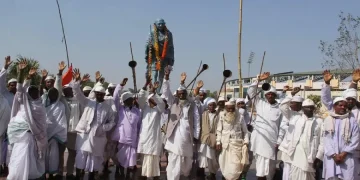
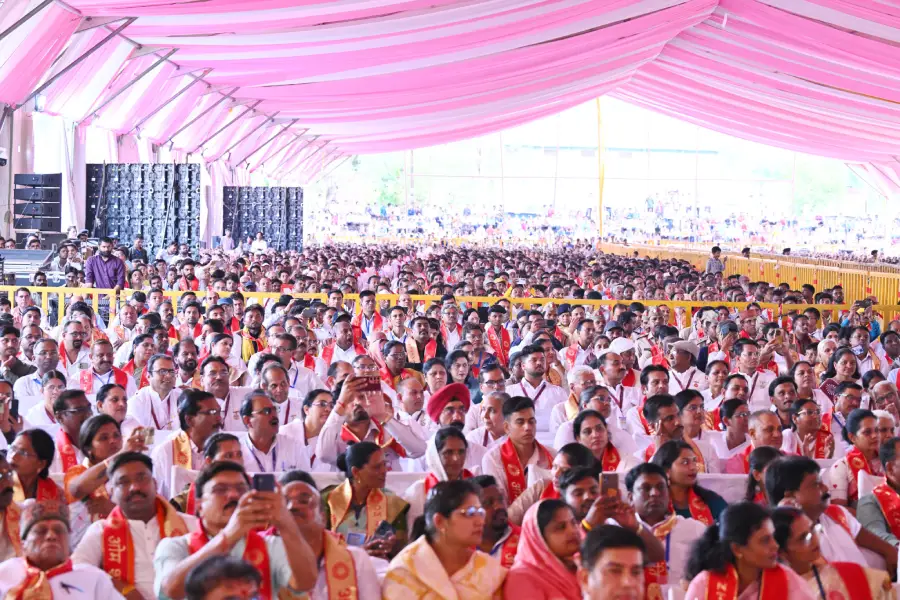
The congregation of the Sangh-affiliated tribal organisations in New Delhi was attended by Home Minister Amit Shah. The delegates reiterated the call for excluding tribal converts from the list of Scheduled Tribes.
Maharashtra Scenario
The issue carries particular significance in Maharashtra, where Scheduled Tribes account for around 9.35 per cent of the population. Census 2011 data show that the state’s ST population increased from 85.77 lakh in 2001 to more than 1.05 crore in 2011.
Although the overwhelming majority identified as Hindus, the Census also recorded ST populations professing Islam, Christianity, Buddhism, Sikhism and Jainism. During the decade, the Muslim and Buddhist ST populations registered notable growth, while the number of Christians among STs declined.
In 2023 too, the Mahayuti government had constituted a three-member panel to investigate allegations that students belonging to Scheduled Tribes who had converted to other religions were availing reservation benefits in Industrial Training Institutes (ITIs). An interim report presented in the Assembly in March 2024 identified 257 such admissions. Although the government announced scrutiny of these cases, no major policy action followed amid criticism from tribal organisations and legal experts.
Demand Spreads Across Tribal States
The debate over delisting has expanded beyond Maharashtra in recent years, particularly in tribal-dominated states such as Jharkhand, Chhattisgarh, Odisha, Madhya Pradesh, Gujarat and parts of the Northeast.
The Janjatiya Suraksha Manch has been at the forefront of the campaign, arguing that constitutional safeguards were intended to protect indigenous tribal communities and their traditional beliefs, customs and cultural identity. The issue has also received support from sections of the BJP and the Sangh Parivar, with memoranda submitted to the Union government and resolutions passed at tribal gatherings seeking constitutional amendments or legal clarification to facilitate the removal of converted tribals from the Scheduled Tribe list.
Why Thee Proposal Faces Resistance
The campaign has, however, encountered stiff opposition from tribal rights organisations, constitutional scholars, Christian groups and several Adivasi organisations, which contend that tribal identity is rooted in ethnicity, ancestry, customary institutions and historical marginalisation rather than religion. They argue that Article 342 does not distinguish between religions while identifying Scheduled Tribes and that constitutional protections are designed to address centuries of social, economic and geographical disadvantage that continue regardless of an individual’s faith.
Many tribal groups also fear that the demand could divide indigenous communities along religious lines and divert attention from pressing issues such as land alienation, displacement, education, healthcare, forest rights and livelihoods. They maintain that any attempt to delist converted tribals would not only face constitutional hurdles but could also fundamentally alter the nature of tribal protections envisioned under the Constitution.