






New Delhi
The relationship between the Tana Bhagat Movement, Indian nationalism and Mahatma Gandhi represents one of the most intriguing intersections in the movement’s history. An earlier account suggests that the Tana Bhagat movement joined the Congress as part of the broader struggle for independence.
However, the history of the Tana Bhagat movement suggests a much more complex reality. Even after associating themselves with the Congress and Gandhi, the Tanas’ traditional beliefs did not change. Instead, they incorporated nationalist ideas into their own socio-political and religious imagination.
With the beginning of subaltern history writing, Guha argued that Indian nationalism was based on an ‘elite’ conception, with the elite leading the nationalist movement while subjugating the common masses.
The first academic writings on the Tana Bhagat movement suggested that the merger with the Congress was complete. Suresh K. Singh also argued that in 1921-22, the Tanas committed themselves to Congress ideology and became part of the freedom struggle in the tribal areas. At the same time, B.B. Chaudhury argued that agrarian issues were radicalised and discontent increased under the influence of the Congress.
Within the nationalist framework, it was narrated that the Tanas came together with Gandhi during the 1920s. However, archival records show that the real agenda of the Congress was to spread the nationalist movement at the local level, making it a channel through which the local community could be brought into the wider movement.
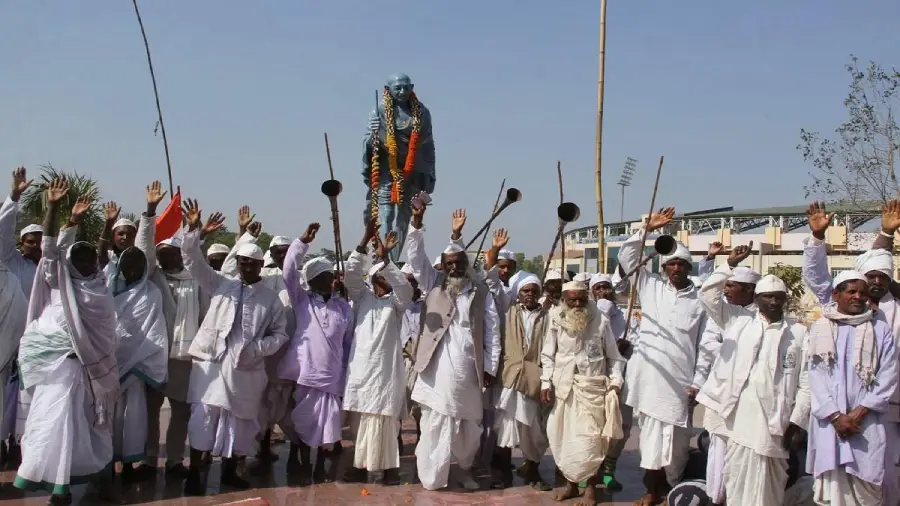
Even for the Tanas, the figure of Gandhi as a ‘baba’ assumed different roles. They saw an opportunity to unite their organisation with his principles. They believed he was a Maharaj with extraordinary power to deliver justice. Tana Bhagats referred to this as a new Raj under the leadership of Gandhi.
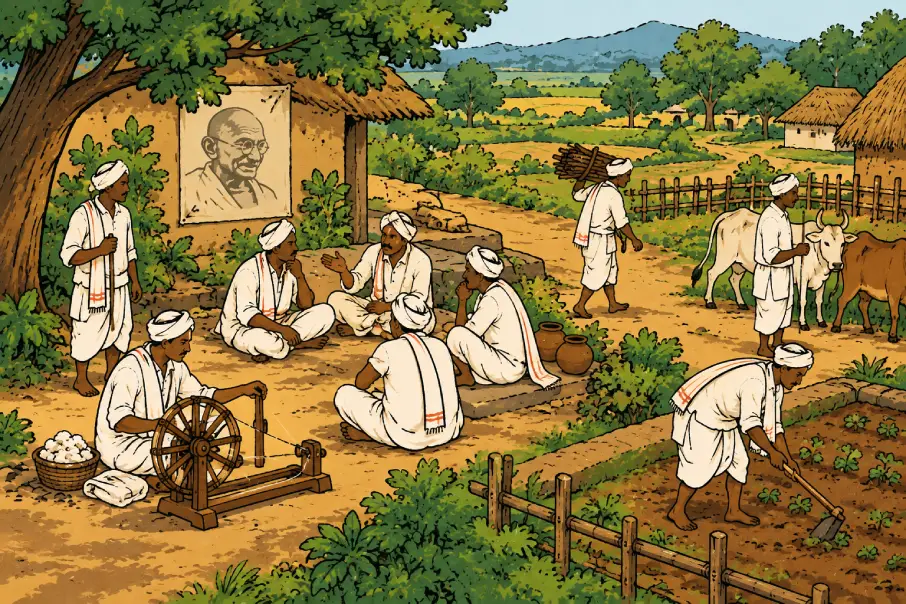
It was also observed that Sibu Bhagat, who was totally opposed to Muslims, ate food cooked by Muslims under the influence of the Congress. For the Tanas, Gandhi Raj represented an aspiration for their own rule and a hope for prosperity in the coming years.
Mahatma Gandhi, in his writings, also referred to the Tanas as dedicated Bhaktas who had upheld his principles. During the 1920s and 1930s, the Tana Bhagat movement paved the way for the Congress to propagate its ideas and interests. Some of the Tanas’ ideas were completely at odds with the party’s ideology, and the Congress dissociated itself from the Tanas on several issues.
However, the Tanas did not simply become ordinary Congress followers. Their imagination of Gandhi remained connected with expectations of social and economic transformation. ‘Gandhi Raj’ represented much more than the end of colonial rule. It was associated with their ideas of justice, peace and well-being.
The movement’s earlier concerns about changes in agrarian structure, taxation policy and social hierarchy did not disappear merely because its political understanding changed.
This becomes clearly visible in the movement after the arrest of its initial leaders. Like Maya and Sibu, new leaders emerged in several different regions of Chotanagpur, and by 1919, the movement showed greater organisational strength.
Yet the movement remained primarily popular among marginal sections of the Oraon population and did not gain wider support from other dominant sections of society. Later, some followers abandoned their faith in the Congress because its promises were not fulfilled, while others continued to participate because they still hoped that their expected Raj would arrive sooner or later.
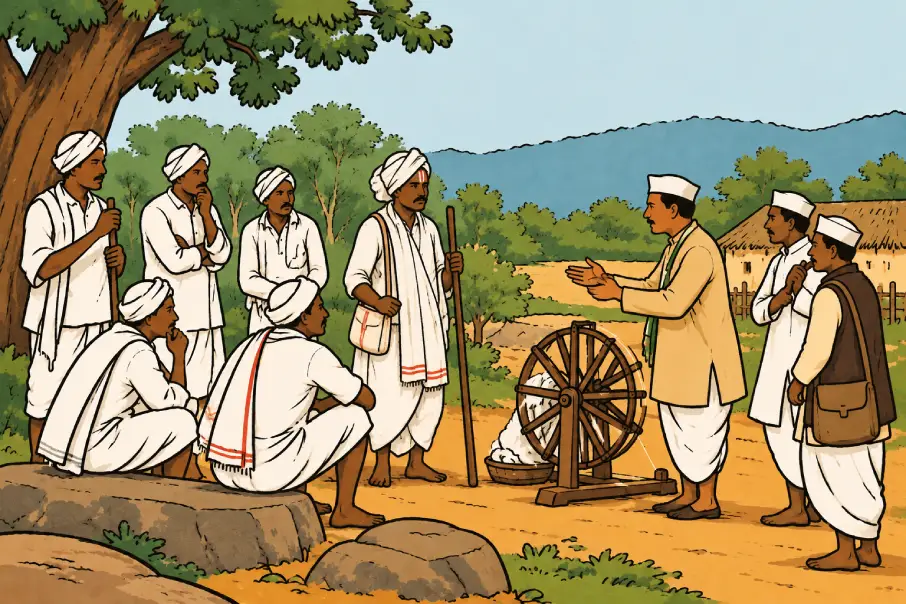
The weakening of the movement did not diminish its historical significance. Its importance lies partly in the way it reveals the complex relationship between local tribal resistance and wider national movements.
The Tana Bhagats did not begin as a nationalist organisation, but they later incorporated nationalist symbols and ideas into their own social system. Their history therefore complicates the distinction between ‘tribal’ and ‘national’ movements. The two were not always distinctly separate; they could overlap while meaning different things to different participants.
While concluding this series, it is worth mentioning that even as the Tana Bhagats are fading from public memory, their leader Jatra Bhagat has emerged as a symbol of Adivasi protest in Jharkhand.
The newly formed state of Jharkhand has icons such as Birsa Munda for the Munda community and Sidhu and Kanhu for the Santhals. For the Oraons, however, it is Jatra Bhagat who became a hero. He sacrificed his worldly life for the well-being of his people and is popularly remembered as the son of God.
This continues even today as a divine statement. In the perception of the Tanas, Gandhi is a figure of flesh and blood who spread the message of God.
In historical writings, the Tana Bhagat movement was an independent movement fighting for its own economic interests against the Zamindars, Sahukars and Sarkar. However, the records of colonial administrators and missionaries portrayed them as an uncivilised tribe that only ate, drank and slept.
They had their own identity, customs and traditions. How can someone impose their way of life and definitions of modernity on others?
These are the colonial narratives of an indigenous community that have been propagated over the last two centuries. In the process of decolonisation, such narratives need to be challenged and reinterpreted.
(Amit Kumar is a political analyst and a Post Graduate Member of the Royal Historical Society, London. Views expressed are personal.)
Ends