

RANCHI/NEW DELHI
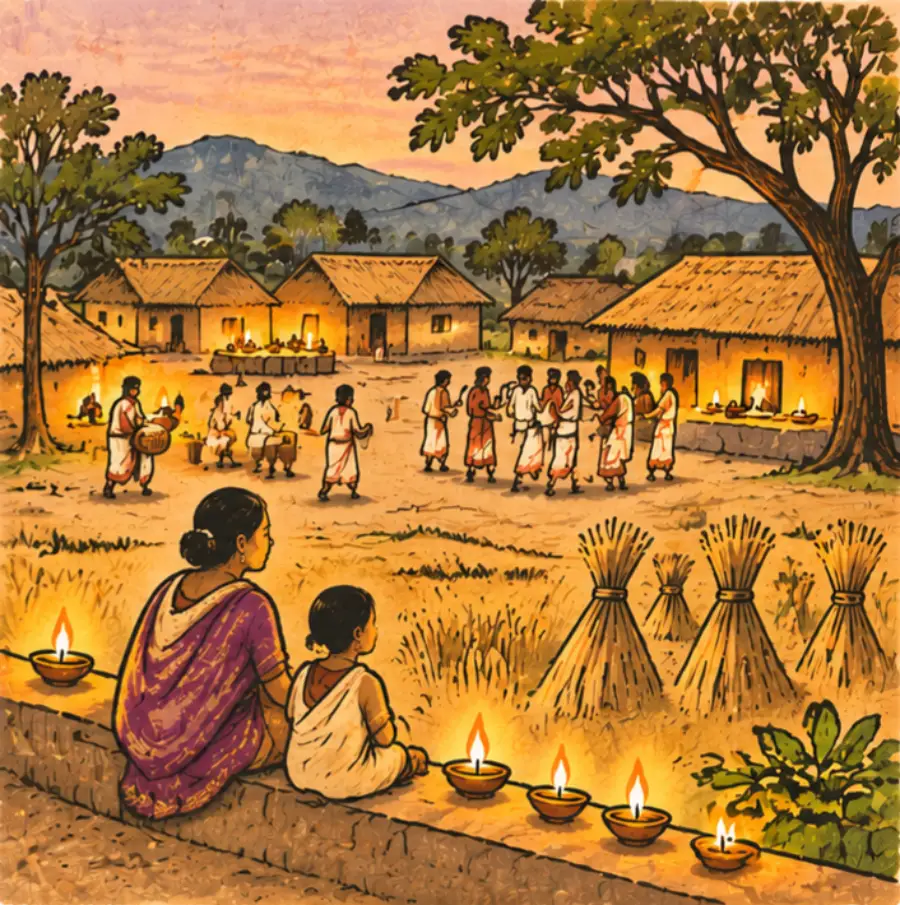
As cities light up with rows of lamps, homes are cleaned and decorated, sweets are exchanged and families gather for Diwali, the festival takes on different meanings in India’s tribal villages.
In some places, the festival is observed much like it is in neighbouring non-tribal settlements. In others, the period overlaps with indigenous harvest celebrations, agricultural rituals and community traditions that have their own histories and significance.
The relationship between Diwali and tribal festivals is therefore not a simple story of one tradition replacing another. It is often a more complex account of coexistence, adaptation and cultural exchange. Jharkhand offers an interesting example.
When Diwali Meets Sohrai
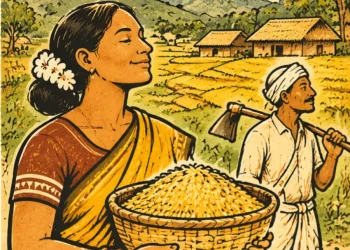
Among the most important festivals of several communities in Jharkhand is Sohrai, a harvest and cattle festival associated with the agricultural calendar.
Sohrai as a festival is observed by Sadans, Oraon, Munda and Santhal communities, among others. It describes the festival as taking place around the Kartik new moon and being associated with the harvest and the honouring of livestock. In agricultural households, cattle have traditionally played an important role in ploughing, transporting agricultural produce and supporting other farm activities. They also provide manure and, in some cases, milk and other household resources.
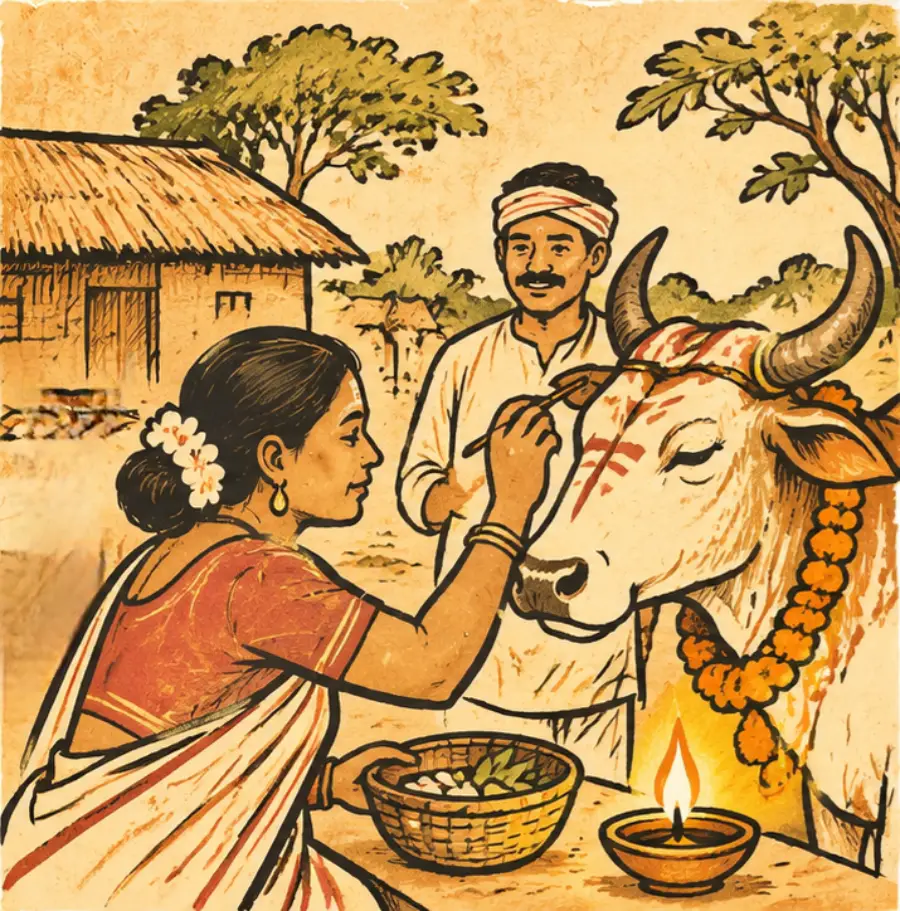
Sohrai recognises this relationship through rituals that place livestock at the centre of celebration. Animals are washed, their horns and bodies are decorated, and they are offered special food. In some places, village celebrations include music, dancing and collective feasts.
The timing and details of the festival differ across communities and villages. In some accounts, Sohrai is described as coinciding with Diwali; in others, it is observed immediately after it. Such variations are important because the festival is not governed by one uniform calendar across Jharkhand.
Sohrai as a festival is also associated with the care and worship of cattle, including rituals involving earthen lamps and the decoration of animals. The significance of the festival goes beyond the lighting of lamps. It brings agricultural life, livestock, household practices and artistic expression into one celebration.
The Walls Tell Another Story
One of the most recognisable aspects of Sohrai is its wall art, particularly in parts of Hazaribagh district. Women artists create distinctive paintings on mud walls, often using natural colours and motifs inspired by animals, plants and the surrounding landscape.
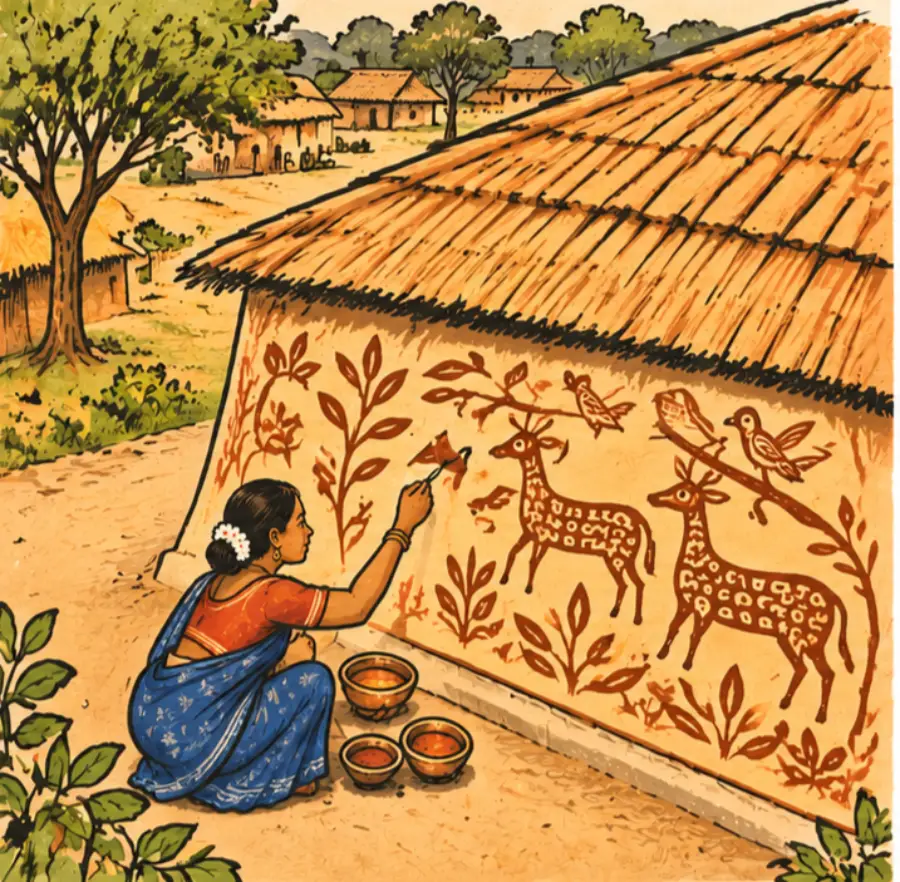
These paintings are not merely decorative additions to festive homes. They are connected with the agricultural cycle, household life and the cultural expression of the communities that practise them.
The art has also moved beyond village walls. Sohrai paintings have attracted wider attention through exhibitions, cultural initiatives and the work of individual artists. This raises another question: how can indigenous art traditions gain economic recognition without losing their community context and cultural meaning?
For the women who practise these forms, the festival is not simply an occasion for display. It is also a setting in which knowledge is transmitted across generations.
One Festival, Many Cultural Experiences
It would be inaccurate to suggest that all tribal communities celebrate Diwali or Sohrai in the same manner. India’s indigenous communities have distinct religious traditions, agricultural calendars and local festivals. Some observe Diwali alongside their neighbours; others give greater importance to their own seasonal and community celebrations.
Even within a single state, practices can differ according to community, region, religious affiliation and local history. The example of Jharkhand is particularly useful because it demonstrates that the same period can hold multiple layers of significance. For one household, Diwali may be primarily a religious occasion. For another, the emphasis may be on the harvest, cattle and the completion of an agricultural cycle. In some places, these meanings coexist.
This is not necessarily a contradiction. Cultural practices have never remained completely isolated from one another. Trade, migration, inter-community relationships, schooling, religious movements and modern media have all influenced the way festivals are observed.
However, cultural exchange should not automatically be interpreted as cultural assimilation. Communities can adopt new practices while retaining elements of their own traditions.
Beyond Jharkhand: The Importance Of Indigenous Calendars
The broader tribal festival landscape also demonstrates why India’s festive calendar cannot be understood only through the major festivals observed nationally.
The Santhal Baha festival, for example, is associated with the flowering of trees and the arrival of spring. Jharkhand Tourism describes its celebration through flower worship, community participation, singing and dancing.
In Bastar, Chhattisgarh, the Dussehra celebration follows a distinctive local religious and cultural tradition centred on Goddess Danteshwari and local deities rather than the conventional Ramayana narrative of Rama’s victory over Ravana. The festival lasts for an extended period and involves participation from different villages and communities.
These examples are not alternatives to Diwali. They illustrate the diversity of indigenous cultural calendars and the importance of understanding festivals within their own historical and social contexts.
The Question Of Cultural Visibility
Tribal festivals frequently receive attention through photographs of colourful dances, traditional clothing, food and decorations. Such coverage can make them visually attractive but may overlook the knowledge systems and community institutions behind the celebrations.
Sohrai, for instance, is not simply a cattle festival or an occasion for wall paintings. It offers a window into the relationship between agricultural production, livestock, seasonal cycles, women’s artistic knowledge and community life. Likewise, Diwali in tribal settlements should not be covered through the assumption that its practices are identical to those in urban households.
The more meaningful editorial question is how communities interpret a festival, which traditions they retain, what changes over time and how younger generations participate. This is particularly relevant when cultural practices are increasingly influenced by migration, consumer markets and the circulation of standardised festival imagery.
As Diwali brings the country together in a celebration of light and prosperity, tribal villages offer a reminder that the festival season can carry several meanings at once. In some households, the glow of the diya may be accompanied by memories of a harvest, the care of cattle, traditional wall paintings and the continuation of practices inherited from earlier generations. Understanding these traditions does not require placing them outside the larger Indian festival landscape. It requires recognising them as an integral part of its diversity.