







Ranchi
Whenever I speak with young people from our community, one question stays with me: Why can’t Adivasi youth become successful entrepreneurs? This question invites two perspectives: an examination of the obstacles they face and a challenge to the assumption that success lies beyond their reach.
Together, these perspectives open up a wider discussion about education, aspirations, cultural values and access to opportunities. Understanding the barriers is essential, but we must never mistake them for limitations of ability. Young people deserve an education that broadens their horizons, institutions that nurture their potential and a community that stands beside them as they turn their aspirations into achievements.
Social Ties Vs Economic Benefits
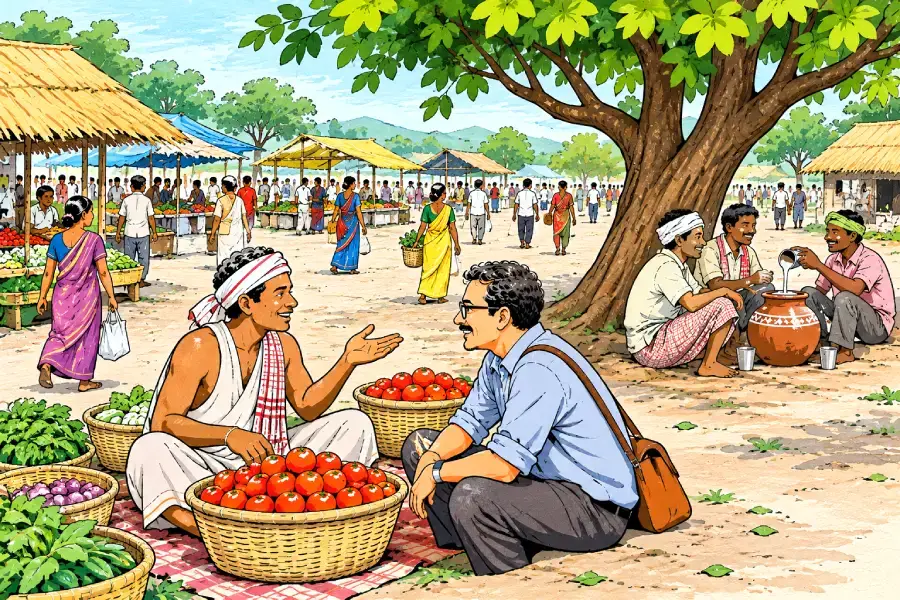
Looking back, a brief encounter at Kansir Bazaar, an old weekly market in Gumla district near my ancestral village, takes on a deeper meaning. I had stopped there one Friday and met my childhood friend Binai, who was selling tomatoes. We slipped naturally into conversation in Kudukh, the Oraon dialect. Pleased with the day’s sales, he told me that he had earned enough for the week.
When I asked whether he would return to the market the following week, he cheerfully replied that there was no need. At the time, it seemed a simple expression of contentment. In retrospect, his words reveal a different understanding of prosperity. While many of us spend our lives accumulating wealth for generations to come, Binai knew when he had enough.
Before I could leave, Binai insisted on placing a large bag of tomatoes in my vehicle. I hesitated to offer him money, unsure whether he might take offence. He then invited me to share some hadia, traditional rice beer being sold under a tamarind tree to celebrate his successful day at the market.
Afterwards, I cautiously offered to pay. His reply was immediate: “You have become a big sahib now!” I fell silent, realising that my gesture of courtesy had unintentionally offended his hospitality. For Binai, treating an old friend was an expression of affection. Even with his modest earnings, he was happy to share, for the warmth of our friendship mattered far more than the expense.
This encounter offers an insight into the social foundations of economic life among Adivasi communities. Buying, selling, sharing and giving carry meanings shaped by kinship, mutual support, collective responsibility and a sense of belonging. Social ties can be stronger than economic considerations. These relationships influence how people earn, spend and understand prosperity. Yet Adivasi economies are diverse and have changed over time. Household ownership, individual initiative and trade have long existed alongside shared resources.
Binai’s generosity cannot represent every Adivasi entrepreneur’s experience, but it raises a meaningful question: Must success depend on continuous accumulation, or can enterprise provide a secure livelihood while nurturing the relationships that give life meaning?
These close-knit relationships within tribal communities can become a hurdle to entrepreneurship, particularly in rural areas, if not managed carefully. Community values strengthen economies by encouraging trust, cooperation, shared labour and reliable local networks. Relatives may expect discounts, friends may delay payments, and entrepreneurs may hesitate to collect dues or decline requests for further credit.
Over time, such generosity can consume the funds needed to replenish stock, pay employees and sustain daily operations. Clear and respectful conversations about these limits are therefore essential. Every enterprise needs working capital, accurate accounts and timely payments. Supporting our young entrepreneurs means recognising the value of their work and paying fairly and promptly, including when they are our relatives or closest friends.
Evaluating Risks And Safeguards In Fostering Tribal Youth Entrepreneurship
Promoting entrepreneurship within tribal villages requires careful reflection on what is being commercialised, who owns it and who benefits. Encouraging individual enterprises without adequate community safeguards may intensify the extraction of resources traditionally governed through collective ownership and responsibility. Resources that sustain everyone could become sources of private profit, with neighbours competing over what they once shared. Millet illustrates this concern. As its commercial appeal grew, producing households began prioritising its sale over retaining it for their own consumption. Higher market value can then come at the cost of household nutrition and food security.
If entrepreneurship is to strengthen rural tribal society, it should be rooted in community ownership, collective decision-making and equitable sharing of benefits. Production must respect ecological limits, while local needs must guide decisions about what can be sold. Without these foundations, commercial competition could deplete shared resources and weaken relationships of reciprocity and mutual care. The community’s social fabric can be damaged even without external intervention.
Education And Entrepreneurship
The foundations of confidence take shape early, through education and meaningful guidance. Throughout my teaching career, I have discussed education, social responsibility and career aspirations with each new group of students. Many find it difficult to articulate their plans after graduation, and some remain uncertain even at the postgraduate level.
Their hesitation concerns me, but it deserves thoughtful understanding. Behind an uncertain answer may lie limited exposure to career possibilities, fear of being ridiculed or anxiety about whether their family can support further study and preparation. Before drawing conclusions about their ambition, we must listen. Their silence is an invitation to begin a conversation.
Bridging The Aspiration Gap: Tribal Youth And Educational Disengagement
My discussions with Dr. Nilanjana Moitra of the National Institute of Educational Planning and Administration (NIEPA), Delhi, deepened my concern about the educational aspirations of Adivasi children. Aspirations take shape within the world children know, through their encounters with family members, teachers, neighbours and institutions. When they have little exposure to different professions or the pathways leading to them, imagining such futures becomes difficult.
Repeated comments questioning their abilities can gradually turn into self-doubt. Teachers must therefore remain sensitive to the lasting effects of even a casually dismissive remark. Encouragement gains meaning when accompanied by practical guidance to help students choose courses, navigate applications, find support and prepare for the opportunities they wish to pursue.
For many families, sending a child to college involves considerable sacrifice. Parents stretch their resources to meet the costs of fees, food and accommodation, yet may have little familiarity with university procedures or career opportunities. Their inability to offer detailed guidance should never be interpreted as a lack of concern. Educational institutions must help families navigate these unfamiliar paths.
Career guidance should begin in school and continue throughout higher education, introducing students to possibilities in agriculture, skilled services, research and business. Alongside these opportunities, students need an honest understanding of the preparation involved, the competition they may face and the time and effort required to develop their abilities.
Empowering Changemakers: The Indispensable Value Of Handholding
I understand the value of such guidance from my own experience. As a quiet schoolboy, I rarely volunteered for activities. My teacher, Mala Bose, saw potential in me that I had yet to discover. She took me to the library, helped me borrow two storybooks, one in Hindi and the other in English, and asked me to read them and share their stories with her. What began as a reluctant task gradually became a habit, giving me a lifelong companionship with books. Her patient, personal attention helped shape my journey. This is what I mean by holding a young person’s hand: taking the time to recognise their abilities and helping them find a direction.
Successful professionals in our community can make a lasting difference by remaining approachable and involved. Young people need mentors willing to review an application, explain an unfamiliar procedure or help them learn from a setback. When success distances individuals from their community, young people lose the opportunity to learn from their journeys. Role models inspire most deeply through personal connection, practical guidance and a willingness to walk alongside those finding their way.
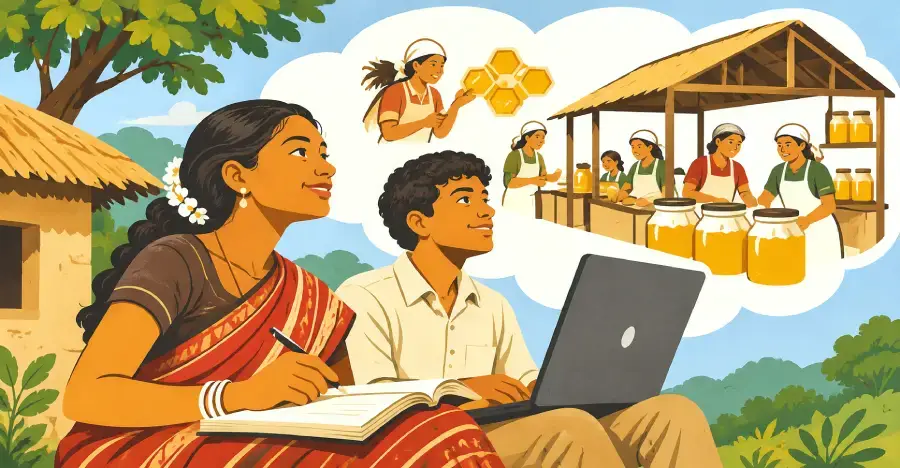
Entrepreneurship offers a practical avenue for connecting education with young people’s aspirations. Universities can strengthen this connection by teaching students to prepare budgets, calculate costs, distinguish revenue from profit, maintain accounts and understand market demand. Guided projects with local enterprises would allow them to learn directly from vegetable growers, food processors and shopkeepers, whose everyday experiences bring classroom concepts to life. Indigenous languages should be integral to this learning, alongside opportunities to develop proficiency in English and other relevant languages. Language education should broaden students’ ability to communicate, negotiate and engage confidently with the world around them.
Putting Skills Into Practice
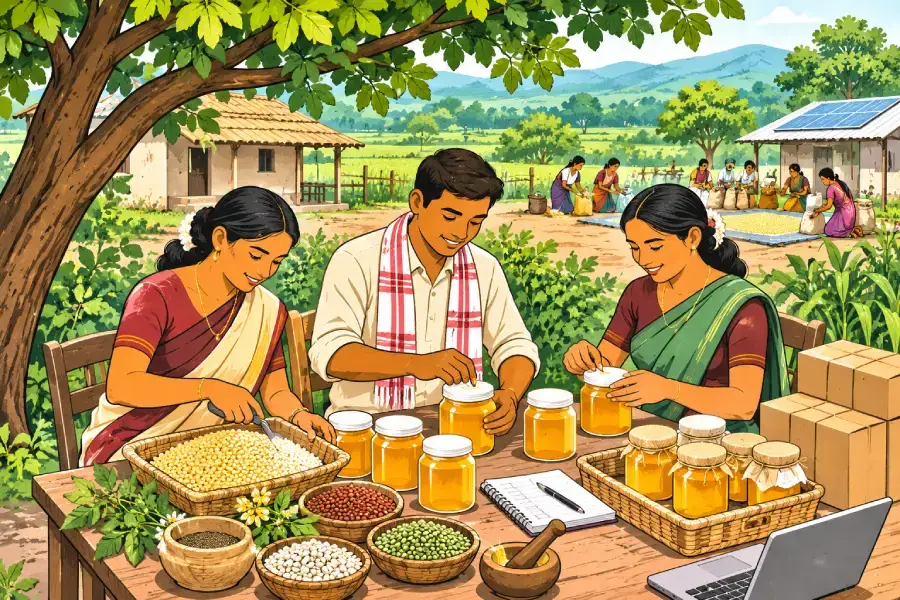
Young entrepreneurs need practical support to put their training to work. This includes affordable finance, reliable transport, suitable workspaces, information about markets and someone to turn to when problems arise. The period following a workshop or loan approval is often when guidance matters most. Community organisations and universities can make this support more accessible by connecting young entrepreneurs with experienced local business owners. Enterprises have a stronger foundation when they build on local strengths and respond to what customers actually need.
Young people also have a responsibility to prepare for the work they choose and to carry it out with integrity. In business, that means working consistently, maintaining honest practices, providing dependable service and treating employees with respect. Digital tools can help them learn new skills and reach customers when used with a clear purpose.
At the same time, when we ask young people to be disciplined, we must recognise what that demands of those who study while earning a living, caring for relatives or making do with inadequate facilities. High expectations must go hand in hand with practical support. Education should give young people the confidence to pursue farming, employment or enterprise and the freedom to decide what a meaningful life looks like for them.
Why, then, should entrepreneurship be beyond the reach of Adivasi youth? The ability is already there. Our responsibility is to help young people imagine what they might build, understand the work it takes and find the support to keep going when they face setbacks. Earning a livelihood can go hand in hand with caring for the people around us. More young people deserve the opportunity to build enterprises on those terms.
(The writer is Assistant Professor, University Department of Anthropology, Dr. Shyama Prasad Mukherjee University, Ranchi, Jharkhand. Views expressed are personal.)