


Ranchi
India is home to an extraordinary diversity of tribal communities, each possessing distinctive languages, oral histories, ecological wisdom, cultural practices and indigenous knowledge systems. Yet, despite centuries of anthropological research, much of this knowledge remains undocumented, inadequately understood or interpreted through the perspectives of outsiders. The concern is not simply that tribal knowledge is disappearing. Equally troubling is that the methods employed to document it have often failed to capture its deeper meanings.
For generations, anthropologists have travelled to tribal settlements, stayed with communities for months and years, conducted interviews, observed rituals, recorded narratives and eventually returned to their institutions to publish their findings.
The communities that made such research possible have frequently remained outside the processes of interpretation, authorship and dissemination. This raises a fundamental question: Can tribal knowledge ever be adequately documented without the community becoming the principal participant in the documentation process? By this, I mean having a greater stake in the process than the researcher, who is often an outsider.
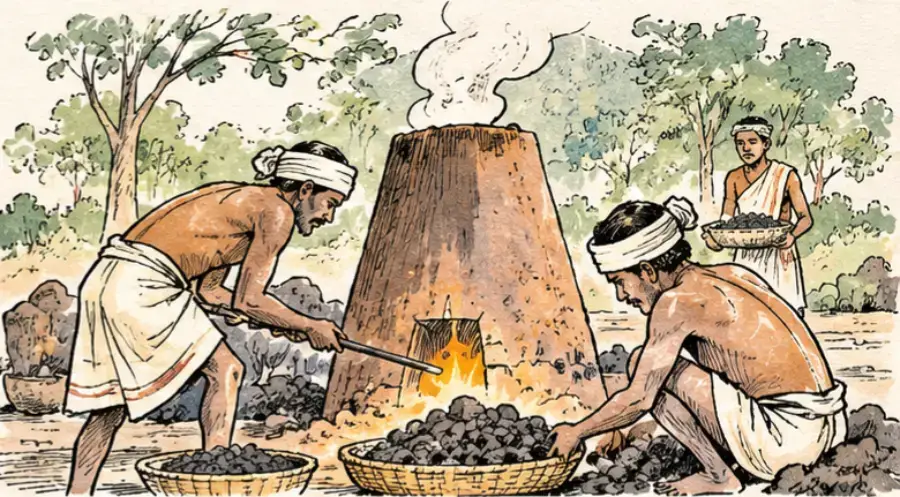
My continuing research on the traditional iron-smelting process among the Asur community of the Netarhat region in Jharkhand has compelled me to reconsider this question. Nearly two years of sustained field engagement, prolonged participation in community life and the application of established anthropological methods left me with a lingering sense of incompleteness. It was not that the research had been futile or that the findings lacked significance.
On the contrary, the fieldwork had yielded valuable insights. Yet, despite the depth of engagement, there remained an unsettling feeling that something fundamental had escaped my understanding. I had documented practices, observed traditions and listened to narratives, but somehow the essence of the community’s lived experiences remained elusive. The knowledge was there, the information was there, but the soul of what I sought to understand seemed to be missing. It was this persistent realisation that compelled me to question not the community or its knowledge, but the very methodology through which I was attempting to understand it.
This experience revealed a methodological challenge that conventional ethnography does not always adequately address. The difficulty was not merely collecting information but understanding the meanings, silences and cultural reasoning underlying what was being communicated. This experience has strengthened my conviction that the future of tribal documentation must move towards a simple but transformative principle: For the Community, By the Community.
Being Tribal Does Not Automatically Make One An Insider
As an Adivasi anthropologist studying another tribal community, I have encountered a particularly complex dimension of fieldwork. There is often an assumption that belonging to a tribal society naturally facilitates access to the cultural world of another tribal group. Shared experiences of attachment to land and collective identity may create an initial sense of familiarity. However, such similarities do not necessarily translate into cultural understanding.
Moreover, while this cultural familiarity may facilitate access to the peripheral layers of a community’s knowledge system, penetrating its deeper meanings, underlying philosophies and core cultural wisdom remains a far more challenging and demanding endeavour. This may be attributed to gender-based restrictions governing access to certain cultural spaces and knowledge systems, as well as the persistent insider-outsider divide, wherein a researcher may continue to be perceived as an outsider despite prolonged engagement and cultural familiarity simply because they do not belong to the village or community under study.
The Asurs possess their own linguistic expressions, historical memories, cosmological beliefs and traditional knowledge systems. My own Adivasi identity does not automatically grant me an understanding of their internal cultural reasoning. Indeed, being tribal while researching another tribal community creates a distinctive methodological dilemma. One may be perceived as culturally familiar, yet remain an outsider to the specific knowledge system being studied. This produces a position that is neither entirely that of an insider nor an outsider. It is a paradox.
The challenge becomes particularly pronounced when researching sacred practices, oral traditions and indigenous technologies. A researcher may understand the broader significance of ancestral relationships with forests, mountains and rivers, yet misunderstand the particular meanings these relationships carry within the community under study. Shared indigeneity cannot substitute for consent, trust or cultural competence. Being an Adivasi researcher does not give me ownership over another Adivasi community’s knowledge. This recognition has been central to my methodological reconsideration.
The Limits Of Conventional Anthropological Fieldwork
Participant observation remains one of anthropology’s most influential methodological contributions. Bronislaw Malinowski established the importance of prolonged engagement with communities, while subsequent anthropologists expanded ethnography through reflexivity and critical interpretation.
However, the publication of Malinowski’s personal diary in 1967 exposed tensions between the anthropologist’s public representation of fieldwork and his personal experiences, which found expression in his diary. Even prolonged immersion does not necessarily eliminate the distinction between ‘we’ and ‘they’. An anthropologist may spend months participating in community life and still misunderstand the cultural significance of an apparently ordinary practice. Equally, community members may consciously withhold information, modify explanations or provide responses they believe the researcher expects.
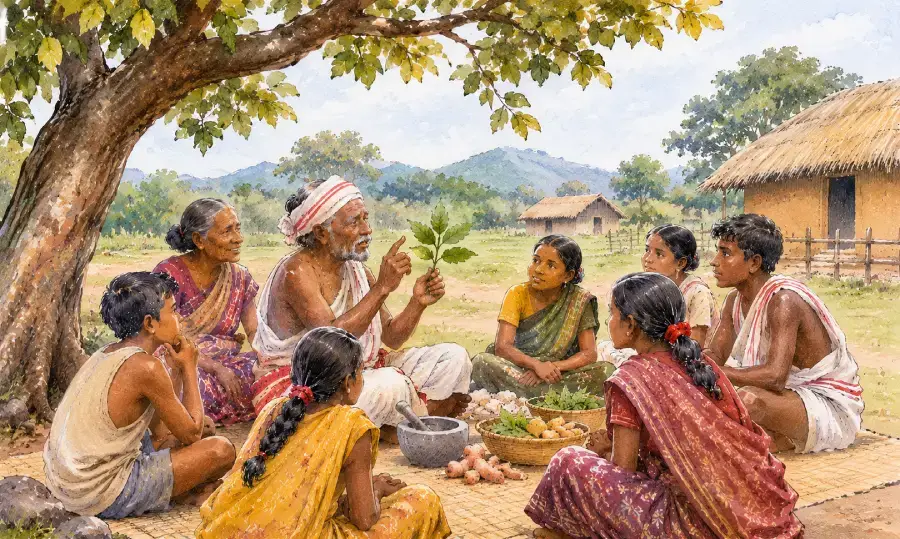
During my engagement with the Asur Particularly Vulnerable Tribal Group (PVTG), I increasingly recognised that some dimensions of knowledge cannot be adequately accessed through questioning alone. Knowledge may be embedded in relationships, collective memory, seasonal practices and culturally regulated forms of transmission. An elder’s silence may be as meaningful as an elaborate explanation. A ritual may contain knowledge that cannot be separated from its social context. The methodological breakthrough, therefore, is not simply to improve interviewing techniques or extend the duration of fieldwork. It is to reconsider who asks the questions, who interprets the responses and who ultimately controls the knowledge produced.
From Research On Communities To Research By Communities
Tribal communities, particularly the Particularly Vulnerable Tribal Groups (PVTGs) of Jharkhand, have long attracted considerable attention from anthropologists, social scientists and researchers, becoming almost perennial subjects of academic investigation. Over time, however, these communities have begun to recognise a recurring pattern. Researchers arrive, establish relationships, collect information, complete their fieldwork and depart, often never to return or even maintain contact. Such an approach stands in sharp contrast to the fundamental ethos of tribal societies, where human relationships are built upon reciprocity, trust, belonging and enduring social obligations. In the tribal worldview, once someone is embraced as a brother, he is always a brother.
For PVTG communities, many of whom continue to experience severe socio-economic disadvantages, the arrival of researchers also generates understandable expectations. Beyond sharing their knowledge, experiences and cultural heritage, they often hope that such engagements might contribute, however modestly, to improving their circumstances. Yet a fundamental question frequently remains unanswered: What tangible difference have decades of research made to the lives of these very communities? Where are the benefits, the accountability and the reciprocity?
The repeated experience of being studied without witnessing meaningful outcomes has understandably contributed to research saturation, growing scepticism and an increasing reluctance to engage with new researchers. What outsiders may interpret as social withdrawal, guardedness or unwillingness to cooperate may, in fact, represent a conscious effort by communities to protect themselves from yet another cycle of extractive research. Their apparent seclusion may also stem from cultural apprehensions and a reluctance to share knowledge because relationships have too often remained one-sided.
The concept of Community-Led Participatory Documentation (CLPD) offers a meaningful alternative to conventional researcher-centred approaches. Its fundamental premise is that communities should not remain passive providers of information. Instead, they must become active documenters, interpreters, custodians and beneficiaries of their own knowledge. Under this approach, the anthropologist’s role changes considerably. Rather than functioning primarily as an investigator, the researcher becomes a facilitator, collaborator and technical resource. Community members determine which aspects of their heritage require documentation, how information should be collected, who should participate and what restrictions should govern its use.
This transformation represents more than a technological innovation. It is a redistribution of authority within the research process. A particularly important aspect involves training young community members to document their own languages, oral histories, traditional ecological practices and cultural expressions. Young people can work alongside elders, traditional knowledge holders and community institutions, creating opportunities for intergenerational learning.
Such participation also addresses a longstanding weakness of externally driven documentation: its dependence on the continued presence of researchers. When researchers depart, documentation frequently stops. Community-led initiatives seek to establish a sustainable process that continues independently. The guiding principle is straightforward: the community must remain capable of documenting its heritage even after the anthropologist has left.
Ethical Challenges Of Entering Another Community’s Knowledge World
Some information is restricted by age, gender, ritual status, lineage or customary authority. Certain narratives are shared only on particular occasions or with specific audiences. A researcher who gains access to such knowledge faces a difficult ethical question: Does the ability to document something establish the right to document it? The answer should be no.
Even community-led documentation cannot assume that every member possesses equal authority to disclose collective knowledge. Consent from an individual does not necessarily constitute consent from the wider community. Another challenge concerns the interpretation of sensitive information. Knowledge that appears scientifically valuable may carry spiritual significance or customary restrictions that external institutions fail to recognise, and the community may not feel comfortable sharing it. The real achievement of ethical anthropology is not gaining access to everything a community knows, but respecting its right to decide what remains undisclosed.
Digital Anthropology: Technology Must Follow Community Authority
Digital technologies offer unprecedented possibilities for documenting endangered languages and cultural knowledge. High-quality audio recording, video documentation, digital mapping, mobile applications and cloud-based repositories can capture forms of knowledge that conventional written ethnography often struggles to preserve.
For predominantly oral traditions, these technologies are particularly valuable. They enable the documentation of pronunciation, gestures, performance, storytelling and the relationship between cultural practices and their physical surroundings. Artificial intelligence may eventually assist with transcription, linguistic analysis, translation and the organisation of large collections of cultural materials.
However, technological sophistication should not be confused with methodological progress. A digitally recorded interview remains meaningless for the community if the community has no control over its interpretation or circulation. Likewise, an online archive cannot automatically be considered community-owned simply because it contains indigenous material. Digital documentation introduces additional concerns regarding privacy, intellectual property, data ownership and the possible commercial exploitation of traditional knowledge. Sensitive recordings may be copied, redistributed or incorporated into AI training systems without adequate community understanding or authorisation.
Consequently, community-led documentation must include clear protocols concerning access, storage, ownership and future use. Some materials may be publicly accessible, while others should remain restricted to designated community members. The principle of Indigenous Data Sovereignty becomes particularly important here. Communities should exercise meaningful authority over the collection, management and use of information concerning their collective heritage. Technology should strengthen community autonomy, not create new forms of dependency.
The Asur Experience: Towards A Practical Methodological Shift
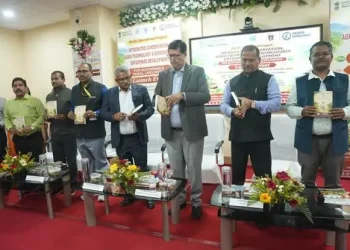
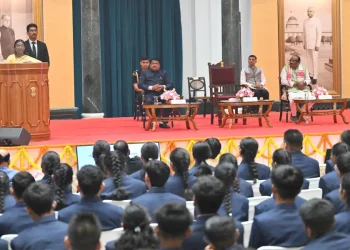
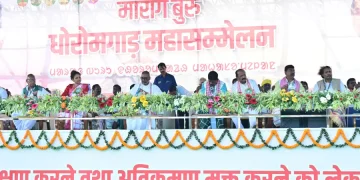
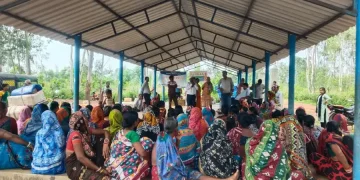
An important step towards implementing this approach emerged through a one-day orientation programme on Community-Led Participatory Documentation, organised in collaboration with the International Documentation Centre at Dr. Shyama Prasad Mukherjee University, Ranchi, and academic collaborators associated with Computational Resources for South Asian Languages (CoRSAL), Indiana University, Bloomington, and the University of North Texas.
The programme began with an introductory address by Sukanya Asur, an eight-year-old girl belonging to the Asur community. Her participation carried significance beyond its ceremonial dimension. It symbolised the central argument of the initiative: communities whose knowledge is being documented must occupy a visible and meaningful position within the process.
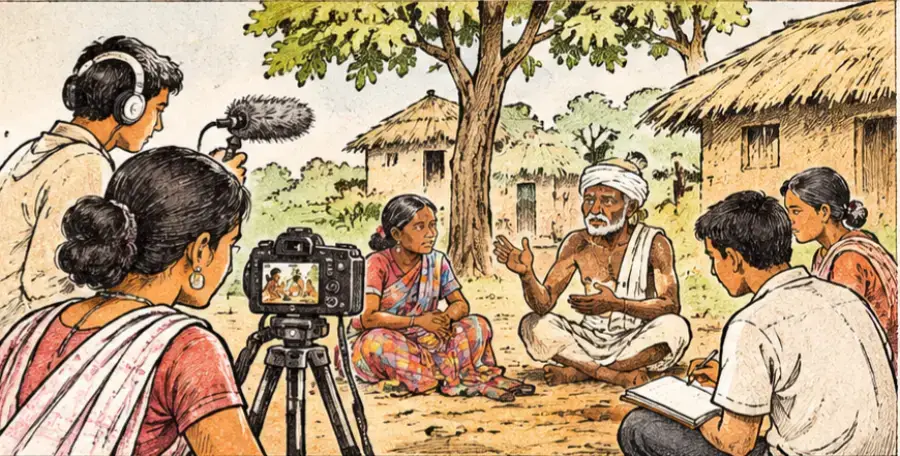
The proposed approach involves identifying and training tribal students and community members to undertake documentation within their own villages. Academic institutions would provide methodological guidance, technical training and ethical supervision. Community members would contribute linguistic competence, cultural understanding and the authority to interpret their own traditions. The documentation would subsequently undergo collaborative review before decisions concerning archiving and accessibility are reached.
This initiative remains an evolving methodological effort rather than a completed solution. Its effectiveness will depend on sustained participation, institutional commitment, financial resources and genuine community control. Nevertheless, it provides a practical direction for transforming anthropological research from an externally administered exercise into a locally sustained intellectual endeavour.
Beyond Preservation: Reclaiming Knowledge And Cultural Dignity
India’s tribal knowledge systems contain important understandings of biodiversity, agriculture, medicinal plants, ecological relationships, craftsmanship, oral history and community governance. Yet documenting these systems should not be reduced to extracting useful information for science, development or commercial innovation.
Knowledge possesses cultural meaning beyond its practical applications. The traditional iron-smelting knowledge of the Asurs, for instance, cannot be understood exclusively as an indigenous metallurgical technique. Its significance also lies in the relationships among livelihood, environment, inherited skills, cultural memory, community bonding and identity. Documentation that records the technical process while overlooking these relationships risks producing an incomplete account.
Equally, preservation should not transform living cultures into static museum collections. Tribal societies are continuously changing. Their languages, technologies and cultural expressions evolve through interaction with wider society. Community-led documentation must therefore accommodate continuity and change rather than assuming that authenticity exists only in the past. The objective is not to freeze tribal life but to strengthen the community’s capacity to understand, transmit and reinterpret its heritage through its own perspectives.
Conclusion: Changing Who Holds The Pen
The future of tribal knowledge documentation in India requires more than improved research instruments. It demands a fundamental reconsideration of the relationship between knowledge, authority and representation. For too long, tribal communities have featured extensively in anthropological writings while remaining insufficiently represented in the production of those writings.
The methodological challenge before us is to reverse this imbalance. My experiences as an Adivasi anthropologist working among the Asurs have reinforced an important lesson. Cultural proximity does not eliminate the responsibilities of an outsider, and academic expertise does not automatically confer interpretative authority. Community-led documentation offers an opportunity to address these limitations through shared research design, local capacity building, ethical accountability and community governance of knowledge. India still has an immense body of tribal knowledge awaiting meaningful documentation. However, the urgency of preservation must never justify another cycle of knowledge extraction driven by self-interest.
The essential question is no longer merely how much tribal knowledge anthropologists can document. It is how effectively tribal communities can be enabled to document, interpret, protect and transmit their own knowledge. The future of tribal documentation must move from studying communities to working with them and, ultimately, towards enabling communities to study and represent themselves. That is the deeper meaning of For the Community, By the Community and perhaps the most important methodological transformation awaiting Indian anthropology.
(The writer is Assistant Professor, University Department of Anthropology, Dr. Shyama Prasad Mukherjee University, Ranchi, Jharkhand. Views expressed are personal.)