



RANCHI/NEW DELHI
Bhai Dooj, celebrated recently after Diwali, is traditionally associated with the relationship between brothers and sisters. Sisters apply a tilak on their brothers’ foreheads, pray for their well-being and wish them a long and prosperous life. Brothers, in turn, reaffirm their affection and commitment to their sisters.
The festival celebrates a relationship that remains emotionally significant across generations. But the meaning of family and kinship in India extends well beyond the relationship between a brother and a sister.
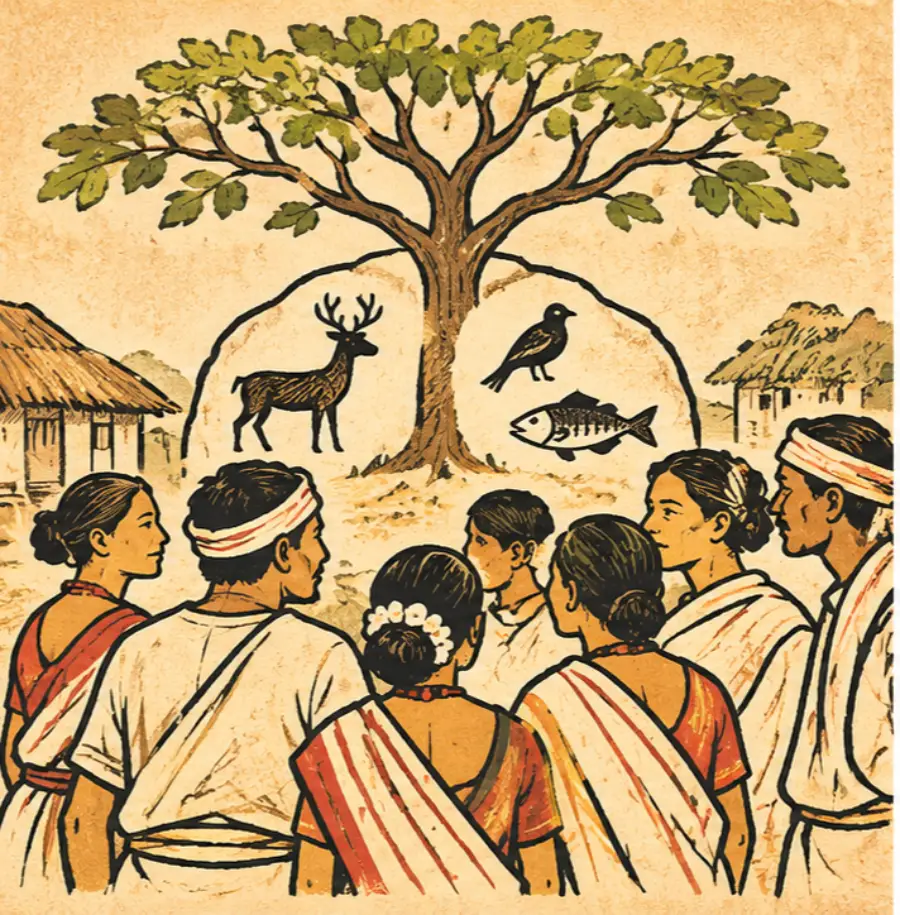
Among the country’s indigenous communities though, family relationships are organised through diverse systems of descent, inheritance, marriage, clan membership and customary responsibilities. These systems can offer a different perspective on how people understand belonging, obligation and mutual support.
There is no single tribal model of family. The kinship structures of the Khasi, Garo, Santhal and Munda communities, for example, differ considerably. Some follow matrilineal descent, while others are predominantly patrilineal. Understanding these differences is essential to looking beyond the familiar symbolism of Bhai Dooj.
When The Mother’s Family Becomes Central
Meghalaya offers one of India’s most distinctive examples of matrilineal social organisation. Among the Khasi, Jaintia and Garo communities, descent is traced through the mother’s line. Children belong to their mother’s clan, and the transmission of family identity and ancestral property follows customary matrilineal principles.
In Khasi society, the youngest daughter, known as Ka Khadduh, traditionally inherits and safeguards ancestral property. Her role is not simply that of a daughter receiving an inheritance; she is also associated with the continuity of the family home and lineage.
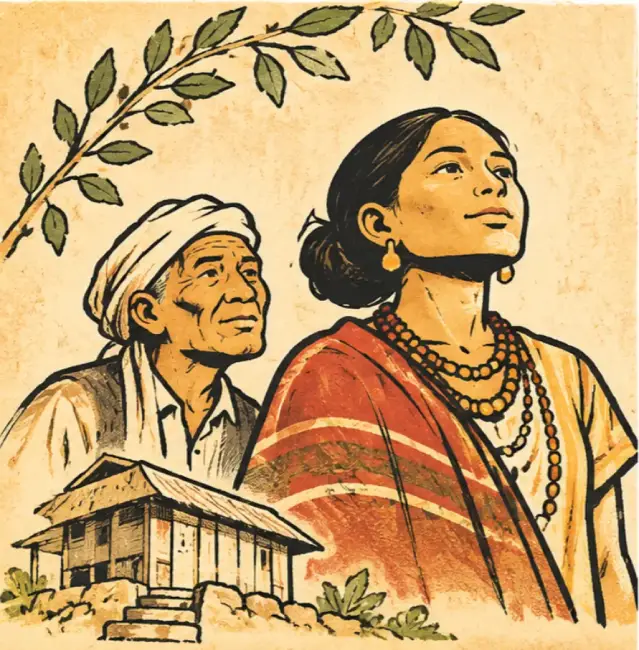
The maternal uncle, known as U Kñi, also occupies an important position in traditional Khasi kinship. His responsibilities demonstrate that a family relationship cannot be understood merely through the nuclear household of parents and children.
Research published in Maternal & Child Nutrition has examined the complementary roles of the Khasi maternal uncle and youngest daughter within the community’s matrilineal structure.
The Garo system offers another illustration. According to the Meghalaya government’s description of Garo society, children belong to their mother’s clan, while the youngest daughter generally inherits the principal family property. Her husband, known as Nokrom, enters the family arrangement associated with the heiress. These practices demonstrate that family continuity and property inheritance need not always follow the male line.
However, matrilineal should not automatically be equated with matriarchal. Women may inherit ancestral property and transmit clan identity, but men continue to hold important social, familial and customary responsibilities. Nor does matriliny by itself guarantee gender equality in every sphere.
Kinship Is Also About Clans And Marriage
In many tribal societies, belonging to a family is closely connected with membership of a larger clan or lineage. The Santhal community, for example, is traditionally organised into clans known as paris. Clan identity influences marriage rules, social relationships and a person’s place within the wider community. Marriage within one’s own clan is generally prohibited under customary practice.
Such arrangements mean that family relationships extend beyond the household. They connect individuals to a network of relatives and clan members, some of whom may live in different villages. Marriage also creates relationships between families and social groups. It is therefore not merely a union between two individuals but can involve a wider network of customary obligations and social responsibilities.
However, the nature of these relationships is changing. Education, urban migration, employment, religious influences and changing economic conditions have affected the way younger generations understand marriage, inheritance and family responsibilities.
Kinship Can Provide Support, But It Can Also Restrict Rights
It would be incorrect to portray customary kinship systems only as examples of social harmony and mutual support. They can provide a framework for belonging, assistance and the settlement of disputes. At the same time, customary rules may also determine who inherits land, who can claim property and whose interests receive priority.
Research by Nitya Rao, published in the Journal of the Royal Anthropological Institute in 2005, examined women’s land claims among the Santhals of Jharkhand. The study showed how kinship could operate in contradictory ways. While the strengthening of customary patrilineal inheritance practices could weaken women’s land rights, kin elders could also support women in pursuing grievances through legal institutions.
The research demonstrates that kinship can simultaneously be a source of social support and a mechanism through which inequalities are maintained. A separate study published in the Indian Journal of Public Administration on customary law and land inheritance among Munda women in Jharkhand also examined the challenges women face in securing their property rights.
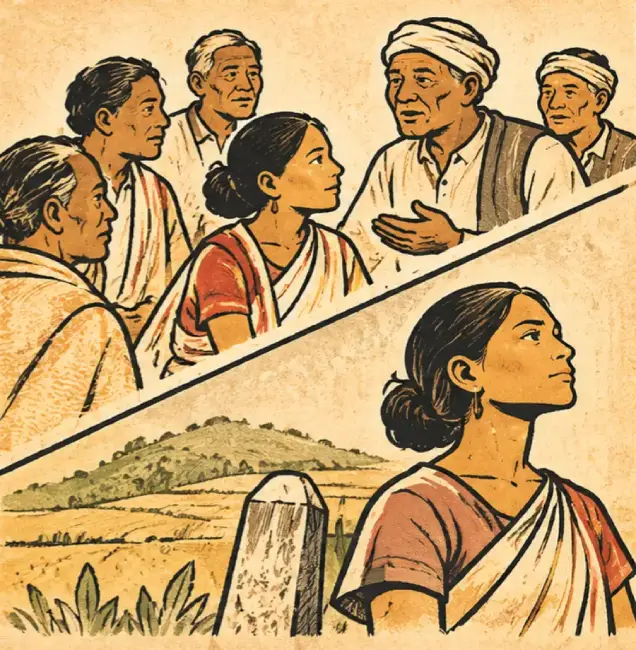
These findings are important because discussions about tribal family systems should not overlook the position of women, widows, unmarried daughters and separated women.
Beyond The Brother-Sister Relationship
Bhai Dooj provides an opportunity to consider the wider meaning of siblinghood and family relationships. In different societies, a person’s responsibilities may extend to maternal uncles, aunts, cousins, clan elders, in-laws and members of the wider community. These relationships can shape decisions about marriage, childcare, inheritance, rituals and support during difficult times.
The importance of these relationships varies across communities. It would be misleading to suggest that all tribal societies follow the same customary obligations or that every relationship carries identical responsibilities. Nevertheless, the broader sociological point is important: family is not always confined to parents, children and siblings living under one roof.
In some communities, the maternal line provides the principal framework for identity and inheritance. In others, paternal lineage and clan membership determine marriage rules and family continuity. In both cases, the wider kinship network can influence individual lives.
Changing Families, Changing Relationships
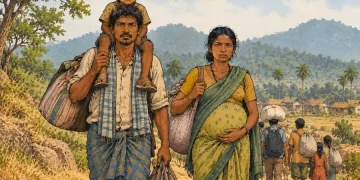
Migration has introduced another dimension to indigenous kinship. Many young tribal men and women move to cities and other states for education and employment. Some establish independent households, while others continue to maintain close relationships with their ancestral villages.
Distance can alter the way family members meet, provide care and fulfil customary responsibilities. Mobile phones and digital communication have made it easier to remain connected, but they cannot always replace physical participation in family and community life.
The expansion of education, salaried employment and nuclear households has also influenced expectations around marriage, property and the role of relatives. These changes do not necessarily signal the disappearance of traditional kinship. Rather, they demonstrate how social institutions are continuously negotiated between inherited practices and contemporary realities.
The constitutional and legal recognition of customary practices in certain Scheduled Areas, including through PESA, also highlights the importance of understanding community institutions within their specific social contexts.
What Bhai Dooj Can Teach Us?
Bhai Dooj is a celebration of affection, responsibility and the wish for a sibling’s well-being. Its emotional significance is widely understood, even as customs differ from region to region.
Looking at the festival through the lens of indigenous kinship broadens the discussion. It reminds us that family relationships are shaped not only by affection but also by social institutions, descent, inheritance, shared responsibilities and community identity.
The Khasi maternal uncle, the Garo heiress, the Santhal clan and the Munda family’s relationship with ancestral land are different examples of how kinship can organise social life. They also remind us that there is no single definition of an Indian family. Beyond the tilak and the exchange of gifts lies a larger question: who constitutes a family, what responsibilities do its members share, and how do relationships sustain people across generations?