








New Delhi
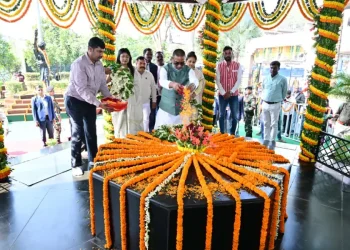
As India prepares to observe Janjatiya Gaurav Diwas on November 15, commemorating the 151st birth anniversary of Birsa Munda, it is worth revisiting the question that defined his rebellion more than a century ago: Who has the right to the land on which Adivasi communities have lived, cultivated, worshipped and sustained their traditional way of life for generations?
Born on November 15, 1875, in Ulihatu village in present-day Jharkhand, Birsa Munda emerged as one of the most influential leaders in the history of Adivasi resistance against colonial rule. Revered as Dharti Aba, he led the Ulgulan, or the Great Tumult, during 1899-1900, challenging British authority, exploitative landlords and the growing encroachment of outsiders into traditional Munda society.
His rebellion was rooted in a larger struggle over land, livelihood, cultural identity and community autonomy. It was not simply an armed confrontation with the colonial administration. It challenged the economic and administrative arrangements that had progressively weakened the traditional rights of Adivasi cultivators.
Ancestral Land Became A Source Of Conflict
To understand the significance of Birsa’s movement, it is necessary to understand the traditional Munda system of landholding.
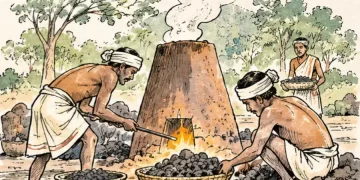
Under the Khuntkatti system, the descendants of the original settlers who cleared forests and established villages enjoyed customary collective rights over the land. The relationship between the community and its territory was shaped by lineage, customary obligations and village institutions.
Land was not merely an individual economic possession. It was closely connected with the identity and collective existence of the community.
The expansion of British colonial administration and revenue settlements progressively disrupted these arrangements. The introduction of intermediary landlords, growing indebtedness, moneylending and the imposition of new revenue obligations weakened the customary position of tribal cultivators. The growing influence of outsiders, commonly described as dikus, further aggravated the conflict. Adivasi cultivators faced exploitation through rent demands, debt, forced labour and the erosion of traditional control over land.
The colonial system increasingly treated land through the framework of revenue administration and recognised property relations that did not always reflect customary community rights. For the Mundas, this was not merely an economic crisis. It threatened an entire social and cultural order.
Ulgulan: A Rebellion For Land, Identity And Self-Rule
The Ulgulan emerged from these accumulated grievances. Birsa’s leadership brought together agrarian resistance, religious and social reform, political assertion and the demand to restore community control over ancestral territories.
The movement challenged the colonial administration and the local structures that facilitated the alienation of Adivasi land. It also sought to revive the traditional authority of village institutions and strengthen the cultural identity of the Munda community.
Historian K.S. Singh, in his seminal work Birsa Munda and His Movement, 1874-1901: A Study of a Millenarian Movement in Chotanagpur (Oxford University Press, 1983), examined Birsa as a religious reformer, social mobiliser and political leader. His work remains an important scholarly reference for understanding the movement beyond its military confrontation with the British.
The uprising reached its decisive phase during 1899-1900. The confrontation at Dombari Buru became one of the defining episodes of the rebellion, with British forces firing on Birsa’s followers. The colonial administration eventually suppressed the movement. Birsa was arrested in 1900 and died in Ranchi Jail on June 9 that year, aged 25.
But the rebellion could not be dismissed as an isolated disturbance. It had exposed the depth of agrarian discontent and the failure of colonial land administration to accommodate customary rights.
Rebellion To Legal Recognition
The legacy of the Ulgulan is closely associated with the subsequent development of protective land legislation in the Chotanagpur region.
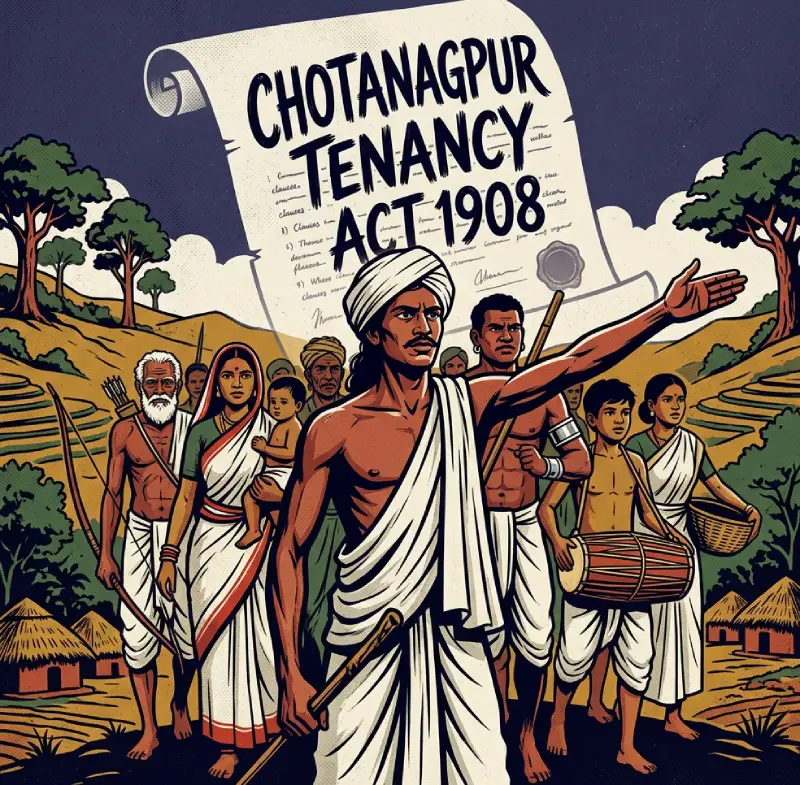
The Chotanagpur Tenancy Act, 1908, became a landmark measure in recognising and protecting specified customary landholding arrangements, including Khuntkatti and Bhuinhari rights. It restricted the transfer of certain categories of tribal land and provided legal safeguards against alienation. However, it would be historically inaccurate to attribute the entire Act to Birsa’s rebellion alone.
The CNT legislation emerged from a much longer history of agrarian resistance and successive administrative and legal interventions. Earlier measures included the Chotanagpur Landlord and Tenant Procedure Act of 1879 and the Commutation Act of 1897. Survey and settlement operations began in 1902, contributing to the legal and administrative process that culminated in the 1908 legislation.
Reverend John-Baptist Hoffmann, a German Jesuit missionary and scholar who studied Munda society and customary institutions, was among the important contributors to the documentation and understanding of tribal landholding systems. The CNT Act was not an all-India tribal land law. Its territorial application was confined to the Chotanagpur region. Nevertheless, it became an important example of how customary tribal rights could be recognised through statutory protection.
The legislation did not undo all previous dispossession, nor did it eliminate future disputes. Its significance lay in establishing that tribal landholding systems could not simply be disregarded in the name of conventional property and revenue arrangements.
The Question Birsa Left Behind
Birsa Munda’s struggle was part of a much wider history of Adivasi resistance across India. The Santhal Hul of 1855-56, the Kol uprising of 1831-32, the resistance led by Alluri Sitarama Raju in the Rampa region during 1922-24 and several other movements reflected different regional experiences of colonial interference, exploitation and the loss of control over customary resources.
These movements were not identical in their leadership, objectives or historical circumstances. Yet, land, forests, livelihood and the preservation of community autonomy were recurring concerns.
Birsa’s importance lies in the way his movement brought these questions together in a powerful assertion of Munda identity and self-rule. His birth anniversary, now observed as Janjatiya Gaurav Diwas, offers an opportunity to examine not only the historical courage of the leader but also the unresolved issues that shaped his rebellion.
The Chotanagpur Tenancy Act represented an important legal response to the land question in one region. But it did not settle the wider national question of Adivasi ownership, customary rights and control over natural resources.
After Independence, India would create constitutional safeguards and enact new laws to protect tribal communities. Yet, as subsequent struggles over forests, mining and development would demonstrate, the tension between community rights and competing claims over land was far from over.
Continued…