




• About
  • Editor & Writers
  • Contact
  • Sitemap
No Result
View All Result
Support Our Mission
Friday, November 6, 2026
The Indian Tribal
  • Home
  • Achievers
    • उपलब्धिकर्ता
  • Cuisine
    • खान पान
  • Health
    • स्वास्थ्य
  • Legal
    • कानूनी
  • Music
    • संगीत
  • News
    • Updates
    • खबरें
  • Sports
    • खेलकूद
  • Variety
    • विविध
  • हिंदी
    • All
    • आदिवासी
    • उपलब्धिकर्ता
    • कला और संस्कृति
    • कानूनी
    • खबरें
    • खान पान
    • खेलकूद
    • जनजाति
    • भारत
    • विविध
    • संगीत
    • संस्कृति
    • स्वास्थ्य
    The Indian Tribal

    मारांग बुरू की आस्था और पहचान बचाने के लिए एकजुट हों आदिवासी: हेमन्त सोरेन

    The Indian Tribal

    कर्ज और मौसमी पलायन से आदिवासी होने वाले पिताओं में डिप्रेशन का खतरा: अध्ययन

    The Indian Tribal

    मिज़ोरम का भूला-बिसरा जनजातीय खेल जो लौट रहा है परंपराओं में

    The Indian Tribal

    पौष्टिक और विविधतापूर्ण होने के बावजूद मुख्यधारा के रेस्तरां से दूर है आदिवासी व्यंजन

    The Indian Tribal

    ओडिशा के पुरवाशा संग्रहालय में सजी जनजातीय विरासत की अनमोल दुनिया

    The Indian Tribal

    ओडिशा के आदिवासी हाटों से पोषण की नई पहल, स्वस्थ भोजन और स्वच्छता पर जोर

    The Indian Tribal

    भारत के टाइगर रिजर्व के सामने नई चुनौती: संरक्षण, आदिवासी अधिकार और पर्यटन का बढ़ता दबाव

    The Indian Tribal

    मेघालय के आदिवासी समुदाय बचा रहे जंगल और जल स्रोत, बालपाक्रम राष्ट्रीय उद्यान में संरक्षण की नई मिसाल

  • Gallery
    • Videos
  • Latest News
No Result
View All Result
The Indian Tribal
No Result
View All Result
  • Home
  • Achievers
  • Cuisine
  • Health
  • Legal
  • Music
  • News
  • Sports
  • Variety
  • हिंदी
  • Gallery
  • Latest News
Support Our Mission
Home » The Indian Tribal / Variety » Art & Culture » Beyond Gold And Silver: What Does Wealth Mean In Tribal Communities?

Beyond Gold And Silver: What Does Wealth Mean In Tribal Communities?

Land, forests, livestock, seeds, traditional knowledge and community relationships can be as important as money and material possessions for tribals, The Indian Tribal finds out

November 6, 2026
The Indian Tribal

Fertile Land Sustains Generations Of Tribal Families

RANCHI/NEW DELHI

When people think of wealth, gold, silver, property, bank balances and investments usually come to mind. During Dhanteras, the first day of Diwali festivities, purchasing precious metals and other valuable goods is widely regarded as auspicious. For millions of families, the occasion is associated with prosperity, security and the hope of a better future.

But wealth can mean something considerably different when viewed through the experiences of India’s indigenous communities.

For many tribal households, particularly those whose livelihoods remain closely connected with agriculture, forests and common natural resources, prosperity cannot be measured exclusively by the quantity of money or jewellery a family possesses. Access to cultivable land, healthy livestock, productive forests, traditional seeds, adequate food stocks and the support of relatives and neighbours can also determine whether a household is secure.

This does not mean that tribal communities do not value money, gold, silver or modern assets. They do. Nor does it suggest that all tribal societies share the same economic philosophy. Rather, it draws attention to a wider understanding of material and social security that often receives little attention in discussions about wealth.

Land Is More Than An Asset

For an agricultural household, land is not simply a property whose value can be calculated according to prevailing market rates. It is also the source of food, livelihood, identity and continuity between generations.

In several tribal regions, agricultural land is connected with family histories, ancestral settlements, customary practices and community relationships. Its significance therefore extends beyond its monetary valuation.

The situation is particularly important in Jharkhand, where the Chotanagpur Tenancy Act, 1908, and the Santhal Parganas Tenancy (Supplementary Provisions) Act, 1949, provide specific protections concerning the transfer of tribal land.

These laws reflect the historical importance of land to tribal communities and the consequences of alienation from ancestral resources.

Yet ownership alone does not necessarily guarantee prosperity. Soil fertility, irrigation, access to markets, agricultural productivity and the ability to retain the produce are equally important.

Forest As A Living Source Of Wealth

For forest-dependent communities, the forest represents an economic and ecological resource that cannot be adequately captured by timber prices or the market value of individual products.

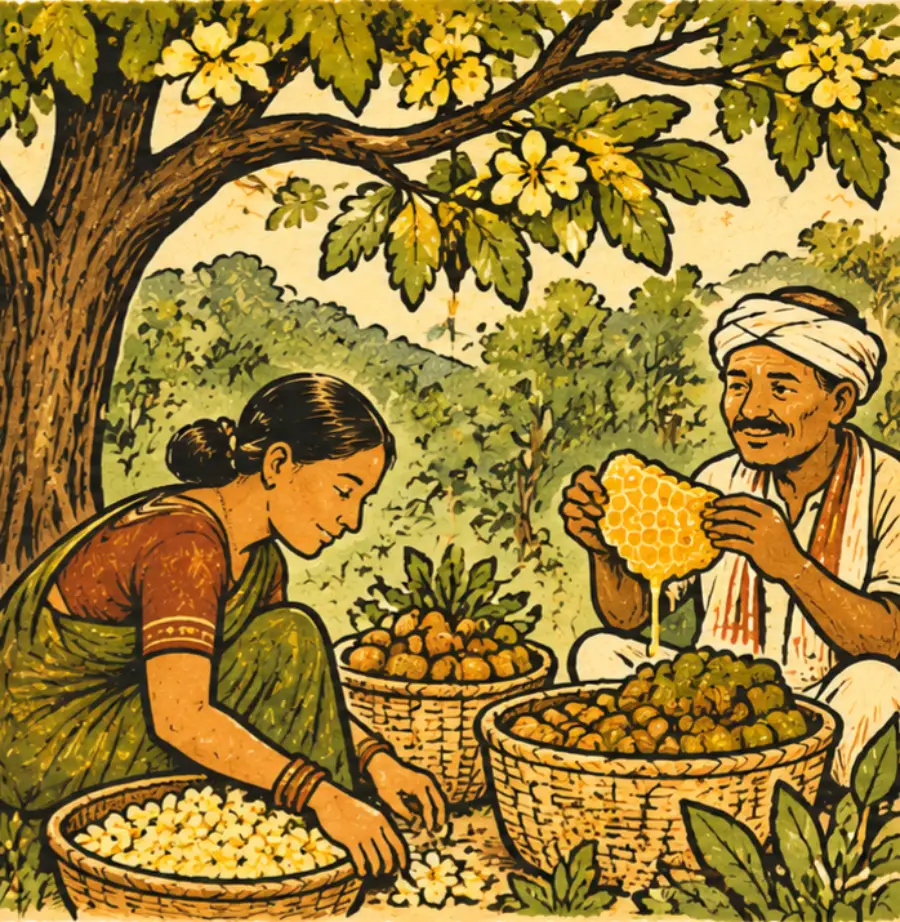
Seasonal forest produce, including mahua flowers, tendu leaves, lac, sal seeds, tamarind, honey, medicinal plants, mushrooms and edible greens, supports household consumption and provides income in different regions. The value of these resources is not restricted to what they fetch in the market. They can also contribute to nutrition, traditional healthcare, household requirements and resilience during periods when agricultural earnings are limited.

The Forest Rights Act, 2006, provides an important legal framework for understanding this relationship. It recognises individual and community rights over forest resources, including ownership, access to and disposal of minor forest produce. It also recognises the right of eligible communities to protect, regenerate, conserve and manage community forest resources traditionally protected by them.

This recognition is significant because it acknowledges that forests are not merely government-controlled natural assets but are also spaces of livelihood, culture, customary rights and community responsibility.

For a village whose economic security depends on the continued availability of forest produce, a healthy forest can represent a form of wealth that no bank statement can adequately describe.

Seeds, Cattle And Food Security

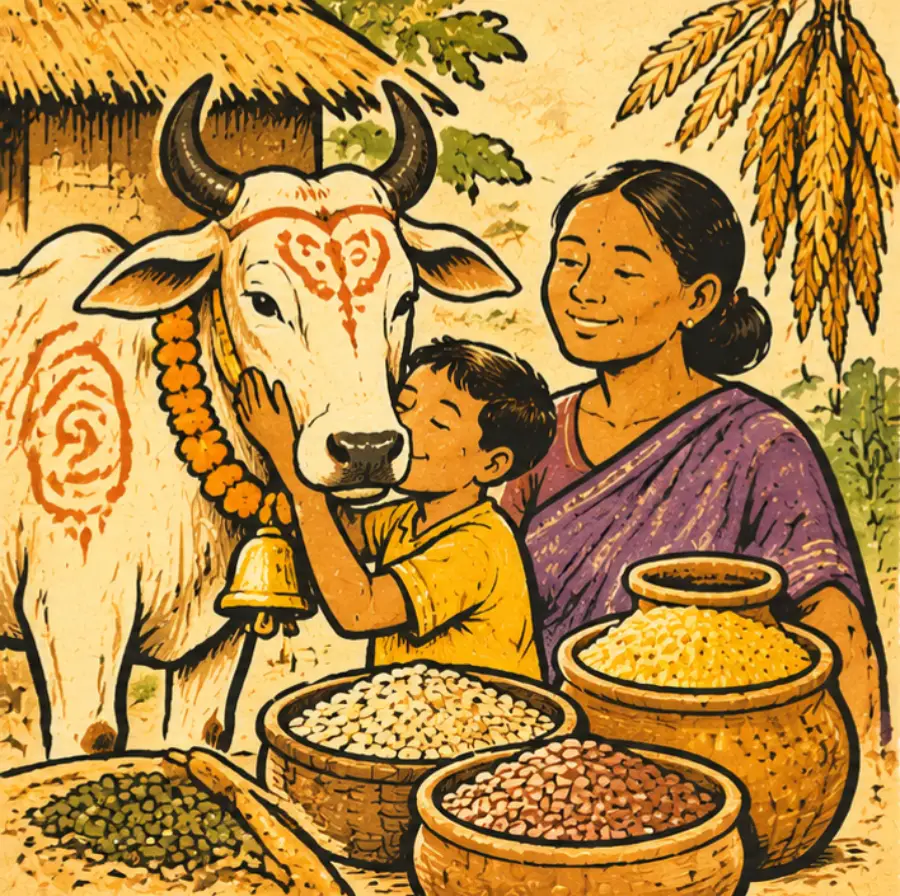
Traditional seeds are another important dimension of indigenous economic security. Farmers who preserve and exchange locally adapted varieties of paddy, millets, pulses and other crops retain access to planting material that may be suited to their local soil and climatic conditions.
The Indian Tribal
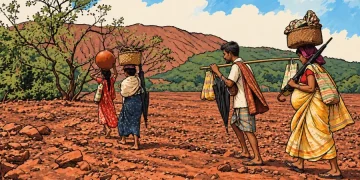
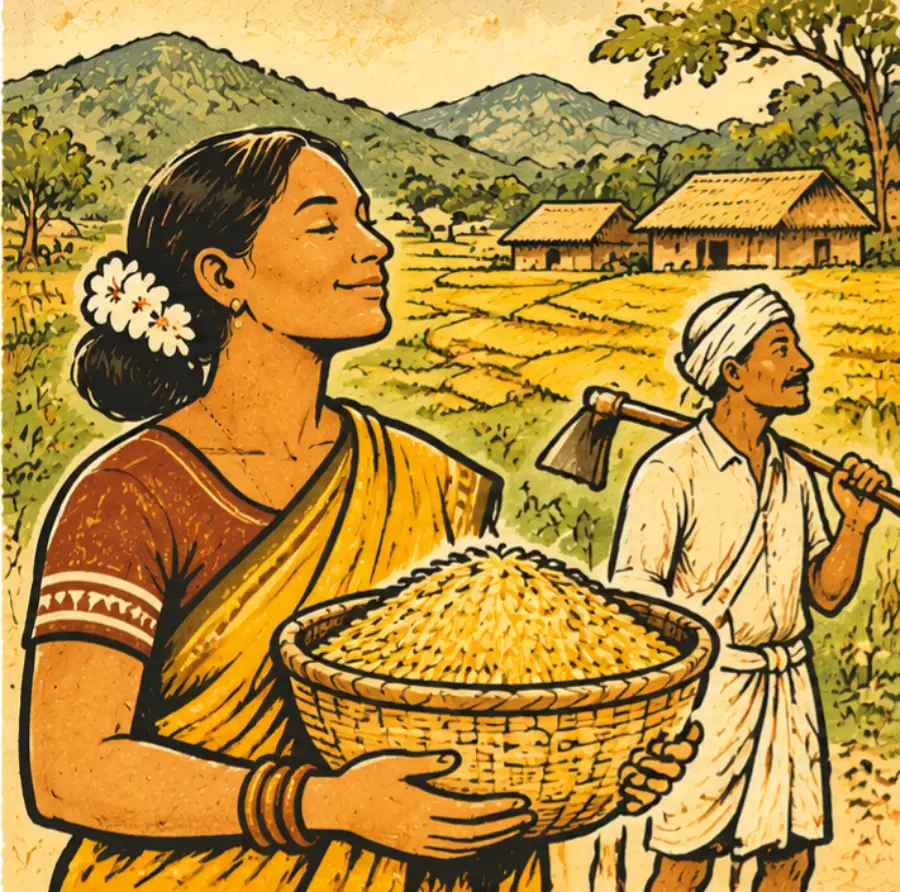
Livestock and stored grains symbolise household prosperity (Pics – AI Generated)

Seed preservation also reduces dependence on purchasing fresh seeds every agricultural season. The practice has cultural and ecological significance, apart from its economic value.

Similarly, livestock can represent much more than an asset that can be sold when money is needed. Cattle, goats and poultry provide manure, agricultural support, milk, meat and a potential source of emergency income.

In Jharkhand, the significance of cattle is particularly visible during Sohrai, a harvest and cattle festival observed among communities including the Santhals, Mundas and Oraons. The animals are washed, decorated and honoured, reflecting their importance in agricultural life.

The festival offers a glimpse into an economic relationship in which livestock is valued not merely for its market price but also for its contribution to household and agricultural life.

Community Relationships As Social Wealth

Another dimension of prosperity is the network of relationships that enables families to withstand economic difficulties.

In villages where agriculture, seasonal work and forest-based livelihoods are important, cooperation between households can be essential. Labour-sharing, assistance during agricultural operations, participation in community activities and support during family emergencies can reduce the financial burden on individual households.

Such arrangements differ across communities and are changing with migration, monetisation and the expansion of market-based employment. Nevertheless, they illustrate why economic security cannot always be understood at the level of an individual bank account.

The Panchayats (Extension to the Scheduled Areas) Act, 1996, recognises the importance of customary law, social and religious practices and traditional management of community resources. It also gives Gram Sabhas responsibilities concerning the preservation of community traditions, cultural identity and resources.

These provisions provide an institutional context for understanding community resources as something that requires collective decision-making and protection.

Does This Understanding Of Wealth Have Contemporary Relevance?

The idea of measuring prosperity through natural resources, food security, livelihood stability and collective well-being has relevance beyond tribal regions.
The Indian Tribal
Forest produce provides livelihood and natural wealth

Climate change, declining biodiversity, land degradation, water scarcity and the vulnerability of rural livelihoods have exposed the limitations of treating economic growth and individual purchasing power as the only measures of development.

However, it would be misleading to romanticise indigenous economic systems. Tribal communities face poverty, indebtedness, land alienation, unemployment, displacement and unequal access to education, healthcare and markets. Traditional livelihoods alone cannot guarantee economic security.

The challenge is therefore not to choose between traditional and modern forms of wealth but to ensure that communities retain control over their resources while gaining access to better education, healthcare, infrastructure, technology and income opportunities.

The Forest Rights Act and PESA provide important legal foundations, but their effectiveness depends on implementation, recognition of legitimate rights and the capacity of local institutions.

Dhanteras and Diwali celebrate prosperity in different ways across India. Looking at wealth through indigenous experiences adds another dimension to that conversation.

For a household, prosperity may be reflected in gold kept safely in a locker. For another, it may also lie in fertile farmland, a healthy herd, a seed collection, a productive forest and a community that stands together in difficult times.

The larger question is whether wealth should be measured only by what an individual owns or also by the resources, relationships and security that make an entire community prosperous.


Root Woot | Online Puja Samagri Root Woot | Online Puja Samagri Root Woot | Online Puja Samagri

Support Our Mission

The Indian Tribal

For the past four-and-a-half years, we have travelled across India to bring to our readers the ‘Unknown, Lesser-Known Tribal Life’, which rarely finds space in the mainstream media.

We have done this without external funding, driven only by our conviction that India’s tribal heritage deserves to be documented with dignity, depth and authenticity.

If you like our work, and if it has informed, inspired or helped you understand India’s tribal/indigenous communities better, we invite you to become a part of this mission.

Your contribution will not merely fund a news platform. It will help preserve voices, traditions, histories and aspirations that form an invaluable part of India’s identity.

Because when an untold story is documented, a piece of India’s heritage is preserved forever.

Thanks
Editor

In Numbers

49.4 %
Female Literacy rate of Scheduled Tribes

Update

Tribal Film Festival gets underway in Mizoram

A three-day Mizoram tribal film festival, organised under the initiative of the Ministry of Tribal Affairs in collaboration with the State Art and Culture Department and the Information, Public Relations, Printing and Stationery Department, got underway in Aizawl on November 4. Mizoram’s Art and Culture Minister C Lalsawivunga inaugurated the festival that will feature film screenings and other programmes at Vanapa Hall and Lianchhiari Run Mini Theatre from November 4 to 6. Lalsawivunga described the festival as an important platform for showcasing Mizo culture and heritage and said filmmakers played a key role in preserving and promoting the identity of the Mizo people.
The Indian Tribal
Health

Rajasthan Study Flags Goitre In Iodine-Sufficient Tribal Children

by The Indian Tribal
November 4, 2026

However, a nationwide study has recorded a decline in goitre prevalence among Indian children following decades of universal salt iodisation, The Indian Tribal reports

The Indian Tribal

कर्ज और मौसमी पलायन से आदिवासी होने वाले पिताओं में डिप्रेशन का खतरा: अध्ययन

November 1, 2026
The Indian Tribal

मिज़ोरम का भूला-बिसरा जनजातीय खेल जो लौट रहा है परंपराओं में

October 29, 2026
The Indian Tribal

पौष्टिक और विविधतापूर्ण होने के बावजूद मुख्यधारा के रेस्तरां से दूर है आदिवासी व्यंजन

October 28, 2026
The Indian Tribal

Despite Human-Elephant Conflict, Tribals Continue To Worship The Pachyderms

October 27, 2026
The Indian Tribal

Debt, Seasonal Migration Linked To Depression Among Tribal Expectant Fathers: Study

October 25, 2026
Previous Post

Diwali Bonanza For Selected Candidates: Jharkhand High Court Quashes Cancellation of JSSC-CGL Recruitment, Restores Their Jobs

Top Stories

Jharkhand High Court | The Indian Tribal
India

Diwali Bonanza For Selected Candidates: Jharkhand High Court Quashes Cancellation of JSSC-CGL Recruitment, Restores Their Jobs

November 6, 2026
The Indian Tribal
आदिवासी

मारांग बुरू की आस्था और पहचान बचाने के लिए एकजुट हों आदिवासी: हेमन्त सोरेन

November 5, 2026
The Indian Tribal
Health

Rajasthan Study Flags Goitre In Iodine-Sufficient Tribal Children

November 4, 2026
Load More
  • About Us
  • Editor & Writers
  • Contact
  • Redressal
  • Copyright Policy
  • Privacy Policy And Terms Of Use
  • Disclaimer
  • Sitemap

  • Achievers
  • Cuisine
  • Health
  • India
  • News
  • Legal
  • Music
  • Sports
  • Trending
  • Chhattisgarh
  • Delhi
  • Gujarat
  • Jammu & Kashmir
  • Jharkhand
  • Kerala
  • Madhya Pradesh
  • Maharashtra
  • North East
  • Arunachal Pradesh
  • Assam
  • Manipur
  • Meghalaya
  • Mizoram
  • Nagaland
  • Sikkim
  • Tripura
  • Odisha
  • Telangana
  • West Bengal
  • Political News
  • Variety
  • Art & Culture
  • Entertainment
  • Adivasi
  • Tribal News
  • Scheduled Tribes
  • हिंदी
  • उपलब्धिकर्ता
  • कानूनी
  • खान पान
  • खेलकूद
  • स्वास्थ्य
  • संस्कृति
  • संगीत
  • विविध
  • कला और संस्कृति
  • खबरें
  • असम
  • अरुणाचल प्रदेश की ताज़ा ख़बरें
  • ओडिशा
  • केरल
  • गुजरात
  • छत्तीसगढ़
  • जम्मू और कश्मीर
  • झारखंड
  • तेलंगाना
  • दिल्ली
  • नॉर्थईस्ट
  • पश्चिम बंगाल
  • मध्य प्रदेश
  • महाराष्ट्र
  • त्रिपुरा
  • नागालैंड
  • मणिपुर
  • मिजोरम की ताज़ा ख़बरें
  • मेघालय
  • सिक्किम की ताज़ा ख़बरें
  • राजस्थान

About Us

The Indian Tribal is India’s first bilingual (English & Hindi) digital journalistic venture dedicated exclusively to the Scheduled Tribes. The ambitious, game-changer initiative is brought to you by Madtri Ventures Pvt Ltd (www.madtri.com). From the North East to Gujarat, from Kerala to Jammu and Kashmir — our seasoned journalists bring to the fore life stories from the backyards of the tribal, indigenous communities comprising 10.45 crore members and constituting 8.6 percent of India’s population as per Census 2011. Unsung Adivasi achievers, their lip-smacking cuisines, ancient medicinal systems, centuries-old unique games and sports, ageless arts and crafts, timeless music and traditional musical instruments, we cover the Scheduled Tribes community like never-before, of course, without losing sight of the ailments, shortcomings and negatives like domestic abuse, alcoholism and malnourishment among others plaguing them. Know the unknown, lesser-known tribal life as we bring reader-engaging stories of Adivasis of India.

Follow Us

All Rights Reserved

© 2026 Madtri Ventures [P] Ltd.

No Result
View All Result
  • Home
  • Achievers
  • Cuisine
  • Health
  • Health
  • Legal
  • Music
  • News
  • Sports
  • Variety
  • हिंदी
    • उपलब्धिकर्ता
    • खान पान
    • कानूनी
    • खेलकूद
    • खेलकूद
    • संगीत
    • संगीत
    • स्वास्थ्य
    • स्वास्थ्य
    • विविध
  • Gallery
  • Videos

© 2026 Madtri Ventures [P] Ltd.