








Ranchi
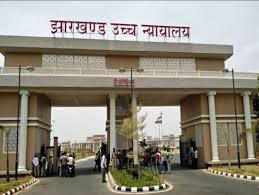
Coming as a major Diwali gift for nearly 2,000 selected candidates, the Jharkhand High Court on Friday quashed the Hemant Soren government’s decision to cancel recruitment under the 2024 Jharkhand Staff Selection Commission Combined Graduate Level (JSSC-CGL) examination, restoring the appointments made under Advertisement No. 10/2023.
Justice Deepak Roshan set aside the State government’s August 18, 2026, notification cancelling the recruitment process and directed that the appointed candidates be treated as having continued in service without any interruption. The court further ordered that they should not be deprived of their salaries or any other consequential service benefits on account of the cancellation notification.
The ruling brings relief to candidates who had received appointment letters in January 2026 and were already working in various government departments. However, the court clarified that their appointments would remain subject to the final outcome of the pending criminal proceedings. Any candidate whose involvement in examination malpractice is established during the investigation may face action in accordance with the law.
The court observed that cancelling an entire recruitment process on the basis of an incomplete investigation was not justified. The State government had failed to place sufficient factual material or concrete evidence before it to establish that the entire selection process was affected by organised and widespread irregularities. Merely because allegations existed against some candidates or investigations were pending could not be grounds for terminating the appointments of all successful candidates.
The court also emphasised that the government could not bypass the principles of natural justice by terminating the services of appointed employees without giving them an opportunity to be heard. The state had failed to establish why such a course of action was necessary in the circumstances.
How The JSSC-CGL Examination Controversy Unfolded
The recruitment process was initiated under Advertisement No. 10/2023 for several posts, including Assistant Branch Officer, Junior Secretariat Assistant, Labour Enforcement Officer, Block Welfare Officer, Block Supply Officer, Planning Assistant and Circle Inspector-cum-Kanungo.
The examination was initially scheduled for January 28 and February 4, 2024. However, following complaints of a question paper leak, it was cancelled and subsequently conducted afresh on September 21 and 22, 2024.
The re-examination, too, came under a cloud, with allegations of irregularities prompting a public interest litigation and petitions by 1,011 unsuccessful candidates before the High Court.
On December 3, 2025, a division bench of the High Court directed the JSSC to declare the results and appoint successful candidates. It also directed the Special Investigation Team (SIT) to complete its investigation within six months. The court ordered that the results of 10 candidates, among 28 suspected candidates, who had been called for document verification, be withheld until the investigation was completed.
The Supreme Court, on January 5, 2026, declined to interfere with the High Court’s order. However, it made the appointments subject to the final outcome of all criminal proceedings arising from the alleged irregularities.
Despite these judicial directions, the state government, following protests in July 2026 over alleged irregularities in recruitment examinations, issued a notification on August 18 cancelling 22 examinations conducted since 2014 by the Jharkhand Public Service Commission (JPSC), JSSC and outsourced agency TDPL. Investigations were also ordered into 23 other examinations. The JSSC-CGL recruitment was among the processes cancelled.
The government cited findings from a CID investigation, including indications of organised malpractice, alleged tampering with OMR answer sheets, manipulation of digital records and possible involvement of officials. It argued that it was not possible to distinguish candidates who had benefited from irregularities from those who had cleared the examination fairly.
The appointed candidates challenged the decision, contending that the government had acted without completing the investigation or producing concrete evidence against the entire selection process. They also argued that the cancellation violated the earlier orders of the High Court and Supreme Court and denied them an opportunity to defend their appointments.
Administrative And Political Implications
The verdict has significant implications for the State’s recruitment process. It reinforces the principle that allegations of malpractice, even if serious, cannot automatically justify scrapping an entire selection process, particularly after appointments have been made and candidates have entered government service. The administration must establish the extent of irregularities through credible evidence and demonstrate why suspected candidates cannot be identified and separated from those selected fairly.
The ruling also places the onus on investigative agencies to complete their inquiries expeditiously and establish individual responsibility rather than allowing uncertainty to continue for thousands of employees. The government will now have to balance its stated commitment to cleansing the recruitment system with the legal requirement to protect the rights of candidates who have entered service through a selection process.
Politically, the decision is a setback for the Hemant Soren government’s blanket cancellation of recruitment examinations, a move announced amid sustained protests by job aspirants demanding action against alleged examination irregularities. While the government had projected the cancellations as a measure to restore credibility and transparency in recruitment, the High Court’s intervention highlights the legal limitations of collective punitive action without adequate evidence and due process.
Importantly, the verdict does not give a clean chit to the examination process or those suspected of malpractice. The court directed that the SIT investigation should continue to its logical conclusion, with the selected candidates required to cooperate. Its observations, it clarified, were confined to the adjudication of the present petitions and would not adversely affect the pending investigation.
The judgment thus seeks to protect the service rights of nearly 2,300 selected candidates without compromising the investigation into alleged corruption and examination fraud. Those found guilty can still face legal action, but the entire workforce cannot be made to bear the consequences of suspected wrongdoing by a few.