


Gadchiroli/New Delhi
Prime Minister Narendra Modi on Sunday linked the country’s progress in poverty reduction and the elimination of Naxalism to the transformation of tribal regions, asserting that communities long deprived of development and basic amenities were now getting opportunities for education, healthcare, livelihoods and greater security.
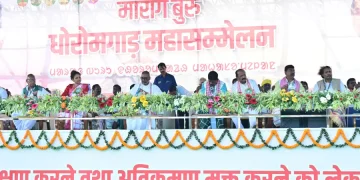
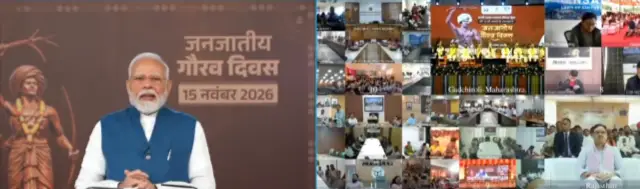
Virtually addressing the national Janjatiya Gaurav Diwas programme in the erstwhile Naxal hotbed of Gadchiroli, Maharashtra, on the 151st birth anniversary of tribal freedom fighter Dharti Aaba Bhagwan Birsa Munda, Modi said nearly 50 crore people had moved out of extreme poverty over the past 12–13 years and the country had become free from Naxalism and Maoist terror. He described both developments as major national achievements, with far-reaching consequences for tribal communities, which had borne a disproportionate share of the suffering caused by poverty, underdevelopment and extremist violence.
The Prime Minister’s address placed the transformation of formerly Naxal-affected tribal belts at the centre of the government’s development narrative. He said the impact of violence had extended beyond loss of lives to the denial of basic democratic rights, education and opportunities, particularly for tribal women and children. “Today, our tribal society, our Janjatiya community, is contributing enthusiastically to the progress of the nation,” he said, adding that the country must draw inspiration from Birsa Munda to fulfil the vision of a developed India.
The programme also marked a major development push, with 246 projects worth approximately Rs 3,000 crore inaugurated or having their foundation stones laid across different states. The initiatives cover education, healthcare, livelihoods, tribal heritage preservation and community infrastructure.
The project package comprises 173 inaugurations and 73 foundation-stone projects. Among those being inaugurated are 38 Eklavya Model Residential Schools (EMRS) and 100 multipurpose centres under the Pradhan Mantri Janjati Adivasi Nyaya Maha Abhiyan (PM-JANMAN). The centres are envisaged as local hubs for delivering government services and facilitating community activities. Other projects fall under PM-JANMAN and the Dharti Aaba Janjatiya Gram Utkarsh Abhiyan (DAJGUA).
The foundation stones were laid for 19 additional Eklavya Model Residential Schools, 12 Tribal Multipurpose Marketing Centres (TMMCs) and 42 other projects under the two flagship programmes. The new schools are intended to expand access to residential education for tribal children, while the marketing centres are expected to improve market access for tribal producers and provide stronger avenues for commercialising forest produce and traditional products.
The scale of the programme reflects the government’s attempt to combine social infrastructure with livelihood development in tribal-majority regions, officials said.
Tribal Heritage Gets National Recognition
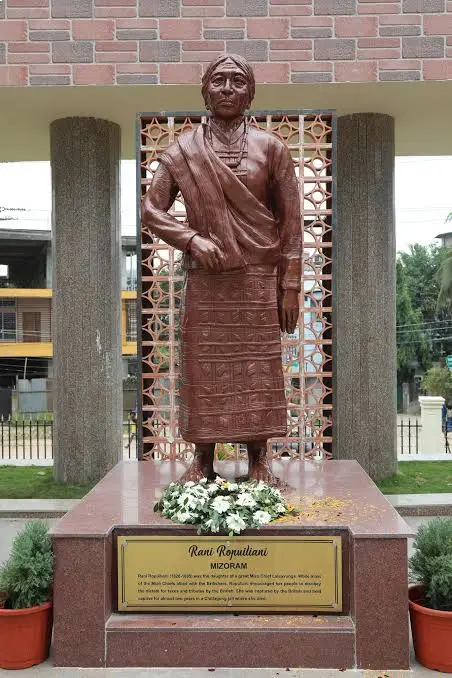
Among the prominent inaugurations was the Ropuiliani Tribal Freedom Fighter Museum at Aizawl in Mizoram, dedicated to the memory of a 19th-century Mizo chieftainess who resisted British colonial rule.
Ropuiliani occupies an important place in the history of Mizo resistance. Her opposition to British expansion and refusal to surrender her authority made her a symbol of courage and sacrifice. The museum is intended to preserve the historical legacy of Mizo freedom fighters while showcasing the region’s cultural traditions and heritage. Its inauguration carries significance beyond the creation of another cultural institution.
Tribal resistance movements across different parts of the country have often remained inadequately represented in mainstream historical narratives. Museums dedicated to indigenous freedom fighters can help address this gap by documenting local histories, preserving oral traditions and providing future generations with access to accounts of resistance that might otherwise remain marginalised.
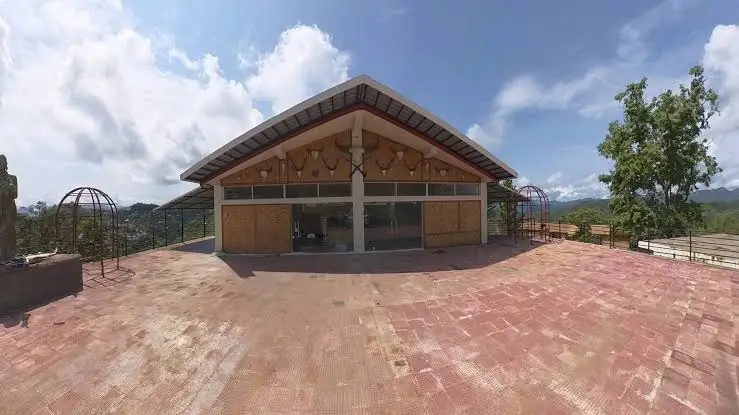
The Prime Minister also inaugurated the new Tribal Research Institute building at Itanagar in Arunachal Pradesh. Tribal Research Institutes play an important role in documenting indigenous languages, customs, knowledge systems, social practices and cultural heritage. Their effectiveness, however, depends on sustained research, community participation and the translation of documentation into meaningful policy and educational resources.
Focus On Bottom Rung
The Prime Minister said that development interventions had been directed towards regions that remained among the most deprived even decades after Independence. He referred to the allocation of more than Rs 1 lakh crore for PM-JANMAN and the Dharti Aaba Janjatiya Gram Utkarsh Abhiyan, describing the objective as ensuring that communities which received development benefits last would now receive them first. “Priority to the deprived, priority to the deprived, this has been our priority,” he said.
Modi cited the construction of more than four crore permanent houses, electrification of 18,000 villages, healthcare coverage of up to Rs 5 lakh under Ayushman Bharat and the establishment of more than 1.75 lakh Ayushman Arogya Mandirs as examples of interventions intended to improve access to essential services.
He also referred to collateral-free loans under the Pradhan Mantri Mudra Yojana and development interventions in more than 100 Aspirational Districts and over 500 Aspirational Blocks.
End Of Naxalism And The return Of Security
Another major theme of the Prime Minister’s address was that India had become free from Naxalism and Maoist terror.
Modi said that in 2014, nearly 125 districts were affected by Maoism and Naxalism, with hundreds of violent incidents taking place every year and thousands of people losing their lives. A substantial number of the victims, he said, belonged to tribal communities.
He argued that the violence had deprived tribal populations of fundamental rights and opportunities, with women and children among the worst affected.
“These very brothers and sisters of mine, had been left to their fate by the governments of that era. Their rights had been taken away,” he said, criticising previous governments for failing to protect communities living in areas affected by extremist violence. He alleged that Maoists had prevented tribal people from exercising their voting rights, abducted children and targeted women, while the administration remained ineffective.
The Prime Minister said the situation had changed following the decline of Maoist violence, allowing people in previously affected regions to participate more freely in education, employment and public life. “Now that Maoism and Naxalism have been defeated, those mothers, the mothers and sisters of my tribal community, are showering countless blessings upon us,” he said.
He referred to his recent Diwali visit to Bastar in Chhattisgarh, where he celebrated the festival with security personnel, and said that people in former Naxal-affected areas, including Gadchiroli, had experienced not only the illumination of lamps but also renewed hope.
Gadchiroli, which has experienced a prolonged Maoist insurgency, provides an important setting for this message. The district and surrounding parts of the Dandakaranya region have historically witnessed armed conflict, displacement, restrictions on movement and disruption of public services.
Birsa Munda And The Legacy Of Tribal Resistance
The Prime Minister also used the occasion to highlight the contribution of tribal communities to India’s freedom struggle, recalling several movements and personalities whose resistance against colonial rule shaped the country’s history.
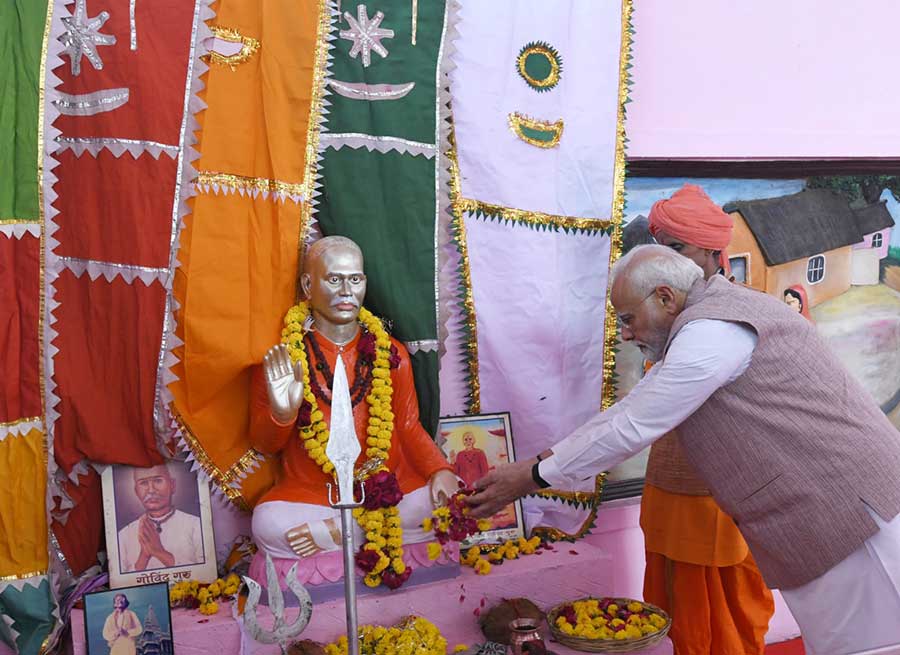
He referred to Tirot Sing’s struggle in the Khasi Hills, the Kol movement in Chota Nagpur and the Santhal rebellion led by Sidho and Kanho. He also recalled the sacrifices of Govind Guru’s followers at Mangarh, the courage of Rani Gaidinliu and Tantya Bhil, and the contributions of Alluri Sitarama Raju and Rani Durgavati.
Gadchiroli itself, he said, had a rich legacy of tribal resistance, with the heroic stories of Raghuji Bhangare, Bhagoji Naik and Veer Baburao Shedmake closely associated with the region.
Paying tribute to these leaders, Modi said the movements represented the tribal community’s longstanding resistance against injustice and exploitation.
However, he placed particular emphasis on Birsa Munda’s Ulgulan, the uprising of 1899–1900 against British colonial authority, land alienation and exploitation by landlords and moneylenders.
Modi recalled that the first observance of the day had taken place on November 15, 2021, and said it had since evolved into a nationwide celebration. Referring to last year’s 150th birth anniversary celebrations, he said more than two lakh programmes had been organised across the country, drawing participation from crores of citizens.
He described the growing recognition of tribal heroes and indigenous history as a change in India’s national consciousness.
“There was a time when many commemorative days and celebrations in our country were shaped through a foreign perspective. But today, India is proudly remembering its heritage, its history, and its heroes with indigenous self-respect,” he said.
The Prime Minister also referred to President Droupadi Murmu as a source of pride for the country, noting that the leadership of the nation was in the hands of a woman from the tribal community.
In a post on X marking the occasion, Modi paid homage to Birsa Munda and extended greetings to people across the country on Janjatiya Gaurav Diwas. “Dharti Aaba’s indomitable courage, struggle and sacrifice will continue to inspire every generation of the country to protect self-respect, freedom and rights,” he wrote in Hindi. He added that, inspired by Birsa Munda, the government was making every effort to ensure dignity, opportunities and prosperity for tribal communities, and called upon citizens to recognise their invaluable contribution to nation-building.
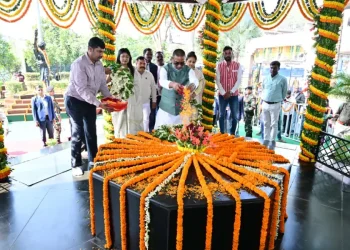
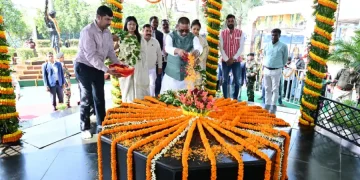
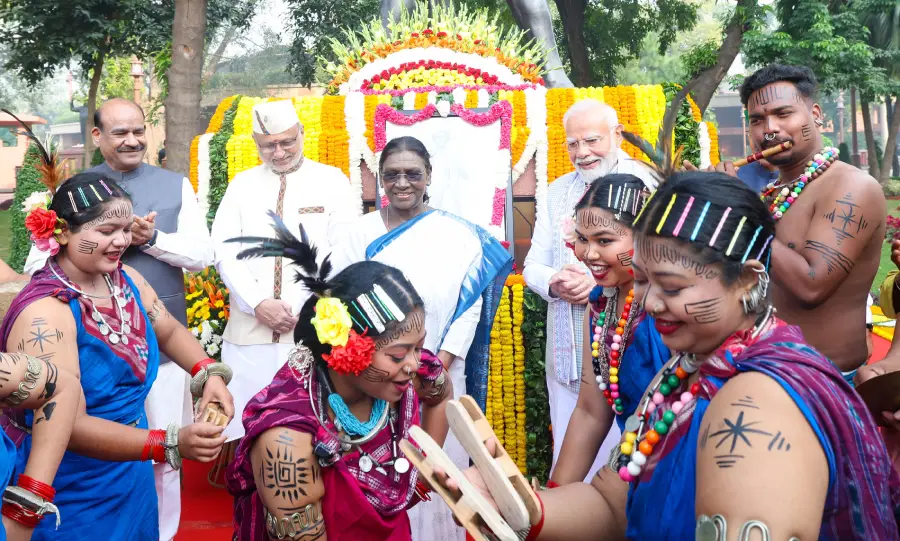
Earlier in the day, President Droupadi Murmu, Vice-President and Rajya Sabha Chairman C. P. Radhakrishnan, Modi, Lok Sabha Speaker Om Birla and other dignitaries paid floral tributes to Birsa Munda’s statue at Prerna Sthal in the Parliament complex.
Nationwide Celebrations Across States
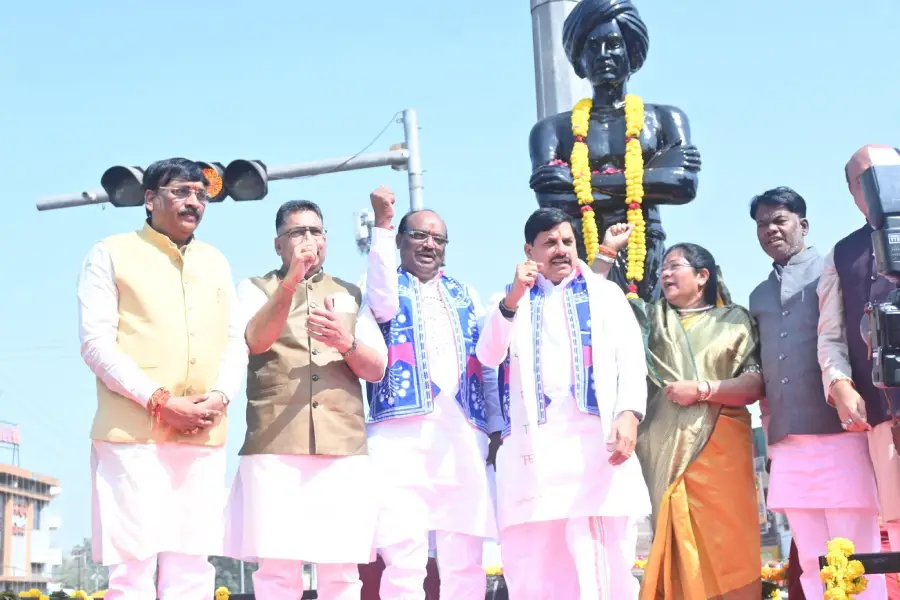
Madhya Pradesh marked the occasion with a three-day programme from November 14 to 16, with events planned in Jabalpur, Dhar, Jobat in Alirajpur district and Khandwa. The principal state-level function was held at Dahi in Dhar district, where Chief Minister Mohan Yadav inaugurated the Rs 1,353.18-crore Dahi Micro Lift Irrigation Project. The project is expected to provide irrigation to around 47,000 hectares across 126 villages in Dhar and Alirajpur, benefiting approximately 1.26 lakh farmers. Yadav also undertook a roadshow and was scheduled to interact with villagers and review the implementation of government welfare schemes. Prime Minister Modi addressed the gathering virtually.
In Chhattisgarh, the state-level Janjatiya Gaurav Diwas programme was organised at Dharamjaigarh in Raigarh district, with Chief Minister Vishnu Deo Sai participating alongside BJP national president Nitin Nabin. The celebrations formed part of an eight-day Janjatiya Gaurav Pakhwada being observed from November 11 to 18. The state government planned exhibitions showcasing welfare schemes, achievements and initiatives for tribal beneficiaries, including activities relating to housing and forest rights. The programme also featured the distribution of assistance under the Baiga Pujari Samman Nidhi Yojana and the Raj Mohini Devi Tendupatta Sangrahak Samajik Suraksha Yojana. The state’s wider programme included youth interactions, scholarship-related activities and tree plantation drives.
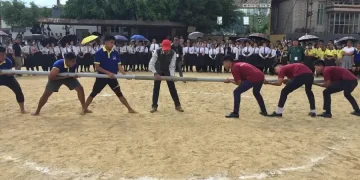
Gujarat observed Janjatiya Gaurav Saptah from November 12 to 18, with the principal state-level celebration held in Chhota Udepur on November 15. The programme featured a traditional procession involving around 10,000 participants, besides the distribution of Forest Rights certificates and assistance to beneficiaries. The week-long schedule also included a gathering of tribal professionals, a festival showcasing indigenous sports and a Mahila Sabha involving tribal women leaders.
In Assam, Janjatiya Gaurav Diwas was observed in Bajali district in the presence of Union Minister Sarbananda Sonowal. The programme featured tributes to Birsa Munda, Bagurumba and Jhumur cultural performances, and government department stalls showcasing welfare schemes and public services.