



• About
  • Editor & Writers
  • Contact
  • Sitemap
No Result
View All Result
Support Our Mission
Monday, September 28, 2026
The Indian Tribal
  • Home
  • Achievers
    • उपलब्धिकर्ता
  • Cuisine
    • खान पान
  • Health
    • स्वास्थ्य
  • Legal
    • कानूनी
  • Music
    • संगीत
  • News
    • Updates
    • खबरें
  • Sports
    • खेलकूद
  • Variety
    • विविध
  • हिंदी
    • All
    • आदिवासी
    • उपलब्धिकर्ता
    • कला और संस्कृति
    • कानूनी
    • खबरें
    • खान पान
    • खेलकूद
    • जनजाति
    • भारत
    • विविध
    • संगीत
    • संस्कृति
    • स्वास्थ्य
    The Indian Tribal

    मेघालय के आदिवासी समुदाय बचा रहे जंगल और जल स्रोत, बालपाक्रम राष्ट्रीय उद्यान में संरक्षण की नई मिसाल

    The Indian Tribal

    ओडिशा के नबरंगपुर में आदिवासी किसानों की मक्का खेती ने कैसे बदली तस्वीर

    The Indian Tribal

    छत्तीसगढ़ में आदिवासी ट्रैकर्स और AI मिलकर बचा रहें हैं दुर्लभ वन्यजीव

    The Indian Tribal

    हाशिए से राष्ट्रीय केंद्र तक: बदल रही है भारत के आदिवासी समुदायों की कहानी

    The Indian Tribal

    शिक्षा, वन उपज में मूल्य संवर्धन से आदिवासी समुदायों के आर्थिक सशक्तीकरण की नई राह

    The Indian Tribal

    मणिपुर में संघर्ष के बीच आदिवासी कोचों ने संभाली नई पीढ़ी के खिलाड़ियों की कमान

    The Indian Tribal

    ओडिशा के आदिवासी किसान ने 10 सालों में बचाईं धान की 100 से ज्यादा देशी किस्में

    The Indian Tribal

    आदिवासी समुदायों में पारंपरिक दाइयों की भूमिका क्यों अब भी कायम है, जब सरकार संस्थागत प्रसव पर दे रही है जोर?

  • Gallery
    • Videos
  • Latest News
The Indian Tribal
  • Home
  • Achievers
    • उपलब्धिकर्ता
  • Cuisine
    • खान पान
  • Health
    • स्वास्थ्य
  • Legal
    • कानूनी
  • Music
    • संगीत
  • News
    • Updates
    • खबरें
  • Sports
    • खेलकूद
  • Variety
    • विविध
  • हिंदी
    • All
    • आदिवासी
    • उपलब्धिकर्ता
    • कला और संस्कृति
    • कानूनी
    • खबरें
    • खान पान
    • खेलकूद
    • जनजाति
    • भारत
    • विविध
    • संगीत
    • संस्कृति
    • स्वास्थ्य
    The Indian Tribal

    मेघालय के आदिवासी समुदाय बचा रहे जंगल और जल स्रोत, बालपाक्रम राष्ट्रीय उद्यान में संरक्षण की नई मिसाल

    The Indian Tribal

    ओडिशा के नबरंगपुर में आदिवासी किसानों की मक्का खेती ने कैसे बदली तस्वीर

    The Indian Tribal

    छत्तीसगढ़ में आदिवासी ट्रैकर्स और AI मिलकर बचा रहें हैं दुर्लभ वन्यजीव

    The Indian Tribal

    हाशिए से राष्ट्रीय केंद्र तक: बदल रही है भारत के आदिवासी समुदायों की कहानी

    The Indian Tribal

    शिक्षा, वन उपज में मूल्य संवर्धन से आदिवासी समुदायों के आर्थिक सशक्तीकरण की नई राह

    The Indian Tribal

    मणिपुर में संघर्ष के बीच आदिवासी कोचों ने संभाली नई पीढ़ी के खिलाड़ियों की कमान

    The Indian Tribal

    ओडिशा के आदिवासी किसान ने 10 सालों में बचाईं धान की 100 से ज्यादा देशी किस्में

    The Indian Tribal

    आदिवासी समुदायों में पारंपरिक दाइयों की भूमिका क्यों अब भी कायम है, जब सरकार संस्थागत प्रसव पर दे रही है जोर?

  • Gallery
    • Videos
  • Latest News
No Result
View All Result
The Indian Tribal
No Result
View All Result
  • Home
  • Achievers
  • Cuisine
  • Health
  • Legal
  • Music
  • News
  • Sports
  • Variety
  • हिंदी
  • Gallery
  • Latest News
Support Our Mission
Home » The Indian Tribal / Variety » Tana Bhagat Movement: How A Tribal Resistance Challenged Colonial Rule And Social Hierarchies

Tana Bhagat Movement: How A Tribal Resistance Challenged Colonial Rule And Social Hierarchies

The history of India’s freedom struggle extends far beyond the familiar national narrative. The story of the Tana Bhagats opens a window into a lesser-known world of resistance, social change and contested ideas of community, Amit Kumar writes. Part-1

September 28, 2026
The Indian Tribal

Tana Bhagats

New Delhi

The history of India’s freedom struggle extends far beyond the conventional narrative of the national movement. Across the country, tribal and peasant communities were also responding to the political, social and economic changes brought by colonial rule, giving rise to numerous movements of resistance.

The Tana Bhagat movement was one such significant expression of indigenous resistance. Emerging from the Oraon community of the Chotanagpur region of British India, particularly in present-day Jharkhand, the movement reflected the complex ways in which tribal society responded to changes in land, authority, religion and everyday life.

Origins, Society And Agricultural Reforms

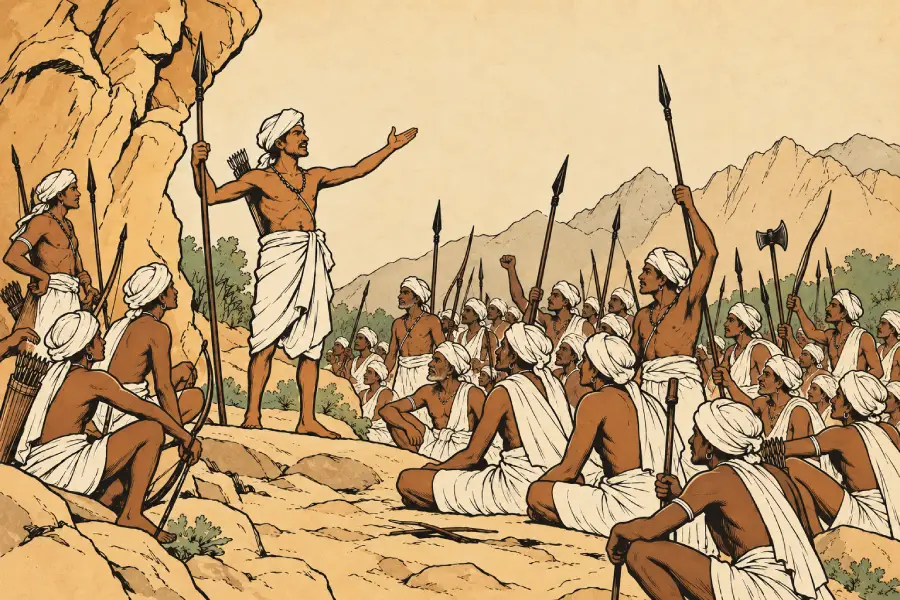
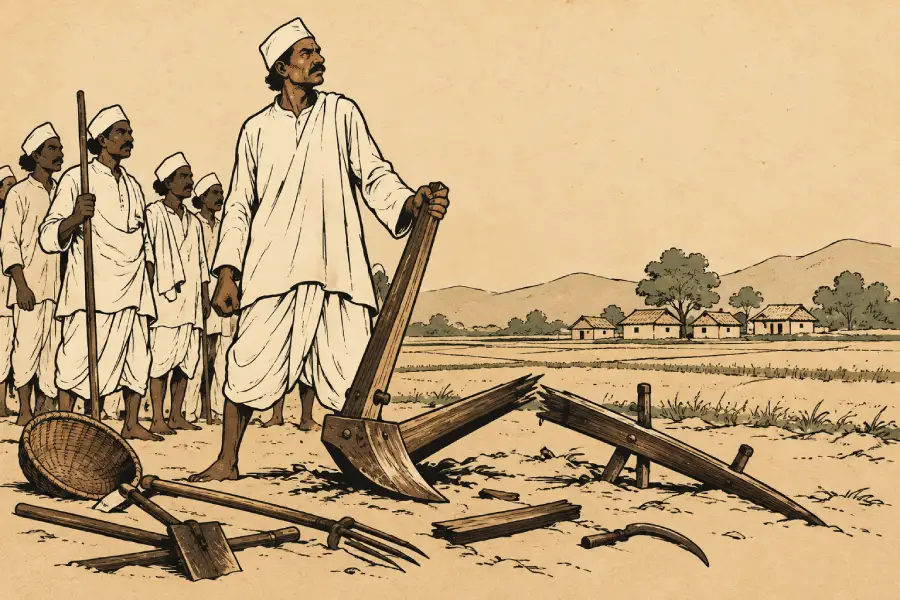
The Tana Bhagat movement began in 1914, when Jatra Oraon of Gumla proclaimed that he had received a divine message from Dharmes, the God of the Oraons, to initiate a new religion in the form of the Tana sect. The new sect sought to free the community from social practices that its followers regarded as evils, including belief in ghosts, animal sacrifice and liquor consumption. The Tana Bhagats asserted their independence from the established social and religious order. They did not depend on Oraon priests or the Mahto, the village representative, and rejected the established ways of worshipping the deities of the Oraon religion.

Jatra Bhagat also claimed that those who did not follow his message would be struck dumb. The movement soon took on a strong social and economic dimension. The Tana Bhagats opposed the zamindars by refusing to work as agricultural labourers, breaking ploughs and declining to pay rent to the British government or local rajas. The disciples were mobilised around the belief that God would provide for them: a single piece of rice would fill their stomachs and a small tract of land would be sufficient for the entire community. As part of this process of purification and rejection of the existing order, followers of the Tana sect were also asked to discard household possessions and throw agricultural tools and ornaments into the river.

The movement’s opposition to the prevailing order, however, cannot be separated from the deeper changes taking place within Oraon society. British authorities misunderstood the community’s internal hierarchies and, in the process, contributed to further differentiation among its members. They directly promoted the interests of the Bhuinhars, the dominant group in Oraon society, by assigning them administrative responsibilities.

These developments were opposed by the disciples of Jatra Bhagat, whose ideas were closely connected to the community’s earlier relationship with shifting agriculture. As settled agriculture expanded, they saw not only a transformation of their traditional way of life but also a threat to their future. The introduction of new land laws and the distribution of land to the elite further intensified their grievances. Together, these changes created an environment in which the Tana Bhagat movement took shape.

The Tana protest was therefore directed not only at colonial authority but also at traditional leadership within the Oraon community. It challenged established hierarchies and was linked to questions surrounding ritual practices, agricultural festivities and the return to shifting cultivation. In this sense, the movement represented a wider challenge to the hierarchical structure that had developed within the landed Oraon community.

Colonial Intervention And Changing Agrarian Order

The arrival of the British in the Chotanagpur region brought significant changes to the existing rural order and created new conditions for resistance. In their efforts to establish local administrative and judicial structures, the colonial authorities introduced new hierarchies within the community. In 1809, under the magistrate of Ramgarh, a police station was established, an institution that stood in contrast to the traditional customs of the community.
The Indian Tribal

The British also sought to establish a closely interconnected system linking land, capital and markets in the region. In 1823, excise duties were imposed as an important source of revenue. By 1833, further administrative reforms had taken place, while the appointment of a Governor General and subsequent measures to strengthen administrative control and revenue collection further transformed the region.

These changes had consequences for the relationship between landholders and tenants. They contributed to growing conflicts between zamindars and tenants, while new administrative and legal mechanisms increasingly brought land and customary rights within the colonial system.

The Bhuinhari Act II was passed in 1869, followed by a British survey conducted between 1869 and 1880. The survey was subsequently extended to the Ranchi region between 1902 and 1910, while the Chotanagpur Tenancy Act was finalised in 1908. The cumulative effect of these administrative and legal changes was a rise in land prices, land transactions and registered mortgages. This, in turn, created opportunities for traders and moneylenders — including Mahajans, Sahus, Banias and Zamindars — to invest in land and participate in tenancy markets.

While zamindars had long been involved in the land market, Sahus and Banias emerged as particularly prominent participants in the land and credit markets. As professional moneylenders and village merchants, they increasingly became part of an economic system that was reshaping relations over land and indebtedness.

Land, Power And The Bhuinhari Divide

The transformation of the land system also brought existing customary rights into greater conflict with the emerging colonial structure. Existing land rights, including manjhihas, the tenures of landlords, and Rajhas, the tenancies of ryots, reflected older customary and community rights over land. Although these rights had been recognised, land remained under the control of the Bhuinhars, who also served as informants for the colonial government.

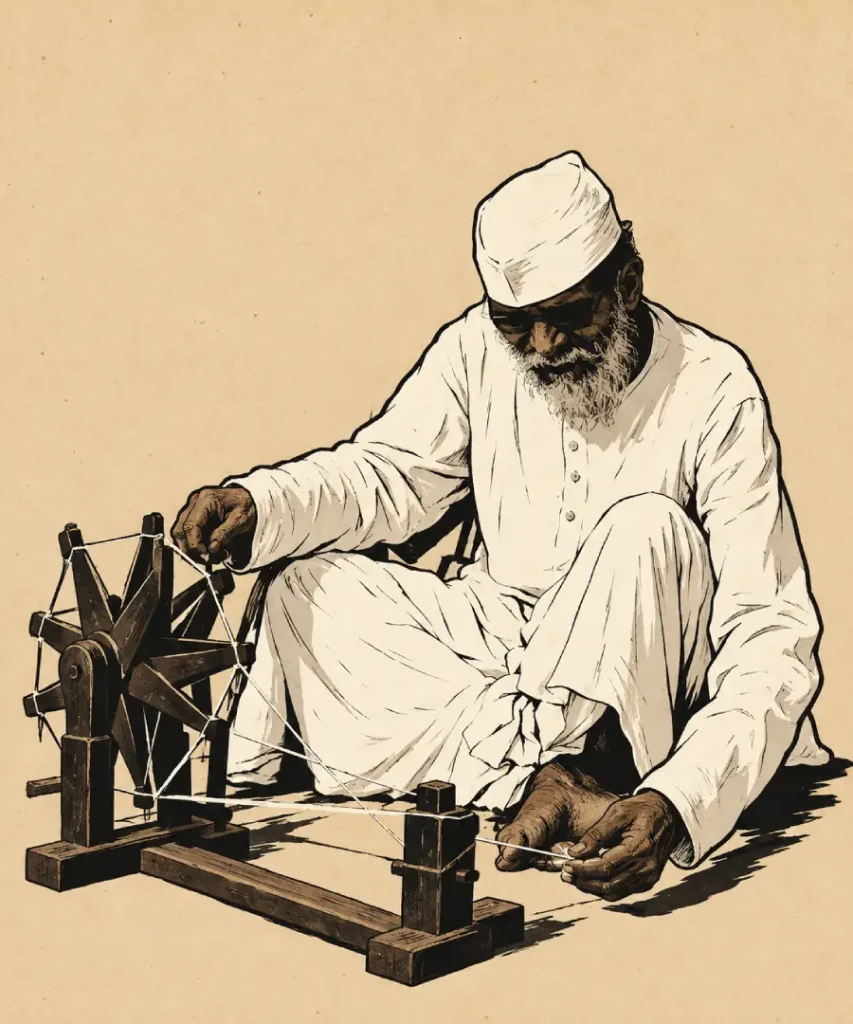
Traditionally, vacant lands were under the control of the Mahto and Pahan belonging to the Bhuinhar community, who settled disputes relating to raiyati lands. The British consequently viewed them as the natural leaders of the Oraon community. From the colonial perspective, this contributed to the perception of Chotanagpur as a two-tiered society.
The Indian Tribal
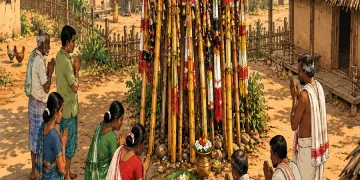
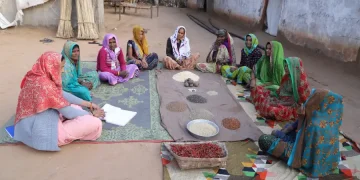
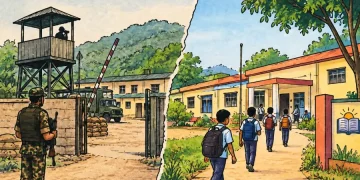
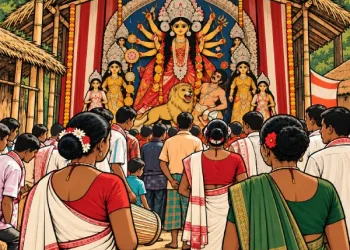
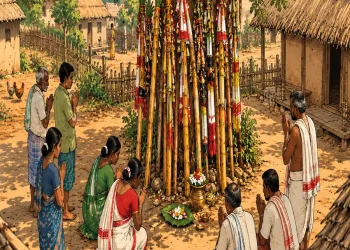
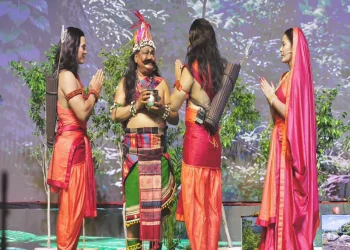
(All Pics – AI Generated)

British intervention in this existing social structure gave the Bhuinhars greater opportunities to assert their claims over land, blood and family. As land became increasingly valuable for economic security, the Bhuinhars also attempted to bring more land under their control.

The resulting struggle over land rights deepened divisions within Oraon society between Bhuinaris and non-Bhuinaris. The Tana Bhagats, who belonged to the non-Bhuinari group as non-occupants and under-ryots, opposed the Bhuinari settlement and other groups exercising control over land rights.

Thus, what began as a movement questioning religious practices and social authority increasingly became intertwined with the struggle over land and customary rights. The emerging conflict took new forms as Tanas discarded household life and agricultural land and moved towards the Ranchi, Hazaribagh and Palamau regions while continuing to practise their faith and traditions.

(Amit Kumar is a political analyst and a Post Graduate Member of the Royal Historical Society, London. Views expressed are personal.)

PART-2 to continue…

Root Woot | Online Puja Samagri Root Woot | Online Puja Samagri Root Woot | Online Puja Samagri

Support Our Mission

The Indian Tribal

For the past four-and-a-half years, we have travelled across India to bring to our readers the ‘Unknown, Lesser-Known Tribal Life’, which rarely finds space in the mainstream media.

We have done this without external funding, driven only by our conviction that India’s tribal heritage deserves to be documented with dignity, depth and authenticity.

If you like our work, and if it has informed, inspired or helped you understand India’s tribal/indigenous communities better, we invite you to become a part of this mission.

Your contribution will not merely fund a news platform. It will help preserve voices, traditions, histories and aspirations that form an invaluable part of India’s identity.

Because when an untold story is documented, a piece of India’s heritage is preserved forever.

Thanks
Editor

In Numbers

49.4 %
Female Literacy rate of Scheduled Tribes

Update

NCST undertakes review in Karnataka

The National Commission for Scheduled Tribes (NCST) on Thursday undertook a comprehensive review of the implementation of constitutional safeguards, welfare measures and development programmes for Scheduled Tribes in Karnataka at a review meeting. The meeting was chaired by Antar Singh Arya, Chairperson, NCST and attended by Jatothu Hussain, Member, Amit Nirmal, Joint Secretary, NCST, senior officers of the Commission, Karnataka’s Chief Secretary, Director General of Police, Additional Chief Secretaries, Principal Secretaries and Secretaries of various departments. The review was undertaken on the basis of a structured and detailed questionnaire circulated by the Commission in advance, the information and data furnished by the Government of Karnataka, grievances and petitions received from members of the Scheduled Tribe communities, feedback received prior to the review meeting, and observations arising from field visits previously undertaken by the Commission in Karnataka.
The Indian Tribal
Adivasi

Karma Puja Across India: How Oraon, Munda, Santal, Ho, Kharia And Other Communities Keep The Tradition Alive

by The Indian Tribal
September 22, 2026

The Karam branch may be the common symbol, but there is no single Karam ceremony. Tribal communities have shaped the festival around their own landscapes, languages, agricultural cycles and oral traditions, Geetisri Patri reports. PART 2

The Indian Tribal

Karam Parab: The Sacred Tree, Two Brothers And A Festival Connecting Forest, Farm, Community

September 20, 2026
The Indian Tribal

Tiger Conservation In India: How Tribal Displacement And Tourism Are Reshaping The Debate

September 17, 2026
The Indian Tribal

ओडिशा के नबरंगपुर में आदिवासी किसानों की मक्का खेती ने कैसे बदली तस्वीर

September 15, 2026
The Indian Tribal

The Ganesha We Know, The Stories We Miss

September 14, 2026
The Indian Tribal

छत्तीसगढ़ में आदिवासी ट्रैकर्स और AI मिलकर बचा रहें हैं दुर्लभ वन्यजीव

September 12, 2026
Previous Post

मेघालय के आदिवासी समुदाय बचा रहे जंगल और जल स्रोत, बालपाक्रम राष्ट्रीय उद्यान में संरक्षण की नई मिसाल

Top Stories

The Indian Tribal
News

मेघालय के आदिवासी समुदाय बचा रहे जंगल और जल स्रोत, बालपाक्रम राष्ट्रीय उद्यान में संरक्षण की नई मिसाल

September 26, 2026
The Indian Tribal
Adivasi

How Tribal Haats In Odisha Are Being Used to Improve Nutrition

September 24, 2026
The Indian Tribal
Adivasi

Karma Puja Across India: How Oraon, Munda, Santal, Ho, Kharia And Other Communities Keep The Tradition Alive

September 22, 2026
Load More
  • About Us
  • Editor & Writers
  • Contact
  • Redressal
  • Copyright Policy
  • Privacy Policy And Terms Of Use
  • Disclaimer
  • Sitemap

  • Achievers
  • Cuisine
  • Health
  • India
  • News
  • Legal
  • Music
  • Sports
  • Trending
  • Chhattisgarh
  • Delhi
  • Gujarat
  • Jammu & Kashmir
  • Jharkhand
  • Kerala
  • Madhya Pradesh
  • Maharashtra
  • North East
  • Arunachal Pradesh
  • Assam
  • Manipur
  • Meghalaya
  • Mizoram
  • Nagaland
  • Sikkim
  • Tripura
  • Odisha
  • Telangana
  • West Bengal
  • Political News
  • Variety
  • Art & Culture
  • Entertainment
  • Adivasi
  • Tribal News
  • Scheduled Tribes
  • हिंदी
  • उपलब्धिकर्ता
  • कानूनी
  • खान पान
  • खेलकूद
  • स्वास्थ्य
  • संस्कृति
  • संगीत
  • विविध
  • कला और संस्कृति
  • खबरें
  • असम
  • अरुणाचल प्रदेश की ताज़ा ख़बरें
  • ओडिशा
  • केरल
  • गुजरात
  • छत्तीसगढ़
  • जम्मू और कश्मीर
  • झारखंड
  • तेलंगाना
  • दिल्ली
  • नॉर्थईस्ट
  • पश्चिम बंगाल
  • मध्य प्रदेश
  • महाराष्ट्र
  • त्रिपुरा
  • नागालैंड
  • मणिपुर
  • मिजोरम की ताज़ा ख़बरें
  • मेघालय
  • सिक्किम की ताज़ा ख़बरें
  • राजस्थान

About Us

The Indian Tribal is India’s first bilingual (English & Hindi) digital journalistic venture dedicated exclusively to the Scheduled Tribes. The ambitious, game-changer initiative is brought to you by Madtri Ventures Pvt Ltd (www.madtri.com). From the North East to Gujarat, from Kerala to Jammu and Kashmir — our seasoned journalists bring to the fore life stories from the backyards of the tribal, indigenous communities comprising 10.45 crore members and constituting 8.6 percent of India’s population as per Census 2011. Unsung Adivasi achievers, their lip-smacking cuisines, ancient medicinal systems, centuries-old unique games and sports, ageless arts and crafts, timeless music and traditional musical instruments, we cover the Scheduled Tribes community like never-before, of course, without losing sight of the ailments, shortcomings and negatives like domestic abuse, alcoholism and malnourishment among others plaguing them. Know the unknown, lesser-known tribal life as we bring reader-engaging stories of Adivasis of India.

Follow Us

All Rights Reserved

© 2026 Madtri Ventures [P] Ltd.

No Result
View All Result
  • Home
  • Achievers
  • Cuisine
  • Health
  • Health
  • Legal
  • Music
  • News
  • Sports
  • Variety
  • हिंदी
    • उपलब्धिकर्ता
    • खान पान
    • कानूनी
    • खेलकूद
    • खेलकूद
    • संगीत
    • संगीत
    • स्वास्थ्य
    • स्वास्थ्य
    • विविध
  • Gallery
  • Videos

© 2026 Madtri Ventures [P] Ltd.