







Bhopal/New Delhi
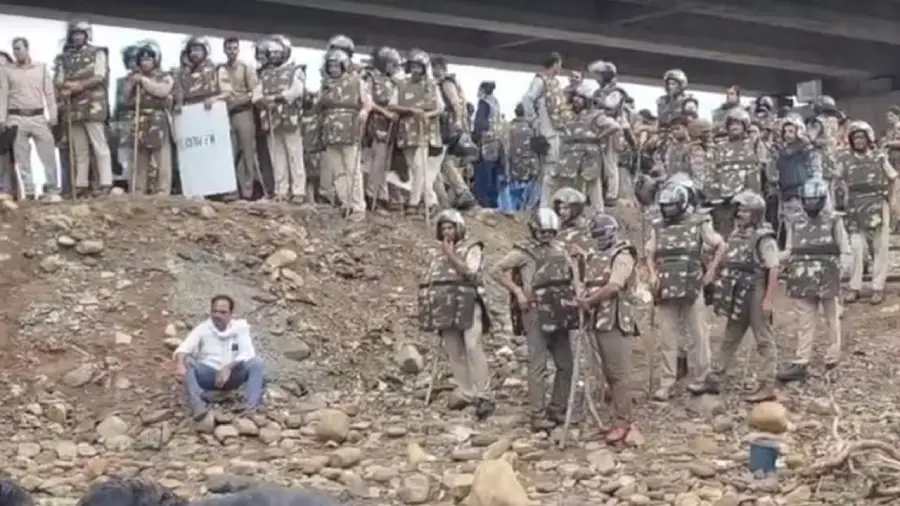
The over-a-fortnight-long protest by tribal farmers and other project-affected residents against the Ken-Betwa Link Project and other development works in Madhya Pradesh came to an abrupt end early on Sunday after police cleared the demonstration site along the Barana river near Kupi village in Chhatarpur district.
The action has triggered a fresh dispute, with protesters alleging that several participants, including movement leader Amit Bhatnagar, were detained, while the police insisted that no arrests or custodial detentions took place.
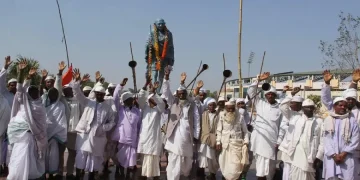
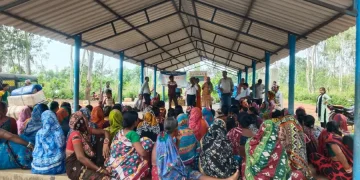
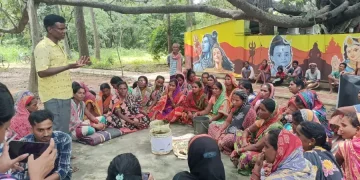
The agitation, which began its second round on July 3, centred on demands for fair compensation, rehabilitation and legal safeguards for families displaced by the Ken-Betwa Link Project as well as the Majhgaon and Runjh irrigation projects. Demonstrators, many of them tribal women, had organised a series of symbolic protests, including jal satyagraha, chita andolan and a symbolic faansi satyagraha, to press their demands.
Bhatnagar had been on an indefinite hunger strike for nearly two weeks. Protesters said he was demanding action over alleged irregularities in the implementation of the river-linking project and insisting that environmental norms, land acquisition laws and constitutional safeguards for affected communities be followed.
According to the administration, a heavy police contingent reached the protest site before sunrise on Sunday and removed demonstrators from beneath an under-construction bridge over the Barana river. Officials said the location posed a safety risk because construction work was underway and there was a possibility of accidents, particularly with changing river conditions.

Additional Superintendent of Police Aditya Patle rejected allegations that protesters had been arrested or taken into custody. “We have neither arrested nor detained any protester,” Patle said. He added that those participating in the agitation were transported safely by buses to their respective villages. Protesters from Panna district were sent back there, while those from Chhatarpur and neighbouring areas were dropped at their homes, he said.
Patle also said Bhatnagar, who had remained on hunger strike for the past 14 days, was taken to the district hospital for a medical examination because of concerns over his deteriorating health.
However, protest organisers presented a different account of the operation.
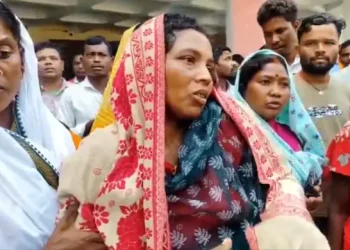
In a video statement, protest leader Divya Ahirwar alleged that police personnel arrived at the site in large numbers from around 5 am and detained Bhatnagar and other demonstrators before he could address the media.
“Our movement leader Amit Bhatnagar was going to expose alleged corruption of Rs 400 crore in the Ken-Betwa project today. But from 5 am onwards, the police administration arrested all our protesters and Amit Bhatnagar from the protest site,” she claimed. Ahirwar further alleged that Chief Minister Mohan Yadav had held a meeting with officials from Panna and Chhatarpur districts to suppress the movement.
“If anything happens to Amit Bhatnagar, or if even one of our protesters suffers so much as a scratch, the administration will be responsible,” she said.
The demonstrators also maintained that assurances made by the administration during discussions in April had not been fulfilled. They accused authorities of failing to ensure lawful land acquisition, proper rehabilitation and the constitutional rights of project-affected families.
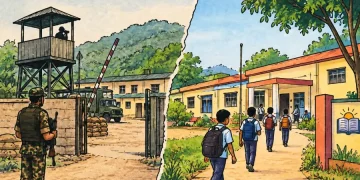
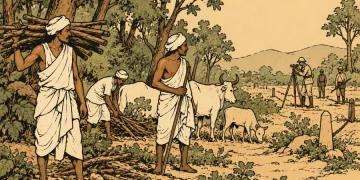
Before the protest was dispersed, Bhatnagar had alleged that people displaced by the Ken-Betwa Link Project, along with those affected by the Majhgaon and Runjh irrigation schemes, had been denied justice. He claimed many families had lost agricultural land, forests, water resources, livelihoods and cultural identity, while some had faced false criminal cases, illegal eviction, electricity disconnections and demolition of schools. He demanded that the administration stop intimidating villagers and publicly display the list of project-affected families in every affected village.
The administration has rejected allegations of wrongdoing and maintains that all procedures are being followed in accordance with the law. Officials have also described the Ken-Betwa Link Project as a nationally important initiative that will improve irrigation, drinking water supply and overall development in the drought-prone Bundelkhand region.
The Ken-Betwa Link Project is India’s first river interlinking project under the National Perspective Plan. It aims to transfer surplus water from the Ken River to the Betwa river to strengthen irrigation and drinking water availability across parts of Madhya Pradesh and Uttar Pradesh, regions that have long grappled with recurring drought.
While governments have projected it as a landmark infrastructure initiative, the project has also generated sustained opposition over displacement, environmental safeguards and rehabilitation, illustrating the continuing challenge of balancing large-scale development with the rights of indigenous and rural communities.