




• About
  • Editor & Writers
  • Contact
  • Sitemap
No Result
View All Result
Support Our Mission
Saturday, August 8, 2026
The Indian Tribal
  • Home
  • Achievers
    • उपलब्धिकर्ता
  • Cuisine
    • खान पान
  • Health
    • स्वास्थ्य
  • Legal
    • कानूनी
  • Music
    • संगीत
  • News
    • Updates
    • खबरें
  • Sports
    • खेलकूद
  • Variety
    • विविध
  • हिंदी
    • All
    • आदिवासी
    • उपलब्धिकर्ता
    • कला और संस्कृति
    • कानूनी
    • खबरें
    • खान पान
    • खेलकूद
    • जनजाति
    • भारत
    • विविध
    • संगीत
    • संस्कृति
    • स्वास्थ्य
    The Indian Tribal

    आदिवासी महोत्सव में झारखंड के विद्यार्थियों को मिलेगा फिल्म निर्माण सीखने का अवसर

    The Indian Tribal

    ‘ट्री ऑफ लाइफ’ सखुआ: पत्तों से रोजगार, बीजों से उद्योग, राल से औषधि और संरक्षण में छिपा भविष्य

    The Indian Tribal

    रांची से उठेगी सखुआ क्रांति: क्यों है सखुआ झारखंड की संस्कृति, आस्था और प्रकृति का प्रहरी?

    The Indian Tribal

    दिशोम गुरु शिबू सोरेन की विरासत ही झारखंड की दिशा: पहली पुण्यतिथि पर बोले हेमंत

    The Indian Tribal

    ओडिशा के PVTGs की अनूठी विवाह व्यवस्था: वधू मूल्य नहीं, सामाजिक साझेदारी का प्रतीक

    The Indian Tribal

    झारखंड के पलामू टाइगर रिजर्व में आदिवासी परंपराएं बनीं बाघ संरक्षण की नई ताकत

    The Indian Tribal

    झारखंड को मिलेगा अपना फिल्म एंड टेलीविजन इंस्टीट्यूट, SRFTI के साथ हुआ समझौता

    The Indian Tribal

    ओडिशा के आदिवासी किसान की देशी धान की विलुप्त होती किस्मों को बचाने का मिशन

  • Gallery
    • Videos
  • Latest News
The Indian Tribal
  • Home
  • Achievers
    • उपलब्धिकर्ता
  • Cuisine
    • खान पान
  • Health
    • स्वास्थ्य
  • Legal
    • कानूनी
  • Music
    • संगीत
  • News
    • Updates
    • खबरें
  • Sports
    • खेलकूद
  • Variety
    • विविध
  • हिंदी
    • All
    • आदिवासी
    • उपलब्धिकर्ता
    • कला और संस्कृति
    • कानूनी
    • खबरें
    • खान पान
    • खेलकूद
    • जनजाति
    • भारत
    • विविध
    • संगीत
    • संस्कृति
    • स्वास्थ्य
    The Indian Tribal

    आदिवासी महोत्सव में झारखंड के विद्यार्थियों को मिलेगा फिल्म निर्माण सीखने का अवसर

    The Indian Tribal

    ‘ट्री ऑफ लाइफ’ सखुआ: पत्तों से रोजगार, बीजों से उद्योग, राल से औषधि और संरक्षण में छिपा भविष्य

    The Indian Tribal

    रांची से उठेगी सखुआ क्रांति: क्यों है सखुआ झारखंड की संस्कृति, आस्था और प्रकृति का प्रहरी?

    The Indian Tribal

    दिशोम गुरु शिबू सोरेन की विरासत ही झारखंड की दिशा: पहली पुण्यतिथि पर बोले हेमंत

    The Indian Tribal

    ओडिशा के PVTGs की अनूठी विवाह व्यवस्था: वधू मूल्य नहीं, सामाजिक साझेदारी का प्रतीक

    The Indian Tribal

    झारखंड के पलामू टाइगर रिजर्व में आदिवासी परंपराएं बनीं बाघ संरक्षण की नई ताकत

    The Indian Tribal

    झारखंड को मिलेगा अपना फिल्म एंड टेलीविजन इंस्टीट्यूट, SRFTI के साथ हुआ समझौता

    The Indian Tribal

    ओडिशा के आदिवासी किसान की देशी धान की विलुप्त होती किस्मों को बचाने का मिशन

  • Gallery
    • Videos
  • Latest News
No Result
View All Result
The Indian Tribal
No Result
View All Result
  • Home
  • Achievers
  • Cuisine
  • Health
  • Legal
  • Music
  • News
  • Sports
  • Variety
  • हिंदी
  • Gallery
  • Latest News
Support Our Mission
Home » The Indian Tribal / Health » Why Tribal Midwives Still Lead Childbirths Despite Push For Institutional Deliveries

Why Tribal Midwives Still Lead Childbirths Despite Push For Institutional Deliveries

As we mark the International Day of the World's Indigenous Peoples (on August 9), themed "Honouring Indigenous Midwives: Safeguarding Life and Well-being", Archana Jyoti dishes out two recent studies revealing why traditional midwives remain indispensable in tribal communities

August 8, 2026
The Indian Tribal

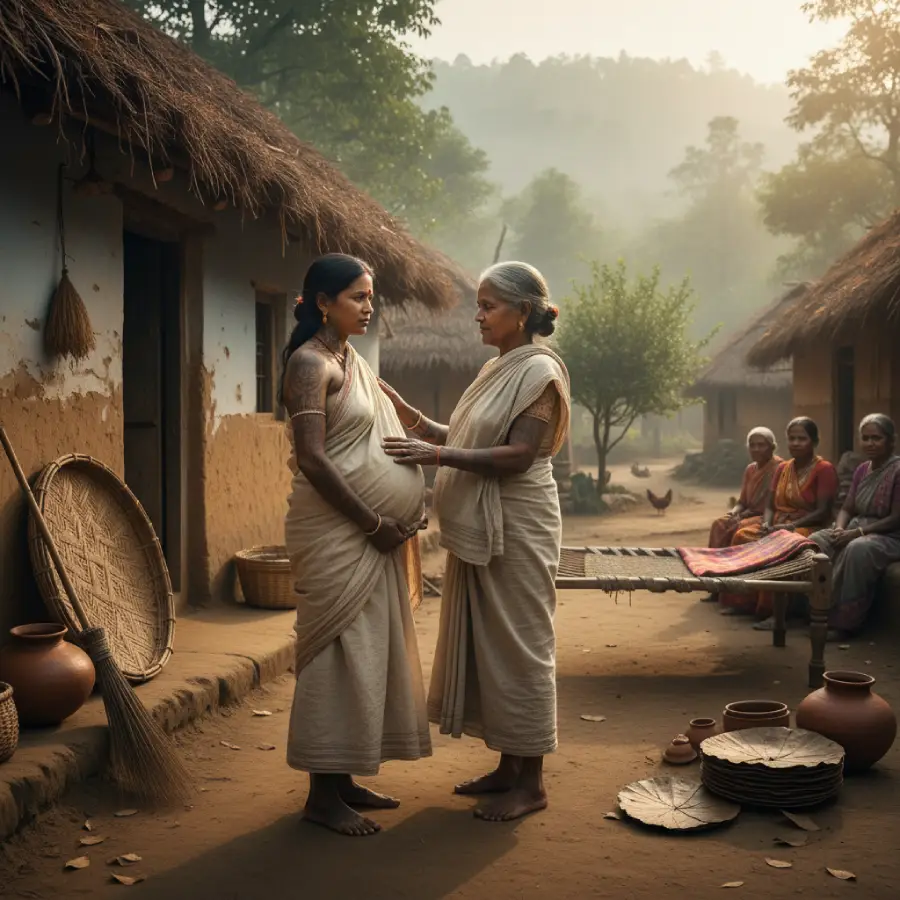
A Midwife Counsels An Expecting Mother

New Delhi

Despite decades of maternal health programmes promoting institutional deliveries, traditional childbirth practices continue to play a central role among tribal communities, with two recent studies from Odisha and Chhattisgarh highlighting that cultural beliefs, poverty, geographical isolation and limited access to healthcare continue to influence where and how tribal women give birth.

A 2026 study from Odisha’s Kalahandi district and a 2024 ethnographic study among the Baiga, one of India’s Particularly Vulnerable Tribal Groups (PVTGs), together suggest that while government interventions have expanded maternal healthcare, policies need to become more culturally responsive by strengthening primary healthcare systems and recognising the role of trusted community-based birth attendants.

The latest study, titled “Condition of Maternal Health and Childbirth Process among Tribal Women: A Study of Kalahandi District in the Post-Independent State of India”, was published in State and Society in India: A Historical Retrospect (CRC Press, Taylor & Francis Group). Conducted by Nalinikanta Rana of Maa Manikeshwari University and Sarita Bag, the research examined maternal healthcare among tribal women in four remote villages of Lanjigarh block in Odisha’s Kalahandi district.

Based on ethnographic fieldwork carried out between November 2024 and February 2025, the researchers interviewed 100 tribal women aged 17 to 45 years, traditional birth attendants or midwives (daai in Hindi), healthcare workers and new mothers to understand pregnancy, childbirth and postnatal care practices in one of the country’s most underserved tribal regions.

Although India has considerably reduced maternal mortality through programmes such as the Janani Suraksha Yojana and Janani Shishu Suraksha Karyakram, the study found that tribal women continue to face multiple barriers in accessing safe maternal healthcare.
The Indian Tribal
At A Glance

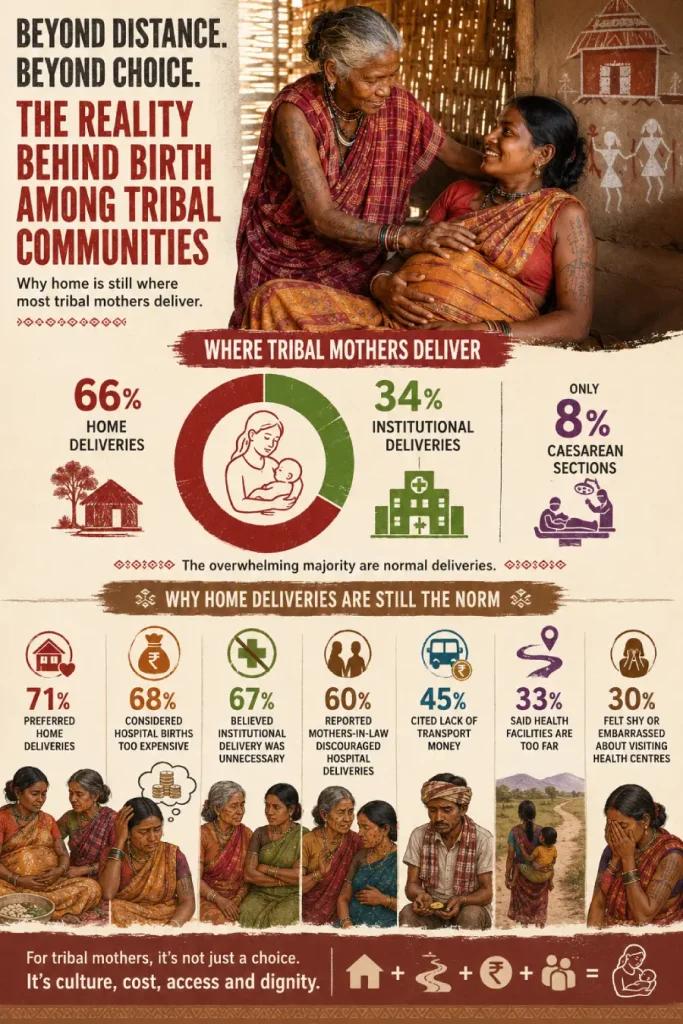
The findings reveal that 66 per cent of deliveries still take place at home, while only 34 per cent occur in healthcare institutions. Caesarean sections accounted for just eight per cent of births, with the overwhelming majority being normal deliveries.

The reasons extend beyond the availability of hospitals. About 71 per cent of women preferred home deliveries, 68 per cent considered hospital births too expensive, while 67 per cent believed institutional delivery was unnecessary. Family influence also played a major role, with 60 per cent reporting that mothers-in-law discouraged hospital deliveries. Nearly 45 per cent cited lack of transport money, 33 per cent said health facilities were too far away, and 30 per cent felt shy or embarrassed about visiting health centres.

The researchers argue that these findings underline the need for interventions that address behavioural, cultural and social barriers alongside improvements in healthcare infrastructure.

Socio-economic conditions further compound maternal health risks. Nearly 87 per cent of households earned less than Rs10,000 per month, reflecting widespread poverty. Most women depended on daily wage labour (37 per cent), agriculture (36 per cent) or forest-based livelihoods (27 per cent), leaving little financial flexibility for transport, nutrition or medical care during pregnancy.

Education levels also remained low. Although 68 per cent had attended school, nearly one-third were illiterate and only one per cent had received university education. Limited education, the researchers observed, affects awareness regarding antenatal care, nutrition, institutional delivery and newborn health.

The study also found that early motherhood remains common, with more than half of women giving birth between the ages of 21 and 25 years, while nearly one-fifth became mothers between 17 and 20 years.

Importantly, the researchers noted that traditional daais continue to enjoy deep trust within tribal communities. Experienced village daais often remain the first choice during pregnancy and childbirth because they share the community’s language, customs and belief systems, particularly where healthcare facilities are distant or difficult to access.

However, while traditional support systems provide emotional reassurance and continuity of care, deliveries without skilled birth attendants increase risks during obstetric emergencies.

The authors concluded that reducing maternal mortality in tribal regions requires more than expanding hospitals. Strengthening primary healthcare, improving transport, ensuring trained personnel in remote areas and designing culturally appropriate awareness programmes are equally important.

The Odisha findings closely echoed an earlier 2024 ethnographic study conducted among the Baiga tribe in Chhattisgarh’s Kabirdham district, which explored the continuing role of traditional midwives in tribal maternal healthcare.

Conducted by Abhishek Yadav and Dr. Shailendra Kumar of the School of Studies in Anthropology, Pt. Ravishankar Shukla University, Raipur, the study documented the experiences of four traditional Baiga daais, one government-appointed Mitanin and 10 tribal women.
The Indian Tribal
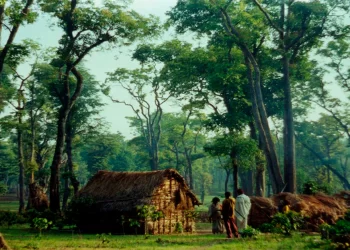
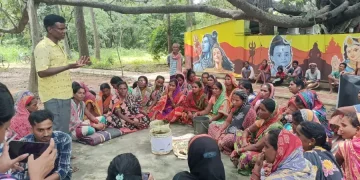
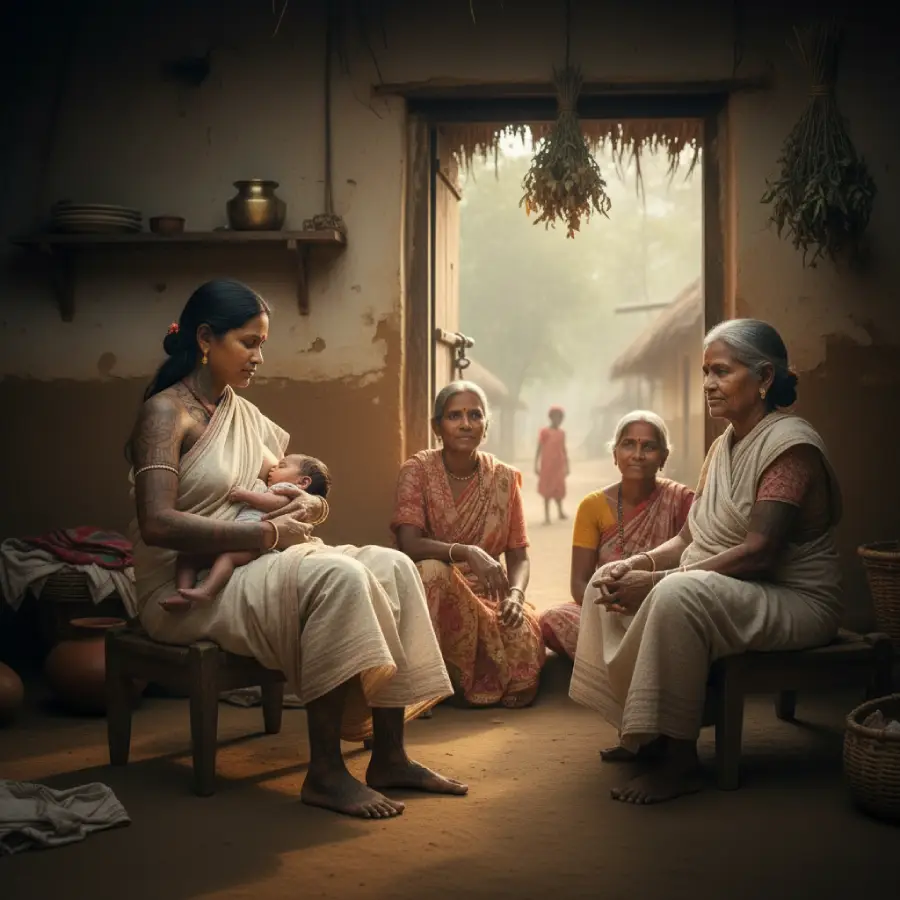
Post-Natal Discussions On (Pics – AI Generated)

Unlike the Kalahandi study, which primarily examined barriers to institutional healthcare, the Baiga research focused on the continuing relevance of indigenous midwives and the absence of any systematic documentation of their contribution across India.

The researchers pointed out that India has no national database documenting traditional birth attendants working in tribal regions. Consequently, policymakers lack basic information on how many such midwives exist, where they continue to assist deliveries, or how their knowledge might complement the formal healthcare system.

The study argues that this represents a significant policy gap, particularly since many tribal communities continue to rely on these women for maternal care.

According to the researchers, Baiga daais possess knowledge acquired over generations through observation and apprenticeship within families rather than formal medical education. They assist women during pregnancy, childbirth and the postnatal period, use locally available medicinal plants and provide emotional support rooted in cultural traditions.

Pregnancy and childbirth, the study notes, are viewed within Baiga society not merely as medical events but as social, cultural and spiritual experiences. Traditional midwives therefore perform functions extending beyond delivery, including rituals, postpartum care and community guidance.

At the same time, the researchers acknowledged important limitations. Traditional birth attendants lack diagnostic tools and formal obstetric training, restricting their ability to manage complications such as severe bleeding or abnormal labour. Many reported referring complicated cases to hospitals.

Rather than viewing indigenous and institutional systems as competing models, the researchers found examples of collaboration between traditional daais and Chhattisgarh’s frontline Mitanins. In several cases, traditional birth attendants accompanied pregnant women to hospitals, providing emotional support while trained professionals managed medical care.

The study recommends that maternal health programmes should move beyond replacing traditional birth attendants with institutional care. Instead, it advocates training daais to recognise danger signs, promote safe deliveries and facilitate timely referrals while preserving valuable indigenous knowledge.

Together, the two studies present a common message. Despite years of public investment in maternal healthcare, tribal communities continue to navigate childbirth through a combination of traditional practices and modern medicine. Expanding healthcare infrastructure alone may not bridge existing gaps unless interventions acknowledge local realities, cultural practices and the trusted role of community caregivers.

For India’s more than 104 million tribal people spread across 705 recognised tribes, the researchers argue, improving maternal health will require policies that combine accessible healthcare services with culturally sensitive community engagement. Only then can the benefits of institutional maternal care reach some of the country’s most geographically and socially marginalised populations, they said.


Root Woot | Online Puja Samagri Root Woot | Online Puja Samagri Root Woot | Online Puja Samagri

Support Our Mission

The Indian Tribal

For the past four-and-a-half years, we have travelled across India to bring to our readers the ‘Unknown, Lesser-Known Tribal Life’, which rarely finds space in the mainstream media.

We have done this without external funding, driven only by our conviction that India’s tribal heritage deserves to be documented with dignity, depth and authenticity.

If you like our work, and if it has informed, inspired or helped you understand India’s tribal/indigenous communities better, we invite you to become a part of this mission.

Your contribution will not merely fund a news platform. It will help preserve voices, traditions, histories and aspirations that form an invaluable part of India’s identity.

Because when an untold story is documented, a piece of India’s heritage is preserved forever.

Thanks
Editor

In Numbers

49.4 %
Female Literacy rate of Scheduled Tribes

Update

Centre notifies Act mandating political reservation for tribals in Goa Assembly

The Centre has notified the Act that grants political reservation for the Scheduled Tribe (ST) community in the 40-member Goa legislative Assembly. The Act passed earlier by Parliament mandates reservation of four seats for tribal candidates in the Goa Assembly for the first time. Goa Chief Minister Pramod Sawant recently met Union Home Minister Amit Shah urging him to expedite the process of reservation for the ST community in the Assembly, which will go to polls early next year. Sawant expressed his “deep gratitude” to Prime Minister Narendra Modi and Home Minister Amit Shah. Tribal leader and BJP MLA Govind Gaude called it a big victory of social justice movement.
The Indian Tribal
आदिवासी

‘ट्री ऑफ लाइफ’ सखुआ: पत्तों से रोजगार, बीजों से उद्योग, राल से औषधि और संरक्षण में छिपा भविष्य

by The Indian Tribal
August 6, 2026

यह वृक्ष केवल जंगलों की शान नहीं, बल्कि आदिवासी जीवन, ग्रामीण अर्थव्यवस्था, पारंपरिक चिकित्सा, जैव विविधता और जलवायु सुरक्षा का सबसे मजबूत आधार माना जाता है। The Indian Tribal की रिपोर्ट भाग-2

The Indian Tribal

रांची से उठेगी सखुआ क्रांति: क्यों है सखुआ झारखंड की संस्कृति, आस्था और प्रकृति का प्रहरी?

August 5, 2026
The Indian Tribal

दिशोम गुरु शिबू सोरेन की विरासत ही झारखंड की दिशा: पहली पुण्यतिथि पर बोले हेमंत

August 4, 2026
The Indian Tribal

ओडिशा के PVTGs की अनूठी विवाह व्यवस्था: वधू मूल्य नहीं, सामाजिक साझेदारी का प्रतीक

August 3, 2026
The Indian Tribal

How Dhimsa Danced Its Way Into Guinness World Records In Bhogapuram

August 1, 2026
The Indian Tribal

झारखंड के पलामू टाइगर रिजर्व में आदिवासी परंपराएं बनीं बाघ संरक्षण की नई ताकत

July 26, 2026
Previous Post

‘ट्री ऑफ लाइफ’ सखुआ: पत्तों से रोजगार, बीजों से उद्योग, राल से औषधि और संरक्षण में छिपा भविष्य

Next Post

आदिवासी महोत्सव में झारखंड के विद्यार्थियों को मिलेगा फिल्म निर्माण सीखने का अवसर

Top Stories

The Indian Tribal
Adivasi

Why Tribal Midwives Still Lead Childbirths Despite Push For Institutional Deliveries

August 8, 2026
The Indian Tribal
आदिवासी

‘ट्री ऑफ लाइफ’ सखुआ: पत्तों से रोजगार, बीजों से उद्योग, राल से औषधि और संरक्षण में छिपा भविष्य

August 6, 2026
The Indian Tribal
आदिवासी

रांची से उठेगी सखुआ क्रांति: क्यों है सखुआ झारखंड की संस्कृति, आस्था और प्रकृति का प्रहरी?

August 5, 2026
Load More
  • About Us
  • Editor & Writers
  • Contact
  • Redressal
  • Copyright Policy
  • Privacy Policy And Terms Of Use
  • Disclaimer
  • Sitemap

  • Achievers
  • Cuisine
  • Health
  • India
  • News
  • Legal
  • Music
  • Sports
  • Trending
  • Chhattisgarh
  • Delhi
  • Gujarat
  • Jammu & Kashmir
  • Jharkhand
  • Kerala
  • Madhya Pradesh
  • Maharashtra
  • North East
  • Arunachal Pradesh
  • Assam
  • Manipur
  • Meghalaya
  • Mizoram
  • Nagaland
  • Sikkim
  • Tripura
  • Odisha
  • Telangana
  • West Bengal
  • Political News
  • Variety
  • Art & Culture
  • Entertainment
  • Adivasi
  • Tribal News
  • Scheduled Tribes
  • हिंदी
  • उपलब्धिकर्ता
  • कानूनी
  • खान पान
  • खेलकूद
  • स्वास्थ्य
  • संस्कृति
  • संगीत
  • विविध
  • कला और संस्कृति
  • खबरें
  • असम
  • अरुणाचल प्रदेश की ताज़ा ख़बरें
  • ओडिशा
  • केरल
  • गुजरात
  • छत्तीसगढ़
  • जम्मू और कश्मीर
  • झारखंड
  • तेलंगाना
  • दिल्ली
  • नॉर्थईस्ट
  • पश्चिम बंगाल
  • मध्य प्रदेश
  • महाराष्ट्र
  • त्रिपुरा
  • नागालैंड
  • मणिपुर
  • मिजोरम की ताज़ा ख़बरें
  • मेघालय
  • सिक्किम की ताज़ा ख़बरें
  • राजस्थान

About Us

The Indian Tribal is India’s first bilingual (English & Hindi) digital journalistic venture dedicated exclusively to the Scheduled Tribes. The ambitious, game-changer initiative is brought to you by Madtri Ventures Pvt Ltd (www.madtri.com). From the North East to Gujarat, from Kerala to Jammu and Kashmir — our seasoned journalists bring to the fore life stories from the backyards of the tribal, indigenous communities comprising 10.45 crore members and constituting 8.6 percent of India’s population as per Census 2011. Unsung Adivasi achievers, their lip-smacking cuisines, ancient medicinal systems, centuries-old unique games and sports, ageless arts and crafts, timeless music and traditional musical instruments, we cover the Scheduled Tribes community like never-before, of course, without losing sight of the ailments, shortcomings and negatives like domestic abuse, alcoholism and malnourishment among others plaguing them. Know the unknown, lesser-known tribal life as we bring reader-engaging stories of Adivasis of India.

Follow Us

All Rights Reserved

© 2026 Madtri Ventures [P] Ltd.

No Result
View All Result
  • Home
  • Achievers
  • Cuisine
  • Health
  • Health
  • Legal
  • Music
  • News
  • Sports
  • Variety
  • हिंदी
    • उपलब्धिकर्ता
    • खान पान
    • कानूनी
    • खेलकूद
    • खेलकूद
    • संगीत
    • संगीत
    • स्वास्थ्य
    • स्वास्थ्य
    • विविध
  • Gallery
  • Videos

© 2026 Madtri Ventures [P] Ltd.