


• About
  • Editor & Writers
  • Contact
  • Sitemap
No Result
View All Result
Support Our Mission
Thursday, September 24, 2026
The Indian Tribal
  • Home
  • Achievers
    • उपलब्धिकर्ता
  • Cuisine
    • खान पान
  • Health
    • स्वास्थ्य
  • Legal
    • कानूनी
  • Music
    • संगीत
  • News
    • Updates
    • खबरें
  • Sports
    • खेलकूद
  • Variety
    • विविध
  • हिंदी
    • All
    • आदिवासी
    • उपलब्धिकर्ता
    • कला और संस्कृति
    • कानूनी
    • खबरें
    • खान पान
    • खेलकूद
    • जनजाति
    • भारत
    • विविध
    • संगीत
    • संस्कृति
    • स्वास्थ्य
    The Indian Tribal

    ओडिशा के नबरंगपुर में आदिवासी किसानों की मक्का खेती ने कैसे बदली तस्वीर

    The Indian Tribal

    छत्तीसगढ़ में आदिवासी ट्रैकर्स और AI मिलकर बचा रहें हैं दुर्लभ वन्यजीव

    The Indian Tribal

    हाशिए से राष्ट्रीय केंद्र तक: बदल रही है भारत के आदिवासी समुदायों की कहानी

    The Indian Tribal

    शिक्षा, वन उपज में मूल्य संवर्धन से आदिवासी समुदायों के आर्थिक सशक्तीकरण की नई राह

    The Indian Tribal

    मणिपुर में संघर्ष के बीच आदिवासी कोचों ने संभाली नई पीढ़ी के खिलाड़ियों की कमान

    The Indian Tribal

    ओडिशा के आदिवासी किसान ने 10 सालों में बचाईं धान की 100 से ज्यादा देशी किस्में

    The Indian Tribal

    आदिवासी समुदायों में पारंपरिक दाइयों की भूमिका क्यों अब भी कायम है, जब सरकार संस्थागत प्रसव पर दे रही है जोर?

    The Indian Tribal

    ओडिशा के विशेष रूप से कमजोर जनजातीय समूहों की सदियों पुरानी विवाह संस्कृति एवं परंपराएँ बदलाव के दौर में भी कायम

  • Gallery
    • Videos
  • Latest News
The Indian Tribal
  • Home
  • Achievers
    • उपलब्धिकर्ता
  • Cuisine
    • खान पान
  • Health
    • स्वास्थ्य
  • Legal
    • कानूनी
  • Music
    • संगीत
  • News
    • Updates
    • खबरें
  • Sports
    • खेलकूद
  • Variety
    • विविध
  • हिंदी
    • All
    • आदिवासी
    • उपलब्धिकर्ता
    • कला और संस्कृति
    • कानूनी
    • खबरें
    • खान पान
    • खेलकूद
    • जनजाति
    • भारत
    • विविध
    • संगीत
    • संस्कृति
    • स्वास्थ्य
    The Indian Tribal

    ओडिशा के नबरंगपुर में आदिवासी किसानों की मक्का खेती ने कैसे बदली तस्वीर

    The Indian Tribal

    छत्तीसगढ़ में आदिवासी ट्रैकर्स और AI मिलकर बचा रहें हैं दुर्लभ वन्यजीव

    The Indian Tribal

    हाशिए से राष्ट्रीय केंद्र तक: बदल रही है भारत के आदिवासी समुदायों की कहानी

    The Indian Tribal

    शिक्षा, वन उपज में मूल्य संवर्धन से आदिवासी समुदायों के आर्थिक सशक्तीकरण की नई राह

    The Indian Tribal

    मणिपुर में संघर्ष के बीच आदिवासी कोचों ने संभाली नई पीढ़ी के खिलाड़ियों की कमान

    The Indian Tribal

    ओडिशा के आदिवासी किसान ने 10 सालों में बचाईं धान की 100 से ज्यादा देशी किस्में

    The Indian Tribal

    आदिवासी समुदायों में पारंपरिक दाइयों की भूमिका क्यों अब भी कायम है, जब सरकार संस्थागत प्रसव पर दे रही है जोर?

    The Indian Tribal

    ओडिशा के विशेष रूप से कमजोर जनजातीय समूहों की सदियों पुरानी विवाह संस्कृति एवं परंपराएँ बदलाव के दौर में भी कायम

  • Gallery
    • Videos
  • Latest News
No Result
View All Result
The Indian Tribal
No Result
View All Result
  • Home
  • Achievers
  • Cuisine
  • Health
  • Legal
  • Music
  • News
  • Sports
  • Variety
  • हिंदी
  • Gallery
  • Latest News
Support Our Mission
Home » The Indian Tribal / Variety » How Tribal Haats In Odisha Are Being Used to Improve Nutrition

How Tribal Haats In Odisha Are Being Used to Improve Nutrition

A specialised project is bringing nutrition awareness, healthier food choices and improved hygiene practices to weekly markets across tribal villages in this eastern State, writes Deepanwita Gita Niyogi

September 24, 2026
The Indian Tribal

Till Now, 30 Haats Have Been Covered In Six Blocks Of Keonjhar District

New Delhi/Keonjhar

Tribal haats have always been a point of attraction, as these are not only places of economic activity, but are also vibrant social places.

Now, a specialised project with the aid of global partners aims to make these weekly markets centres of research on food and nutrition. A study titled Indian Food Systems for Improved Nutrition was launched last year around September to make the tribal families of Keonjhar district in Odisha aware about how to access nutritious foods for improved health.

Under this initiative, some selected tribal villages of Keonjhar have been selected where the aim would be to work with households in order to understand the quality of food consumed and how it could be improved.
The Indian Tribal
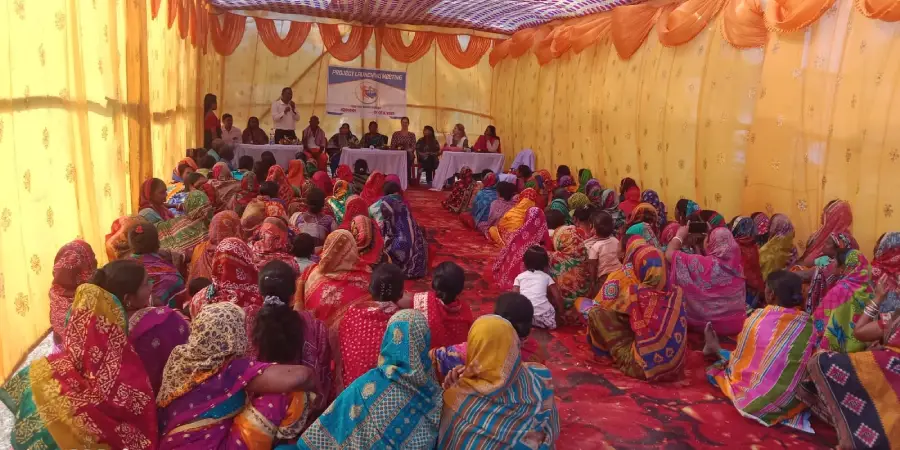
A study, Indian Food Systems for Improved Nutrition, was launched last year to spread awareness among tribal families about how to access nutritious foods for improved health at weekly markets

“As part of the project, my organisation wants to encourage tribal families to consume more fruits, vegetables and animal-based foods, as these are important for good health,” said Shibanath Pradhan of Varrat (Voluntary Association for Rural Reconstruction and Appropriate Technology), a non-profit founded in 1983. If the programme helps to improve people’s diets in the tribal villages of Keonjhar, a similar approach could be used elsewhere.

Importance of nutrition

India has food and nutrition programmes. These range from the Mid-Day Meal Scheme, now renamed PM-Poshan, in schools to nutrition awareness sessions regularly held at anganwadis for mothers and children.

However, many people, especially tribals, are still not aware about the importance of having nutritious meals and how to buy such foods from tribal haats, which are weekly rural markets. This is all the more necessary now, as packaged foods like chips have flooded rural markets. Fried food is also sold in the form of jalebis, bhajis and samosas.

A special focus of the programme is on families who have children between 0 to 5 years of age, as proper nutrition in early childhood is important for growth and development.

Like most tribal districts, malnutrition is prevalent in Keonjhar, where nearly one-third (36 percent) of children under the age of five are stunted (short for their age) due to inadequate nutrition and about one-fourth (24 percent) of children under five are wasted (thin for their height), says the NITI Aayog district nutrition profile. In India, over 77 percent of children aged in the range of 6-23 months lack dietary diversity as recommended by the World Health Organization.

Apart from Varrat, the research is being conducted by Ekjut and Design Jatra. While Varrat supports rural livelihoods and sustainable community development in Odisha, Ekjut works across India on maternal, newborn and child health and Design Jatra, an architecture and design organisation, works to improve the design of public and private spaces using community-led approaches. The research will be conducted in collaboration with the London School of Hygiene and Tropical Medicine based in London.

Targeting tribal village haats

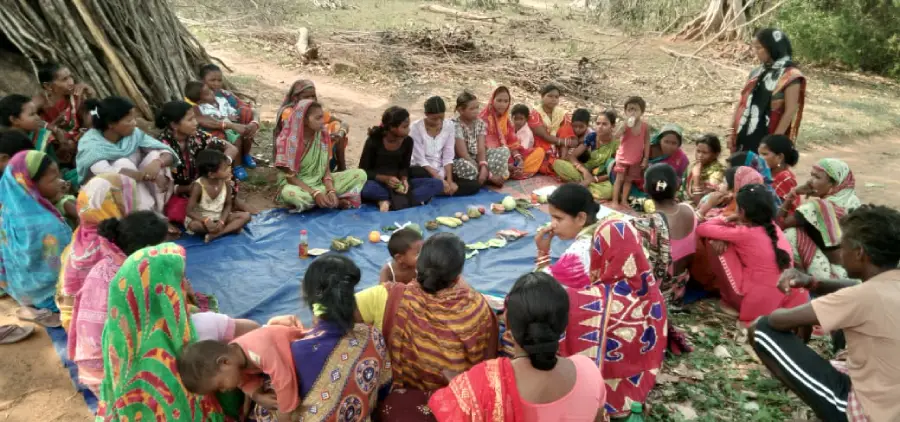
The research would cover 60 haats in Keonjhar where meetings would be organised with tribal families through participatory activities like the family market day, during which cooking demonstrations, games and food tasting sessions would be organised.
The Indian Tribal
Tribal haats, which are vibrant social places, have become centres of discussion on nutrition

In the course of time, dedicated teams would provide training on nutrition to frontline health workers like Anganwadi workers and ASHAs. Besides, training on safe food handling and hygienic practices are being demonstrated to vendors who sell fried foods and sweets. As part of this, a vendor training programme on food safety and hygiene was conducted at the weekly Laxmiposi Haat Pindi on May 14 in neighbouring Mayurbhanj district.

A prime objective of the research is to work with the leaseholders of weekly haats that are leased out by gram panchayats or village councils to co-design healthier spaces. The target is to increase the availability of nutritious foods, improve cleanliness and reduce food waste.

An attractive feature are the kiosks where buyers can discuss food needs, receive recipe tips, and sign up to receive short videos about healthy foods on phones.

Pradhan’s colleague Jyoti Ranjan Barik informed that a major focus was on household visits to families which have children from 0 to 5 years old in the villages. The parents of these children were being shown videos on food and nutrition on mobile phones.

After the research ends in December 2028, follow-up interviews would be conducted with the same families to understand if and how things have changed over time. The research targets about 1,860 tribal families in Keonjhar. Till now, 30 haats have been covered in six blocks of the district.
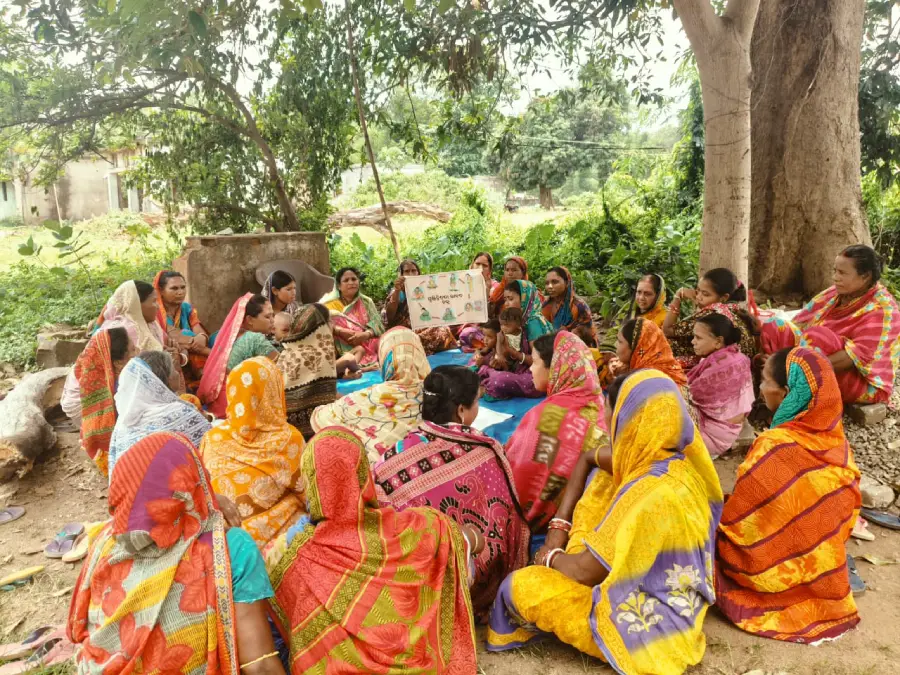
The Indian Tribal
Most tribals lack awareness about the importance of nutritious meals and how to buy such foods from haats

“The purpose of the study is to test this new programme in the villages, which involves working with tribal people in rural haats, and see how their diet can be improved,” Pradhan added.

In a village called Bholobeda in Keonjhar, tribal resident Kalyani Nayak, who is in her 20s, visits her nearby haat twice or thrice a month to buy household essentials. “As it is nearby, I go walking either alone or with my mother-in-law,” said Kalyani, who has a son aged one year eight months. “I buy vegetables from the haat and do not buy fried stuff much. Some eight months back I used to buy fried foods but have stopped now due to the sessions. As of now, my family has attended four meetings to understand about healthy diets.”

The woman already has a nutrition garden at her house where she grows brinjal, Indian spinach and pumpkin. “I do not sell the produce but use them in my kitchen.”

Kalyani’s mother-in-law, Damayanti Nayak, did not know about nutrition and used to cook whatever she got near at hand. Though the family consumes eggs and meat, they eat rice as millets are not that much available in Keonjhar.

Barik explained that families are being urged to buy nutritious foods. He feels that if parents understand nutrition, they will provide healthy food to children. But Barik is pragmatic. “If we tell them not to eat fried stuff at all, they may not listen. Slowly, the habit has to be changed.”
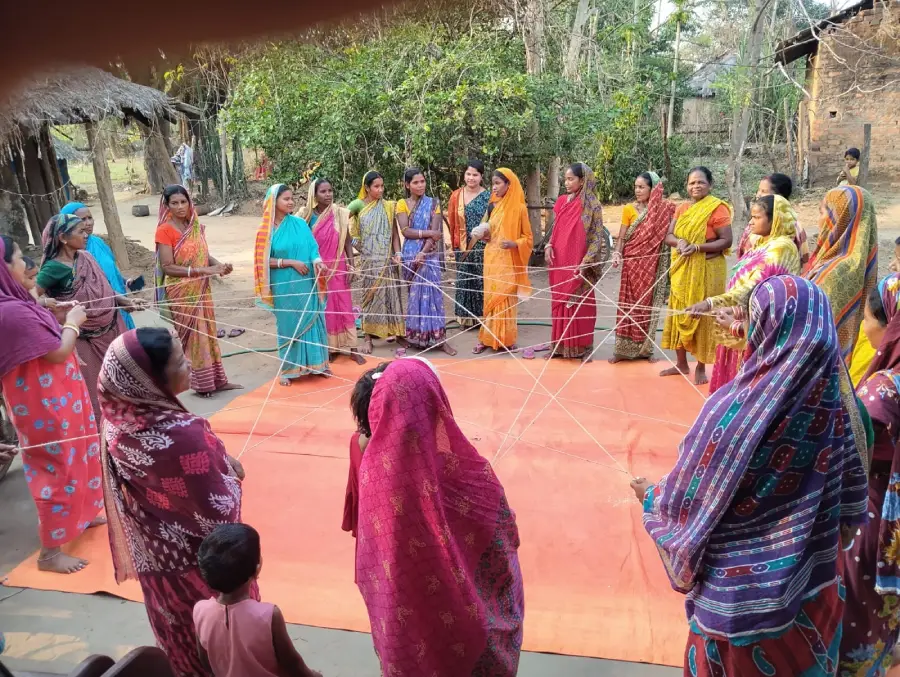
The Indian Tribal
The research targets about 1,860 tribal families in Keonjhar (All pics – Varrat)

There have been specialised programmes to help communities. Varrat ran a video programme, which is now over, to improve maternal health in Keonjhar and Mayurbhanj. Many pregnant women are barred from eating certain foods during their pregnancy and while lactating due to social taboos. These videos were produced since 2016 with the collaboration of Digital Green, a developmental organisation. The videos helped break existing myths around food and pregnancy. According to the National Family Health Survey-5 report, 57 percent of women between 15 and 49 years are anaemic. The risk increases during pregnancy.

To improve the nutrition of rural communities, the Mo Upakari Bagicha Project, a nutrition initiative under the Odisha Livelihoods Mission in partnership with the Azim Premji Philanthropic Initiatives, was conceptualised around 2018 and launched in 2019. Under this, rural women were encouraged to set up nutrition gardens.


Root Woot | Online Puja Samagri Root Woot | Online Puja Samagri Root Woot | Online Puja Samagri

Support Our Mission

The Indian Tribal

For the past four-and-a-half years, we have travelled across India to bring to our readers the ‘Unknown, Lesser-Known Tribal Life’, which rarely finds space in the mainstream media.

We have done this without external funding, driven only by our conviction that India’s tribal heritage deserves to be documented with dignity, depth and authenticity.

If you like our work, and if it has informed, inspired or helped you understand India’s tribal/indigenous communities better, we invite you to become a part of this mission.

Your contribution will not merely fund a news platform. It will help preserve voices, traditions, histories and aspirations that form an invaluable part of India’s identity.

Because when an untold story is documented, a piece of India’s heritage is preserved forever.

Thanks
Editor

In Numbers

49.4 %
Female Literacy rate of Scheduled Tribes

Update

NSTDFC, HPCL sign MoU

The National Scheduled Tribes Finance and Development Corporation (NSTFDC) and Hindustan Petroleum Corporation Limited (HPCL) have signed a Memorandum of Understanding (MoU) for establishment of integrated Computer Lab-cum-Smart Classroom facilities in 29 functional Eklavya Model Residential Schools (EMRS) across 11 districts of Rajasthan. The project, with a total budget of ₹16.01 crore approved by the HPCL Board, is planned to be completed within six months from the date of signing of the MoU. Under the project, each school will have four smart classrooms equipped with 86-inch interactive flat panels, pre-loaded licensed software, curated open educational resources and audio-visual equipment, including speakers and webcams. Each school will also have a fully networked computer laboratory with desktops and UPS backup, structured LAN, multi-function printer, furniture, air-conditioning, electrical refurbishment and safety systems. In addition, 10 tablets pre-loaded with coaching material for competitive examinations will be provided in each school. Internet connectivity, including wiring, installation and a one-year subscription, will also be provided.
The Indian Tribal
Adivasi

Karam Parab: The Sacred Tree, Two Brothers And A Festival Connecting Forest, Farm, Community

by The Indian Tribal
September 20, 2026

From Jharkhand and Odisha to West Bengal, Chhattisgarh, Bihar, Madhya Pradesh and Assam, Karam Parab or Karma Puja is celebrated in different forms by several tribal and other communities. Geetisri Patri lists out the details. PART-1

The Indian Tribal

Tiger Conservation In India: How Tribal Displacement And Tourism Are Reshaping The Debate

September 17, 2026
The Indian Tribal

ओडिशा के नबरंगपुर में आदिवासी किसानों की मक्का खेती ने कैसे बदली तस्वीर

September 15, 2026
The Indian Tribal

The Ganesha We Know, The Stories We Miss

September 14, 2026
The Indian Tribal

छत्तीसगढ़ में आदिवासी ट्रैकर्स और AI मिलकर बचा रहें हैं दुर्लभ वन्यजीव

September 12, 2026
The Indian Tribal

हाशिए से राष्ट्रीय केंद्र तक: बदल रही है भारत के आदिवासी समुदायों की कहानी

September 11, 2026
Previous Post

Karma Puja Across India: How Oraon, Munda, Santal, Ho, Kharia And Other Communities Keep The Tradition Alive

Top Stories

The Indian Tribal
Adivasi

Karma Puja Across India: How Oraon, Munda, Santal, Ho, Kharia And Other Communities Keep The Tradition Alive

September 22, 2026
The Indian Tribal
Adivasi

Karam Parab: The Sacred Tree, Two Brothers And A Festival Connecting Forest, Farm, Community

September 20, 2026
The Indian Tribal
Adivasi

Tiger Conservation In India: How Tribal Displacement And Tourism Are Reshaping The Debate

September 17, 2026
Load More
  • About Us
  • Editor & Writers
  • Contact
  • Redressal
  • Copyright Policy
  • Privacy Policy And Terms Of Use
  • Disclaimer
  • Sitemap

  • Achievers
  • Cuisine
  • Health
  • India
  • News
  • Legal
  • Music
  • Sports
  • Trending
  • Chhattisgarh
  • Delhi
  • Gujarat
  • Jammu & Kashmir
  • Jharkhand
  • Kerala
  • Madhya Pradesh
  • Maharashtra
  • North East
  • Arunachal Pradesh
  • Assam
  • Manipur
  • Meghalaya
  • Mizoram
  • Nagaland
  • Sikkim
  • Tripura
  • Odisha
  • Telangana
  • West Bengal
  • Political News
  • Variety
  • Art & Culture
  • Entertainment
  • Adivasi
  • Tribal News
  • Scheduled Tribes
  • हिंदी
  • उपलब्धिकर्ता
  • कानूनी
  • खान पान
  • खेलकूद
  • स्वास्थ्य
  • संस्कृति
  • संगीत
  • विविध
  • कला और संस्कृति
  • खबरें
  • असम
  • अरुणाचल प्रदेश की ताज़ा ख़बरें
  • ओडिशा
  • केरल
  • गुजरात
  • छत्तीसगढ़
  • जम्मू और कश्मीर
  • झारखंड
  • तेलंगाना
  • दिल्ली
  • नॉर्थईस्ट
  • पश्चिम बंगाल
  • मध्य प्रदेश
  • महाराष्ट्र
  • त्रिपुरा
  • नागालैंड
  • मणिपुर
  • मिजोरम की ताज़ा ख़बरें
  • मेघालय
  • सिक्किम की ताज़ा ख़बरें
  • राजस्थान

About Us

The Indian Tribal is India’s first bilingual (English & Hindi) digital journalistic venture dedicated exclusively to the Scheduled Tribes. The ambitious, game-changer initiative is brought to you by Madtri Ventures Pvt Ltd (www.madtri.com). From the North East to Gujarat, from Kerala to Jammu and Kashmir — our seasoned journalists bring to the fore life stories from the backyards of the tribal, indigenous communities comprising 10.45 crore members and constituting 8.6 percent of India’s population as per Census 2011. Unsung Adivasi achievers, their lip-smacking cuisines, ancient medicinal systems, centuries-old unique games and sports, ageless arts and crafts, timeless music and traditional musical instruments, we cover the Scheduled Tribes community like never-before, of course, without losing sight of the ailments, shortcomings and negatives like domestic abuse, alcoholism and malnourishment among others plaguing them. Know the unknown, lesser-known tribal life as we bring reader-engaging stories of Adivasis of India.

Follow Us

All Rights Reserved

© 2026 Madtri Ventures [P] Ltd.

No Result
View All Result
  • Home
  • Achievers
  • Cuisine
  • Health
  • Health
  • Legal
  • Music
  • News
  • Sports
  • Variety
  • हिंदी
    • उपलब्धिकर्ता
    • खान पान
    • कानूनी
    • खेलकूद
    • खेलकूद
    • संगीत
    • संगीत
    • स्वास्थ्य
    • स्वास्थ्य
    • विविध
  • Gallery
  • Videos

© 2026 Madtri Ventures [P] Ltd.