




• About
  • Editor & Writers
  • Contact
  • Sitemap
No Result
View All Result
Support Our Mission
Sunday, November 8, 2026
The Indian Tribal
  • Home
  • Achievers
    • उपलब्धिकर्ता
  • Cuisine
    • खान पान
  • Health
    • स्वास्थ्य
  • Legal
    • कानूनी
  • Music
    • संगीत
  • News
    • Updates
    • खबरें
  • Sports
    • खेलकूद
  • Variety
    • विविध
  • हिंदी
    • All
    • आदिवासी
    • उपलब्धिकर्ता
    • कला और संस्कृति
    • कानूनी
    • खबरें
    • खान पान
    • खेलकूद
    • जनजाति
    • भारत
    • विविध
    • संगीत
    • संस्कृति
    • स्वास्थ्य
    The Indian Tribal

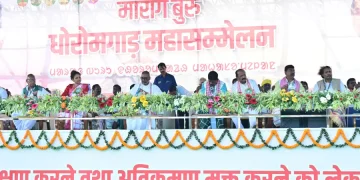
    मारांग बुरू की आस्था और पहचान बचाने के लिए एकजुट हों आदिवासी: हेमन्त सोरेन

    The Indian Tribal

    कर्ज और मौसमी पलायन से आदिवासी होने वाले पिताओं में डिप्रेशन का खतरा: अध्ययन

    The Indian Tribal

    मिज़ोरम का भूला-बिसरा जनजातीय खेल जो लौट रहा है परंपराओं में

    The Indian Tribal

    पौष्टिक और विविधतापूर्ण होने के बावजूद मुख्यधारा के रेस्तरां से दूर है आदिवासी व्यंजन

    The Indian Tribal

    ओडिशा के पुरवाशा संग्रहालय में सजी जनजातीय विरासत की अनमोल दुनिया

    The Indian Tribal

    ओडिशा के आदिवासी हाटों से पोषण की नई पहल, स्वस्थ भोजन और स्वच्छता पर जोर

    The Indian Tribal

    भारत के टाइगर रिजर्व के सामने नई चुनौती: संरक्षण, आदिवासी अधिकार और पर्यटन का बढ़ता दबाव

    The Indian Tribal

    मेघालय के आदिवासी समुदाय बचा रहे जंगल और जल स्रोत, बालपाक्रम राष्ट्रीय उद्यान में संरक्षण की नई मिसाल

  • Gallery
    • Videos
  • Latest News
No Result
View All Result
The Indian Tribal
No Result
View All Result
  • Home
  • Achievers
  • Cuisine
  • Health
  • Legal
  • Music
  • News
  • Sports
  • Variety
  • हिंदी
  • Gallery
  • Latest News
Support Our Mission
Home » The Indian Tribal / Variety » Bastar Dussehra: Why India’s 75-Day Tribal Festival Does Not Burn Ravana’s Effigy

Bastar Dussehra: Why India’s 75-Day Tribal Festival Does Not Burn Ravana’s Effigy

From the construction of a massive wooden chariot to the gathering of local deities, Bastar's Dussehra reflects a distinctive relationship between faith, community and regional history. Its absence of Ravana effigy-burning sets it apart from many of India's other Dussehra celebrations, The Indian Tribal reports

October 21, 2026
The Indian Tribal

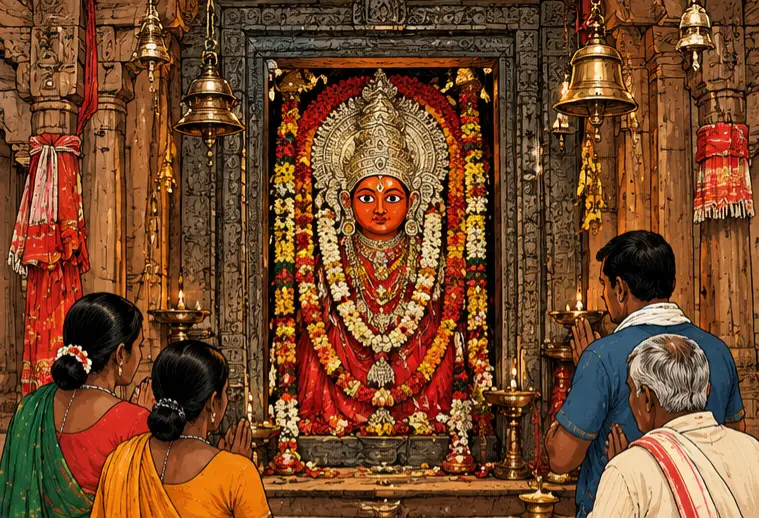
Devotees Worshipping Maa Danteshwari

New Delhi/Jagdalpur

In much of India, Dussehra is marked by the burning of Ravana’s effigy, symbolising the victory of good over evil and recalling the Ramayana narrative of Rama defeating the king of Lanka. In Bastar, however, the festival unfolds to a different rhythm, shaped by the worship of Maa Danteshwari, local deities and the indigenous traditions of one of Chhattisgarh’s most culturally distinctive regions.

Here, Dussehra is not a ten-day celebration alone. It extends over approximately 75 days, drawing together religious ceremonies, traditional craftsmanship, community participation and rituals that reflect the region’s history. Ravana’s effigy is not burnt, and the festival’s central narrative is not the familiar episode of Rama’s victory over Ravana.

Instead, Bastar Dussehra celebrates a living religious and cultural tradition in which the Goddess and the region’s network of local deities occupy a central place.

A Festival Rooted In A Centuries-Old History

The Government of India’s Incredible India tourism portal traces Bastar Dussehra to the 15th century, around 1408, during the reign of King Purushottam Dev, the fourth ruler of the Kakatiya dynasty of Bastar. The festival is described as approximately 600 years old and continues to serve as an important expression of the region’s cultural identity.

Its principal deity is Maa Danteshwari, the presiding goddess of Bastar. The religious traditions associated with her are intertwined with the worship of other local deities, many of which are connected with individual communities and settlements.

The festival’s duration reflects the number of ceremonies and stages involved. Rather than being confined to the familiar sequence of Navratri and Vijayadashami, Bastar’s observances extend over several weeks, with different rituals marking the progression towards the main celebrations.

For 2026, the official Incredible India listing gives August 12 as the date of Pat Jatra, marking the beginning of the festival, and October 18–22 as the main Dussehra phase. October 20 is listed as Bhitar Raini. The official calendar therefore places the principal celebrations in the second half of October. [1]

From Pat Jatra To The Ceremonial Chariot

The festival begins with Pat Jatra, a ceremony associated with the worship of wood brought from the forest and the commencement of preparations. It marks the beginning of an extended period of ritual activity and community involvement.
The Indian Tribal
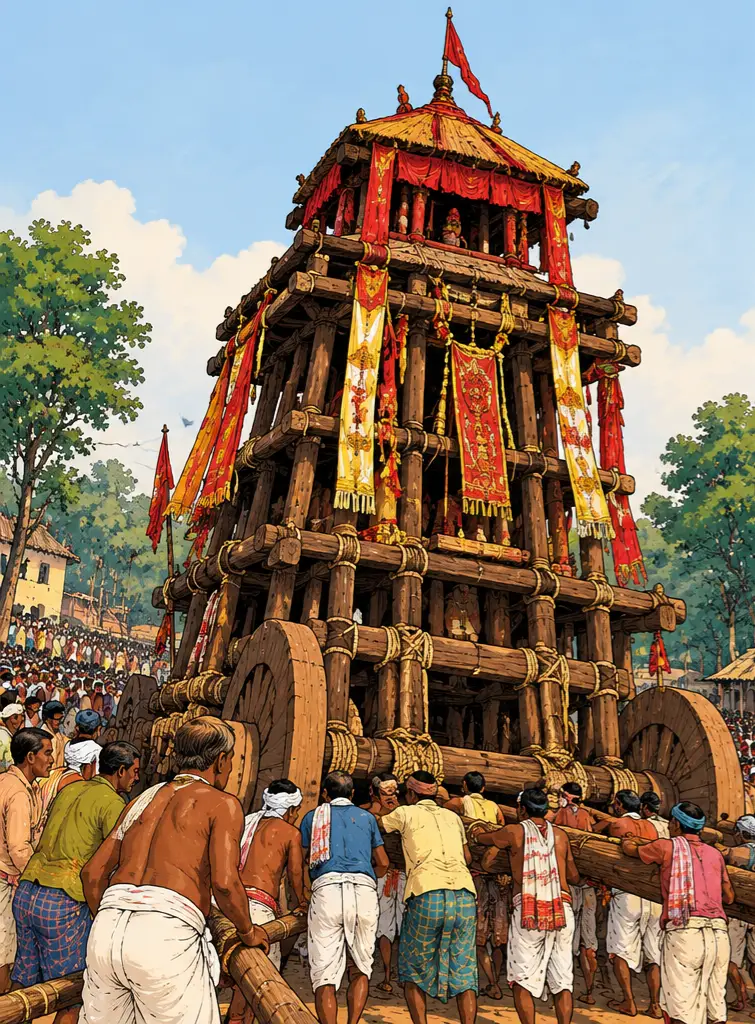
The massive wooden ceremonial chariot and the people moving it

Other important stages include Kachhin Gadi, Jogi Bithai, the gathering of deities, Mavli Parghav and the chariot ceremonies. The festival concludes through further rituals and the return of participating deities to their respective places.

The construction and movement of the massive wooden chariot are among Bastar Dussehra’s most recognisable features. The work relies on traditional knowledge and collective effort, with the chariot’s ceremonial movement forming a major part of the public celebration.

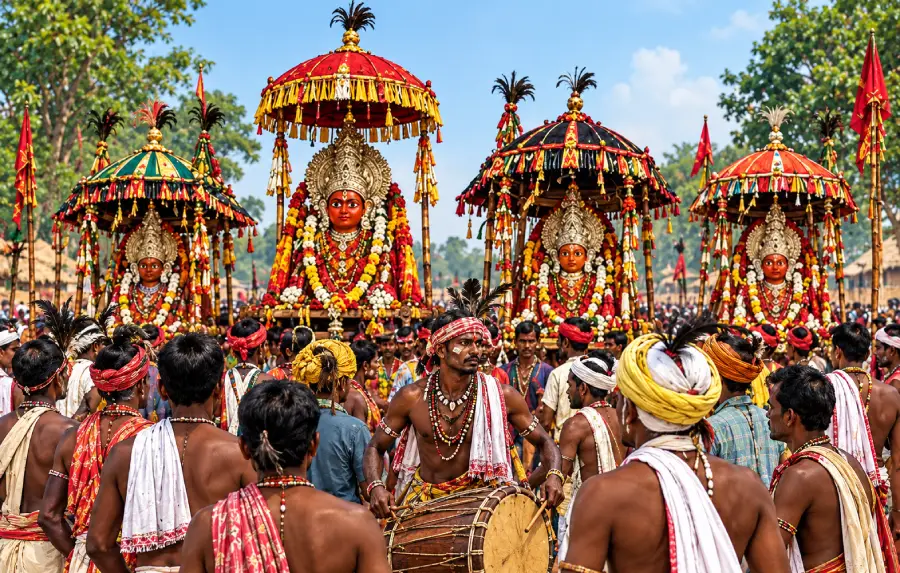
The gathering of deities from different parts of Bastar is equally significant. It brings together traditions associated with different settlements and communities, reinforcing the festival’s regional character.

These practices help explain why Bastar Dussehra cannot be understood simply as a local variation of the mainstream Dussehra festival. Its sequence of rituals and its religious focus reflect a particular history of the region.

Why There Is No Ravana Effigy

The absence of Ravana effigy-burning is one of the clearest distinctions between Bastar Dussehra and many other celebrations of Vijayadashami.

The festival is centred on Maa Danteshwari and the traditions of Bastar, rather than the narrative of Rama’s victory over Ravana. Its significance lies in the worship of the goddess, the gathering of local deities and the observance of rituals that have been transmitted through generations.

This distinction should not be interpreted as a rejection of the Ramayana or as evidence that all tribal communities observe Dussehra in the same way. It reflects the particular religious and cultural history of Bastar.

Across India, Dussehra takes different forms. In some places, the dominant emphasis is on Rama and Ravana; elsewhere, it centres on the Goddess and her victory over evil. Bastar demonstrates that regional and indigenous traditions can have their own ritual priorities and historical meanings.

A Living Expression Of Bastar’s Identity

Bastar Dussehra is also a social institution. Its ceremonies bring communities together and preserve relationships between local deities, settlements and traditional practices.

The festival’s continuation over centuries demonstrates how a regional religious tradition can survive political and social change. The historical association with the former ruling dynasty remains part of its story, but the festival today is also a public expression of Bastar’s cultural heritage.
The Indian Tribal
Procession With Local Deities (Pics – AI Generated)

Its importance lies not only in its unusual duration or the spectacle of its chariot, but in the network of community practices that sustain it.

Bastar Dussehra offers a reminder that India’s festive calendar cannot be reduced to one narrative of Dussehra. The absence of Ravana’s effigy is not an omission; it is a defining feature of a celebration whose meaning emerges from the traditions of Bastar itself.

As the festival enters its main phase in October 2026, it continues to bring together faith, ritual and community memory in a form that remains distinctive within India’s diverse cultural landscape.


Root Woot | Online Puja Samagri Root Woot | Online Puja Samagri Root Woot | Online Puja Samagri

Support Our Mission

The Indian Tribal

For the past four-and-a-half years, we have travelled across India to bring to our readers the ‘Unknown, Lesser-Known Tribal Life’, which rarely finds space in the mainstream media.

We have done this without external funding, driven only by our conviction that India’s tribal heritage deserves to be documented with dignity, depth and authenticity.

If you like our work, and if it has informed, inspired or helped you understand India’s tribal/indigenous communities better, we invite you to become a part of this mission.

Your contribution will not merely fund a news platform. It will help preserve voices, traditions, histories and aspirations that form an invaluable part of India’s identity.

Because when an untold story is documented, a piece of India’s heritage is preserved forever.

Thanks
Editor

In Numbers

49.4 %
Female Literacy rate of Scheduled Tribes

Update

Tribal Film Festival gets underway in Mizoram

A three-day Mizoram tribal film festival, organised under the initiative of the Ministry of Tribal Affairs in collaboration with the State Art and Culture Department and the Information, Public Relations, Printing and Stationery Department, got underway in Aizawl on November 4. Mizoram’s Art and Culture Minister C Lalsawivunga inaugurated the festival that will feature film screenings and other programmes at Vanapa Hall and Lianchhiari Run Mini Theatre from November 4 to 6. Lalsawivunga described the festival as an important platform for showcasing Mizo culture and heritage and said filmmakers played a key role in preserving and promoting the identity of the Mizo people.
The Indian Tribal
आदिवासी

मारांग बुरू की आस्था और पहचान बचाने के लिए एकजुट हों आदिवासी: हेमन्त सोरेन

by The Indian Tribal
November 5, 2026

विधायक और मुख्यमंत्री की धर्मपत्नी कल्पना सोरेन ने पूछा- क्या सदियों पुरानी आदिवासी आस्था का प्रमाण केवल ऐतिहासिक अभिलेखों में दर्ज पंक्तियां हैं? विभिन्न राज्यों के आदिवासी प्रतिनिधियों ने गिरिडीह में आयोजित महासम्मेलन में लिया हिस्सा, The Indian Tribal की रिपोर्ट

The Indian Tribal

Rajasthan Study Flags Goitre In Iodine-Sufficient Tribal Children

November 4, 2026
The Indian Tribal

कर्ज और मौसमी पलायन से आदिवासी होने वाले पिताओं में डिप्रेशन का खतरा: अध्ययन

November 1, 2026
The Indian Tribal

मिज़ोरम का भूला-बिसरा जनजातीय खेल जो लौट रहा है परंपराओं में

October 29, 2026
The Indian Tribal

पौष्टिक और विविधतापूर्ण होने के बावजूद मुख्यधारा के रेस्तरां से दूर है आदिवासी व्यंजन

October 28, 2026
The Indian Tribal

Despite Human-Elephant Conflict, Tribals Continue To Worship The Pachyderms

October 27, 2026
Previous Post

Durga Puja Among Santhals: How A Wider Hindu Festival Coexists With Indigenous Traditions

Next Post

ओडिशा के पुरवाशा संग्रहालय में सजी जनजातीय विरासत की अनमोल दुनिया

Top Stories

The Indian Tribal
Adivasi

Tribal Activist Nisha Bhagat Death: Father Alleges Conspiracy To Murder Daughter, Seeks CBI Probe

November 7, 2026
The Indian Tribal
Adivasi

Jharkhand’s Tribal Activist Dies By Suicide After Facebook Live

November 6, 2026
The Indian Tribal
Adivasi

Beyond Gold And Silver: What Does Wealth Mean In Tribal Communities?

November 6, 2026
Load More
  • About Us
  • Editor & Writers
  • Contact
  • Redressal
  • Copyright Policy
  • Privacy Policy And Terms Of Use
  • Disclaimer
  • Sitemap

  • Achievers
  • Cuisine
  • Health
  • India
  • News
  • Legal
  • Music
  • Sports
  • Trending
  • Chhattisgarh
  • Delhi
  • Gujarat
  • Jammu & Kashmir
  • Jharkhand
  • Kerala
  • Madhya Pradesh
  • Maharashtra
  • North East
  • Arunachal Pradesh
  • Assam
  • Manipur
  • Meghalaya
  • Mizoram
  • Nagaland
  • Sikkim
  • Tripura
  • Odisha
  • Telangana
  • West Bengal
  • Political News
  • Variety
  • Art & Culture
  • Entertainment
  • Adivasi
  • Tribal News
  • Scheduled Tribes
  • हिंदी
  • उपलब्धिकर्ता
  • कानूनी
  • खान पान
  • खेलकूद
  • स्वास्थ्य
  • संस्कृति
  • संगीत
  • विविध
  • कला और संस्कृति
  • खबरें
  • असम
  • अरुणाचल प्रदेश की ताज़ा ख़बरें
  • ओडिशा
  • केरल
  • गुजरात
  • छत्तीसगढ़
  • जम्मू और कश्मीर
  • झारखंड
  • तेलंगाना
  • दिल्ली
  • नॉर्थईस्ट
  • पश्चिम बंगाल
  • मध्य प्रदेश
  • महाराष्ट्र
  • त्रिपुरा
  • नागालैंड
  • मणिपुर
  • मिजोरम की ताज़ा ख़बरें
  • मेघालय
  • सिक्किम की ताज़ा ख़बरें
  • राजस्थान

About Us

The Indian Tribal is India’s first bilingual (English & Hindi) digital journalistic venture dedicated exclusively to the Scheduled Tribes. The ambitious, game-changer initiative is brought to you by Madtri Ventures Pvt Ltd (www.madtri.com). From the North East to Gujarat, from Kerala to Jammu and Kashmir — our seasoned journalists bring to the fore life stories from the backyards of the tribal, indigenous communities comprising 10.45 crore members and constituting 8.6 percent of India’s population as per Census 2011. Unsung Adivasi achievers, their lip-smacking cuisines, ancient medicinal systems, centuries-old unique games and sports, ageless arts and crafts, timeless music and traditional musical instruments, we cover the Scheduled Tribes community like never-before, of course, without losing sight of the ailments, shortcomings and negatives like domestic abuse, alcoholism and malnourishment among others plaguing them. Know the unknown, lesser-known tribal life as we bring reader-engaging stories of Adivasis of India.

Follow Us

All Rights Reserved

© 2026 Madtri Ventures [P] Ltd.

No Result
View All Result
  • Home
  • Achievers
  • Cuisine
  • Health
  • Health
  • Legal
  • Music
  • News
  • Sports
  • Variety
  • हिंदी
    • उपलब्धिकर्ता
    • खान पान
    • कानूनी
    • खेलकूद
    • खेलकूद
    • संगीत
    • संगीत
    • स्वास्थ्य
    • स्वास्थ्य
    • विविध
  • Gallery
  • Videos

© 2026 Madtri Ventures [P] Ltd.