



Ranchi
If Karam is viewed only through one village or one community, it can appear to have a fixed form. Across India, however, its diversity becomes unmistakable.
The Oraon Karam of Jharkhand, the Santal tradition of the wider eastern Indian belt, Munda and Ho observances in the Chotanagpur and Kolhan regions, Karam traditions in Odisha, and the festival among Assam’s tea-tribe communities are related but not identical cultural expressions.
What unites them is less a prescribed list of rituals than a shared relationship with nature, agriculture, youth and community.
Oraon, Munda And Santal Traditions
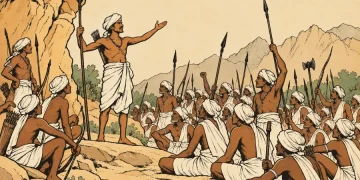
Among the Oraons, Karam is closely associated with agriculture, youth and collective celebration. The akhra can become the social heart of the festival, with the Karam branch providing the focus for prayer, songs and dance. Jawa, the sacred branch and the Karam story form important elements of many observances.
The festival also reflects the agricultural landscape in which Oraon communities have historically lived. The Karam season comes at an important stage in the crop cycle, making the prayer for agricultural prosperity particularly meaningful.
Munda traditions demonstrate another important aspect of Karam — variation within a community itself. Some observances are strongly community-centred, while others have a greater household dimension. The role of the ritual specialist, the place of the branch and the sequence of ceremonies can differ from one locality to another.
For Santals, the festival has an equally strong oral and musical character. The Karmu-Dharmu story recorded in the folklore of the Santal Parganas is one example of how the Karam tradition has been preserved through narrative. In that account, the actions of the two brothers and their relationship with Karam Gosain are closely linked with prosperity, labour and misfortune.
Among Ho and Kharia communities too, Karam forms part of a wider seasonal and agricultural cultural landscape. The songs, language, ritual roles and local practices give the celebration a distinct community character even when the Karam branch and agricultural symbolism remain recognisable.
Odisha Shows Why There Is No Single Karam Calendar
Odisha offers perhaps the clearest example of why Karam should not be described as one uniform festival.
Karma Puja is observed among Adivasi communities in several parts of the state, but the timing and sequence can differ substantially. Kendujhar records a particularly distinctive eight-day form in Keonjhar and Champua subdivisions. It begins on a Thursday in Margasira, around November-December, rather than on the familiar Bhadra Ekadashi.
In this tradition, two unmarried young men collect new pulses from households and keep them in a bamboo basket beside a stream. The grains are watered daily and allowed to germinate. On the eighth day, two Karam branches are planted in front of the Mandaghar, and the germinated grains are placed beside them. Young people then dance around the branches.
The following day, the district account records the sacrifice of two fowls before the branches and germinated grains are carried in procession to a river or nala for immersion. This is a useful reminder that even familiar Karam elements — germinated seeds, Karam branches, youth, dance and immersion — can be arranged within a completely different ritual calendar.
West Bengal: Village And Household Celebrations
In West Bengal, Karam is particularly associated with areas such as Purulia, Bankura and Jhargram, where it is connected with Bhadra Shukla Ekadashi and agricultural prosperity, while local celebrations include Jawa, songs and community participation.
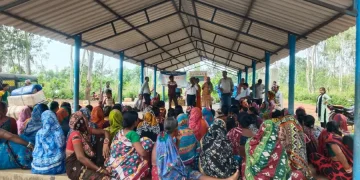
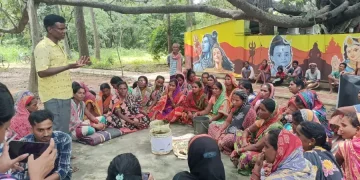
Purulia traditions also illustrate how Karam can operate simultaneously at household and village levels. The festival may be observed within a family while neighbouring households and even people from nearby villages join the larger celebration.
The result is a festival that can be intimate and collective at the same time. The Karam branch becomes a household object of worship in one setting and a village-wide symbol in another.
Karam In Assam’s Tea-Garden Communities
Farther east, Karam has acquired another historical dimension among Assam’s tea-tribe communities.
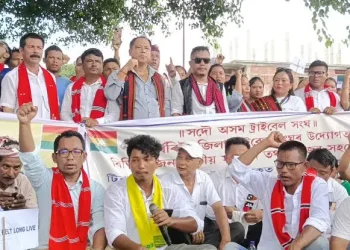
Assam Tourism identifies Karam as an agricultural festival celebrated by different tea-tribe communities and places the principal observance in August-September. Its description records young people going to the forest, bringing Karam branches back to the village, installing them in the centre of the community space and observing the night with ritual, song and dance.
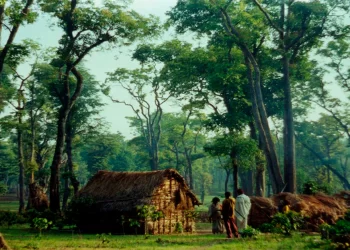
The Assam setting is significant because many of the communities who celebrate Karam there trace their histories to Adivasi populations brought to the tea-growing regions during the colonial period. Karam consequently functions not only as a seasonal celebration but also as an expression of cultural memory and community identity in a landscape far removed from the original forest and agricultural environments of the Chotanagpur plateau.
The Sound And Colour Of Karam
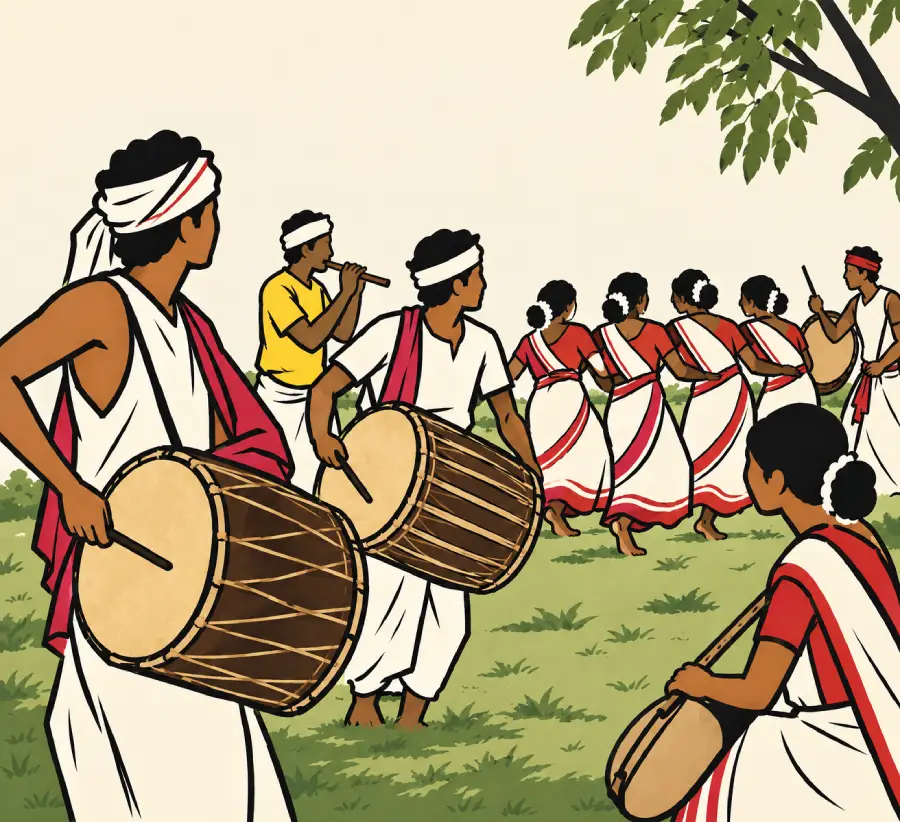
Karam is impossible to imagine without its music. The mandar, a traditional double-headed drum widely associated with tribal celebrations of Jharkhand and adjoining regions, provides one of the principal rhythms for Karam dancing. Other drums and instruments may also accompany the celebration, depending on the community and locality. These can include the dhol, nagara, dhak, tumdak or tumdah, tamak, flute and banam, among others.
The Santal musical tradition has its own characteristic instruments, while Oraon, Munda and Ho communities may use different combinations of drums, wind instruments or string instruments. The exact ensemble is therefore as diverse as Karam itself.
The instruments serve more than a musical function. Their rhythms bring dancers together and give structure to the long hours of communal celebration. Karam songs may recount traditional stories, relationships, love, agricultural life, humour and the experiences of the community. For younger generations, learning these songs and dances can be an important way of acquiring cultural memory.
Visual Character Of The Festival
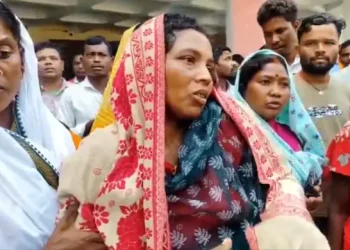
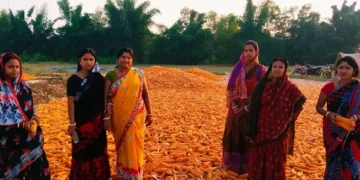
There is no single prescribed Karam costume for all communities. Women and girls in many parts of Jharkhand and neighbouring regions wear traditional saris or locally customary forms of dress, often accompanied by festive jewellery such as bangles, earrings, necklaces and other ornaments. Among Santal women, traditional draping and jewellery form an important part of the festive appearance, while Oraon, Munda and Ho women retain their own community-specific styles.
Young women participating in Jawa-related rituals or the main celebration may take particular care with their appearance and may decorate their hair with flowers or other natural adornments. The colours and styles, however, vary from community to community.
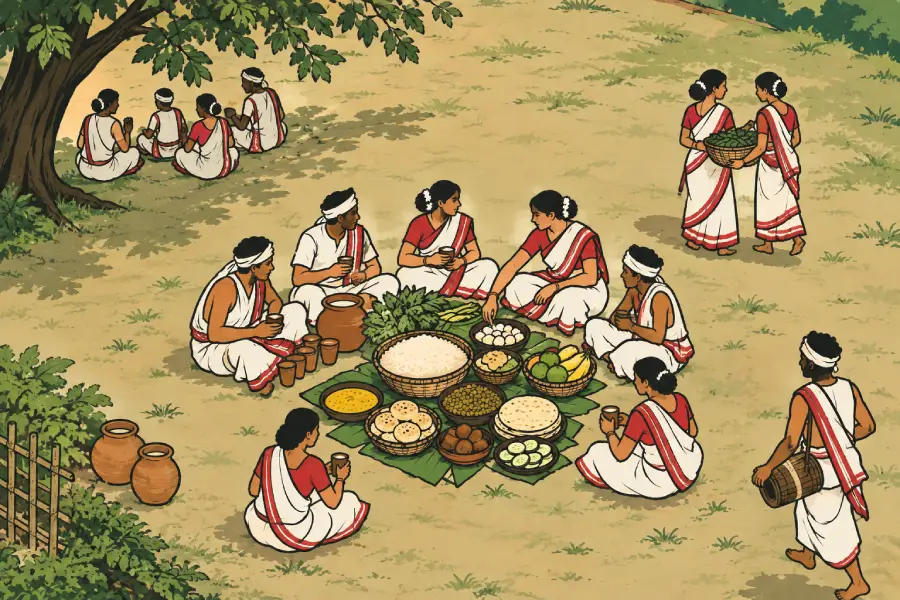
Men and boys may wear dhoti or other traditional garments, sometimes combined with a kurta, shirt, waistcloth, turban or locally customary headgear. Some men dress more elaborately for the festival, particularly when taking part in the dance or ritual procession, while younger participants may combine traditional elements with contemporary clothes.
Children often wear festive versions of traditional or everyday clothing. Girls may appear in small traditional saris or dresses with bangles, jewellery and flowers, while boys may wear dhoti-kurta, shirts or other festive garments. Their presence is significant because Karam is fundamentally intergenerational: children learn the songs, dances, stories and rituals by participating alongside older members of the community.
Elders, meanwhile, may wear traditional saris, dhoti-kurta or other customary attire, although contemporary clothing is also common. Their importance lies less in elaborate dress and more in the knowledge they carry. Elders often guide the ritual, remember the songs and stories, and explain the significance of practices to younger participants.
Together, the traditional dress, jewellery, flowers, Karam branch, Jawa shoots and rhythmic drums give the festival its unmistakable visual and musical identity.
A Festival Of Food And Community
There is no single Karam menu. Rice is central to many communities because of its importance as both food and crop. Chura, gram, jaggery, cucumber, pulses, pitha, roti, seasonal fruits and vegetables may feature in different regions. The meal following the ceremony can be as important socially as the formal offerings made before the Karam branch.
In some traditions handia or rice beer forms part of the social or ritual setting. In others it does not. Similarly, animal sacrifice occurs in certain regional traditions but is absent in others.
The diversity of food mirrors the diversity of the agricultural landscapes in which Karam is celebrated.
From Forest To Village — And Back To Water
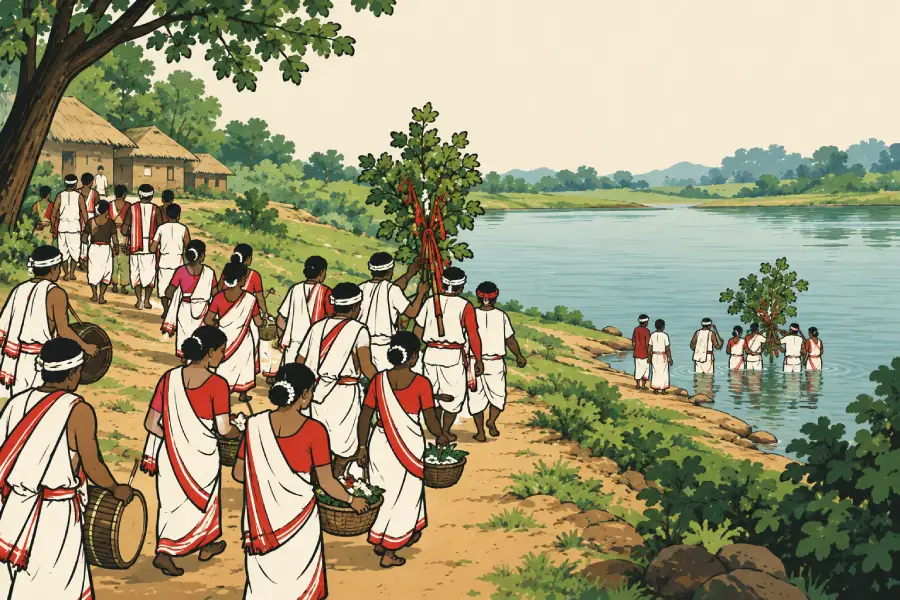
The conclusion of Karam often completes the symbolic journey that began when the branch was collected. The branch came from the forest. It was brought into the village. It was installed at the centre of the community or household. Seeds were nurtured into shoots. Prayers were offered for crops, prosperity, fertility and well-being. The night was spent in song, dance and storytelling. And then, in many traditions, the branch was carried to a river, pond, stream or nala and immersed.
In some places the Jawa is also distributed or taken back towards agricultural spaces. The details vary, but the underlying cycle is powerful: nature gives, the community celebrates, and what was brought from nature is eventually returned to it.
Ends