







NEW DELHI
Financial insecurity, seasonal migration and limited social support may place tribal men at greater risk of psychological distress while their partners are pregnant, highlighting a neglected dimension of maternal and family health in India.
A study published in the Indian Journal of Psychological Medicine has found depressive symptoms in 17.5% of tribal expectant fathers in Attappady, Kerala, and anxiety symptoms in 10%. Four in 10 participants also reported poor psychological well-being, underlining the need to extend pregnancy-related mental health support beyond expectant mothers.
The study, titled Psychosocial Correlates of Prenatal Depression and Anxiety Among Fathers from Tribal Communities in India: A Cross-sectional Study, was conducted among 80 men from the Irula, Muduga and Kurumba communities in Attappady, Palakkad district, between July and December 2025.
The findings point to a strong association between economic pressures and depressive symptoms. Men reporting seasonal migration had seven times the adjusted odds of depressive symptoms, while those with financial debt had nearly five times the adjusted odds compared with participants without these circumstances.
Of the 80 participants, 14 reported depressive symptoms and eight reported anxiety symptoms on standard screening questionnaires. Lead author Dr Kimneihat Vaiphei clarified that these results indicate possible psychological distress and should not be treated as clinical diagnoses.
The researchers cautioned that the findings are exploratory because of the small sample and the limited number of participants reporting symptoms. The study also cannot establish that debt or migration directly causes depression.
Economic Insecurity And Family Pressures
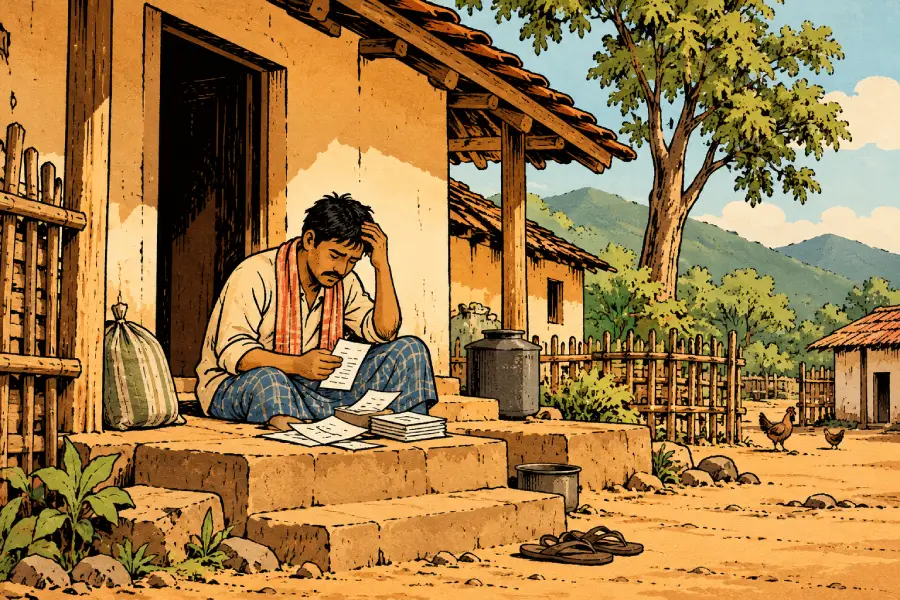
The socioeconomic profile of the participants offers important context for the findings. As many as 82.5% belonged to households classified as below the poverty line, 56.3% worked as daily-wage earners, 31.3% reported seasonal migration and 37.5% had financial debt. Most lived in joint families, while 70% reported substance use.
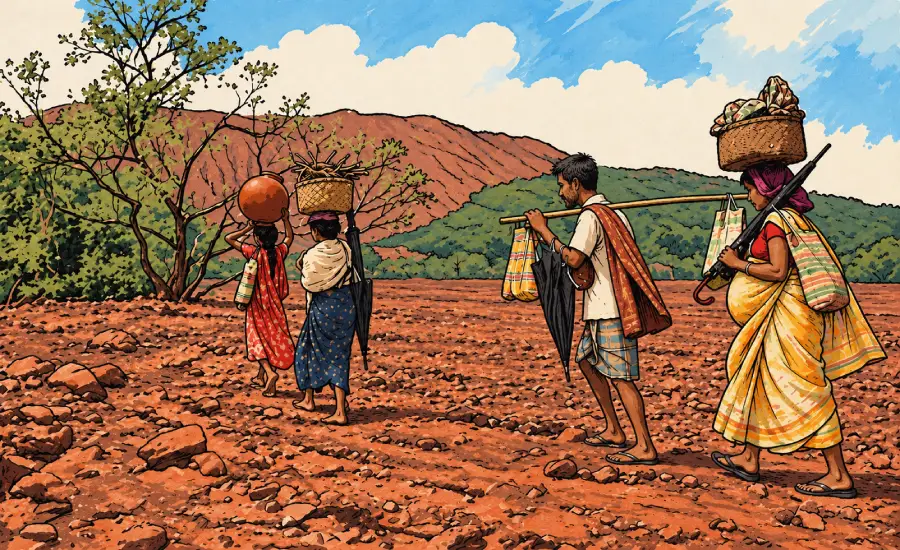
For households dependent on casual labour and seasonal employment, pregnancy may coincide with uncertainty over earnings, household expenditure and access to stable work. Migration can add the strain of separation from one’s partner and uncertainty over whether the expectant father will be present during pregnancy and childbirth.
These are plausible explanations for the associations identified by the researchers, rather than causal conclusions established by the study.
The findings also suggest that pregnancy-related experiences matter. Men whose partners had planned pregnancies had lower adjusted odds of anxiety symptoms, while a history of pregnancy loss was associated with substantially higher odds. However, the researchers warned that the estimates concerning pregnancy loss were imprecise because relatively few participants reported anxiety symptoms.
Social support emerged as another important factor. Greater perceived support was associated with fewer depressive and anxiety symptoms, while better psychological well-being was associated with stronger perceived support. This points to the potential value of supportive family relationships and community networks during pregnancy, particularly for households facing economic hardship.
Why Tribal Fathers Need Attention
The study addresses a gap in research on tribal health, which has traditionally concentrated on maternal and child health. Evidence drawn from the general population cannot automatically be applied to tribal men, just as findings from tribal women cannot necessarily be generalised to tribal fathers.
Co-author Dr Prabha S. Chandra said the findings could help improve father-inclusive antenatal care and support the early identification of men experiencing psychological distress during the perinatal period.
The implications extend beyond mental health screening. Antenatal services could provide opportunities to identify financial stress, migration-related difficulties, substance-use concerns and inadequate social support among expectant fathers. Appropriate counselling and referrals could then be offered alongside existing maternal health services.
Such an approach would complement, rather than divert attention from, the health needs of pregnant women. It would also recognise that a family’s emotional and economic circumstances can influence its experience of pregnancy and preparation for childbirth.
However, the study has important limitations. It was confined to one tribal region and included only 80 participants. Although interviews were conducted in Malayalam using standard screening questionnaires, the cultural adaptation and validity of the tools specifically for tribal fathers in the study setting had not been established.
The researchers have called for larger studies that follow men through pregnancy and the postpartum period to establish the prevalence of psychological distress across tribal communities and identify effective interventions.
The central message is not that tribal expectant fathers uniformly face mental health problems, but that their experiences warrant greater research and attention. Addressing the emotional consequences of debt, insecure employment and seasonal migration could become an important component of more inclusive maternal and family healthcare.