





New Delhi/Jhargram
Jagat Hembrom walked down memory lane. He remembered a particular day in 2018 when several elephants raided his village, Dumuria, under the Arra panchayat in Jhargram, a relatively new district of West Bengal. It was formed on April 4, 2017, after the division of Paschim Medinipur (West Midnapore). Jhargram was the epicentre of Jangal Mahal, once part of the much-dreaded Red Corridor, but now relatively peaceful.
“In that year, about 250 elephants entered the village, which came into existence some 200 years ago and is still dominated by mud houses. The animals stayed for two days and damaged many houses. Later, when we invoked Marang Buru at the village’s sacred grove, locally called the jaherthan, our deity informed us that we had made a grave error in our rituals and that the exact date of worship had already passed. So, naturally, the deity was angry,” Hembrom said.
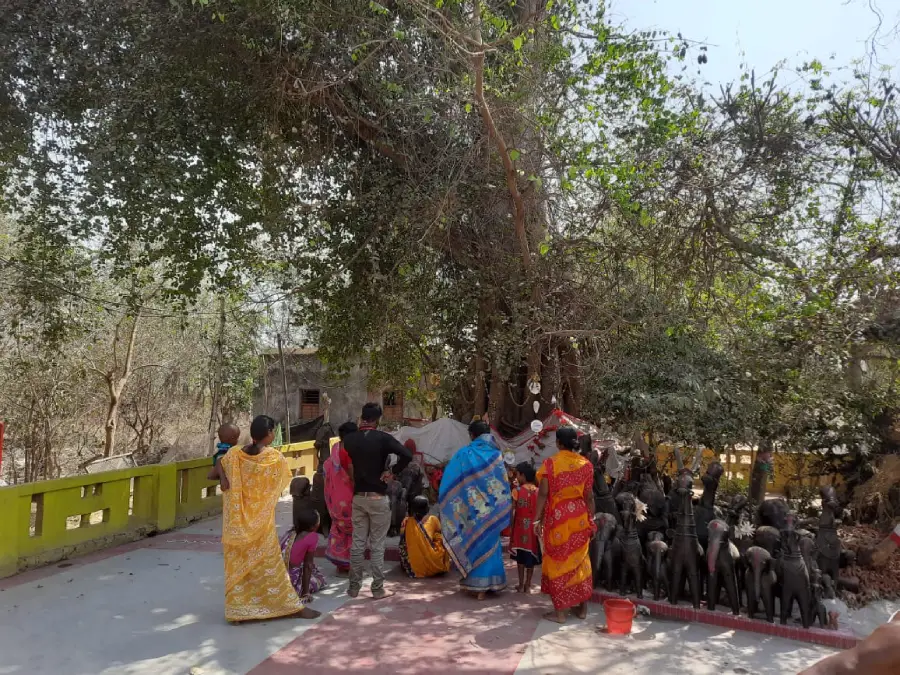
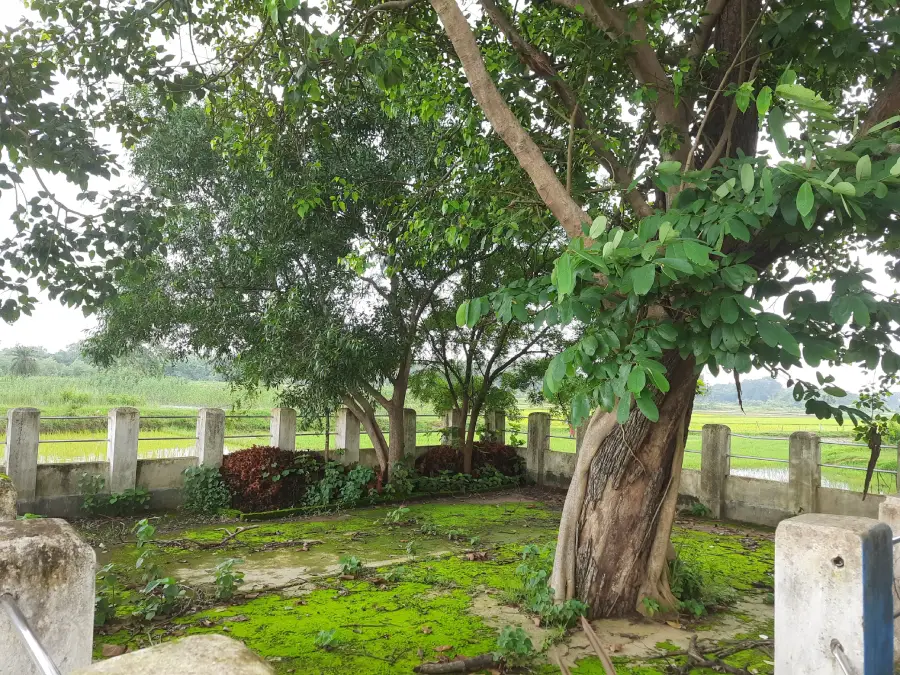
Across the Ho and Santhal tribal communities of Jharkhand and West Bengal, jaherthans, or sacred groves, hold an important place in community life, where priests or deuris offer worship. Even in this age of AI, mobile phones and the internet, the all-encompassing forest reigns supreme.
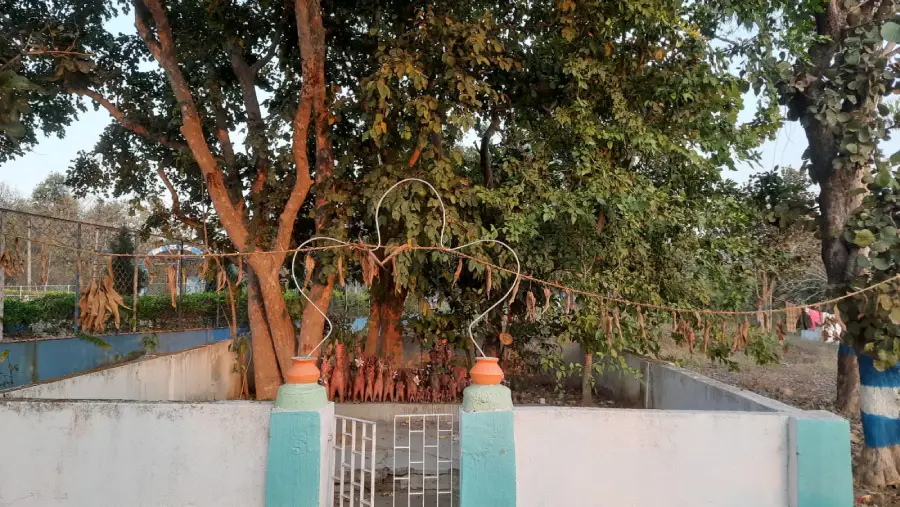
“Despite material progress, tribals in my village will always maintain their deep connection with forests dominated by Sal trees, or else our settlement will cease to exist,” Hembrom, who cultivates paddy, told The Indian Tribal.
The Place Of Marang Buru
Hembrom explained the concept of Marang Buru, also known as bodo pahad (big hill) in Bengali. In every jaherthan in Jhargram, clay or terracotta figurines of horses and elephants have been found since ancient times. The horses are believed to be the vahans, or mounts, of Marang Buru. All the animal figures are made by potters.
Incidentally, in Jhargram, which is in South Bengal, the elephant figures are called hathi thakurs (elephant gods), while the horse figures are known as sadom. In North Bengal, the elephant is referred to as Mahakal.
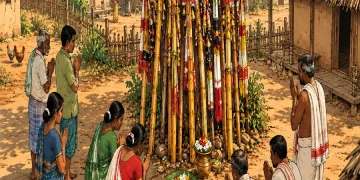
Worship is performed thrice a year, and white cocks are sacrificed at jaherthans. To buy red and white cocks and hens during festivals, contributions are collected from all households. People usually offer worship in March-April during the Baha/Sarhul festival and again on the occasion of Raash Purnima, which falls after Durga Puja and is observed once every five years. Worship also takes place on the day of Durga Puja’s Shashthi. Sometimes, chicken is cooked with rice during festivities.
Ranger Gurudas Murmu, who works for the West Bengal Forest Department, said he had been in Jhargram for 17 years. Every village has a jaherthan.
“I have seen the custom of worshipping elephant figurines since childhood in jaherthans, but not all have them. However, all tribal villages have jaherthans,” he said. He patrols eight villages daily, and his range covers around 80 villages. Many of these villages border forests.
Guide Subhadip Kundu, who was born and raised in Jhargram, helps tourists go trekking and explore scenic places and jungles. “Conflict is high in Jhargram. In the past 10 years, even elephants have been killed due to mob anger and the continued use of the hula method of chasing away elephants,” he said.
According to Kundu, Jangal Mahal is culturally no different from Jharkhand. In 1855-56, when the Santhal rebellion led by Sido and Kanhu took place, its impact was felt in this region as well.
The animals often raid villages in search of paddy, the main crop, and also consume vegetables. Hembrom’s daughter, Sandhya, a Class 12 student, said the forest is close to her house and that she often enters it to collect leaves for sale and fuelwood for cooking.
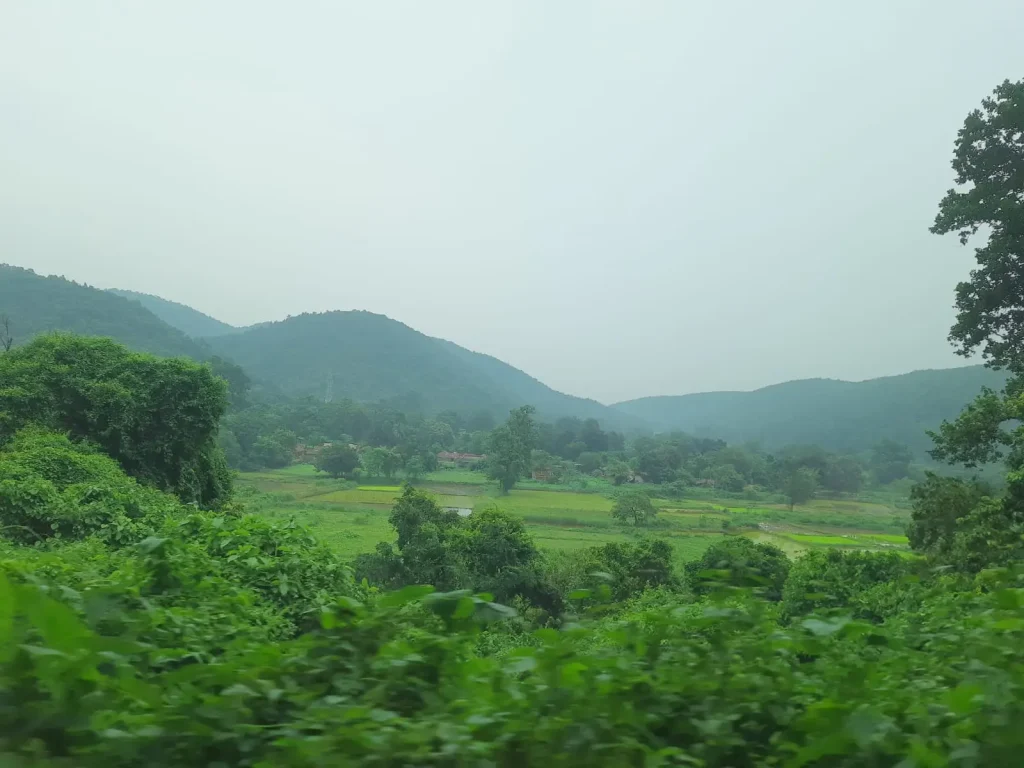
“I have been seeing elephants since childhood and do not fear them anymore. The forest is close by, but 10-15 of us enter it together,” she said.
Sandhya’s house has a gas stove, but her mother is not comfortable using it. The stove has also become old. Rising LPG prices and difficulties in accessing supplies mean that many rural households still depend on fuelwood for cooking.
Changing Behaviour Of Elephants
Elephants usually came from Dalma in Jharkhand and entered Jhargram. However, they are now staying in the Jhargram landscape and refusing to move away.
Assistant Divisional Forest Officer Chinmoy Barman is posted in the Kharagpur division, which spans Paschim Medinipur and Jhargram districts. Barman said there were around 220 elephants in the Paschim Medinipur, Bankura and Jhargram districts of South Bengal.
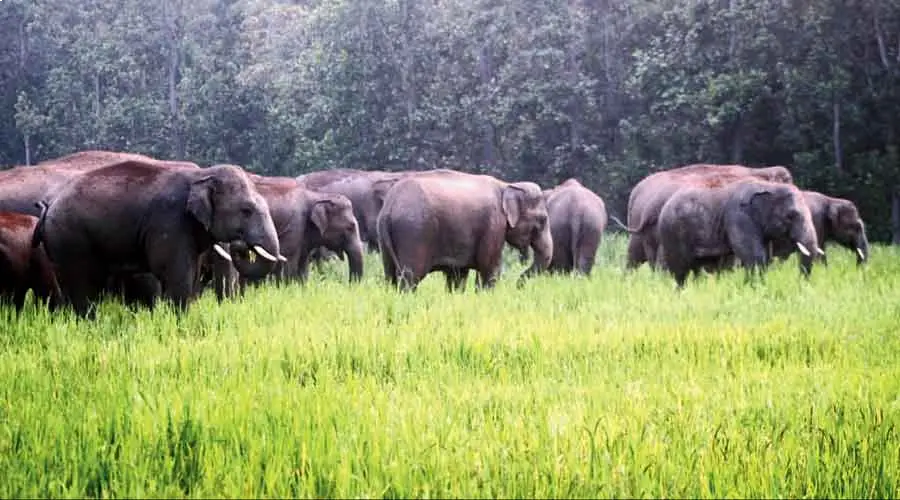
“The animals used to come to Bengal from Odisha and Dalma in Jharkhand once a year, around the mid-to-late 1990s. But over the past 15-20 years or more, they have mostly remained in Bengal and refuse to leave, as corridors have been disrupted by irrigation for multiple crops throughout the year and pressure from human populations. Extensive mining in both Jharkhand and Odisha also deters their movement,” he said.
The officer said extensive crop damage created a constant risk of retaliatory killings, as people sought to protect their crops. People also set up electric fences or live wires, which sometimes kill elephants.
Barman acknowledged that moving the animals had become a concerted effort. “When forest staff try to make them move, the animals sometimes refuse to leave. This year, we tried to move 57 of them and then 30 by attempting to guide them. Paddy is the dominant crop and attracts elephants the most. The animals consume large quantities of paddy and often raid fields at night,” he said.
Based on his experience, the elephants’ diet had changed, and they now fed mostly on paddy and vegetables, Ranger Murmu said.
“They do not return to Dalma anymore. Earlier, the animals used to come to Bengal during the monsoon and return to Dalma in November-December,” he said. There are 41 solitary elephants, or loners, in Murmu’s landscape, he claimed
“The elephants used to travel as far as Betla National Park in Jharkhand. Now, even people in Dalma say that the elephants belong to Bengal,” he said.
The controversial hula method is often used in South Bengal to make elephants leave. According to forest department sources, although this is not officially acknowledged, it is difficult to move elephants without resorting to hula. Under this practice, groups of people attempt to chase away the animals using mashals, or flaming torches, at night rather than relying only on firecrackers.
Avijan Saha of Airavat Trust, an NGO based in Siliguri, said people who own paddy fields usually keep five to ten such burning torches.
“At one time, the practice was used solely to chase away elephants. Later, it also became a profit-making activity because of the use of gunny bags and kerosene obtained from ration shops, which became a source of income. There are specialised hula teams with six to eight members in each team, and they chase elephants from one place to another. One animal was killed due to hula. These torches were once made of wood, but now iron ones are used,” he said.
Sandhya added that these flaming torches could be found in every house, with up to five pieces in each household. “I once held them to see if elephants were near my house,” she said.
Despite the continuing human-elephant conflict, reverence for the animals persists. Santhal resident Ghanashyam Murmu is from Mohonpur village in Jhargram. He is a priest and has been performing worship at jaherthans for 20-25 years. In Jhargram, the Santhals mainly offer worship to these figures, but the Kurmis follow the practice as well. Jaherthans in Dumka and Bokaro districts of Jharkhand also have these figures.
The figurines are also kept to maintain the connection between human beings and the environment, particularly the forests. Since tribal communities once lived in jungles, the practice is believed to have originated from that close relationship with the natural world.
Hembrom said the villagers always listened to Marang Buru. “When the plan to erect a boundary wall around the jaherthan was raised, the deity objected and asked the devotees to preserve it in its original form,” he said.
Across Jharkhand, many sacred groves now have boundary walls.