









Ranchi
The standoff between the Jharkhand government and protesting JPSC-JSSC aspirants continued on Sunday after a third round of talks ended without an agreement on the students’ key demands, including a CBI probe into alleged irregularities and cancellation of the JSSC-CGL examination.
The government agreed to cancel the 14th Jharkhand Public Service Commission (JPSC) examination along with the 2023 and 2025 backlog examinations, and announced a series of measures to investigate alleged irregularities and reform the State’s recruitment system.
The students, however, said they would not call off their agitation until the demand for a CBI investigation was accepted. They also continued to demand cancellation of the JSSC-CGL examination and other examinations allegedly conducted by agencies or individuals under scrutiny.
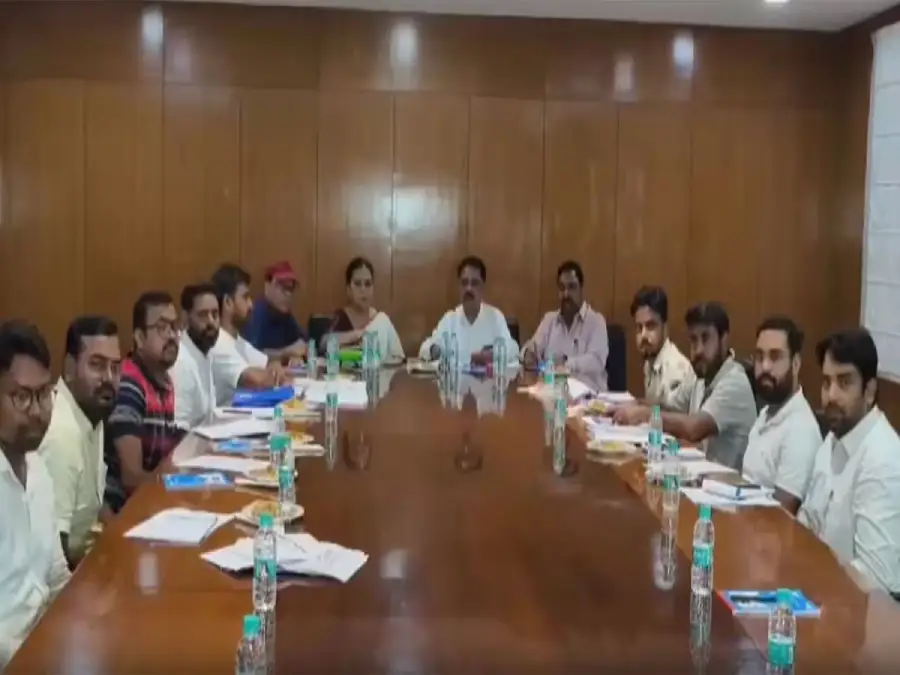
The latest talks took place as the students entered the 16th day of their agitation. An eight-member delegation of the JPSC-JSSC Reform Manch met a ministerial panel comprising Dipika Pandey Singh, Sudivya Kumar, Chamra Linda and Sanjay Yadav at the State Guest House in Ranchi.
The government had held discussions with the Reform Manch on Friday night and four rounds of talks with different student groups on Saturday. On Sunday, it held discussions with two groups — one led by Devendranath Mahto and the other by the JPSC-JSSC Reform Manch.
Govt accepts cancellation of 14th JPSC, backlog exams
Addressing a press conference after the talks, Minister Sudivya Kumar Sonu said the government had accepted 98% of the demands raised by the students.
He said the government had agreed to cancel the 14th JPSC examination as well as the 2023 and 2025 backlog examinations scheduled alongside it. The government also decided to conduct a comprehensive inquiry into examinations conducted by TDPL in view of allegations against the agency. Further action would be taken if widespread irregularities were found, Sonu said.
The Minister said the government had also agreed to investigate allegations relating to the JSSC-CGL examination, but maintained that the state could not cancel the examination on its own because the recruitment process had been conducted under the supervision of the High Court and Supreme Court.
“If required, a probe committee headed by a retired judge could be formed to investigate the alleged irregularities in the CGL examination,” Sonu said.
He also said the government could not cancel appointments of candidates selected through the CGL process.
CBI probe remains key point of disagreement
The major point of disagreement remained the students’ demand for a CBI investigation.
The government proposed that the CID investigate the alleged irregularities in the 14th JPSC examination and complete the probe within 90 days. It also proposed setting up a fast-track court to deal with cases arising from examination irregularities, with charge sheets to be filed within the stipulated 90-day period.
The government also proposed requesting the Enforcement Directorate (ED) to investigate the financial aspects of alleged irregularities in the JPSC examinations.
Explaining the government’s position on the CBI demand, Sonu said the state had already witnessed prolonged CBI investigations into the first and second JPSC examinations.
“We have witnessed firsthand the nature of CBI investigations in this state; the inquiries into the first and second JPSC examinations were conducted by the CBI. More than twenty years have passed since then,” he said.
He said the government had offered a time-bound alternative. “When we assured them that our CID would conclude the investigation within 90 days through a fast-track court process, they should have accepted that proposal,” Sonu said.
He said the alleged irregularities had two aspects — criminal conspiracy and financial implications. According to him, the criminal investigation could be handled by the CID, while the ED would be better placed to examine the financial aspects.
Students refuse to compromise
Student leaders rejected the government’s proposal and maintained that a CBI investigation was essential.
“Our primary demand is that the JSSC-CGL exam must be cancelled and a CBI inquiry ordered. This is the foremost demand of the vast majority of students,” student leader Rajesh Prasad said.
Student leader Ravindra Paswan said the agitation would continue because the students’ key demands had not been accepted.
“Most of our demands have been met, including the demand for cancellation of the 14th JPSC exam. But we will not compromise till our demand for a CBI probe is fulfilled,” Paswan said.
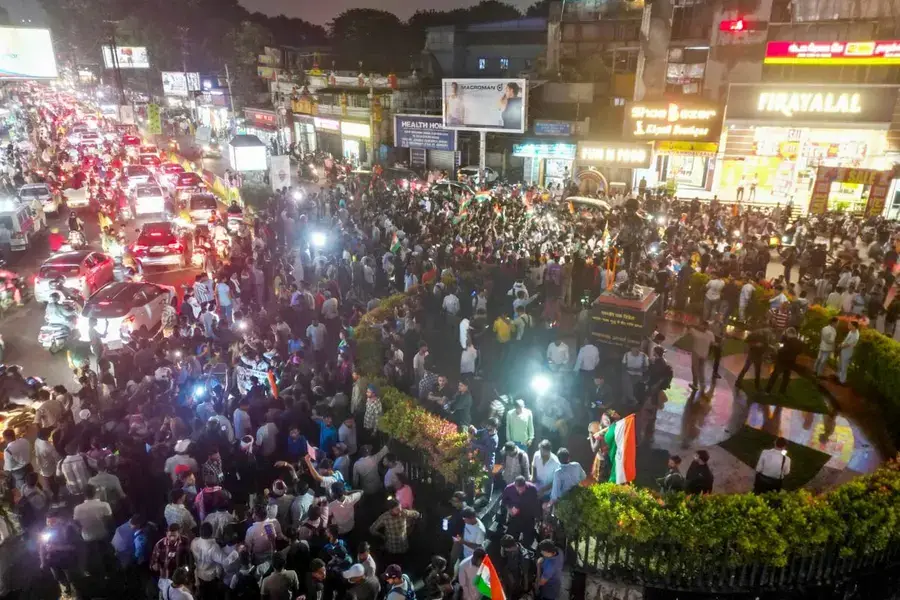
He said the students would take out a peaceful march to the Jharkhand Assembly on Monday.
“Our demand is that all examinations conducted by the TDPL agency should be cancelled and a CBI investigation should be ordered. Secondly, all examinations in which Abhay Tiwari was involved should be cancelled and a CBI investigation should be conducted,” Paswan said.
He added that since the demand for a CBI inquiry, including into the JSSC-CGL examination, had not been accepted, the students would continue their agitation and proceed with their planned Assembly march.
Students question JPSC resignations
The resignation of the JPSC chairman and members also featured in the students’ arguments for a CBI investigation.
Protester Anish Fatima said the resignations indicated that irregularities had taken place within the commission.
“This implies that there were indeed irregularities within the JPSC. They are resigning out of fear as the CID investigation progresses. While the CID investigation is underway, only the ‘small fishes’ are being exposed. A CBI inquiry would expose the ‘big fish’ involved,” Fatima said. She said the students were seeking changes in the recruitment system rather than limiting their demands to individual cases.
“We are fighting against the system and want to reform it; that is why we absolutely insist on a CBI inquiry,” she said.
The government, meanwhile, said the resignations and other actions were part of the steps already taken after alleged irregularities came to light.
According to the government, raids had been conducted and digital and documentary evidence seized. Suspects were detained, interrogated and subsequently remanded to judicial custody. The JPSC chairman and members also resigned.
Government proposes wider recruitment reforms
Apart from the investigations, the government announced measures aimed at reforming the state’s examination system.
Sonu said a panel comprising experts from IITs, IIMs and XLRI would be constituted to recommend reforms in the recruitment and examination system.
A separate panel headed by a retired High Court judge would examine alleged irregularities in the JSSC-CGL examination, he said.
The government also said it would recommend an ED probe into alleged financial irregularities linked to JPSC examinations.
The proposals followed demands from the protesting students for action against those responsible for alleged examination irregularities and systemic changes in the recruitment process.
Soren’s appeal fails to end agitation
The failure of the talks came hours after Chief Minister Hemant Soren sought to reach out to protesting youth during the inauguration of the two-day Adivasi Mahotsav at Jaipal Singh Munda Stadium.
Soren said the concerns of young people were also the government’s concerns and assured them that justice would be delivered transparently. He urged the students to resolve their grievances through dialogue and constitutional means and said there was no need for political patronage.
Soren also said the government had acted after alleged irregularities came to light and assured the youth that those responsible would face stringent punishment.
The students, however, continued with their agitation after the talks failed to resolve the CBI probe and JSSC-CGL cancellation demands.
Assembly march planned for Monday
The students have now announced a march towards the Jharkhand Assembly on August 10, with thousands of aspirants expected to participate.
The march is planned as a peaceful demonstration, according to the student leadership.
The government has maintained that it has accepted most of the students’ demands and offered a combination of investigations, cancellation of examinations, time-bound prosecution and structural reforms. The students have maintained that these measures do not meet their principal demand for a CBI probe and have decided to continue the agitation.
The standoff, therefore, remains centred on two unresolved questions — whether the JSSC-CGL examination should be cancelled and whether the alleged irregularities should be investigated by the CBI rather than through the state government’s proposed CID-led mechanism.