









Ranchi
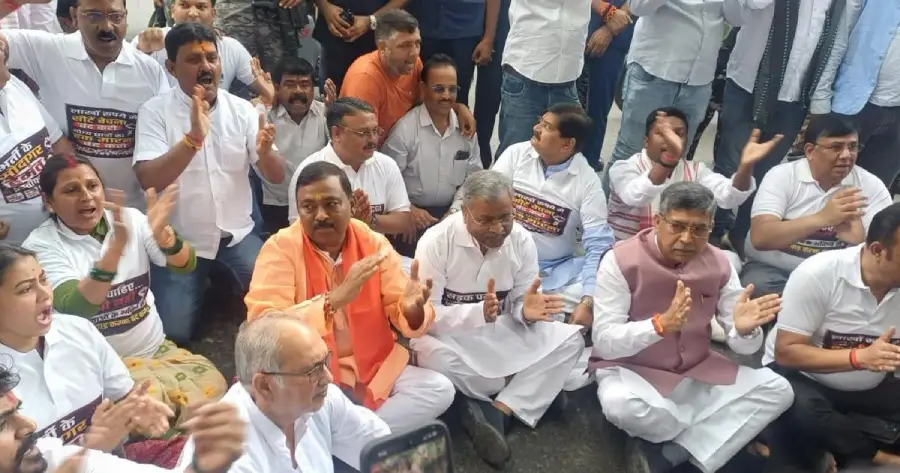
The Jharkhand BJP has called a statewide bandh on Tuesday, August 11, in protest against the police action against JPSC-JSSC aspirants during their march towards the Assembly. The bandh comes amid a sharp escalation in the political battle, with Leader of Opposition Babulal Marandi and several BJP MLAs themselves being detained while protesting outside Chief Minister Hemant Soren’s residence and demanding accountability from the government.
State BJP president Aditya Sahu said: “The Jharkhand bandh would commence at 8:00 a.m. and during the bandh, the entire State of Jharkhand would come to a standstill; only essential services would remain operational. He added that Kanwariyas (pilgrims) will face no inconvenience and also appealed to party workers to extend their full cooperation to them.”
For his part, in his latest outreach through an open letter to the protesting students, Chief Minister Hemant Soren appealed to them not to be drawn into what he described the Opposition’s narrative, while stressing that their concerns about recruitment examinations were legitimate and that the government had already accepted most of their demands.
Soren also commended the security personnel and officials for what he described as restraint and responsibility in handling the situation, and called for the issue to be resolved through dialogue rather than confrontation.
“The government has heard you. Our senior ministers have been in continuous dialogue with you, and I assure you that your demands will be acted upon with the utmost seriousness and sensitivity. Over the past few days, you have seen that, irrespective of who is responsible, the government has not spared anyone. Our clear objective is to address the shortcomings in the system so that no student has to face such difficulties in the future.
“We want to make the examination system more transparent, technology-enabled, secure and accountable. Your participation in this transformation is the most important. Our endeavour is to ensure that Jharkhand does not merely discuss its problems but sets a new example of finding solutions from here.
“I also understand that, amid your peaceful protest, some people from the Opposition have tried to disturb the atmosphere and mislead the students for political gains. I appeal to all of you not to be swayed by any such political narrative. You are the future of Jharkhand. It is not our responsibility to ignore your voice, but to listen to it and resolve your problems.
“I will reiterate my appeal: let us resolve this issue together through dialogue and trust,” the CM said.
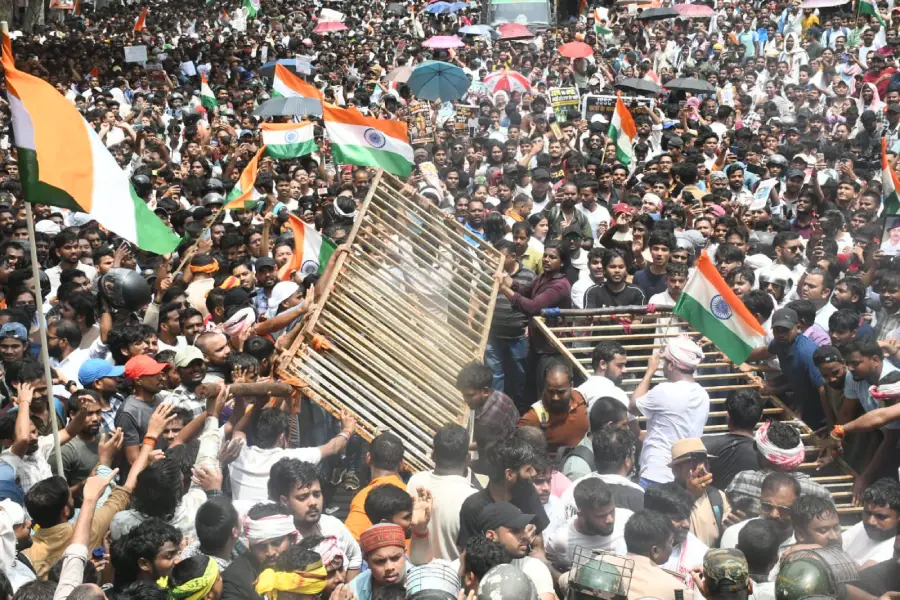
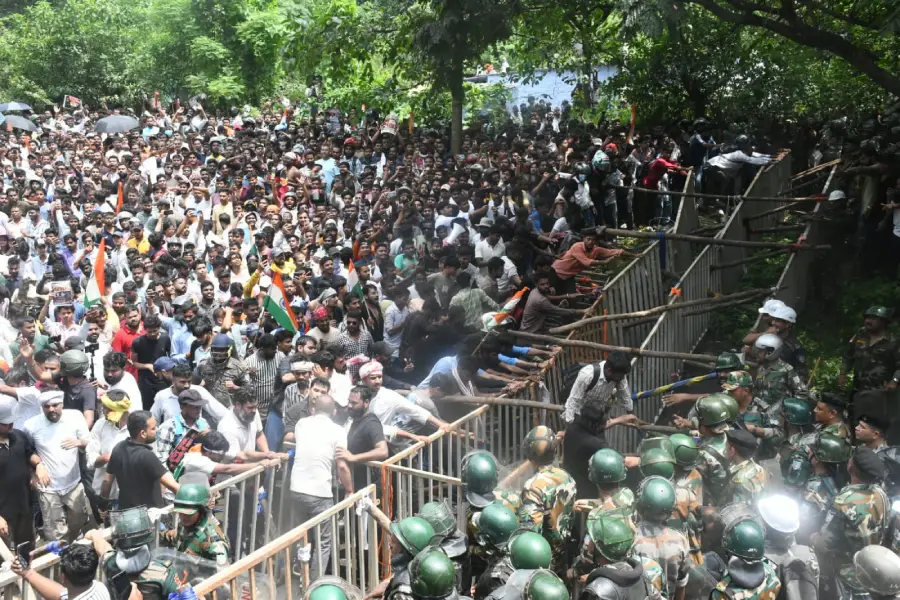
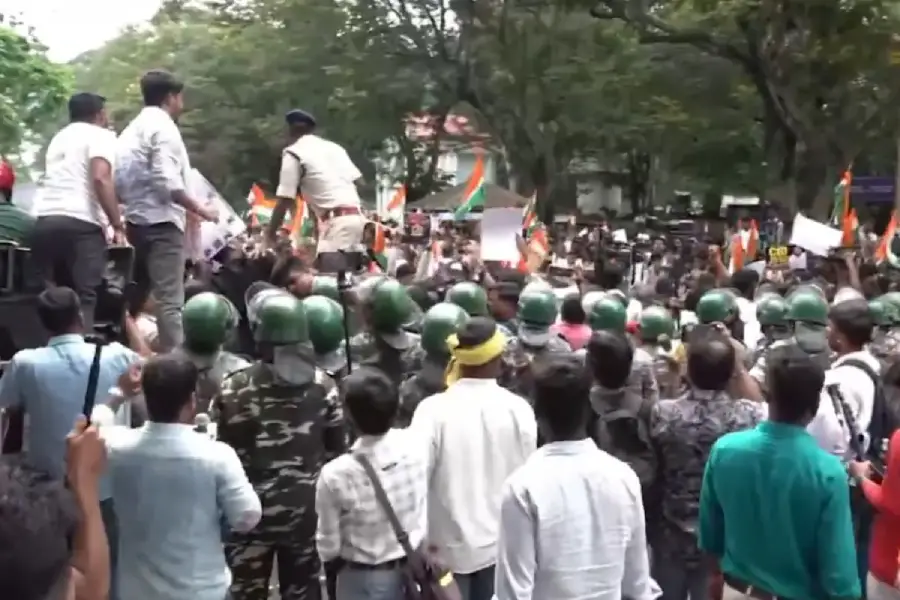
Earlier, the 17-day agitation by Jharkhand’s JPSC-JSSC aspirants entered a direct confrontational phase on Monday. Thousands of students marched towards the Jharkhand Assembly (as part of their Vidhan Sabha gherao plan), breaching multiple police barricades including those adorned with barbed wires, facing water cannons, tear gas and lathicharge by the police deployed in large numbers.
The escalation came even as the Jharkhand CID arrested former Jharkhand Public Service Commission (JPSC) chairman L Khiangte in connection with alleged irregularities in the commission’s 14th Combined Civil Services Preliminary Examination.
“We have arrested former JPSC chairperson L Khiangte in connection with irregularities in recruitment examinations,” Additional Director General (CID), Manoj Kaushik, said. Khiangte, who had resigned from the Commission last month amid the investigation, had been questioned several times by the CID. Prior to being appointed as the JPSC chairman, the Government had made him the Chief Secretary.
The street confrontation and the arrest have added a new dimension to an agitation that began over allegations of examination irregularities but has since evolved into a wider demand for transparency, accountability and an overhaul of Jharkhand’s recruitment system.
Barricades Breached, Police Use Force
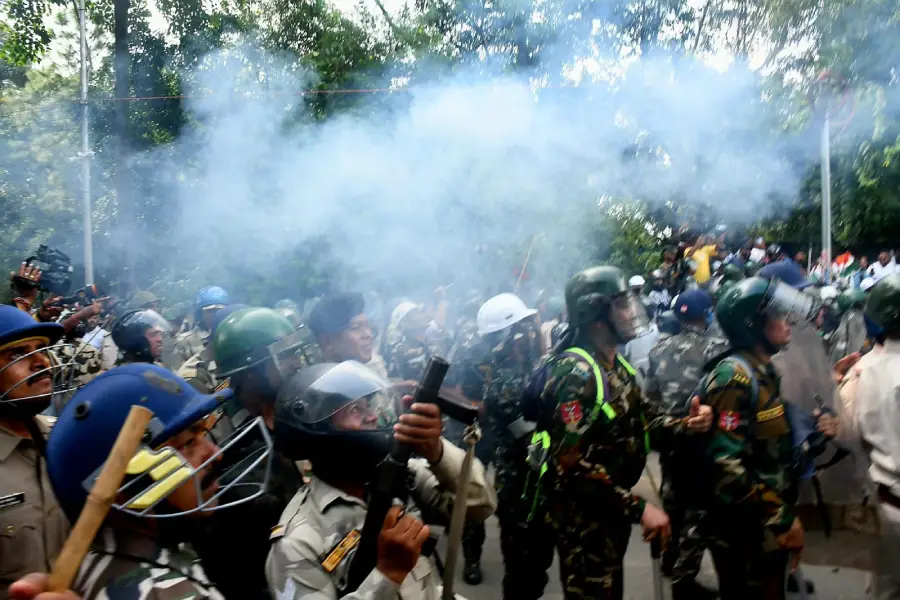
The day began with thousands of aspirants assembling in Ranchi for the planned Vidhan Sabha Gherao. Student leaders had repeatedly said the march would be peaceful and constitutional, but the administration had imposed prohibitory restrictions around the Assembly and erected multiple layers of barricades, including barbed-wire fencing, to prevent protesters from entering the restricted zone.

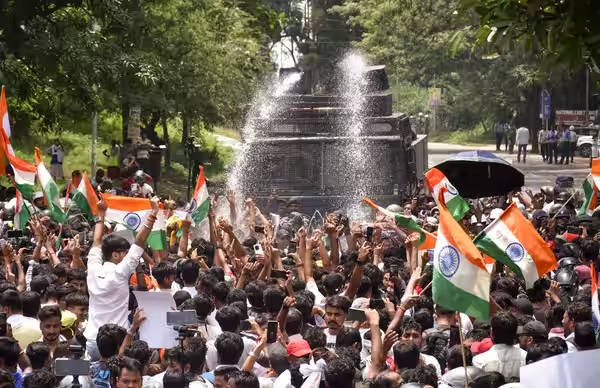
Videos and reports from the ground showed protesters advancing towards the Assembly and breaking through successive barricades. Police first used water cannons and subsequently resorted to lathicharge and tear gas as the crowd continued to push forward.
The protesters managed to get to within roughly 100 metres of the Assembly complex before the police action intensified. At least three people — two protesters and a Jharkhand Armed Police personnel — were reported injured in the confrontation, according to officials.
The situation around the Assembly consequently became the most dramatic flashpoint of the agitation so far, with police reinforcements, barricades, barbed wire and crowd-control measures deployed to prevent the protesters from reaching the legislature.
In the evening, police lathicharged the protesters again in a bid to disperse them from staging a sit-in in front of the Jharkhand Assembly.
Following the second round of police action and more protesters sustaining injuries, student leaders hardened their position and said the government’s handling of the protest had further eroded their trust in the administration. They asserted that after repeated rounds of talks with ministers and officials failed to resolve the deadlock, they would now speak only with Chief Minister Hemant Soren directly and would not enter into any further negotiations with lower-level government representatives.
The students maintained that the police action had strengthened rather than weakened their resolve and reiterated that the agitation would continue until their principal demands, particularly an independent CBI probe, were addressed. Reports from the ground confirmed that the confrontation continued after protesters breached barricades, with police using lathicharge, water cannons and tear gas to disperse them.
City SP Paras Rana, however, claimed four policemen were injured after protesters allegedly pelted stones at security personnel.
Why Did The Students Decide To Gherao The Assembly?
The Assembly march was not a sudden decision. Students had announced the August 10 gherao after several rounds of negotiations with the state government failed to produce an agreement on what they consider their core demands. The agitation had already entered its third week when the government and student representatives held multiple rounds of talks over Friday, Saturday and Sunday.
The immediate trigger for the Assembly march was the failure of the latest talks on Sunday to bridge the gap over two contentious issues: a CBI investigation into alleged irregularities in recruitment examinations and cancellation of the JSSC Combined Graduate Level (CGL) examination.
The government offered substantial concessions. But the students maintained that an investigation by the state CID or a judicial committee could not substitute for a CBI probe. That disagreement ultimately became the defining fault line between the two sides.
Government Says 98% Demands Accepted
The Jharkhand government has maintained that it has gone a long way towards addressing the protesters’ concerns. Minister Sudivya Kumar Sonu said on Sunday that the government had accepted around 98% of the points raised by the students.
Among the major concessions was the decision to cancel the 14th JPSC Preliminary Examination and the 2023 and 2025 backlog examinations. The government also proposed investigations into alleged irregularities and measures aimed at reforming the recruitment system.
For the criminal aspects of alleged irregularities in the 14th JPSC examination, the government proposed a CID investigation. It also said the Enforcement Directorate would be requested to examine suspected financial transactions connected with the alleged irregularities.
The government further proposed a time-bound investigation and fast-track judicial mechanism, with charge sheets to be filed within 90 days, according to reports of the talks.
For broader reforms, the government proposed involving experts from institutions including IIT-ISM, IIM Ranchi and XLRI to recommend changes in the recruitment and examination system.
CBI Probe Remains The Deal-Breaker
Despite the concessions, the students refused to call off their agitation. Their principal objection is that the State government has not agreed to hand the alleged irregularities to the CBI.
Student representatives have argued that an independent central agency is necessary because the allegations concern the functioning of recruitment bodies and the wider examination process. They have also questioned whether a state agency can inspire sufficient confidence among aspirants when the controversy involves senior officials and institutions within the state administration.
The government, on the other hand, has defended the CID route and argued that a time-bound state investigation, coupled with ED scrutiny of financial irregularities and a fast-track court mechanism, can deliver results more quickly. It also cited the “20-year” delay in the probe into the first and second JPSC exams by the CBI.
The government has also maintained that it cannot simply cancel the JSSC-CGL examination because the recruitment process was conducted under judicial supervision and candidates selected through it have already been appointed.
For the CGL controversy, the government proposed a judicial inquiry headed by a retired judge, with the possibility of ED involvement if financial irregularities are found. Students rejected that alternative and continued to demand a CBI probe.
Why The JSSC-CGL Examination Is So Contentious?
The CGL examination has become one of the central issues in the agitation because students are demanding both scrutiny of the recruitment process and cancellation of the examination. The government’s position is that the examination cannot simply be annulled because of the judicial oversight under which the process was conducted and because appointments have already been made.
The students have taken the opposite position, arguing that alleged irregularities need to be independently investigated and that the integrity of the entire process must be established before the recruitment can be treated as legitimate.
This is why the government’s agreement to cancel three JPSC examinations failed to end the agitation: the JSSC-CGL issue and the CBI demand remained unresolved.
Three JPSC Members Resign Amid Controversy
The confrontation has unfolded alongside significant changes within the JPSC itself. Three commission members — Ajita Bhattacharya, Anima Hansda and Jamal Ahmad — resigned amid the ongoing CID investigation. Their resignations were accepted by Governor Santosh Kumar Gangwar.
The resignations followed CID action in the examination irregularities case. The investigating agency has questioned several people and arrested individuals linked to alleged examination fraud and middlemen, while also examining the role of officials and personnel associated with the examination process.
Former JPSC chairman Khiangte had already been questioned repeatedly by the CID. The agency had also searched premises linked to him and examined material connected with the examination process before his arrest on Monday.
Who Is L Khiangte And Why Is His Arrest Significant?
The CID investigation has focused, among other things, on alleged irregularities involving the examination process and the role of an outsourcing agency Technocratic Dynamos Pvt. Ltd (TDPL). Earlier searches at JPSC and related premises resulted in the seizure of documents and digital material and the detention of several people for questioning.
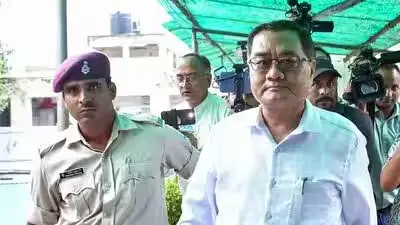
Khiangte resigned as JPSC chairman in July. His arrest on Monday came as thousands of aspirants were simultaneously marching towards the Assembly, making it one of the most consequential developments since the protests began.
Lalbiaktluanga Khiangte’s arrest is significant because he headed the Commission at the centre of the controversy surrounding the 14th Civil Services examination. A tribal from Mizoram, he was a 1988-batch IAS officer of Jharkhand cadre.
The arrest, however, does not resolve the students’ demand for a CBI investigation. The government continues to rely on the state CID for the criminal investigation and has proposed involving the ED for financial aspects.
Hunger Strike Adds Pressure
The Assembly march also came against the backdrop of an indefinite hunger strike by student leader Devendra Nath Mahto, whose health had deteriorated during the agitation.
Mahto, who had been on hunger strike for around nine days, joined Monday’s march in an ambulance despite significant weight loss and being medically weak.
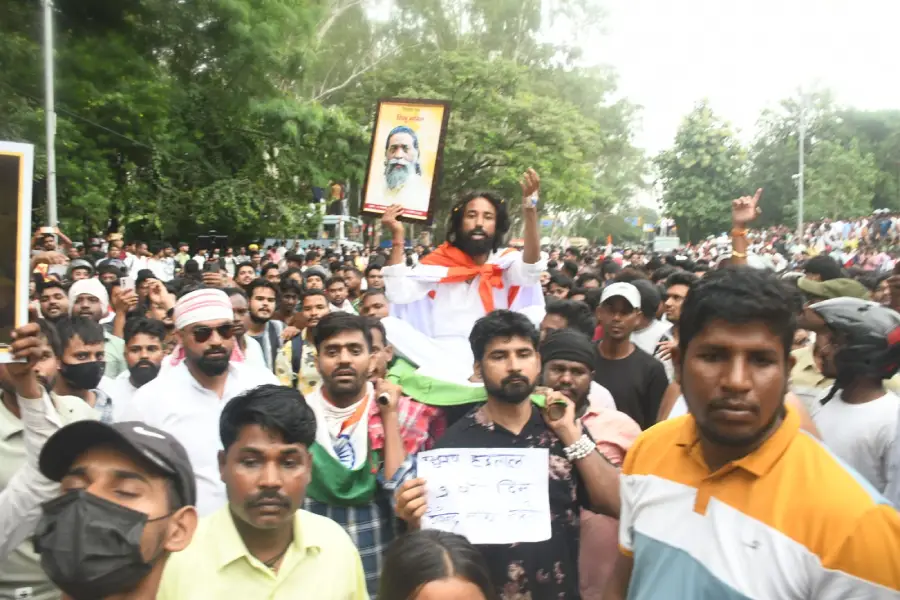
His participation gave the Assembly march an additional symbolic dimension, as protesters sought to demonstrate that the movement would not be called off merely because the government had accepted several of their demands.
Hemant Soren’s Appeal Fails To Break Deadlock
Chief Minister Hemant Soren had sought to engage with the protesters and urged them to pursue their grievances through dialogue and constitutional means. The government has argued that it has already acted against those suspected of wrongdoing, initiated investigations and accepted most of the students’ demands.
But the appeal did not produce a breakthrough.
For the students, the question is no longer limited to cancellation of individual examinations. They say the controversy has exposed deeper weaknesses in Jharkhand’s recruitment system and want an investigation they consider independent enough to establish responsibility across the chain.
What Happens Next?
The immediate future of the agitation now depends largely on whether either side shifts its position on the CBI demand.
The students’ position: Student leaders have said the agitation will continue until the demand for a CBI probe is accepted. They have also maintained their opposition to the JSSC-CGL examination and want examinations conducted by agencies facing allegations of irregularities to be scrutinised or cancelled where wrongdoing is established.
The students have additionally raised demands relating to recruitment reforms, age relaxation and changes in the examination system, including greater representation of tribal and regional languages in qualifying papers and creation of a dedicated state testing agency.
The government’s position: The government is likely to proceed with the decisions already announced — cancellation of the three JPSC examinations, CID investigation into alleged criminal irregularities, proposed ED scrutiny of financial transactions and a judicial mechanism for examining the CGL controversy.
It has also proposed broader institutional reforms through an expert committee. But unless the government agrees to the CBI demand or the students accept the proposed investigative mechanism, the basic dispute will remain unresolved.
A Protest That Has Moved Beyond One Examination
The significance of the Ranchi agitation now extends beyond the fate of a single examination. For thousands of aspirants, government recruitment examinations represent years of preparation and one of the few pathways to secure employment. Allegations of paper leaks, manipulation, irregularities or institutional favouritism therefore carry consequences far beyond the candidates who appear in a particular examination.
For the government, the challenge is equally serious. It must demonstrate that investigations are credible, timely and capable of identifying and prosecuting those responsible while protecting candidates who were selected legitimately.
Monday’s confrontation has raised the political and administrative stakes considerably.
MEANWHILE
Congress leader Rahul Gandhi on Monday condemned the use of force against the protesting JPSC-JSSC aspirants, saying that using force against students was wrong and urging the Jharkhand government to continue listening to them and resolve their grievances immediately. His intervention came after he had earlier spoken directly with protesting students and expressed support for their demands.
For his part, BJP national president JP Nadda attacked the Jharkhand government over the handling of the agitation accusing the ruling coalition of failing to address the concerns of students and questioning the use of police force against the protesters. The BJP has also sought to put the Congress in Jharkhand on the spot, pointing to the contrast between Rahul Gandhi’s criticism of the crackdown and the Congress’s position as a partner in the Hemant Soren government.