









New Delhi
Few artists have altered the destiny of a tradition the way Teejan Bai did. Her demise marks the end of one of the most remarkable chapters in India’s folk heritage.
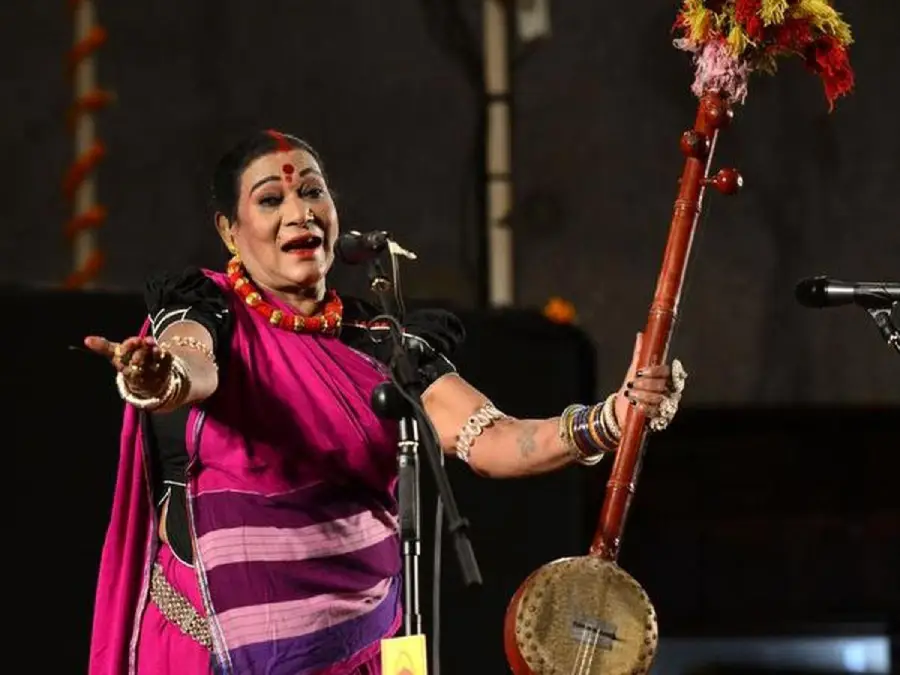
When she first stepped onto village stages as a young girl, few imagined that an illiterate child from a modest Pardhi tribal family in present-day Chhattisgarh would one day perform before presidents, prime ministers and audiences across Europe, America, Australia and Asia. Her extraordinary journey became proof that artistic genius can emerge from the most unassuming corners of India.
For more than six decades, she stood as the unmistakable face of Pandavani, the narrative folk tradition of Chhattisgarh that recounts episodes from the Mahabharata through music, storytelling and dramatic interpretation. Yet her greatness lay far beyond keeping an ancient art alive. She transformed it into a living, breathing performance that crossed linguistic, cultural and geographical boundaries without losing its roots.
STANDING OUT
Every performer lends a distinct interpretation to familiar stories, making each recital a fresh encounter with the epic. Within this tradition exist two principal styles—Vedamati and Kapalik. The former is relatively restrained, with the artist remaining seated while narrating the story. The latter is energetic, theatrical and physically demanding, requiring the performer to move across the stage, enact different characters and infuse every episode with dramatic intensity.
For generations, women generally confined themselves to the seated Vedamati style. Kapalik was considered physically vigorous and socially unsuitable for them. Teejan Bai ignored those unwritten rules.
Choosing the Kapalik style was not simply an artistic preference; it was an act of quiet rebellion. At a time when women in many rural communities faced severe social restrictions, she decided to perform standing before large public gatherings, portraying mighty warriors, kings and sages with commanding confidence. She did not seek permission to enter a male-dominated performance space. She occupied it naturally, compelling audiences to redefine their expectations of women performers.
That decision came at a heavy personal cost. According to accounts from her early life, members of her community ostracised her for publicly performing before mixed audiences. Yet the social boycott neither silenced her nor diminished her determination. She continued travelling from village to village, often with meagre resources, carrying little more than her tambura and an unwavering belief in her art.
Ironically, the very choice that invited criticism would eventually become the defining hallmark of her career.
IN A LEAGUE OF HER OWN
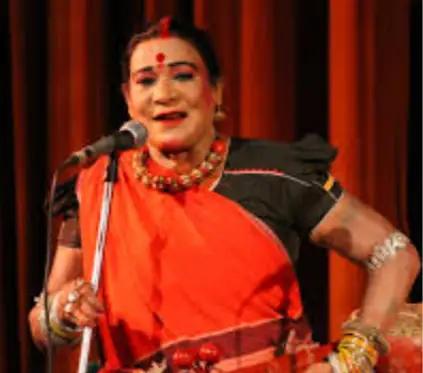
What distinguished Teejan Bai from many accomplished singers was her remarkable ability to transform narration into theatre. Her performances unfolded like vivid dramatic productions without elaborate costumes or expensive stage sets. A slight change in posture could signal the arrival of Bhima. A measured pause could evoke Krishna’s wisdom. A sudden tightening of facial expressions conveyed Draupadi’s anguish with startling immediacy. Audiences did not merely hear the Mahabharata; they experienced it unfolding before them.
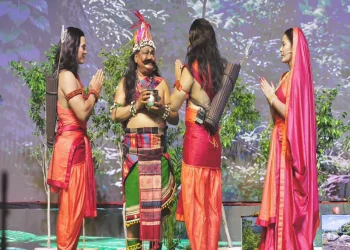
Central to this theatrical brilliance was her extraordinary use of the tambura. In most musical performances, the instrument serves as accompaniment. In Teejan Bai’s hands, it became a versatile dramatic prop. Within moments it could represent Bhima’s mace, Arjuna’s bow, a royal sceptre, a chariot, or even the flowing hair of Draupadi after her humiliation in the Kaurava court. Such effortless transformations demonstrated her rare ability to ignite the audience’s imagination using the simplest of objects.
Her genius lay in understanding that folk performance is not dependent on spectacle but on suggestion. She trusted the audience’s imagination, inviting them to complete the visual world she created through gesture, rhythm and expression. Every movement carried meaning; every pause heightened anticipation.
SPOTTING HER
Renowned theatre personality Habib Tanvir was among the earliest to recognise the extraordinary talent hidden in this village performer. His encouragement proved crucial in introducing her to wider audiences beyond rural Chhattisgarh. Soon afterwards, cultural institutions across the country began inviting her to festivals where she stood shoulder to shoulder with India’s finest classical musicians and dancers. She demonstrated that artistic excellence is determined not by the category assigned to an art form but by the depth of the performer interpreting it.
Her rise also challenged another long-standing cultural hierarchy—that between written and oral traditions. Indian epics have often been approached through manuscripts, scholarly commentaries and formal literary study. Teejan Bai reminded audiences that they also survive through memory, performance and collective participation. Her Mahabharata was never confined to books. It lived in voice, rhythm and emotion, passed from one generation to another through listening rather than reading.
That oral inheritance began in her own childhood. She often acknowledged that her maternal grandfather, Brijlal Pardhi, introduced her to the Mahabharata by narrating its stories repeatedly. She absorbed those tales through attentive listening, long before she understood their wider literary significance. What began as stories heard in a village courtyard gradually evolved into a lifelong artistic calling.
There is a memorable anecdote that illustrates both her confidence and her instinctive theatrical intelligence. During one of her early public performances, some members of the audience reportedly questioned whether a young woman could convincingly portray the mighty Bhima. Rather than responding with words, she launched into the episode with such force, changing voice, posture and expression in rapid succession, that scepticism quickly turned into thunderous applause. It became an early reminder that true performance transcends social prejudice.
As her reputation spread, invitations began arriving from prestigious cultural festivals across India. Audiences unfamiliar with Chhattisgarhi were equally captivated because her communication extended far beyond language. Her expressive face, commanding body language and instinctive timing conveyed emotions that required no translation. Whether in Delhi, London or Paris, spectators recognised courage, grief, humour, pride and compassion through the universality of her performance.
It was this rare ability—to make a deeply regional art universally accessible without diluting its identity—that elevated Teejan Bai from a celebrated folk artist to a cultural ambassador for India. She proved that authenticity, rather than adaptation, is often the strongest bridge between cultures.