









New Delhi
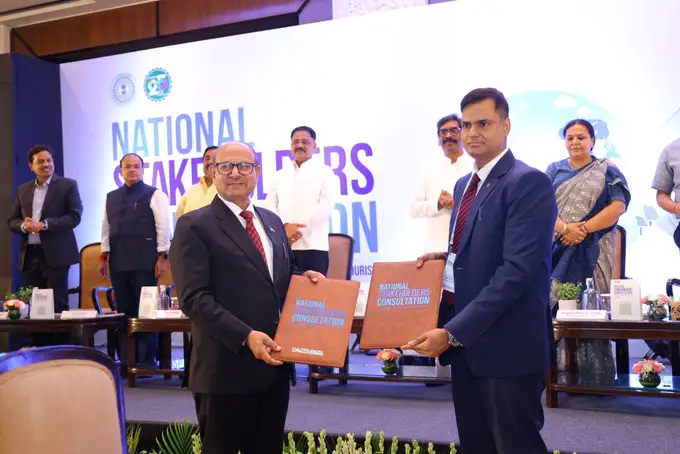
Jharkhand has received investment commitments worth Rs 99,639 crore after signing 14 major Memorandums of Understanding (MoUs) with leading industrial houses, technology firms and strategic partners during the valedictory session of the National Stakeholders Consultation, marking one of the state’s biggest investment mobilisation exercises in recent years.
The agreements span heavy industries, steel, cement, artificial intelligence, cloud computing, digital governance, tourism and infrastructure, while complementing the state’s ambitious Vision 2050 roadmap aimed at transforming Jharkhand into a technology-driven, innovation-led economy.
The biggest investment commitments came from Jindal Steel Private Limited, which signed an agreement for an investment of Rs 40,000 crore, and Ambitious Cement, a unit of Jindal Nuclear Power Pvt. Ltd., which committed Rs 30,000 crore. Together, the two proposals account for more than two-thirds of the total investment attracted during the consultation.
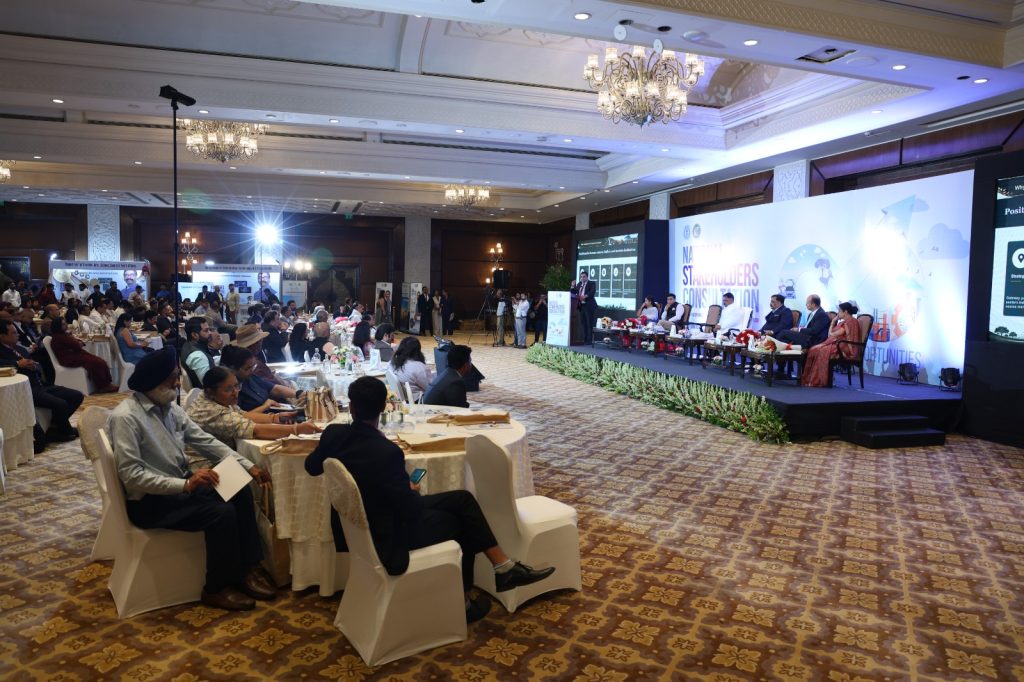
Addressing industry leaders, investors, policymakers and technology experts on the concluding day of the event on Thursday, Chief Minister Hemant Soren said the agreements represented far more than investment documents.
“The MoUs signed today are not merely paper agreements but achievements for the bright future of Jharkhand. They are not just policies but entirely new possibilities for the state’s development.” He said Jharkhand now intends to move beyond conventional industrialisation by simultaneously building research capacity, technological innovation and knowledge-based institutions.
“We welcome institutions of innovation and research to strengthen Jharkhand’s intellectual capabilities. The state must move on the path of sustainable progress by developing into a research and innovation hub powered by new technologies while implementing long-term plans for holistic development.”
Government Vows Continuous Engagement With Investors
The Chief Minister acknowledged that inadequate communication had prevented Jharkhand from adequately projecting its strengths before investors over the years.
He said the government would ensure that the pace of development does not slow down and would institutionalise continuous engagement with domestic and international investors.
“We have long envisioned this transformation and have consistently pursued dialogue and cooperation at national and international levels to realise it. Today that vision is steadily becoming a reality. Because of inadequate communication in the past, Jharkhand’s true potential could not be fully presented before the world. We will now bridge that gap and maintain continuous engagement with investors from India and abroad.”
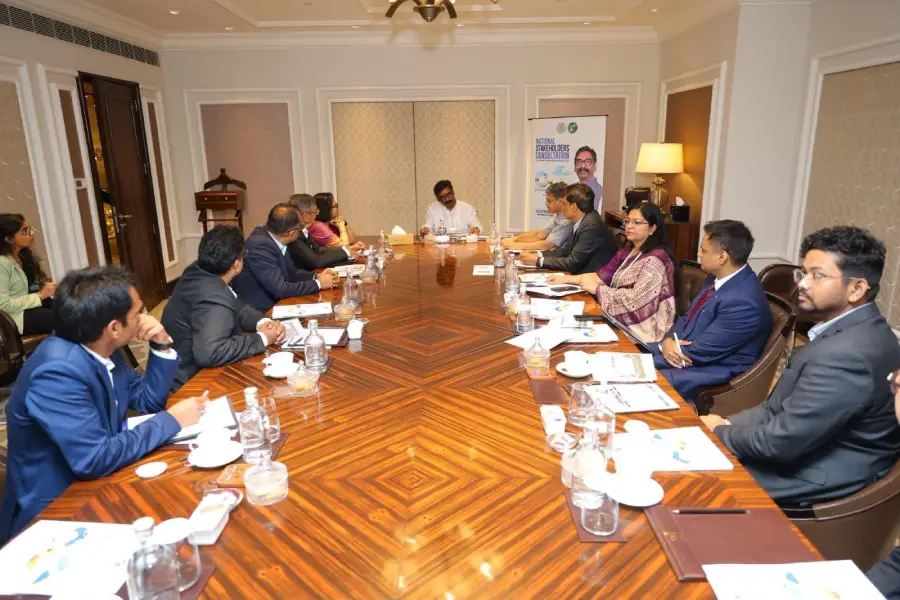
During the consultation, the government held extensive interactions with representatives of industry bodies and leading companies to identify fresh opportunities in manufacturing, investment, employment generation and technology-led development.
The Chief Minister said representatives from the textile sector had submitted a Letter of Intent (LoI) indicating the potential to generate nearly 70,000 jobs in Jharkhand.
Separate discussions with the Confederation of Indian Industry (CII) focused on collaboration in energy, renewable energy, transmission and power infrastructure, while interactions with FICCI centred on tourism, sports tourism, tourism-linked skill development and expansion of the textile sector.
The government also held discussions with Hero Cycles and Avon Cycles regarding the possibility of establishing a bicycle manufacturing ecosystem in Jharkhand. Representatives of Coca-Cola and EaseMyTrip also explored investment and partnership opportunities in the state. “Our commitment is clear—to transform Jharkhand into a leading destination for investment, industry, employment and innovation through policy reforms while creating large-scale opportunities for local youth,” the Chief Minister said.
Major MoUs Signed During The Consultation
The key investment agreements signed during the National Stakeholders’ Consultation include:
- Google LLC – Collaboration with the Government of Jharkhand to promote Artificial Intelligence, cloud technology, data centre modernisation, education, healthcare, traffic management and capacity building.
- Jindal Steel Private Limited – Investment proposal of Rs 40,000 crore.
- Ambitious Cement (a unit of Jindal Nuclear) – Investment proposal of Rs 30,000 crore.
- Tata Steel Ltd. (Tinplate Expansion) – Investment proposal of Rs 2,600 crore.
- Amalgam Steel and Power Ltd. – Investment proposal of Rs 4,980 crore.
- Ambuja Cement – Investment proposal of Rs 650 crore.
- Ambuja Cement – Additional investment proposal of Rs 1,000 crore.
- Varun Beverages – Investment proposal of Rs 409 crore.
The New Delhi consultation built upon the investment outreach initiated by the Jharkhand government during the World Economic Forum Annual Meeting in Davos, Switzerland, in January this year, where the state actively engaged global corporations, investors and business leaders to showcase Jharkhand as an emerging investment destination.
Alongside industrial investments, the consultation showcased Jharkhand’s ambitious Vision 2050, which seeks to position the state as one of India’s leading destinations for artificial intelligence, digital governance and technology-led economic development.
On the opening day of the consultation, the government unveiled a comprehensive roadmap to transform Jharkhand into the country’s leading Public Governance-led AI State by integrating artificial intelligence, advanced digital infrastructure and citizen-centric innovation across governance.
The roadmap envisages the adoption of AI across government departments, education, healthcare, agriculture, industry and public service delivery to enable faster, transparent and data-driven decision-making while improving the efficiency, accessibility and quality of government services.
A major highlight of the consultation was the proposed Jharkhand Artificial Intelligence Policy 2026-2031, which seeks to mainstream AI across governance, healthcare, agriculture, mining, education, environmental management and disaster response while ensuring responsible use of technology through robust safeguards for transparency, data privacy and cybersecurity.
To strengthen governance through intelligent analytics, the government proposed the Chief Minister Data Intelligence Platform (CM-DIP)—an AI-enabled decision-support system designed to facilitate real-time monitoring of government programmes, infrastructure projects and departmental performance.
The roadmap also envisages AI-powered citizen services through multilingual digital platforms, WhatsApp-based service delivery, digital grievance redressal mechanisms and Panchayat-level digital access to government services.
Three flagship AI initiatives were showcased during the consultation:
- Chief Minister Data Intelligence Platform (CM-DIP) for AI-enabled governance and monitoring.
- Health & Nutrition Vigilance System (HNVS) to strengthen healthcare delivery through intelligent data analytics.
- Critical Minerals Administration System (CMAS) to modernise mineral administration and improve resource management.
Google Partnership To Accelerate Digital Transformation
Among the most significant agreements signed during the consultation was the Memorandum of Understanding between the Government of Jharkhand and Google LLC.
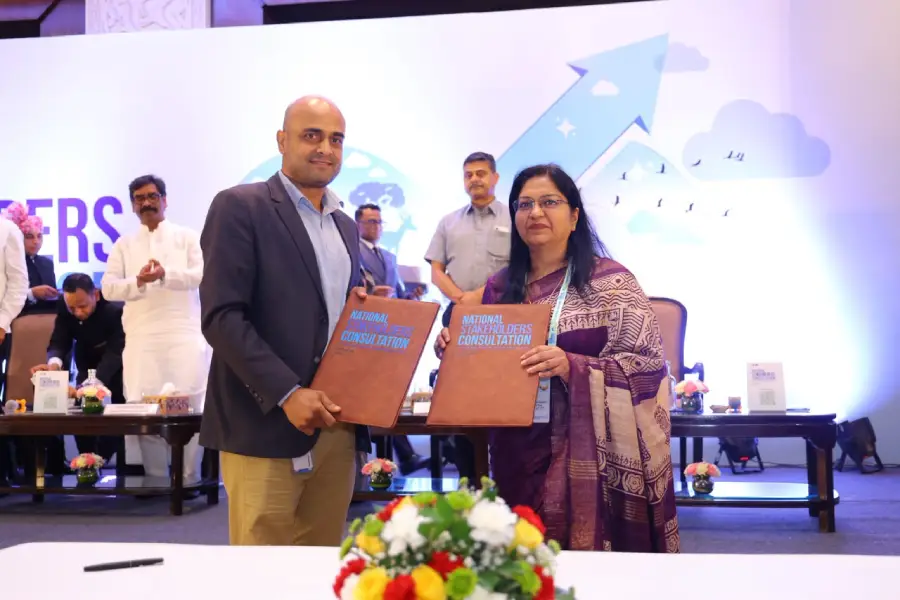
The partnership is expected to play a pivotal role in expanding artificial intelligence and cloud technology capabilities across the state. It will support data centre modernisation while promoting technological innovation in education, healthcare, traffic management, governance and capacity building.
The collaboration aligns with the state’s broader objective of creating a robust digital ecosystem capable of supporting next-generation governance and technology-led economic growth.
State Plans AI Mission, Innovation Hub and IT Park
As part of its long-term digital strategy, the government announced plans to establish a State AI Mission, Jharkhand AI Cloud, AI Innovation Hub, AI Park, AI Innovation Zones, Centres of Excellence and a comprehensive startup and skilling ecosystem aimed at promoting research, entrepreneurship and industry-academia collaboration.
To support these initiatives, the government has proposed an investment of Rs 1,150 crore over the next five years to build AI infrastructure, strengthen digital capabilities and accelerate AI adoption across government departments.
Another major proposal under Vision 2050 is the development of a 100.97-acre IT Park in Ranchi, envisioned as a hub for Global Capability Centres (GCCs), information technology companies, startups and innovation-driven enterprises.
Under the Vision 2050 framework, Jharkhand aims to attract over Rs 10,000 crore in technology investments, establish more than 50 Global Capability Centres, nurture over 1,000 AI startups, and generate more than one lakh AI-enabled employment opportunities, positioning the state among India’s leading centres for digital innovation and technology-driven industrial development.
Tribal Development Too To be Kept In Mind
In one of the consultation’s most significant announcements, the Chief Minister directed officials to review the existing industrial incentive framework for tribal entrepreneurs.
Observing that Jharkhand’s tribal communities form the soul of the state, the CM asked the State Industries Department to examine increasing the 25 per cent concession currently available under Jharkhand Industrial Area Development Authority (JIADA) regulations to 50 per cent, enabling greater tribal participation in industrialisation and entrepreneurship.
The proposal is intended to ensure that tribal communities become equal stakeholders in the state’s next phase of economic growth instead of remaining passive beneficiaries.
Singapore Partnership Opens New International Avenue
On the second day of the consultation, Chief Minister Hemant Soren also met the High Commissioner of Singapore to India, with both sides agreeing to facilitate a visit by Singaporean companies to Jharkhand to identify long-term investment opportunities across priority sectors.
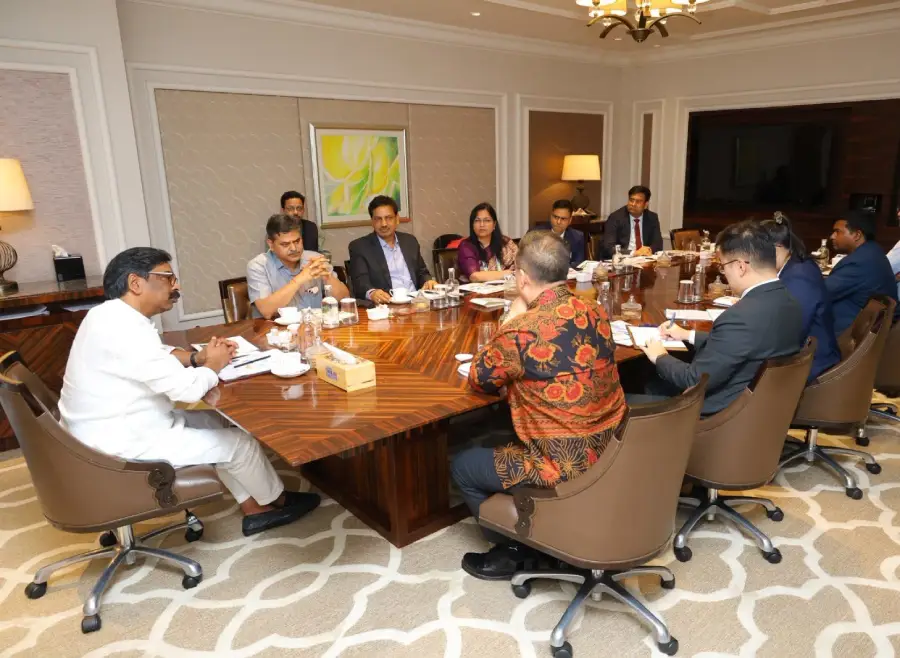
The discussions focused on logistics, supply chain resilience, transport, value addition to natural resources, healthcare, education and skill development. “We agreed to facilitate a visit by Singaporean companies to Jharkhand to jointly map opportunities for long-term collaboration across priority sectors. Our discussions focused on logistics, supply chain resilience, transport, resource-based value addition, healthcare, education and skilling,” Soren said.
“Jharkhand looks forward to working closely with Singapore to identify areas of mutual interest, foster innovation, and build partnerships that generate investment, create quality jobs, and deliver sustainable growth for both sides.”