










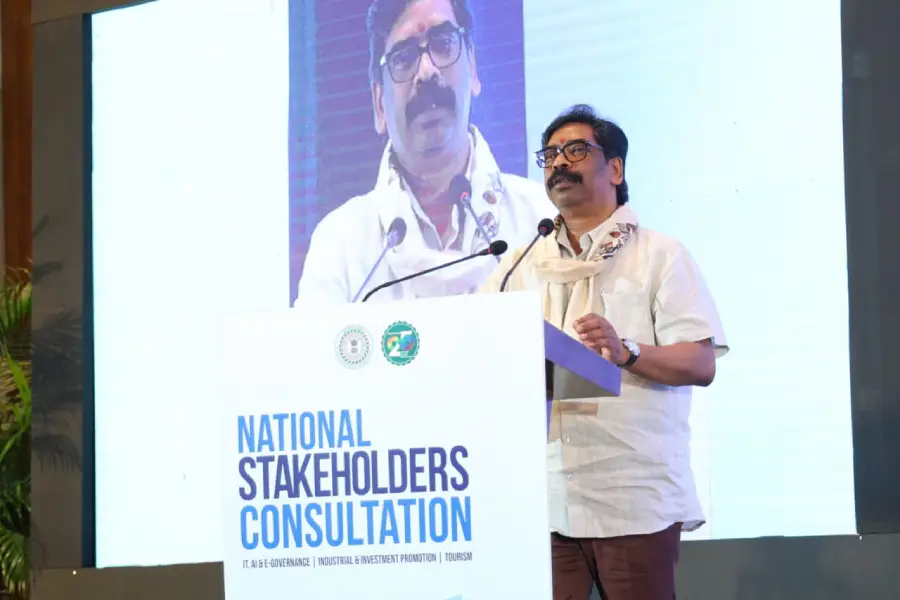
New Delhi
Jharkhand on Tuesday initiated a broad-based consultation with industry leaders, technology companies, policymakers and experts to refine six key draft policies that are expected to guide the state’s investment, industrial and technology roadmap under its Vision 2050 agenda.
Launching the two-day National Stakeholders Consultation in New Delhi, Chief Minister Hemant Soren said the exercise was intended to ensure that the proposed policies reflected industry expectations while strengthening Jharkhand’s competitiveness in emerging sectors.
The government presented concept papers on the proposed Jharkhand AI Policy, Investment Promotion Policy, Tourism Policy, Textile Policy, JIADA Regulations and Public-Private Partnership (PPP) Policy, inviting suggestions from stakeholders before finalisation.
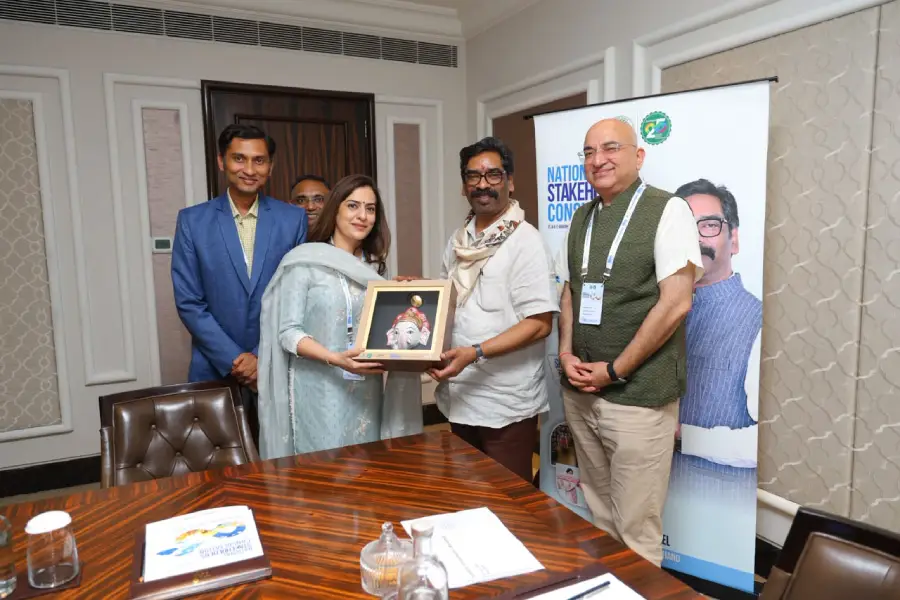
The first day of the consultation focused on information technology, artificial intelligence, digital governance and emerging technologies, bringing together representatives from government, industry, academia and global technology companies.
Addressing the gathering, the Jharkhand CM said, “Today we have all come together at this two-day National Stakeholders Consultation organised by the Government of Jharkhand with a shared objective. The participation of experts from IT governance, industry, tourism, education, Microsoft, Google and various other sectors reflects Jharkhand’s commitment to establishing a strong identity in the economy of the future. Our goal is to give fresh momentum to Jharkhand’s industrial and technological progress.
“India’s industrial development is not possible without Jharkhand’s industrial development. Jharkhand has contributed not only mineral wealth but also intellectual capital to the nation. Now our identity should not be limited to ‘mines’ but should also be built on ‘minds’; not only on resources but also on research; not only on extraction but also on innovation; and not merely on growth but on extensive growth. Alongside our natural resources, we must attach equal importance to research, innovation and a knowledge-based economy. Our objective is not just development, but inclusive, broad-based and sustainable development.”
He added, “The convergence of Jharkhand’s traditional knowledge and modern technology will drive the development of both the state and the nation.”
The consultation brought together leading technology companies including Google, Oracle, Microsoft, IBM, AWS, Salesforce, Techstar, Leah AI, Mamsys, and other industry stakeholders to explore collaborative opportunities for transforming governance through emerging technologies.
A Business-to-Government (B2G) interaction between government officials and industry representatives explored opportunities for investment and collaboration in information technology, artificial intelligence, digital governance and other emerging technology sectors.
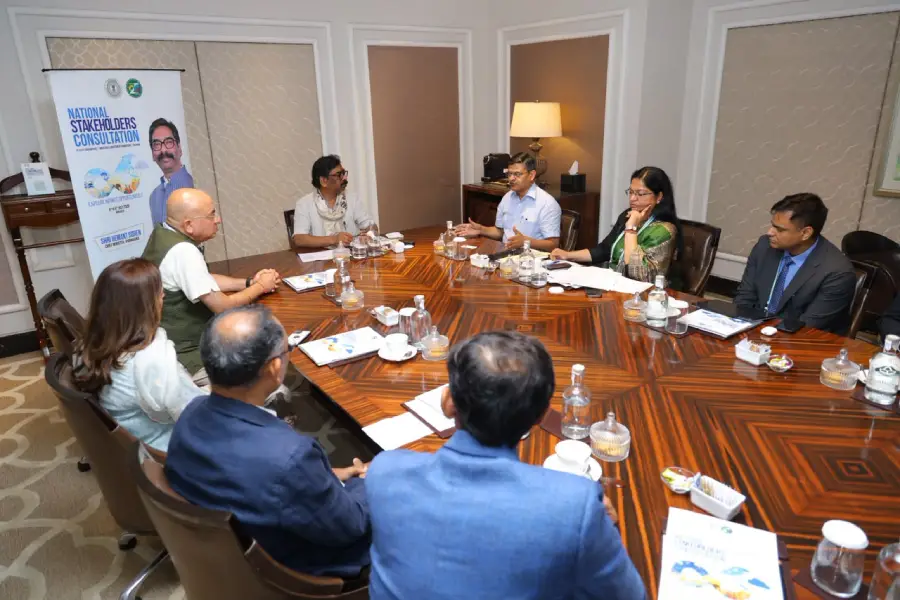
Soren said the state government remained committed to preparing Jharkhand for future technologies and asserted that consultations with stakeholders would play a crucial role in shaping the state’s long-term development strategy. He said the feedback received during the consultation would help the government formulate policies that attract investments, generate employment and ensure inclusive growth.
During the meeting with Lokesh Lohiya from Google, discussions centred on AI-enabled governance, smart healthcare, emergency response systems, AI-powered language solutions, and digital skilling. Google proposed an AI training and certification programme for 3–4 lakh K–12 teachers through a three-month certification module. A Statement of Intent (SoI) is proposed to formalise collaboration between Google and the Government of Jharkhand. The discussions also explored AI-enabled ambulance management and integrated healthcare platforms.
Oracle Senior Director Data Platform, Tausif Siddique, expressed Oracle’s interest in partnering with the State to strengthen its AI, cloud, and digital skilling ecosystem. The company proposed industry-oriented training, certification programmes, workforce development, innovation, and capacity-building initiatives aligned with industry requirements to create a future-ready talent pool.
The meeting with Keshri Asthana, CTO India, Microsoft, focused on developing a unified AI-driven Data Intelligence Platform to integrate data across government departments, strengthen evidence-based decision-making, automate departmental processes, and improve data governance. Discussions also explored the use of low-code platforms to accelerate digital service delivery.
IBM Senior Advisor Talleen Kumar shared his view on AI-powered governance solutions across mining, healthcare, banking, and cybersecurity. IBM proposed collaboration on intelligent data analytics, mining monitoring, secure data sharing, and offered a no-cost Proof of Concept (PoC) to demonstrate AI-enabled governance solutions tailored to Jharkhand’s requirements.
Discussions with SaaS solution providers focused on AI-powered analytics, hybrid cloud infrastructure, cybersecurity, and intelligent data platforms to improve governance, reduce leakages in public welfare schemes, strengthen service delivery, and build institutional capacity through training and certification programmes.
The discussion with Principal AI Specialist Sachin Punyani from AWS focused on leveraging AWS’s cloud and AI capabilities to accelerate Jharkhand’s digital transformation. AWS proposed collaboration on secure cloud infrastructure, AI-powered data integration, digital governance, Direct Benefit Transfer (DBT), education, and centralised decision-making dashboards. The company also offered a no-cost Proof of Concept (PoC) to demonstrate AI-driven governance solutions for the State.
Chief Secretary, Avinash Kumar along with senior officials of Jharkhand Government answered all the queries of stakeholders.
Why Jharkhand Is Holding the National Stakeholders Consultation?
The National Stakeholders Consultation is a key step in Jharkhand’s Vision 2050 roadmap, aimed at reshaping the state’s long-term economic and industrial strategy. By bringing together industry leaders, technology companies, policymakers and experts, the government seeks practical inputs before finalising six major policies covering AI, investment promotion, tourism, textiles, public-private partnerships (PPP) and JIADA regulations.
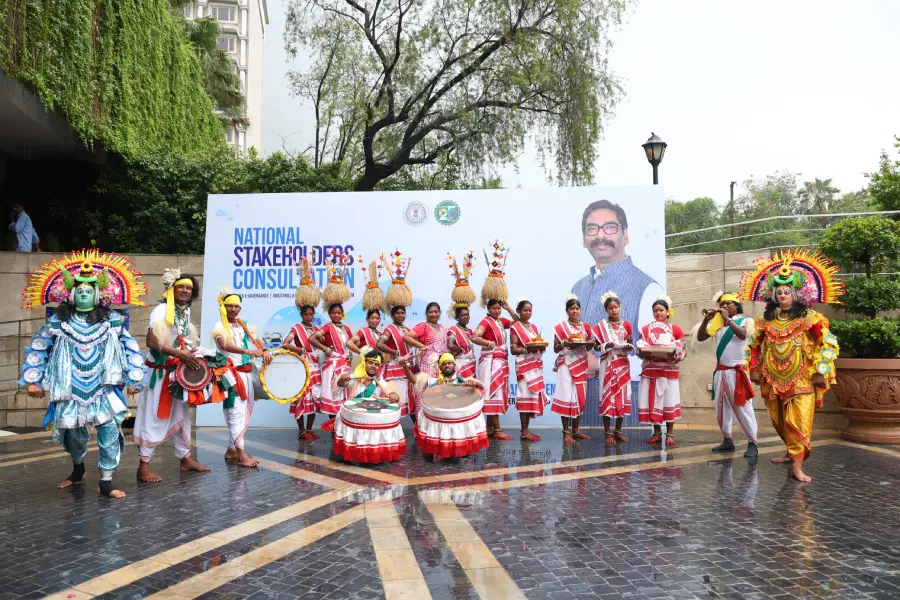
The exercise reflects the government’s intention to diversify Jharkhand’s economy beyond its traditional dependence on mining. While the state is rich in mineral resources, it aims to emerge as a hub for innovation, technology, research and knowledge-based industries. This vision is encapsulated in Chief Minister Hemant Soren’s call for Jharkhand to be recognised not only for its “mines” but also for its “minds.”
A major objective is to create policies that are investor-friendly, globally competitive and aligned with future industries. The government expects stakeholder feedback to help improve ease of doing business, attract private investment, promote entrepreneurship and generate quality employment, particularly for the state’s youth.
The consultation also focuses on strengthening sectors with significant untapped potential. Jharkhand is looking to expand its digital economy through AI and IT, leverage its natural and cultural assets to boost tourism, promote textile manufacturing and traditional products such as tasar silk, and improve industrial infrastructure and governance through updated regulations and public-private partnerships.
Overall, the initiative signals a shift towards evidence-based policymaking and collaborative governance. By incorporating industry expertise into policy formulation, the government hopes to build a more diversified, technology-driven and inclusive economy capable of sustaining growth and improving livelihoods over the coming decades.