



New Delhi
Three teachers. Three different journeys. Three different parts of India. But behind each story lies the same quiet struggle: how do you take education to children when education itself seems distant from their lives? For these educators, the answer has never been to wait for the child to come closer. They have gone the extra mile themselves.
Rekha Chaudhari: When A Child’s Language Becomes The First Lesson
In Tejgadh in south Gujarat, Rekha Chaudhari’s work with Adivasi children grew from an understanding of a problem that can easily be overlooked inside a classroom. For a child who grows up speaking one language at home and enters a school where another language dominates, the first day of school can feel like entering an unfamiliar world.
An Adivasi woman herself, Rekha has been associated with Bhasha’s Adivasi Academy for more than a decade and has played a leading role in Vasantshala, an initiative designed to bring children who have remained outside formal schooling back into education. The approach begins where the child is — with the mother tongue — before gradually moving towards Gujarati.
The idea is simple, but for a child who does not understand the language being used in class, it can make a real difference. Starting with a familiar language allows children to take part in lessons without the fear of getting the words wrong. It also makes the move to Gujarati easier with time.
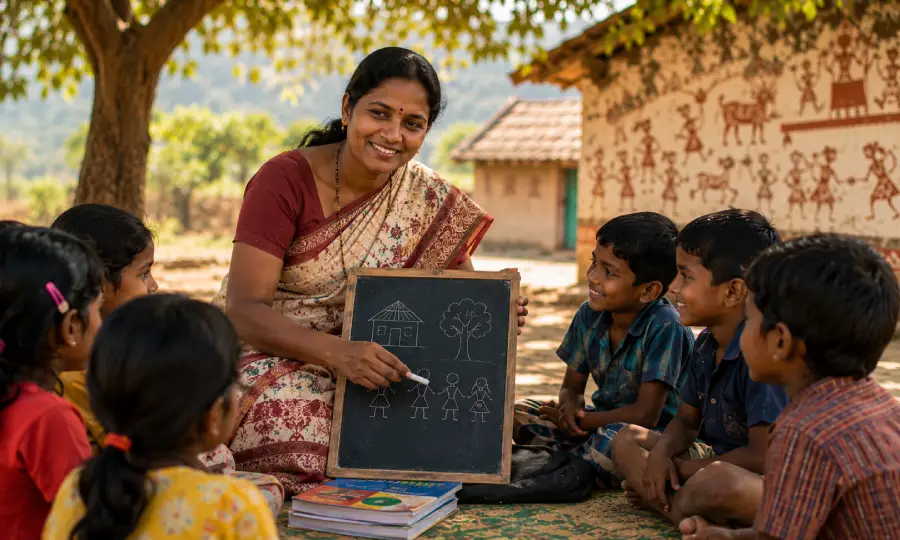
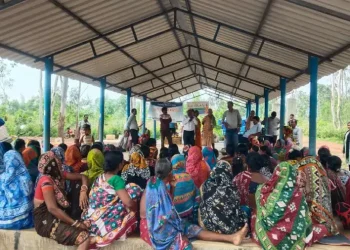
For these children, that small change can mean a great deal. A teacher’s words become understandable. A child can participate instead of remaining silent. School begins to feel less like a place where everything is unfamiliar. But the teachers at Vasantshala do more than teach. They become caregivers, counsellors and a link between the school and families. They have to understand why a child is absent, why a parent may hesitate to send a child to school and what makes a student lose interest in learning.
Much of this work happens outside the lesson itself. Teachers have to speak to families, understand what is happening at home and sometimes work out why a child has stopped coming to school. It is a slow process, but these small efforts can decide whether a child stays connected to education or drops out.
Rekha’s contribution lies in recognizing that before a child can learn from a textbook, the child must first feel that the classroom is a place where they belong. For children, education need not mean choosing between learning and identity.
Gangadaran: A Journey That Came Full Circle
For Gangadaran, education is deeply personal. A member of the Mullakurumba Adivasi community in the Nilgiris of Tamil Nadu, he grew up in a family where his parents had no formal education. His own journey into teaching did not begin with a prestigious degree or a conventional career path. It began with evening classes for adults in his community.
For him, teaching was closely tied to the community he came from. When he got the opportunity to work with Adivasi Munnetra Sangam (AMS), he did not have a fixed idea of what job he wanted. As he recalled, “I really wanted to work for our adivasi organisation AMS to help our adivasi community. I would have done any work, but they needed teachers, and I was good at math.”
That first step eventually took him to a Government Tribal Residential School in Kappala, where he worked as a volunteer teacher. The community valued teachers who understood the children’s mother tongue, culture and circumstances — things that cannot always be learned from a textbook. Gangadaran later taught young children at a study centre in Kadichankolli and underwent teacher training.
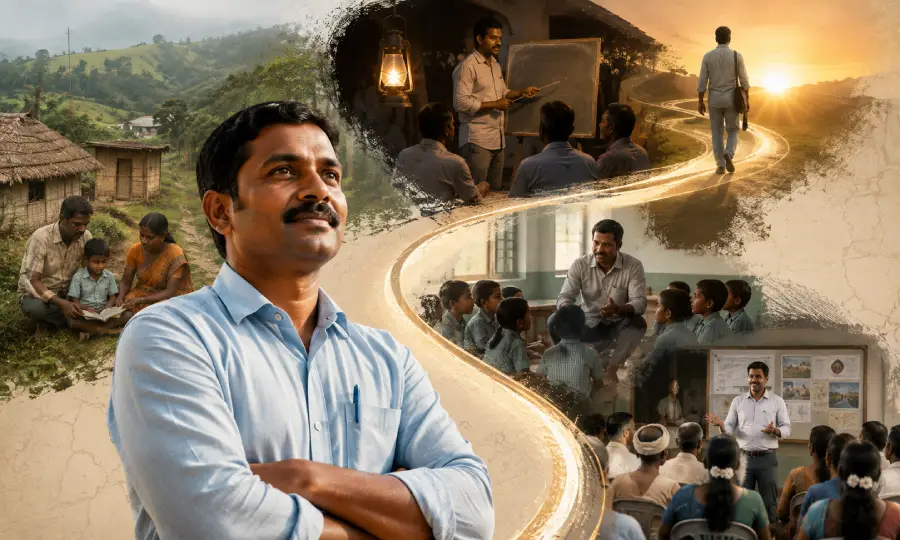
At the residential school, this familiarity mattered. The children were from Adivasi communities like his own, and having someone who understood their language and background could make the unfamiliar surroundings of a residential school a little easier for them.
The study centre gave him another opportunity to work closely with children. His experience as a teacher continued to grow, while his own education also continued alongside his work. He later completed his teacher training, adding formal training to the experience he had gained in the community.
At the residential school, this familiarity mattered. The children were from Adivasi communities like his own, and having someone who understood their language and background could make the unfamiliar surroundings of a residential school a little easier for them.
Over time, his role grew far beyond one classroom. As an education coordinator with the Adivasi organization AMS, he became involved in education work across hundreds of Adivasi villages, working with teachers and parents and helping coordinate educational activities.
Eventually, his work took him to around 300 Adivasi villages. The work was not only about teaching children. He also had to work with teachers and parents and keep track of how children were doing in school. The role gave him a much wider view of the challenges faced by Adivasi children in education
There is something powerful about that journey. A child growing up in a family where education was absent became an educator for a community where educational opportunities had long been limited. He did not simply leave his roots behind to pursue education. He returned to those roots carrying education with him.
Santosh Pradhan: A Teacher Without A Paycheque
In Odisha’s Jharsuguda district, Santosh Pradhan’s story begins with a dream that was interrupted. Pradhan had studied only up to Class 9 when financial difficulties forced him to leave school in 1971.
Having had to leave school because his family could not afford to keep him there, Pradhan knew from experience what it meant when a child’s education came up against financial hardship. Years later, instead of allowing that experience to remain a personal setback, he turned towards children who were facing their own difficulties in reaching education.
For many, that might have been the end of the story. For him, it became the beginning of another one. Pradhan, now 72, has spent 33 years teaching children in remote tribal villages without receiving a salary. He teaches students from Classes 1 to 8, covering basic literacy, mathematics, English, science and other subjects. He also talks to children about health, social awareness and values.
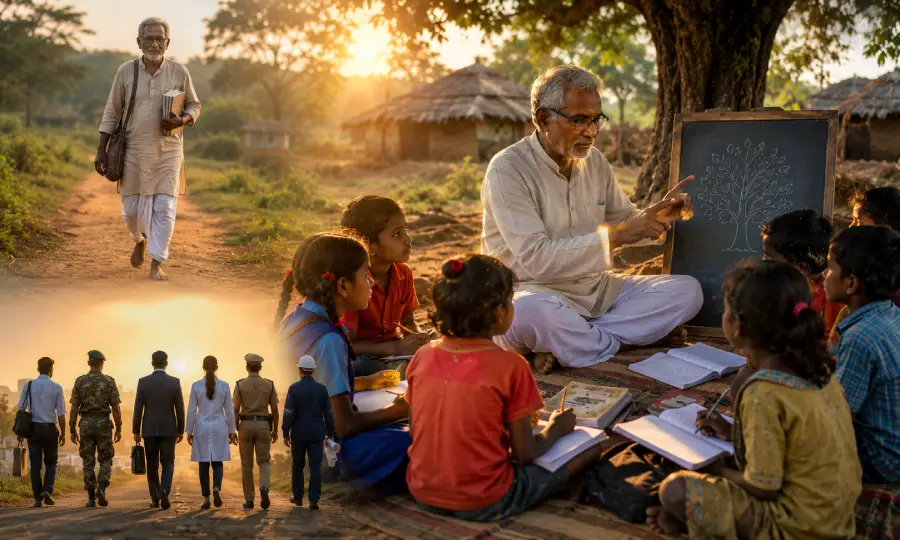
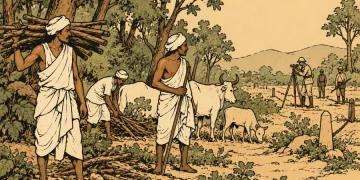
His classroom has no fixed address. He walks from village to village and school to school, often barefoot, to reach children who might otherwise have limited access to regular learning. His lessons go beyond the subjects in a schoolbook. He talks to children about health, social awareness and values as well, bringing conversations into the classroom that are connected to the way they live and the choices they will have to make as they grow up.
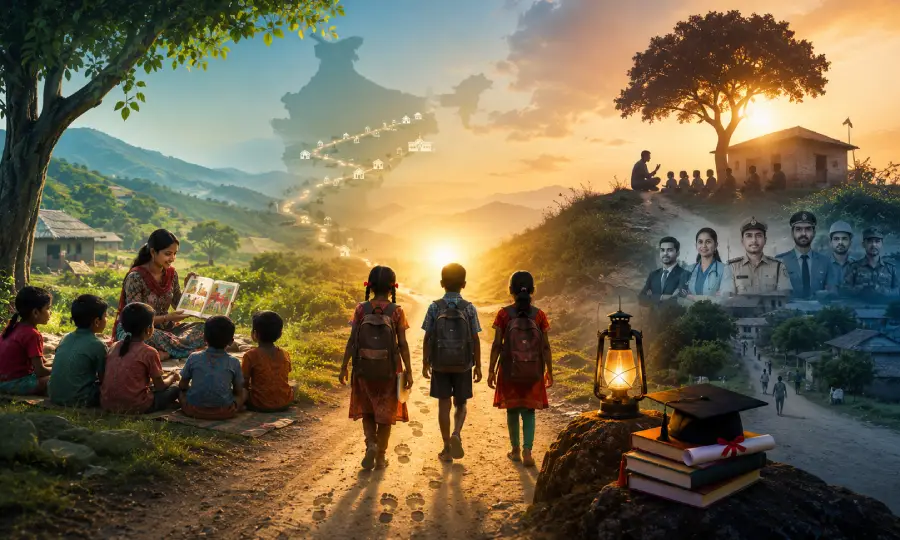
The most striking part of his story may be what happened to the children he taught. Some of his former students have gone on to become teachers, police personnel, engineers, public-sector employees and members of the armed forces.
The man who could not continue his own education because his family could not afford it spent the next three decades helping other children continue theirs. He may not have received a salary for his work, but his students carried his lessons into professions and lives far beyond the villages where he taught.