






Shillong/New Delhi
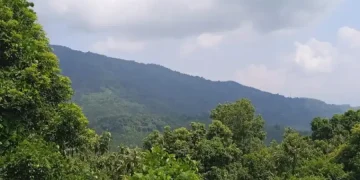
In Meghalaya, a mountainous State in the North-East, lies Balpakram National Park, one of the most important biodiversity hotspots in the Indian subcontinent.
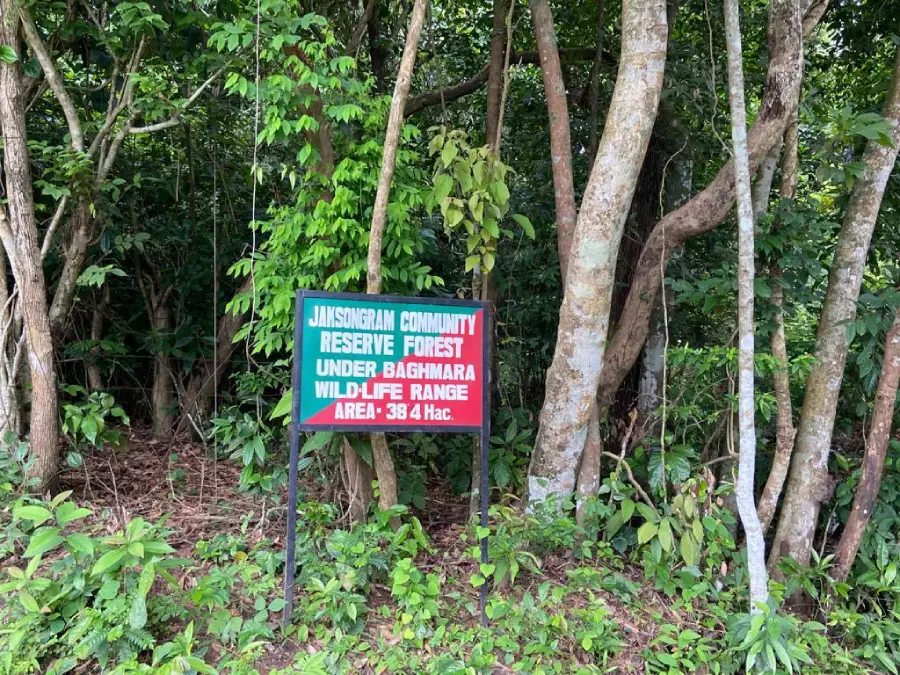
Inside Balpakram and in the areas surrounding it, there are several community reserves that have been approved and notified by the State government.
“This is exactly how the Forest Department is supporting the local tribal communities, mostly Garo people, who reside in and around the park. They carry out developmental work as part of the conservation initiative of community reserves,” said Rimse K Sangma, the Divisional Forest Officer who was posted in Tura, a municipality in the West Garo Hills. She was also the former Director of Balpakram National Park.
Sangma explained that water scarcity is an issue in some of these community reserves because of the threat of deforestation. The Forest Department, therefore, decided to help tribal communities conserve water as part of a project under which fisheries ponds were also developed around the park. The officer is now posted in the Williamnagar Territorial Division of Meghalaya.
The protection was already in place through the State government’s declaration, the officer clarified. “During my time, there were about 25 community reserves and the number may have increased now. Balpakram is very different from other national parks due to its terrain. Apart from water conservation through harvesting, other reasons for community involvement are protection of wildlife and biodiversity conservation,” she said.
As Balpakram lies on the border of the South Garo Hills and shares a border with Bangladesh, some of these community reserves are located in the interior areas. The region is characterised by difficult hilly terrain and communication challenges.
Importance Of Community And Conservation Reserves
The community reserves in and around Balpakram are privately owned but are registered under the forest department. There are 220 community reserves across India, and Meghalaya has the highest number, with 74 of them.
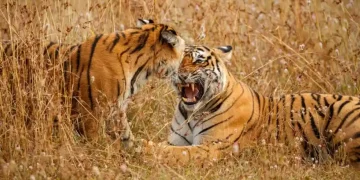
Community reserves can help protect wildlife to a great extent, particularly in areas affected by human disturbance. At one point, there were rumours of a tiger being spotted in the region, but Sangma said she could not find any evidence of the animal on camera traps. There are also developmental activities in the region. According to media reports, the two-lane road project under State Highway 4 has a total length of 1.520 km within Balpakram National Park.
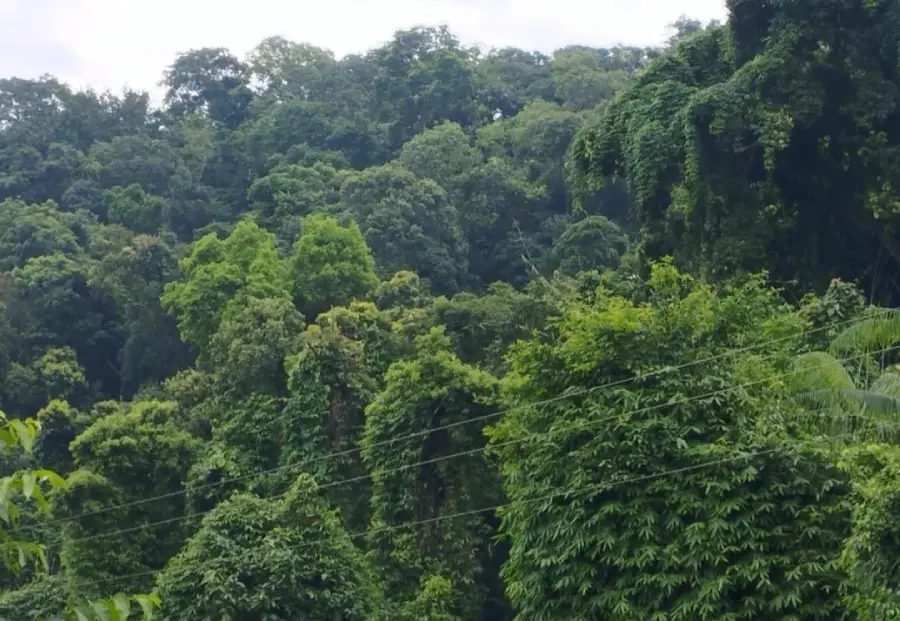
Both conservation reserves and community reserves are relatively new categories of protected areas in India, in addition to national parks and wildlife sanctuaries, where the land is usually owned by the government. Conservation reserves allow more areas to be brought under some degree of protection. These reserves can act as a shield against developmental pressures and mining threats.
To address tiger dispersal outside protected areas, including the designated tiger reserves, which now number 58 across India, the creation of conservation reserves serves as an important step. Community reserves can also play a role. As the tiger population increases, many forested areas and wildlife corridors are increasingly being used by dispersing tigers. However, it is not always easy to convert these areas into national parks and tiger reserves because of the restrictions that such designations can impose on local communities. In such cases, community and conservation reserves can serve the purpose.
Tigers found outside protected areas are also counted in the All-India Tiger Estimation. “We do it across the country, and in all tiger-bearing forests. There is 30 percent of tiger population outside the protected areas and they are always counted,” said a National Tiger Conservation Authority (NTCA) source, who is not authorised to speak to the press.
In such a scenario, the legal provision for creating conservation and community reserves serves an important need. As part of this framework, forests come under the protective cover of the Wildlife Protection Act, 1972, particularly against diversion. The rights of local people, especially Indigenous Peoples, over their natural resources are also protected.
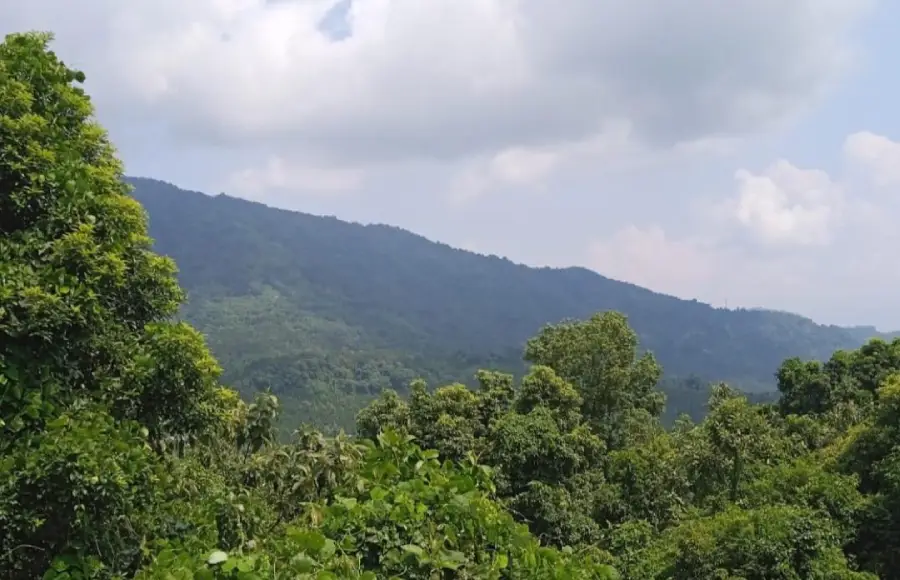
The Khasi and Garo hills are vital to the North-East region. However, the latter has undergone deforestation. Limestone mining threatens a crucial elephant corridor that passes through the Siju-Rewak Sanctuary, which is also located in the South Garo Hills.
Local Protection
In Meghalaya, rituals and ancient traditions have helped in the conservation of forests and wildlife, according to the Meghalaya State Biodiversity Strategy and Action Plan Draft (2016-2026). It States that the Bengal Slow Loris is indicated to be present in Balpakram and in many community reserves in the South Garo Hills. Community reserves were introduced through the Wildlife (Protection) Amendment Act of 2002. The provision recognises the participation of local communities in the protection of species and biodiversity.
Nazia Rosy D Marak, the present director of Balpakram National Park, said that tribal communities look after certain stretches of the forest and try to ensure that streams do not dry up. “The people are conscious about the concept of deforestation and try to protect the forest to ensure water availability,” she said. In her division, there are 25 community reserves that receive the double protection of the forest department as well as people’s participation.
According to forester Sikgilson D Mara, who has been posted in Balpakram for over two decades, there are around 117 fringe villages. Many Garo tribals are engaged in plantations such as rubber and areca nut, and the aim is to conserve water in the catchment areas.
“A coal truck driver had reported spotting a tiger around a few years back outside the Balpakram National Park. But other wildlife has been definitely captured thanks to the dense forest,” he said.