



• About
  • Contact
  • Sitemap
  • Gallery
No Result
View All Result
Vacancies
Wednesday, July 8, 2026
The Indian Tribal
  • Home
  • Achievers
    • उपलब्धिकर्ता
  • Cuisine
    • खान पान
  • Health
    • स्वास्थ्य
  • Legal
    • कानूनी
  • Music
    • संगीत
  • News
    • Updates
    • खबरें
  • Sports
    • खेलकूद
  • Variety
    • विविध
  • हिंदी
    • All
    • आदिवासी
    • उपलब्धिकर्ता
    • कला और संस्कृति
    • कानूनी
    • खबरें
    • खान पान
    • खेलकूद
    • जनजाति
    • भारत
    • विविध
    • संगीत
    • संस्कृति
    • स्वास्थ्य
    The Indian Tribal

    उत्तर बंगाल के चाय बागानों का संकट: जलवायु परिवर्तन, पलायन और महिलाओं की असुरक्षा का बढ़ता दुष्चक्र

    The Indian Tribal

    सिदो-कान्हू ने परिणाम की चिंता किये बगैर शोषण के विरुद्ध मोर्चा खोला था: मुख्यमंत्री हेमन्त सोरेन

    The Indian Tribal

    सरना से कोया पुनेम तक: जनगणना 2027 में अलग आदिवासी धर्म श्रेणी की मांग क्यों तेज हुई?

    The Indian Tribal

    किन्नौर की जनजातीय राजनीति में उभरी नई पर्यावरणीय आवाज, युवा नेतृत्व ने बदली विकास की बहस

    The Indian Tribal

    झारखण्ड के 11 नए उत्पादों को मिला जीआई टैग, राष्ट्रीय और वैश्विक बाजार में बढ़ेगी पहचान

    The Indian Tribal

    युवाओं को नशे की गिरफ्त से बचाना सर्वोच्च प्राथमिकता: मुख्यमंत्री हेमन्त सोरेन

    The Indian Tribal

    मध्य प्रदेश के सहरिया आदिवासियों ने भूख से लड़ने के लिए अपनाए पारंपरिक तरीके

    The Indian Tribal

    झारखण्ड में विद्यार्थियों को ई-साइकिल देने की तैयारी, कौशल विकास को भी व्यवहारिक बनाने पर मुख्यमंत्री का ज़ोर

  • Gallery
    • Videos
  • Latest News
The Indian Tribal
  • Home
  • Achievers
    • उपलब्धिकर्ता
  • Cuisine
    • खान पान
  • Health
    • स्वास्थ्य
  • Legal
    • कानूनी
  • Music
    • संगीत
  • News
    • Updates
    • खबरें
  • Sports
    • खेलकूद
  • Variety
    • विविध
  • हिंदी
    • All
    • आदिवासी
    • उपलब्धिकर्ता
    • कला और संस्कृति
    • कानूनी
    • खबरें
    • खान पान
    • खेलकूद
    • जनजाति
    • भारत
    • विविध
    • संगीत
    • संस्कृति
    • स्वास्थ्य
    The Indian Tribal

    उत्तर बंगाल के चाय बागानों का संकट: जलवायु परिवर्तन, पलायन और महिलाओं की असुरक्षा का बढ़ता दुष्चक्र

    The Indian Tribal

    सिदो-कान्हू ने परिणाम की चिंता किये बगैर शोषण के विरुद्ध मोर्चा खोला था: मुख्यमंत्री हेमन्त सोरेन

    The Indian Tribal

    सरना से कोया पुनेम तक: जनगणना 2027 में अलग आदिवासी धर्म श्रेणी की मांग क्यों तेज हुई?

    The Indian Tribal

    किन्नौर की जनजातीय राजनीति में उभरी नई पर्यावरणीय आवाज, युवा नेतृत्व ने बदली विकास की बहस

    The Indian Tribal

    झारखण्ड के 11 नए उत्पादों को मिला जीआई टैग, राष्ट्रीय और वैश्विक बाजार में बढ़ेगी पहचान

    The Indian Tribal

    युवाओं को नशे की गिरफ्त से बचाना सर्वोच्च प्राथमिकता: मुख्यमंत्री हेमन्त सोरेन

    The Indian Tribal

    मध्य प्रदेश के सहरिया आदिवासियों ने भूख से लड़ने के लिए अपनाए पारंपरिक तरीके

    The Indian Tribal

    झारखण्ड में विद्यार्थियों को ई-साइकिल देने की तैयारी, कौशल विकास को भी व्यवहारिक बनाने पर मुख्यमंत्री का ज़ोर

  • Gallery
    • Videos
  • Latest News
No Result
View All Result
The Indian Tribal
No Result
View All Result
  • Home
  • Achievers
  • Cuisine
  • Health
  • Legal
  • Music
  • News
  • Sports
  • Variety
  • हिंदी
  • Gallery
  • Latest News
Vacancies
Home » The Indian Tribal / News » TRIs To Drive Evidence-Based Tribal Policy As ‘Bhubaneswar Declaration’ Charts Reform Agenda

TRIs To Drive Evidence-Based Tribal Policy As ‘Bhubaneswar Declaration’ Charts Reform Agenda

Adopted at the conclusion of a two-day national workshop, the Declaration outlines institutional reforms, technology integration and community participation as the pillars of the future TRI ecosystem. The Indian Tribal reports

July 8, 2026
The Indian Tribal

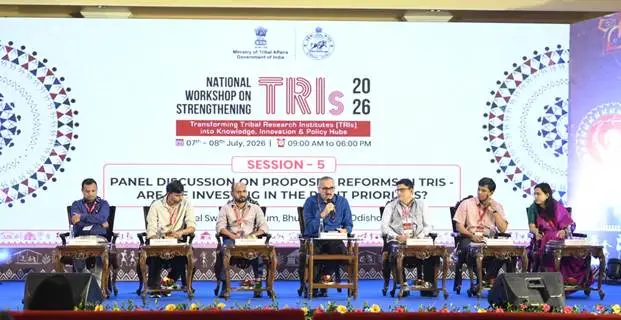
A Session In Progress

Bhubaneswar

The Union Ministry of Tribal Affairs on Wednesday adopted the Bhubaneswar Declaration, unveiling a comprehensive national roadmap to transform Tribal Research Institutes (TRIs) into centres of excellence for research, innovation, cultural preservation and evidence-based policymaking, marking a significant institutional reform initiative aimed at strengthening tribal development in line with the vision of Viksit Bharat@2047.

The Declaration was adopted at the conclusion of the two-day National Workshop on Strengthening Tribal Research Institutes, jointly organised by the Ministry of Tribal Affairs and the Government of Odisha. Nearly 200 participants, including representatives of Tribal Research Institutes, State Tribal Welfare Departments, academia, research organisations, technology institutions, industry, development partners and civil society organisations, deliberated on ways to modernise India’s tribal research ecosystem.

The Declaration positions TRIs as the principal knowledge institutions and policy think tanks of states on tribal affairs, while recognising their responsibility to preserve India’s rich tribal heritage and generate evidence that shapes development policies.

Drawing upon recommendations emerging from four thematic working groups, expert panel discussions and plenary sessions, the Bhubaneswar Declaration lays out a multi-dimensional reform agenda covering governance, research quality, technology adoption, institutional capacity, cultural preservation and community participation.

Among its key recommendations is the development of Tribal Research Institutes as specialised Centres of Excellence, supported by the revival of a Nodal TRI system under which established institutes will mentor newer institutions and help build institutional capacities across states.

The Declaration also mandates community-level need assessments so that research priorities are shaped by the actual requirements of tribal communities rather than remaining confined to academic exercises. It proposes the establishment of a TRI Innovation Network to identify, test and scale successful grassroots solutions emerging from tribal regions.
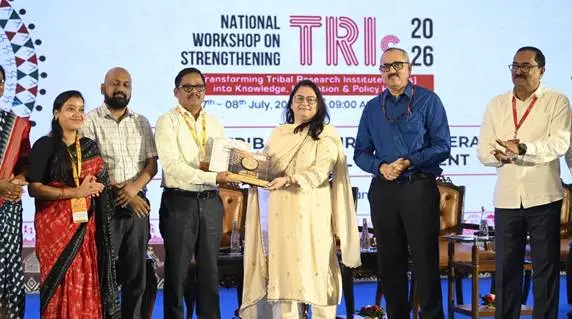
The Indian Tribal
A Glimpse Of The Event

To promote accountability and improve institutional performance, the declaration recommends introducing a national Result and Ranking Framework through the National Tribal Research Portal, enabling performance-based growth and encouraging healthy competition among Tribal Research Institutes.

Recognising that research has limited value unless translated into policy and public action, the declaration calls for a Research Dissemination and Utilisation Strategy to convert technical studies into accessible policy briefs, digital dashboards and learning resources for governments, researchers and communities.

One of the most significant institutional reforms proposed is the finalisation and adoption of the Model TRI Framework 2030, which will establish common standards for governance, staffing, research quality, institutional functions and technology infrastructure. States will be encouraged to benchmark their Tribal Research Institutes against these standards and prepare time-bound institutional improvement plans.

The Declaration also proposes a National TRI Research Agenda (2027-2032) to identify common research priorities aligned with national development goals and policy needs while introducing a Research Standards Framework incorporating peer review, ethical practices and robust data management protocols.

Preservation of indigenous knowledge remains central to the roadmap. The Declaration recommends systematic documentation of tribal languages, oral traditions, music, musical instruments, cuisine, cultural practices and endangered art forms with active participation of tribal youth to ensure inter-generational transfer of knowledge.

Recognising the need for stronger human resources, it advocates measures to attract, retain and continuously train specialised researchers, domain experts and technical professionals capable of enhancing the quality and relevance of research undertaken by Tribal Research Institutes.
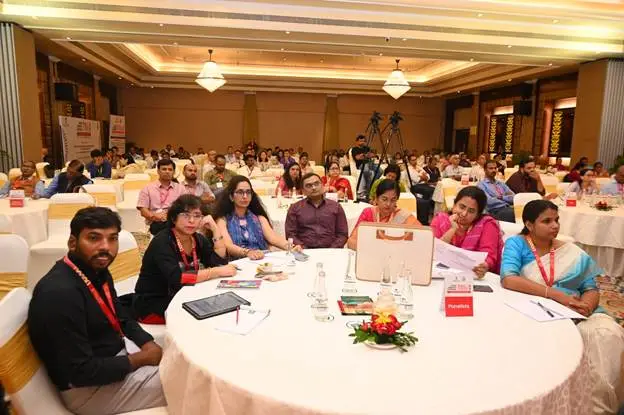
The Indian Tribal
Participants At The Workshop

The roadmap further stresses the importance of expanding partnerships with universities, research institutions, technology organisations, industries and non-governmental organisations to strengthen entrepreneurship, skill development and livelihood opportunities for tribal communities through collaborative initiatives.

To avoid duplication of resources while enabling advanced research, the Declaration recommends adopting a shared-services model for Artificial Intelligence, analytics platforms, innovation hubs and digital infrastructure alongside the creation of a robust national repository of tribal data.

The workshop itself reflected these priorities through four thematic breakout sessions. Discussions focused on transforming Tribal Research Institutes into vibrant knowledge and cultural resource centres, strengthening research for evidence-based policymaking, integrating emerging technologies such as Artificial Intelligence and Geographic Information Systems into tribal research, and undertaking institutional reforms to improve governance, staffing and strategic partnerships.

On the second day, representatives of each working group presented their recommendations before experts and officials of the Ministry of Tribal Affairs, following which the proposals were consolidated into the Bhubaneswar Declaration.

Summing up the deliberations, Secretary, Ministry of Tribal Affairs, Ranjana Chopra described Tribal Research Institutes as the voices of tribal communities and said they must evolve into globally recognised centres of excellence rooted in community realities. She said the institutions require greater institutional and financial autonomy while working more closely with state governments, universities, multilateral agencies and other knowledge institutions to bridge the gap between research, policymaking and tribal communities.

Throughout the workshop, participants emphasised strengthening governance structures, expanding institutional capacities, improving research quality, adopting standard methodologies and enhancing knowledge sharing across states so that Tribal Research Institutes can emerge as repositories of indigenous knowledge while generating timely policy inputs for tribal development programmes.

The Ministry also recognised excellence within the TRI ecosystem by presenting Certificates of Appreciation to seven best-performing institutions for their contributions to research, documentation, knowledge generation and preservation of tribal cultural heritage. The recognised institutes were the Tribal Research and Training Institute, Chhattisgarh; Scheduled Castes and Scheduled Tribes Research and Training Institute, Odisha; Tribal Research and Cultural Institute, Tripura; Tribal Research & Training Institute, Maharashtra; Kerala Institute for Research, Training & Development Studies of Scheduled Castes and Scheduled Tribes (KIRTADS); Tribal Cultural Research and Training Institute, Telangana; and Dr Ramdayal Munda Tribal Welfare Research Institute, Jharkhand.

In his concluding remarks, Joint Secretary, Ministry of Tribal Affairs, Anant Prakash Pandey said the workshop had produced rich deliberations and a shared commitment to strengthening Tribal Research Institutes. He said the recommendations and the Bhubaneswar Declaration provide a clear roadmap for enhancing institutional capacities, promoting research excellence, embracing technology and fostering greater collaboration, adding that the Ministry would work with states and all stakeholders to translate the recommendations into meaningful outcomes for tribal development.

With the adoption of the Bhubaneswar Declaration, the Ministry has, for the first time, articulated a coordinated national framework to modernise Tribal Research Institutes as future-ready knowledge institutions that preserve indigenous heritage while generating research capable of shaping evidence-based policies for the socio-economic advancement of India’s tribal communities.


Root Woot | Online Puja Samagri Root Woot | Online Puja Samagri Root Woot | Online Puja Samagri

In Numbers

49.4 %
Female Literacy rate of Scheduled Tribes

Update

झारखंड में PVTG परिवारों को अब मनरेगा में मिलेंगे 150 दिन का रोजगार

मुख्यमंत्री हेमन्त सोरेन की अध्यक्षता में गुरुवार को हुई झारखंड मंत्रिपरिषद की बैठक में विशेष रूप से कमज़ोर जनजातीय समूहों (PVTG) के लिए बड़ा फैसला लिया गया। कैबिनेट ने राज्य में मनरेगा के तहत इन्हें वित्तीय वर्ष में निर्धारित 100 दिनों के रोजगार के अतिरिक्त 50 दिनों का और रोजगार उपलब्ध कराने को मंजूरी दे दी। इसके साथ ही PVTG परिवारों को अब वर्ष में कुल 150 दिनों का रोजगार मिल सकेगा। बैठक में वीबी-जी रामजी (VB-G RAM G) पर भी विस्तृत चर्चा की गई। सम्यक विचार-विमर्श के बाद मंत्रिपरिषद ने इस प्रस्ताव को सैद्धांतिक स्वीकृति प्रदान कर दी। मनरेगा के तहत अतिरिक्त 50 दिनों के रोजगार का यह निर्णय इन अत्यंत कमजोर जनजातीय समुदायों की आजीविका सुरक्षा, आय में वृद्धि और ग्रामीण क्षेत्रों से मजबूरी में होने वाले पलायन को कम करने की दिशा में एक महत्वपूर्ण कदम साबित हो सकता है। झारखंड देश के उन राज्यों में शामिल है जहां PVTG की सबसे अधिक आबादी निवास करती है। राज्य में नौ PVTG समुदाय—असुर, बिरहोर, बिरजिया, कोरवा, माल पहाड़िया, सौरिया पहाड़िया, परहैया, पहाड़िया (कुमारभाग) और सावर—अधिसूचित हैं।
The Indian Tribal
आदिवासी

सिदो-कान्हू ने परिणाम की चिंता किये बगैर शोषण के विरुद्ध मोर्चा खोला था: मुख्यमंत्री हेमन्त सोरेन

by The Indian Tribal
June 30, 2026

हूल दिवस पर मुख्यमंत्री सोरेन ने झारखण्ड की राजधानी रांची में सिदो-कान्हू उद्यान परिसर में आयोजित रक्तदान शिविर में शामिल होकर रक्तदाताओं के बीच प्रशस्ति-पत्र भी वितरित किया। The Indian Tribal की रिपोर्ट

The Indian Tribal

In Palamau Tiger Reserve In Jharkhand, Tribal Traditions Strengthen Big Cat Conservation

June 28, 2026
The Indian Tribal

सरना से कोया पुनेम तक: जनगणना 2027 में अलग आदिवासी धर्म श्रेणी की मांग क्यों तेज हुई?

June 25, 2026
The Indian Tribal

किन्नौर की जनजातीय राजनीति में उभरी नई पर्यावरणीय आवाज, युवा नेतृत्व ने बदली विकास की बहस

June 24, 2026
The Indian Tribal

झारखण्ड के 11 नए उत्पादों को मिला जीआई टैग, राष्ट्रीय और वैश्विक बाजार में बढ़ेगी पहचान

June 17, 2026
The Indian tribal

As North Bengal’s Tea Gardens Shut Shop, Tribal Women Pay The Price

June 16, 2026
Previous Post

Tribal Research Institutes Set For Overhaul; Centre Launches TribeX Digital Learning Platform

Next Post

Hemant Soren Pitches ‘Minds Over Mines’ As Jharkhand Seeks Industry Inputs On Vision 2050

Top Stories

The Indian Tribal
Adivasi

TRIs To Drive Evidence-Based Tribal Policy As ‘Bhubaneswar Declaration’ Charts Reform Agenda

July 8, 2026
The Indian Tribal
Adivasi

Tribal Research Institutes Set For Overhaul; Centre Launches TribeX Digital Learning Platform

July 7, 2026
The Indian Tribal
Adivasi

Ken-Betwa Project Faces Fresh Tribal Resistance As Displaced Families Revive Agitation

July 6, 2026
Load More
  • About Us
  • Editor & Writers
  • Contact
  • Redressal
  • Copyright Policy
  • Privacy Policy And Terms Of Use
  • Disclaimer
  • Sitemap

  • Achievers
  • Cuisine
  • Health
  • Hindi Featured
  • India
  • News
  • Legal
  • Music
  • Sports
  • Trending
  • Chhattisgarh
  • Delhi
  • Gujarat
  • Jammu & Kashmir
  • Jharkhand
  • Kerala
  • Madhya Pradesh
  • Maharashtra
  • North East
  • Arunachal Pradesh
  • Assam
  • Manipur
  • Meghalaya
  • Mizoram
  • Nagaland
  • Sikkim
  • Tripura
  • Odisha
  • Telangana
  • West Bengal
  • Political News
  • Variety
  • Art & Culture
  • Entertainment
  • Adivasi
  • Tribal News
  • Scheduled Tribes
  • हिंदी
  • उपलब्धिकर्ता
  • कानूनी
  • खान पान
  • खेलकूद
  • स्वास्थ्य
  • संस्कृति
  • संगीत
  • विविध
  • कला और संस्कृति
  • खबरें
  • असम की ताज़ा ख़बरें
  • अरुणाचल प्रदेश की ताज़ा ख़बरें
  • ओडिशा की ताज़ा ख़बरें
  • केरल की ताज़ा ख़बरें
  • गुजरात की ताज़ा ख़बरें
  • छत्तीसगढ़
  • जम्मू और कश्मीर की ताज़ा ख़बरें
  • झारखंड न्यूज़
  • तेलंगाना की ताज़ा ख़बरें
  • दिल्ली
  • नॉर्थईस्ट की ताज़ा ख़बरें
  • पश्चिम बंगाल की ताज़ा ख़बरें
  • मध्य प्रदेश की ताज़ा ख़बरें
  • महाराष्ट्र की ताज़ा ख़बरें
  • त्रिपुरा की ताज़ा ख़बरें
  • नागालैंड की ताज़ा ख़बरें
  • मणिपुर की ताज़ा ख़बरें
  • मिजोरम की ताज़ा ख़बरें
  • मेघालय की ताज़ा ख़बरें
  • सिक्किम की ताज़ा ख़बरें
  • राजस्थान की ताज़ा ख़बरें

About Us

The Indian Tribal is India’s first bilingual (English & Hindi) digital journalistic venture dedicated exclusively to the Scheduled Tribes. The ambitious, game-changer initiative is brought to you by Madtri Ventures Pvt Ltd (www.madtri.com). From the North East to Gujarat, from Kerala to Jammu and Kashmir — our seasoned journalists bring to the fore life stories from the backyards of the tribal, indigenous communities comprising 10.45 crore members and constituting 8.6 percent of India’s population as per Census 2011. Unsung Adivasi achievers, their lip-smacking cuisines, ancient medicinal systems, centuries-old unique games and sports, ageless arts and crafts, timeless music and traditional musical instruments, we cover the Scheduled Tribes community like never-before, of course, without losing sight of the ailments, shortcomings and negatives like domestic abuse, alcoholism and malnourishment among others plaguing them. Know the unknown, lesser-known tribal life as we bring reader-engaging stories of Adivasis of India.

Follow Us

All Rights Reserved

© 2026 Madtri Ventures [P] Ltd.

No Result
View All Result
  • Home
  • Achievers
  • Cuisine
  • Health
  • Health
  • Legal
  • Music
  • News
  • Sports
  • Variety
  • हिंदी
    • उपलब्धिकर्ता
    • खान पान
    • कानूनी
    • खेलकूद
    • खेलकूद
    • संगीत
    • संगीत
    • स्वास्थ्य
    • स्वास्थ्य
    • विविध
  • Gallery
  • Videos

© 2026 Madtri Ventures [P] Ltd.