








RANCHI
The Jharkhand government’s decision on Monday to cancel the JSSC Combined Graduate Level (JSSC-CGL) examination and all examinations and recruitment processes conducted through TSR Data Processing Private Limited (TDPL) since 2014 is a major victory for thousands of protesting students and job aspirants, but it has stopped short of resolving the most contentious issue at the heart of the agitation — their demand for a Central Bureau of Investigation (CBI) probe.
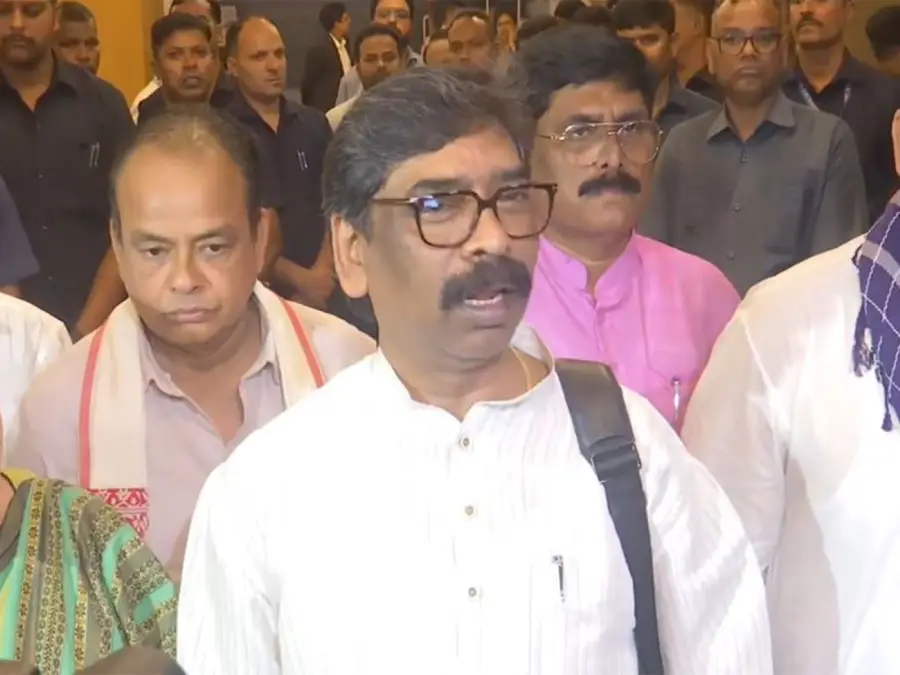
Chief Minister Hemant Soren announced the decisions after a lengthy Cabinet meeting amid an agitation that entered its 24th day on Monday. The protesters have been on an indefinite hunger strike and announced plans to gherao the Chief Minister’s residence on August 20 if their demands were not accepted. The escalation had followed several rounds of talks that failed to produce a settlement.
Soren said the Cabinet had decided to cancel the JSSC-CGL examination and, in a broader move, annul everything associated with TDPL — including examinations conducted by or through the agency, results published on their basis, and selections made through those processes.
“Addressing all aspects of the issue, we have decided to cancel everything associated with TDPL—including the examinations conducted, the results published, the candidates selected or who participated, and all other activities carried out by TDPL,” Soren told mediapersons.
“Today, the Cabinet decided to cancel the JSSC-CGL examinations as well. Furthermore, a comprehensive inquiry will be conducted into all errors—minor or major—that have occurred since 2014. We will also soon convene to discuss the amendments made to the MMDR Act by the Central Government; if necessary, we may even call a special session to deliberate on this specific issue…”
“The investigations being conducted by both the SIT and the CID have brought to light several shocking facts. Since the investigation is ongoing, it is not possible to disclose every detail openly; however, it has been observed that individuals appointed through the CGL process are now being arrested on charges related to irregularities in the JPSC examinations.
“Furthermore, there appears to be a complex, interconnected network involving various companies that have operated here at different times. The scope of the investigation covers all examinations held from 2014 to the present. We have instructed the concerned department and the CID; since the investigation has been initiated, it must be carried out thoroughly,” the Chief Minister said without committing anything on the CBI probe demand.
The announcement represents a striking shift from the government’s position only days earlier. After agreeing to scrap the 14th JPSC Civil Services examination and two backlog examinations, the government had resisted the students’ demand for cancellation of the JSSC-CGL, arguing that the examination had been conducted under court directions and that appointments had already been made on the basis of its results. That position had failed to break the deadlock, with students subsequently announcing that they would intensify the agitation.
Students forced a rethink
For the protesters, Monday’s decision is the clearest indication yet that sustained pressure has forced the government to reconsider a position it had defended for weeks.
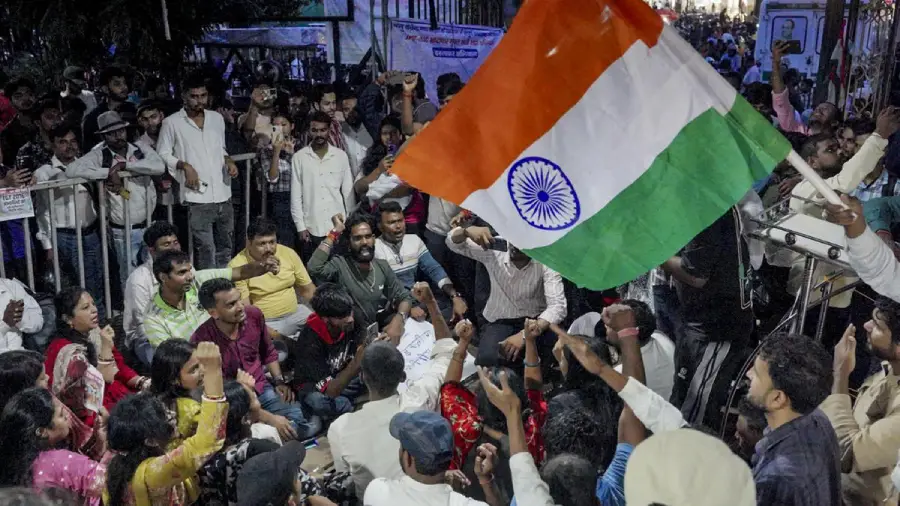
The agitation began with demands relating to alleged irregularities in the JPSC and JSSC examinations but grew into a broader movement for reform of the state’s recruitment system. Students have consistently argued that repeated paper leaks, procedural lapses and controversies over recruitment have damaged their careers and eroded confidence in the examination machinery. The present agitation has brought together aspirants from across Jharkhand and has been described as one of the state’s most significant student movements in recent years.
The pressure intensified dramatically on August 10 when thousands of protesters marching towards the Jharkhand Assembly breached police barricades and were met with tear gas, water cannons and batons. The confrontation, which left people on both sides injured, transformed the dispute from a prolonged administrative standoff into a major political issue.
The students subsequently announced that if the government failed to meet their demands, they would move towards the Chief Minister’s residence on August 20 and seek Soren’s resignation. Protesters also burnt effigies of Soren and Rahul Gandhi on Sunday, accusing the ruling JMM-Congress alliance of failing to act decisively.
Rahul Gandhi’s intervention added pressure
The political equation changed further with Congress leader and Leader of Opposition in the Lok Sabha Rahul Gandhi writing to Soren and asking him to personally meet the protesting students.
In his August 14 letter, Gandhi described the students’ protest as peaceful and their concerns as legitimate, and urged the Jharkhand Chief Minister to engage directly with them. His intervention was significant because Congress is a key constituent of the ruling alliance in Jharkhand.
Coming after the violent confrontation outside the Assembly and just days before the proposed gherao of the Chief Minister’s residence, the intervention gave the government an additional political incentive to prevent the confrontation from escalating further.
The timing was particularly sensitive. The students were already accusing the ruling alliance of ignoring their concerns, while the opposition BJP had openly backed the demand for a CBI investigation and sought to turn the agitation into a wider political campaign.
Why did the government change its stance?
The reversal appears to be the product of several pressures converging simultaneously rather than a single trigger.
First, the investigation itself appears to have altered the government’s room for manoeuvre. The arrest of JPSC officials and multiple TDPL-linked persons, followed by raids and continuing investigation, made it increasingly difficult to maintain that the CGL controversy could be treated simply as a dispute over an examination whose results had already been acted upon. The government’s own statement that investigators had uncovered incriminating material strengthened the case for a wider review.
Second, the students’ movement was not losing momentum despite prolonged negotiations. Six earlier rounds of talks had failed to settle the central dispute, and the government’s earlier concessions on JPSC examinations did not persuade the protesters to withdraw because the CGL cancellation and independent investigation remained unresolved.
Third, the proposed August 20 gherao created a potentially explosive law-and-order situation. After the Assembly confrontation on August 10, another large mobilisation directed specifically at the Chief Minister’s residence carried obvious risks. The government had already begun tightening security around the CM residence amid the announced programme.
Fourth, the issue had acquired a political dimension beyond JSSC and JPSC. The agitation was increasingly being framed around youth employment, corruption and the credibility of government recruitment — issues with a broad political resonance in a state where government jobs attract intense competition. The BJP had begun openly supporting the protesters’ CBI demand, while Gandhi’s intervention demonstrated that even within the ruling alliance there was pressure for a political resolution.
CBI probe remains sticking point: Students ‘not going anywhere’
This unresolved demand could determine what happens next. Student leaders have repeatedly questioned whether a state-level CID investigation can command sufficient confidence, particularly when allegations involve the functioning of state recruitment agencies. Aspirants had earlier said they feared that a state investigation could be vulnerable to political influence and therefore wanted an independent central agency to investigate the alleged irregularities.
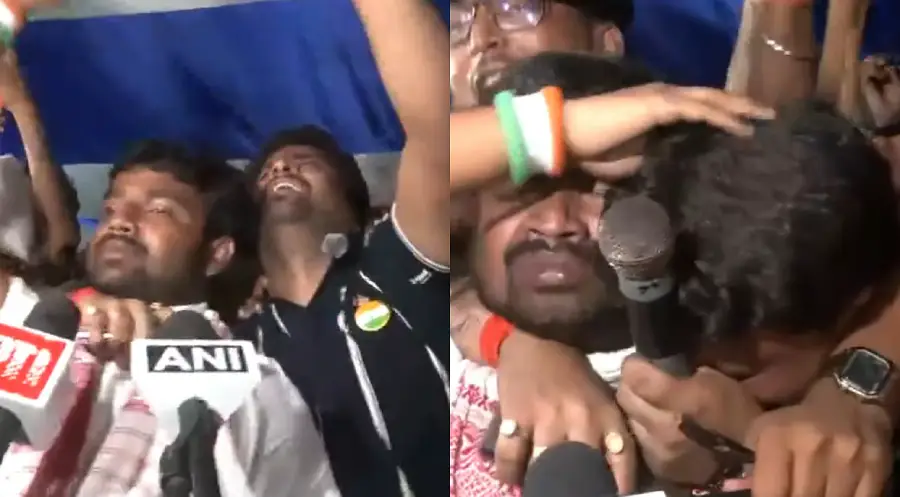
JPSC-JSSC aspirants indulged in emotional celebrations as the news poured in. But they were quick to point out their demand for a CBI probe was yet to be accepted.
Student leader Piyush Kumar made it clear, “This is just the first step. Our demand regarding the ’11th to 13th’ issue remains in place; we are waiting for a decision on it. We will sit down and decide our next course of action for this movement. Our demands have not yet been fully met, this is merely the first step and the first celebration. There is more to come. The struggle will continue; we aren’t going anywhere. The CBI investigation is still pending, and the 11th to 13th decision remains to be overturned. We will sit down to conduct a detailed, in-depth analysis and then speak to you at length about which demands are still outstanding. We aren’t going anywhere.”
Another prominent student leader Ravindra Paswan too maintained: “We will not stop until we achieve total victory. All our demands have not been met yet. Our demands regarding the cancellation of exams have been fulfilled, but the CBI investigation is not done yet. Until that demand is met, we will not move from here.”
Devendra Nath Mahato, one of the prominent faces of the agitation, welcomed the government’s decision but made clear that the students’ larger struggle was not necessarily over. “We, the students, will continue to support this investigation and the effort to eradicate this corrupt system at its very roots,” Mahato said, while stressing that the students wanted a system that could guarantee that paper leaks and irregularities would not recur.
He said he would end his hunger strike following the government’s decision but would continue the struggle for recruitment reforms. “If our issues are resolved and our demands met, why would we need to hold further protests?” he said, while making clear that the students were awaiting an official notification and concrete implementation of the government’s assurances.
What happens to candidates now?
The cancellation of the CGL and TDPL-linked examinations creates a new administrative challenge for the government: rebuilding the recruitment process without further disadvantaging candidates who have already spent years preparing for competitive examinations or having qualified and serving in their respective postings.
“We were appointed following a High Court division bench ruling. We had the Supreme Court’s seal of approval, yet suddenly, the government in an instant, made us unemployed. We are upset with the Chief Minister. Sir, please at least reconsider this matter. What about the honourable court’s stance? What will happen to the hundreds of our brothers who resigned from previous jobs to join this one? We will go to court. We reached this stage through the courts before, so we will go to court again,” said a protester who was demanding that the CGL exams should not be cancelled.
Another protester said: “We joined through a fair process, so why is such a step being taken? We say: conduct an investigation. If any errors are found during the investigation, remove those specific individuals.”
Soren has indicated that the government intends to examine the entire chain of irregularities and strengthen the standard operating procedures governing future recruitment. That will be crucial because cancellation alone does not address the deeper problem exposed by the protests — how examination agencies are selected, how question papers and OMR sheets are secured, how answer scripts are evaluated and how results and appointments are authenticated.
The controversy has already highlighted the vulnerability created when sensitive public recruitment processes are outsourced to private examination agencies. The arrest of TDPL personnel in the ongoing investigation has intensified scrutiny of that arrangement.
For thousands of aspirants, the immediate question will be when and how fresh examinations are conducted, whether affected candidates receive adequate age and attempt protection, and whether the new process can restore credibility. Above all, the issue now looks all set to go to courts once again.