




New Delhi
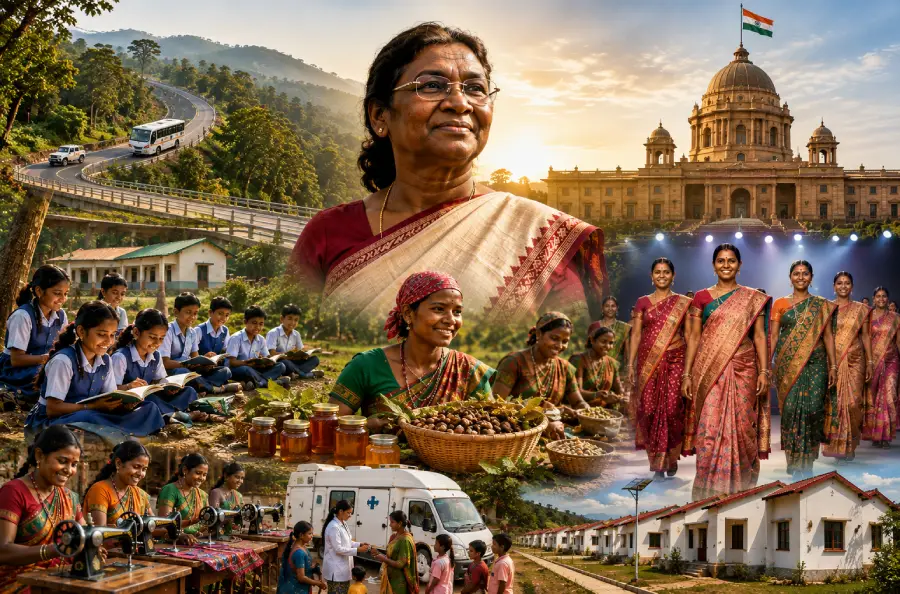
Being historically marginalised from economic development, India’s tribal communities had serious deficiencies in their human development indicators. But laying the groundwork for economic independence and raising the literacy level to an unprecedented 71.6% in 2021 not only increased their family incomes. It also laid the necessary framework for a much larger transformation, neutralising long-standing regional insurgencies and paving a clear path for historic tribal representation at the highest levels of national governance.
From Security Flashpoints To Economic Mainstreams
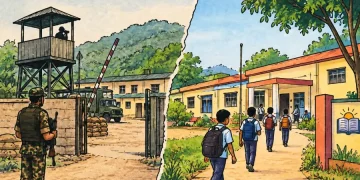
The practical effects of marrying the expansion of infrastructural facilities with economic empowerment at a localised level can be clearly seen in areas that had experienced serious civil strife in the past. Bastar is a densely forested area in the Chhattisgarh region, which has for many years been a stronghold of Left-Wing Extremism activities.
In the past, the approach of the state authorities towards these regions was largely security-oriented, thus contributing further to the feeling of estrangement among the locals. The policy turnaround came when the central government realised the need to accord the same importance to civil and infrastructural development as to security-related activities.
To dismantle the physical isolation that allowed insurgencies to thrive, the state launched an aggressive infrastructural campaign. This multi-pronged approach brought the physical state closer to its citizens, opening up access for long-isolated villages to public healthcare, banking systems and formal markets.
According to recent NITI Aayog National Multidimensional Poverty Index (MPI) reports, targeted infrastructure interventions in tribal sub-plan areas have contributed significantly to pulling millions of citizens out of poverty, with intense poverty rates in tribal areas dropping by nearly 15-20% over the last decade.
Human Face Of Rehabilitation
The key feature of this process was a forward-thinking strategy for surrender and rehabilitation. Shifting the focus away from punishment, the State created a system where vocational training and economic integration, along with the psychological healing of the insurgents, were of primary importance. The aim was to create an alternative to fighting.
A living example of such a policy transformation took place during the National Handloom Day celebrations this year in Raipur, the state capital of Chhattisgarh, when women who had been fighting as Naxal rebels in the dense forests of Sukma and other areas turned into professional models walking the ramp. Replacing their uniforms with intricately designed kosa sarees, they highlighted their enduring tradition of handlooms.
Due to vocational education, these women who used to be a threat to the system have become self-reliant businesswomen. It was a great demonstration that, if provided with equal opportunity, economic empowerment is the way to end violence.
Breaking The Ultimate Glass Ceiling
As the grassroots transformations were creating stability in the economy and silence in the conflict zones, the year 2022 presented a landmark political shift. It was when Droupadi Murmu became the 15th President of India and created a remarkable historical moment for the republic. Coming from a poor Santhal family residing in a remote small village of Odisha, her transition from a school teacher to a public servant and then to becoming the Head of State of India carried a strong message for the nation.
Electing the first female tribal leader to head the world’s largest democracy had a profound political impact that transcended normal partisan lines. The historic image of an Adivasi leader taking the oath of office at Rashtrapati Bhavan was so compelling that it united competing political factions. Leaders from diverse regional parties, including those representing non-tribal constituencies and various opposition blocs, recognised the historic weight of the moment and voted overwhelmingly in favour of her candidacy. Her landslide victory broke a 75-year-old political glass ceiling, signalling that India’s tribal communities had definitively moved from the political margins into the centre of national decision-making.
For the actualisation of these high-level political success stories into practical reality for the marginalised sections of society, the newly developed models of governance shifted their attention to the Particularly Vulnerable Tribal Groups.
These particular tribes mostly live in scattered and remote hamlets where the population tends to remain stagnant or even fall. To rectify this situation, the government started a programme called the Pradhan Mantri Janjati Adivasi Nyaya Maha Abhiyan (PM JANMAN) in 2023, which has a massive budget of ₹24,104 crore. As a means of uplifting marginalised areas, this programme is constructing 4.90 lakh pucca houses instead of temporary houses.
Moreover, this programme also includes the construction of 8,000 kilometres of all-weather roads linking isolated hamlets with neighbouring towns. For access to basic facilities, 1,000 mobile health units have also been made available to provide essential healthcare facilities to these isolated regions.
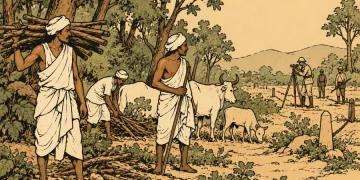
The transformation in the tribal regions of India within the last decade can be called nothing less than a paradigm shift in the relationship between the nation-state and its indigenous population. Tribal people were earlier seen under an outdated paradigm of paternalistic welfare, wherein the tribe was merely a passive beneficiary of charitable aid provided by the state. This is no longer the case, as we have a new approach that is based on respecting their culture and integrating them into the mainstream economy and politics.
(The writer is a political analyst and a Post Graduate Member of the Royal Historical Society, London. Views expressed are personal.)
Ends