



Bhubaneswar
In much of India, marriage has increasingly become synonymous with extravagant ceremonies, soaring expenses and the social evil of dowry. Yet, tucked away in the forests, hills and remote habitations of Odisha lives a very different tradition—one that values relationships over riches, community over commerce and reciprocity over transaction.
A comprehensive technical report titled Socio-Cultural, Demographic, Nutrition and Health Status of the Particularly Vulnerable Tribal Groups (PVTGs) of Odisha offers a rare window into these indigenous marriage systems.
Prepared by the Centre of Excellence in Studies on Tribal and Marginalized Communities (CoE in STMC), Utkal University, under the World Bank-assisted Odisha Higher Education Programme for Excellence and Equity (WB-OHEPEE) of the Department of Higher Education, Government of Odisha, the study documents the socio-cultural life of ten of Odisha’s 13 Particularly Vulnerable Tribal Groups (PVTG).
The multidisciplinary research was carried out in collaboration with the Regional Medical Research Centre–Indian Council of Medical Research (RMRC-ICMR), Bhubaneswar, with support from the Scheduled Castes and Scheduled Tribes Research and Training Institute (SCSTRTI). The report was submitted to the Odisha Governor on July 20.
Among its most fascinating findings is the institution of bride price—a practice that, despite its name, bears little resemblance to the dowry system familiar across large parts of the country.
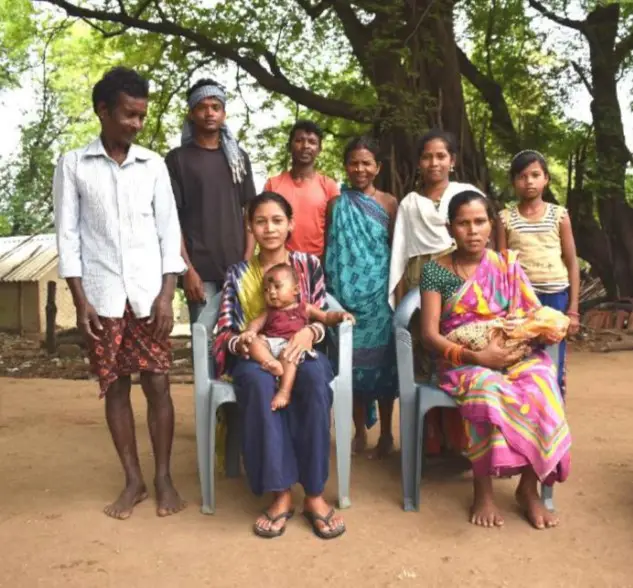
Rather than placing an economic value on women, the study portrays bride price as a culturally embedded institution of reciprocity. The exchange acknowledges the contribution of families, strengthens kinship ties and publicly affirms a new social alliance. In many communities, the responsibility of arranging the customary gifts is shared not only by the bride’s parents but also by maternal uncles, paternal uncles, village elders and traditional mediators, making marriage a collective social responsibility rather than a private affair.
Bride Price Practices Across Odisha’s Ten PVTGs
| PVTG | Local name | Contributors | Customary bride price |
| Birhor/Mankidia | Ganang | Bride’s parents | Rs 7 (four annas), four hens, two goats and 50 kg rice |
| Bonda | Ginning | Bride’s parents | One cow, one bullock and 20–30 kg cereals |
| Didayi | Gineng/Jhola Dabu | Bride’s parents | 10 kg rice, cash, one goat and five gallons of sago palm drink |
| Juang | Kania Mula | Bride’s father, father’s younger brother, maternal uncle and Khandaria (middleman) | Rs 3, about 50 kg rice, one chicken, rice beer and a saree for the bride’s mother |
| Paudi Bhuiyan | Kania Mula | Bride’s father, father’s younger brother, maternal uncle and village headman | About 25 kg rice, three goats, three bullocks and a dhoti for the maternal uncle |
| Dongria Kandha | Modar | Bride’s family; customary shares for grandmother and villagers | 50 kg rice, two buffaloes, liquor, saree, utensils and brass plates |
| Hill Kharia | Pana | Bride’s parents | Rs 2.50, rice and clothes for the bride, mother and relatives |
| Kutia Kandha | Jala/Kalu Tapineru | Parents and maternal uncles | Rice, buffalo, food grains, dresses and ornaments |
| Lodha | Kanya Pana | Bride’s parents | Traditionally Rs 5–7 (now around Rs 501), clothes, goat or chicken and brass utensils |
| Lanjia Saora | Panshal | Bride’s parents | Both cash and kind |
Adapted from the technical report.
Marriage Is A Community Institution
Perhaps the report’s most remarkable insight is that marriage among these communities is rarely negotiated by the couple alone. It is instead woven into an intricate web of kinship obligations.
The Juang’s Kania Mula illustrates this vividly. The bride price is not borne solely by the parents. The bride’s father, his younger brother, the maternal uncle and a traditional intermediary known as the Khandaria all contribute. The customary exchange includes rice, rice beer, a chicken, a saree for the bride’s mother and a symbolic cash payment. Each item represents participation by different branches of the family, reinforcing social solidarity rather than financial obligation.
The Paudi Bhuiyan extend this principle even further. Besides close relatives, the village headman participates in the customary exchange. His presence symbolises that marriage is also an agreement between communities, not merely households. Such practices underline the importance of collective sanction and village cohesion in sustaining tribal social order.
Among the Kutia Kandha, the maternal uncle occupies a particularly significant place in arranging the bride price. His contribution reflects the continuing importance of maternal kinship in indigenous social organisation—an institution that has largely diminished in many mainstream societies but remains central to tribal family structures.
Rice, Livestock And Cloth: The Language Of Indigenous Reciprocity
The items exchanged during marriage tell their own story.
Rice appears in almost every community’s bride-price package, symbolising food security, prosperity and fertility. Livestock—whether goats, cows, bullocks or buffaloes—reflects the agrarian and forest-based economy that sustains these communities. Sarees, dhotis, brass utensils and ornaments recognise the social role of relatives who nurture and support the bride. Traditional beverages such as rice beer or sago palm drink are integral to communal feasts that transform marriage into a collective celebration.
Even where cash is involved, it is often nominal and symbolic. The Lodha, for instance, traditionally fixed the bride price at just Rs 5–7. While inflation has seen the amount rise to around Rs 501 today, the principle remains unchanged: the payment is ceremonial rather than commercial.
The diversity of names like Ganang, Ginning, Gineng, Kania Mula, Modar, Pana, Jala, Kanya Pana and Pansha also reflects the linguistic richness of Odisha’s PVTGs. Each term embodies a distinct cultural worldview and reminds us that no single model of marriage can represent India’s indigenous societies.
(Part-2 to follow)