


• About
  • Contact
  • Sitemap
  • Gallery
No Result
View All Result
Vacancies
Saturday, July 4, 2026
The Indian Tribal
  • Home
  • Achievers
    • उपलब्धिकर्ता
  • Cuisine
    • खान पान
  • Health
    • स्वास्थ्य
  • Legal
    • कानूनी
  • Music
    • संगीत
  • News
    • Updates
    • खबरें
  • Sports
    • खेलकूद
  • Variety
    • विविध
  • हिंदी
    • All
    • आदिवासी
    • उपलब्धिकर्ता
    • कला और संस्कृति
    • कानूनी
    • खबरें
    • खान पान
    • खेलकूद
    • जनजाति
    • भारत
    • विविध
    • संगीत
    • संस्कृति
    • स्वास्थ्य
    The Indian Tribal

    उत्तर बंगाल के चाय बागानों का संकट: जलवायु परिवर्तन, पलायन और महिलाओं की असुरक्षा का बढ़ता दुष्चक्र

    The Indian Tribal

    सिदो-कान्हू ने परिणाम की चिंता किये बगैर शोषण के विरुद्ध मोर्चा खोला था: मुख्यमंत्री हेमन्त सोरेन

    The Indian Tribal

    सरना से कोया पुनेम तक: जनगणना 2027 में अलग आदिवासी धर्म श्रेणी की मांग क्यों तेज हुई?

    The Indian Tribal

    किन्नौर की जनजातीय राजनीति में उभरी नई पर्यावरणीय आवाज, युवा नेतृत्व ने बदली विकास की बहस

    The Indian Tribal

    झारखण्ड के 11 नए उत्पादों को मिला जीआई टैग, राष्ट्रीय और वैश्विक बाजार में बढ़ेगी पहचान

    The Indian Tribal

    युवाओं को नशे की गिरफ्त से बचाना सर्वोच्च प्राथमिकता: मुख्यमंत्री हेमन्त सोरेन

    The Indian Tribal

    मध्य प्रदेश के सहरिया आदिवासियों ने भूख से लड़ने के लिए अपनाए पारंपरिक तरीके

    The Indian Tribal

    झारखण्ड में विद्यार्थियों को ई-साइकिल देने की तैयारी, कौशल विकास को भी व्यवहारिक बनाने पर मुख्यमंत्री का ज़ोर

  • Gallery
    • Videos
  • Latest News
The Indian Tribal
  • Home
  • Achievers
    • उपलब्धिकर्ता
  • Cuisine
    • खान पान
  • Health
    • स्वास्थ्य
  • Legal
    • कानूनी
  • Music
    • संगीत
  • News
    • Updates
    • खबरें
  • Sports
    • खेलकूद
  • Variety
    • विविध
  • हिंदी
    • All
    • आदिवासी
    • उपलब्धिकर्ता
    • कला और संस्कृति
    • कानूनी
    • खबरें
    • खान पान
    • खेलकूद
    • जनजाति
    • भारत
    • विविध
    • संगीत
    • संस्कृति
    • स्वास्थ्य
    The Indian Tribal

    उत्तर बंगाल के चाय बागानों का संकट: जलवायु परिवर्तन, पलायन और महिलाओं की असुरक्षा का बढ़ता दुष्चक्र

    The Indian Tribal

    सिदो-कान्हू ने परिणाम की चिंता किये बगैर शोषण के विरुद्ध मोर्चा खोला था: मुख्यमंत्री हेमन्त सोरेन

    The Indian Tribal

    सरना से कोया पुनेम तक: जनगणना 2027 में अलग आदिवासी धर्म श्रेणी की मांग क्यों तेज हुई?

    The Indian Tribal

    किन्नौर की जनजातीय राजनीति में उभरी नई पर्यावरणीय आवाज, युवा नेतृत्व ने बदली विकास की बहस

    The Indian Tribal

    झारखण्ड के 11 नए उत्पादों को मिला जीआई टैग, राष्ट्रीय और वैश्विक बाजार में बढ़ेगी पहचान

    The Indian Tribal

    युवाओं को नशे की गिरफ्त से बचाना सर्वोच्च प्राथमिकता: मुख्यमंत्री हेमन्त सोरेन

    The Indian Tribal

    मध्य प्रदेश के सहरिया आदिवासियों ने भूख से लड़ने के लिए अपनाए पारंपरिक तरीके

    The Indian Tribal

    झारखण्ड में विद्यार्थियों को ई-साइकिल देने की तैयारी, कौशल विकास को भी व्यवहारिक बनाने पर मुख्यमंत्री का ज़ोर

  • Gallery
    • Videos
  • Latest News
No Result
View All Result
The Indian Tribal
No Result
View All Result
  • Home
  • Achievers
  • Cuisine
  • Health
  • Legal
  • Music
  • News
  • Sports
  • Variety
  • हिंदी
  • Gallery
  • Latest News
Vacancies
Home » The Indian Tribal / Achievers » Decade-Long Endeavour Of This Tribal Farmer Helps Conserve Over 100 Indigenous Paddy Varieties

Decade-Long Endeavour Of This Tribal Farmer Helps Conserve Over 100 Indigenous Paddy Varieties

His initiative demonstrates how tribal knowledge and community participation can help protect native crop diversity for future generations, writes Niroj Ranjan Misra

July 4, 2026
The Indian Tribal

Suratha With His Seed Varieties

Bhubaneswar

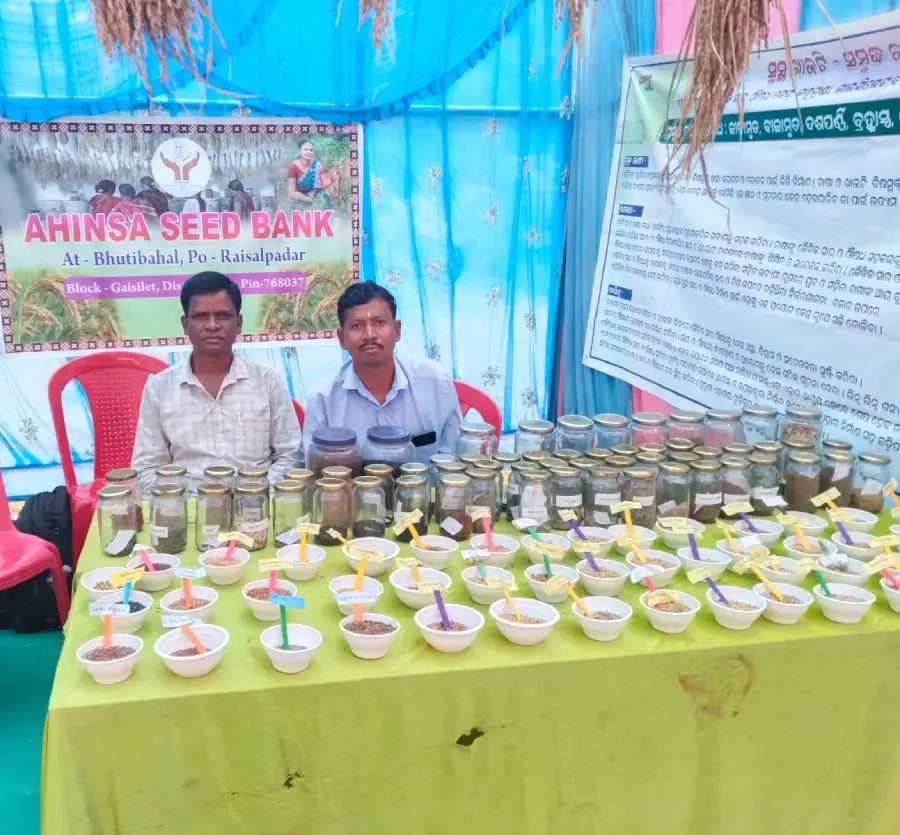
When the advent of high-yielding varieties became the preferred means of boosting rice production during the mid-1960s, the stock of indigenous varieties began to shrink. But Suratha Kisan, a tribal farmer from Dharudihi village in Odisha’s Sundargarh district, established the Singha Bahini Seed Bank (SBSB) in 2014-15 to arrest their slide towards extinction.

With support from the Sambalpur-based non-government organisation Desi Bihana Surakhsya Manch (DBSM), Suratha set up the seed bank on his own to salvage indigenous varieties from slipping into anonymity. Gradually, from 2015-16 onwards, 20 to 25 farmers from his area joined the initiative one after another, strengthening the mission to conserve indigenous seeds.

“Our SBSB started with only 35 indigenous paddy varieties. Now the seed bank has about 110 such varieties. This apart, SBSB has stocked seeds of six indigenous pulse varieties, 18 varieties of millets, 10 vegetable varieties and two oil varieties. Now our seed bank, which has about 80 active farmer members, is still collecting and storing as many indigenous seed varieties as possible,” Suratha, a graduate who belongs to the Kisan tribal community, told The Indian Tribal.

The Kisans are primarily agriculturists who grow paddy, millets and oilseeds. They speak the Kuruk dialect, Odia and Sambalpuri, and also collect and sell various kinds of minor forest produce. A section of the community is engaged in date palm craft, including the making of mats and brooms.
The Indian Tribal
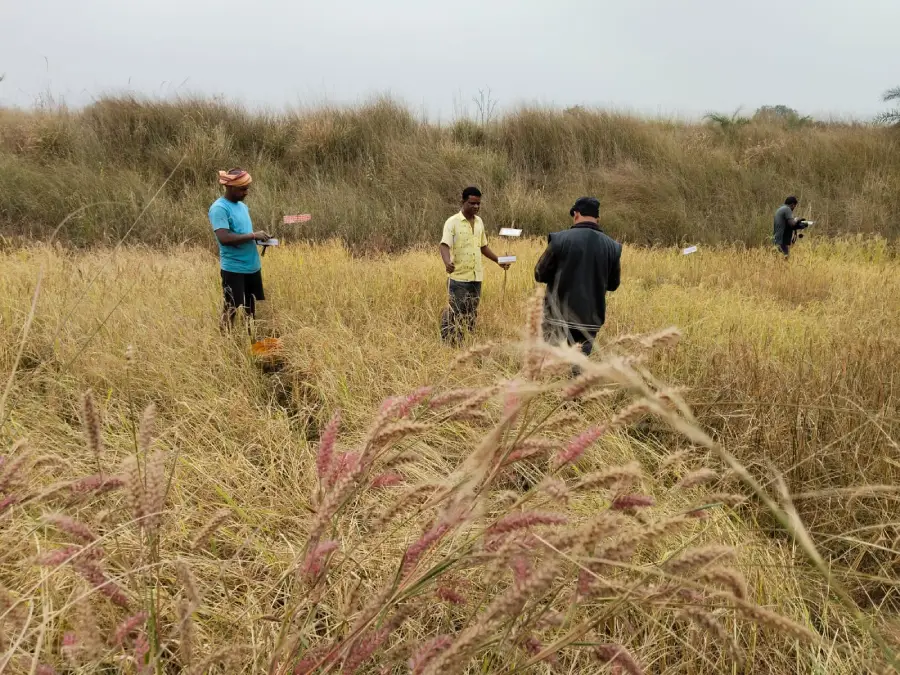
Suratha (middle) Explaining To A Visiting Scientist

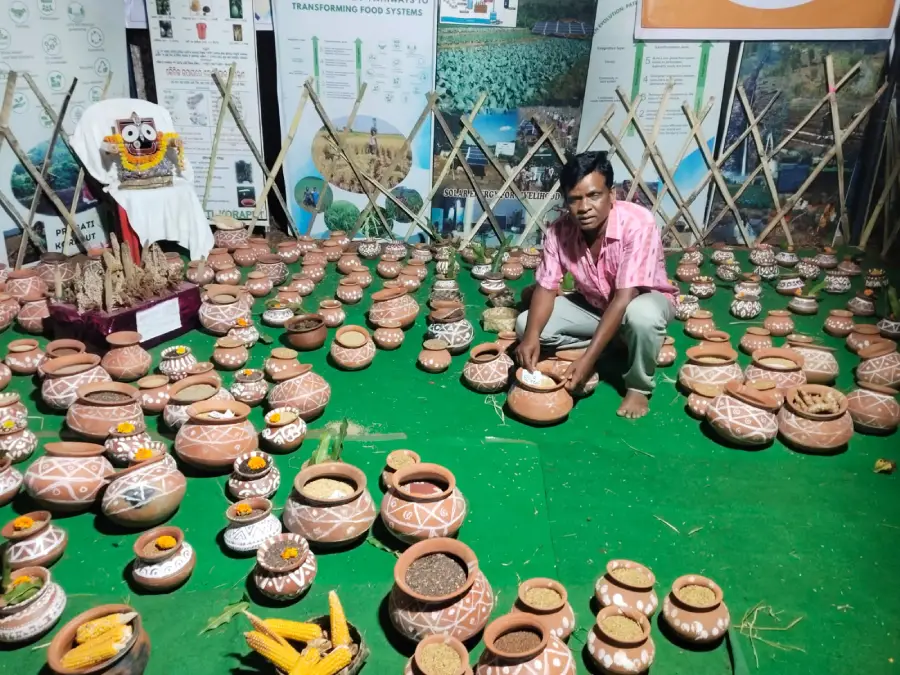
When SBSB was established in 2014-15, its collection included indigenous paddy varieties such as the black Kalajeera, fine Sunakathi, red Lusuri, aromatic Karpura Kranti and the plain non-aromatic Pateni. Since then, the seed bank has added varieties such as the black Kalabati, fine Machcha Kanta, aromatic Karpura Kranti, red Juiguda and the plain non-aromatic Katia. Indigenous vegetable seeds, including red okra, ridge gourd, cucumber, tomato, bitter gourd and cowpea, are also preserved in the seed bank.

Suratha’s late father, Baneswar Kisan, had cultivated indigenous varieties such as Nilamani, Bhoska and Bansbhotta on about five acres. However, in 1995 he switched to high-yielding varieties such as Swarna and Pratikshya to obtain better yields. While high-yielding varieties in the rain-fed region produce 12 to 14 quintals per acre, indigenous varieties yield 8 to 10 quintals per acre.

However, Suratha’s association with DBSM in 2012 made him realise the harmful impact of chemical fertilisers and pesticides used in cultivating high-yielding varieties. According to studies, chemical fertilisers cause soil acidification, loss of soil fertility and soil compaction. On the other hand, several indigenous varieties are naturally pest-resistant and drought-tolerant. According to Suratha, these varieties are also resilient enough to withstand the impacts of climate change.

“Since then, I have been growing indigenous paddy varieties on five acres and vegetables on about 25 decimals. Besides, I had to invest Rs. 6,000 to Rs. 8,000 per acre per year for cultivating high-yielding paddy varieties, while I now spend Rs. 3,000 to Rs. 4,000 per acre per year to grow indigenous varieties,” said Suratha, who has been felicitated by various NGOs, media organisations and even Odisha Chief Minister Mohan Charan Majhi for his relentless efforts.

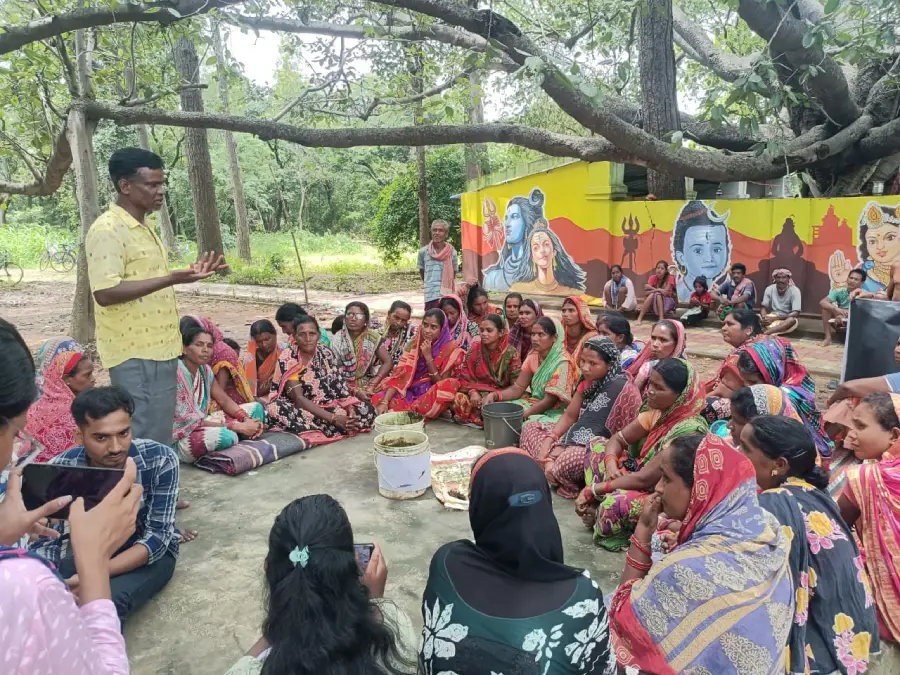
He not only cultivates indigenous crops through natural farming but has also motivated other farmers to adopt ecological farming methods. Today, indigenous paddy is cultivated on nearly 25 acres and vegetables on around five acres in his village.
The Indian Tribal
Suratha At A Seed Festival

“Suratha was initiated into ecological farming during his early phase by DBSM. He was also immensely inspired by Padma Shri Prof. Radhamohan of Nayagarh district, Padma Shri Dr. Subhash Palekar of Maharashtra and noted agriculturist Natabar Sarangi of Cuttack district during 2013-14. These stalwarts not only inspired him to cultivate indigenous varieties but also encouraged him to establish SBSB and earn the tag of a seed saviour,” said DBSM Convener Saroj Kumar Mohanty.

In his quest to become a successful cultivator of indigenous crops and a custodian of native seeds, Suratha underwent several training programmes conducted by DBSM and the Krishi Vigyan Kendra (KVK), Kirei, in Sundargarh district.

“We trained Suratha in different phases under the ‘Protection of Plant Varieties and Farmers’ Rights Act’, the ‘National Mission on Natural Farming’ and the government’s ‘Paramparagata Krushi Vikash Yojana’. He was trained in seed treatment, assessment of soil nutrients, seed conservation and mulching, including the preparation of vermi-compost,” said Dr. Manoj Kumar Jena, Scientist (Soil Science), KVK, Kirei.

“During the training, he also learnt the preparation and use of bio-fertilisers such as ‘Bijamruta’ and ‘Jivamruta’, and bio-pesticides including ‘Nimastra’, ‘Bramhastra’, ‘Agniastra’ and ‘Dashaparni’,” he added.
The Indian Tribal
Suratha Counselling Female Farmers

Suratha’s SBSB lends indigenous seeds to farmers in nearby areas. Farmers who borrow seeds repay the loan after harvest with an additional quantity as interest. For example, a farmer who borrows 10 kilograms of seed must return 15 kilograms after harvest.

“The seed bank also sells seeds to farmers in distant areas. For example, it sells paddy varieties such as ‘Kusumkali’ and ‘Machchakanta’ at Rs. 30 and Rs. 40 per kilogram, respectively. However, if any NGO or institution purchases seeds from SBSB under a government-sponsored project, the per-kilogram price increases marginally,” explained Suratha.

“My seed bank also exchanges its seeds with other seed banks in western Odisha if a particular variety is not available in the SBSB stock,” he added.

Suratha also cultivates indigenous seed varieties specifically to replenish the seed bank and ensure adequate supplies during the sowing season. While he grows millet, vegetable and paddy seeds on half an acre to maintain diversity, high-demand varieties such as Machchakanta are cultivated on 1.5 acres.


Root Woot | Online Puja Samagri Root Woot | Online Puja Samagri Root Woot | Online Puja Samagri

In Numbers

49.4 %
Female Literacy rate of Scheduled Tribes

Update

झारखंड में PVTG परिवारों को अब मनरेगा में मिलेंगे 150 दिन का रोजगार

मुख्यमंत्री हेमन्त सोरेन की अध्यक्षता में गुरुवार को हुई झारखंड मंत्रिपरिषद की बैठक में विशेष रूप से कमज़ोर जनजातीय समूहों (PVTG) के लिए बड़ा फैसला लिया गया। कैबिनेट ने राज्य में मनरेगा के तहत इन्हें वित्तीय वर्ष में निर्धारित 100 दिनों के रोजगार के अतिरिक्त 50 दिनों का और रोजगार उपलब्ध कराने को मंजूरी दे दी। इसके साथ ही PVTG परिवारों को अब वर्ष में कुल 150 दिनों का रोजगार मिल सकेगा। बैठक में वीबी-जी रामजी (VB-G RAM G) पर भी विस्तृत चर्चा की गई। सम्यक विचार-विमर्श के बाद मंत्रिपरिषद ने इस प्रस्ताव को सैद्धांतिक स्वीकृति प्रदान कर दी। मनरेगा के तहत अतिरिक्त 50 दिनों के रोजगार का यह निर्णय इन अत्यंत कमजोर जनजातीय समुदायों की आजीविका सुरक्षा, आय में वृद्धि और ग्रामीण क्षेत्रों से मजबूरी में होने वाले पलायन को कम करने की दिशा में एक महत्वपूर्ण कदम साबित हो सकता है। झारखंड देश के उन राज्यों में शामिल है जहां PVTG की सबसे अधिक आबादी निवास करती है। राज्य में नौ PVTG समुदाय—असुर, बिरहोर, बिरजिया, कोरवा, माल पहाड़िया, सौरिया पहाड़िया, परहैया, पहाड़िया (कुमारभाग) और सावर—अधिसूचित हैं।
The Indian Tribal
आदिवासी

सिदो-कान्हू ने परिणाम की चिंता किये बगैर शोषण के विरुद्ध मोर्चा खोला था: मुख्यमंत्री हेमन्त सोरेन

by The Indian Tribal
June 30, 2026

हूल दिवस पर मुख्यमंत्री सोरेन ने झारखण्ड की राजधानी रांची में सिदो-कान्हू उद्यान परिसर में आयोजित रक्तदान शिविर में शामिल होकर रक्तदाताओं के बीच प्रशस्ति-पत्र भी वितरित किया। The Indian Tribal की रिपोर्ट

The Indian Tribal

In Palamau Tiger Reserve In Jharkhand, Tribal Traditions Strengthen Big Cat Conservation

June 28, 2026
The Indian Tribal

सरना से कोया पुनेम तक: जनगणना 2027 में अलग आदिवासी धर्म श्रेणी की मांग क्यों तेज हुई?

June 25, 2026
The Indian Tribal

किन्नौर की जनजातीय राजनीति में उभरी नई पर्यावरणीय आवाज, युवा नेतृत्व ने बदली विकास की बहस

June 24, 2026
The Indian Tribal

झारखण्ड के 11 नए उत्पादों को मिला जीआई टैग, राष्ट्रीय और वैश्विक बाजार में बढ़ेगी पहचान

June 17, 2026
The Indian tribal

As North Bengal’s Tea Gardens Shut Shop, Tribal Women Pay The Price

June 16, 2026
Previous Post

Jharkhand To Host National Stakeholders Consultation To Drive Vision 2050, Investment, AI Growth

Top Stories

The Indian Tribal
India

Jharkhand To Host National Stakeholders Consultation To Drive Vision 2050, Investment, AI Growth

July 2, 2026
The Indian Tribal
आदिवासी

उत्तर बंगाल के चाय बागानों का संकट: जलवायु परिवर्तन, पलायन और महिलाओं की असुरक्षा का बढ़ता दुष्चक्र

July 2, 2026
The Indian Tribal
आदिवासी

सिदो-कान्हू ने परिणाम की चिंता किये बगैर शोषण के विरुद्ध मोर्चा खोला था: मुख्यमंत्री हेमन्त सोरेन

June 30, 2026
Load More
  • About Us
  • Editor & Writers
  • Contact
  • Redressal
  • Copyright Policy
  • Privacy Policy And Terms Of Use
  • Disclaimer
  • Sitemap

  • Achievers
  • Cuisine
  • Health
  • Hindi Featured
  • India
  • News
  • Legal
  • Music
  • Sports
  • Trending
  • Chhattisgarh
  • Delhi
  • Gujarat
  • Jammu & Kashmir
  • Jharkhand
  • Kerala
  • Madhya Pradesh
  • Maharashtra
  • North East
  • Arunachal Pradesh
  • Assam
  • Manipur
  • Meghalaya
  • Mizoram
  • Nagaland
  • Sikkim
  • Tripura
  • Odisha
  • Telangana
  • West Bengal
  • Political News
  • Variety
  • Art & Culture
  • Entertainment
  • Adivasi
  • Tribal News
  • Scheduled Tribes
  • हिंदी
  • उपलब्धिकर्ता
  • कानूनी
  • खान पान
  • खेलकूद
  • स्वास्थ्य
  • संस्कृति
  • संगीत
  • विविध
  • कला और संस्कृति
  • खबरें
  • असम की ताज़ा ख़बरें
  • अरुणाचल प्रदेश की ताज़ा ख़बरें
  • ओडिशा की ताज़ा ख़बरें
  • केरल की ताज़ा ख़बरें
  • गुजरात की ताज़ा ख़बरें
  • छत्तीसगढ़
  • जम्मू और कश्मीर की ताज़ा ख़बरें
  • झारखंड न्यूज़
  • तेलंगाना की ताज़ा ख़बरें
  • दिल्ली
  • नॉर्थईस्ट की ताज़ा ख़बरें
  • पश्चिम बंगाल की ताज़ा ख़बरें
  • मध्य प्रदेश की ताज़ा ख़बरें
  • महाराष्ट्र की ताज़ा ख़बरें
  • त्रिपुरा की ताज़ा ख़बरें
  • नागालैंड की ताज़ा ख़बरें
  • मणिपुर की ताज़ा ख़बरें
  • मिजोरम की ताज़ा ख़बरें
  • मेघालय की ताज़ा ख़बरें
  • सिक्किम की ताज़ा ख़बरें
  • राजस्थान की ताज़ा ख़बरें

About Us

The Indian Tribal is India’s first bilingual (English & Hindi) digital journalistic venture dedicated exclusively to the Scheduled Tribes. The ambitious, game-changer initiative is brought to you by Madtri Ventures Pvt Ltd (www.madtri.com). From the North East to Gujarat, from Kerala to Jammu and Kashmir — our seasoned journalists bring to the fore life stories from the backyards of the tribal, indigenous communities comprising 10.45 crore members and constituting 8.6 percent of India’s population as per Census 2011. Unsung Adivasi achievers, their lip-smacking cuisines, ancient medicinal systems, centuries-old unique games and sports, ageless arts and crafts, timeless music and traditional musical instruments, we cover the Scheduled Tribes community like never-before, of course, without losing sight of the ailments, shortcomings and negatives like domestic abuse, alcoholism and malnourishment among others plaguing them. Know the unknown, lesser-known tribal life as we bring reader-engaging stories of Adivasis of India.

Follow Us

All Rights Reserved

© 2026 Madtri Ventures [P] Ltd.

No Result
View All Result
  • Home
  • Achievers
  • Cuisine
  • Health
  • Health
  • Legal
  • Music
  • News
  • Sports
  • Variety
  • हिंदी
    • उपलब्धिकर्ता
    • खान पान
    • कानूनी
    • खेलकूद
    • खेलकूद
    • संगीत
    • संगीत
    • स्वास्थ्य
    • स्वास्थ्य
    • विविध
  • Gallery
  • Videos

© 2026 Madtri Ventures [P] Ltd.