






Bhopal/New Delhi
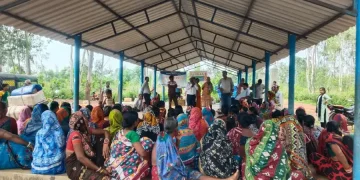
One of central India’s most closely watched displacement movements has gathered momentum again with tribal communities and other project-affected residents returning to the protest site against the Ken-Betwa River Linking Project in Madhya Pradesh.
The fresh phase of the agitation comes only a few months after demonstrators had temporarily suspended their movement following discussions with district officials. Protest leaders now contend that the commitments made by the administration regarding compensation, rehabilitation and verification of affected families have not been implemented to their satisfaction, prompting them to resume public demonstrations.
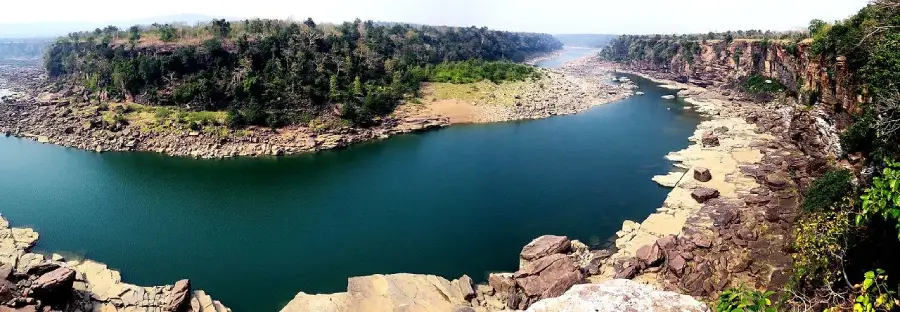
The renewed protests are centred in villages to be impacted by the construction of the Daudhan Dam, a key component of the Ken-Betwa River Linking Project. For the record, the Daudhan Dam will displace 5,288 families in Chhatarpur and 1,400 families in Panna. The project is designed to transfer surplus water from the Ken River to the Betwa basin with the objective of improving irrigation, drinking water availability and power generation across the drought-prone Bundelkhand region spanning Madhya Pradesh and Uttar Pradesh.
For the protesting Gond and Kol tribal communities, however, the central issue remains displacement from ancestral lands and forests that have sustained their livelihoods for generations. Many families fear losing agricultural holdings, forest-based income and cultural ties linked to their villages before adequate rehabilitation measures are put in place.
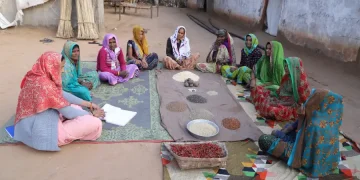
The movement first drew national attention earlier this year when tribal women and other protesters adopted a series of symbolic demonstrations to express their opposition. Participants lay on funeral pyres as part of what became known as the “Chita Andolan”, while other forms of protest included hunger strikes, demonstrations involving soil collected from their villages and gatherings in water bodies to highlight the risks they associate with the project. These peaceful demonstrations attracted widespread public attention and renewed scrutiny of the rehabilitation process.
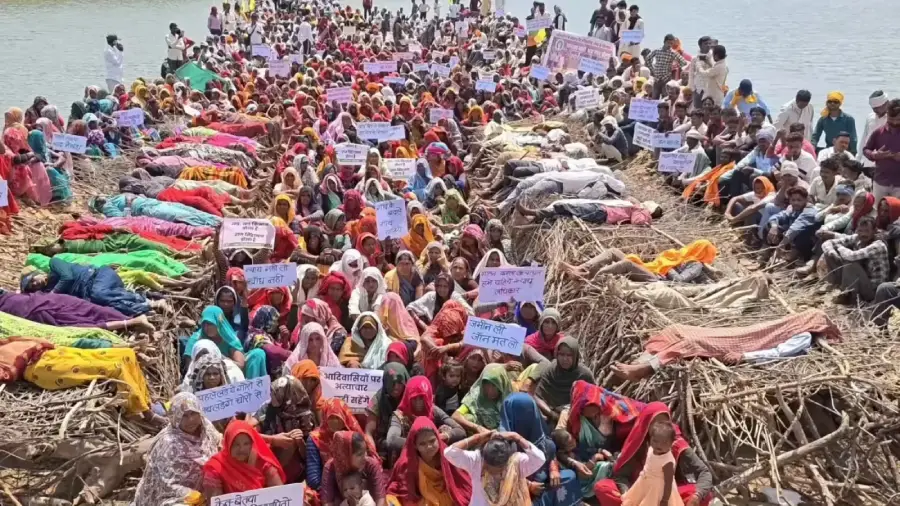
Following negotiations with officials, the agitation was suspended after the administration assured protesters that pending grievances would be examined. These included fresh verification of affected households, scrutiny of compensation-related claims and review of rehabilitation concerns.
With the promised measures yet to produce visible outcomes, protesters have once again begun mobilising in the affected villages. They maintain that land records, compensation assessments and identification of eligible beneficiaries require greater transparency before any further displacement takes place.
Several affected residents also continue to raise concerns over the implementation of legal safeguards available to Scheduled Tribes and forest-dwelling communities. They argue that families dependent on forests for livelihood and traditional practices should not be relocated without ensuring that statutory protections and rehabilitation provisions are fully implemented.
The Ken-Betwa River Linking Project occupies a significant place in India’s long-term water management strategy. As the country’s first river interlinking project to reach the implementation stage under the National Perspective Plan, it is expected to deliver irrigation to more than a million hectares of farmland, provide drinking water to millions of people and generate hydropower for the region. Successive governments have projected it as a major intervention to reduce the recurring water shortages that have long affected Bundelkhand.
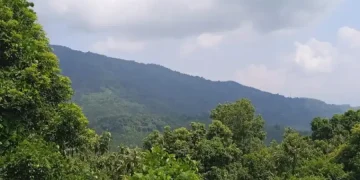
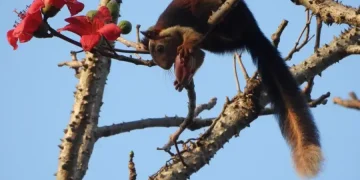
At the same time, the project has remained the subject of sustained debate because of its environmental and social implications. Conservationists have expressed concern over the impact of the proposed reservoir on forests and wildlife habitats, including parts of the Panna landscape. Social organisations have similarly questioned whether rehabilitation and consent processes have adequately addressed the concerns of displaced communities.
The latest protests indicate that these issues remain far from settled despite progress on the infrastructure component of the project. Demonstrators insist that development and water security should not come at the expense of communities that stand to lose their homes, agricultural land and customary access to forests.
According to media reports, Chhatarpur Collector Parth Jaiswal claimed the demands raised during the previous round of protests had already been addressed. He, however, pointed out that the administration was looking into protests by “some people from Panna”.
Officials have maintained that rehabilitation and compensation are being carried out in accordance with applicable policies and have indicated their willingness to continue discussions with affected families. The administration is expected to engage with protest representatives once again in an effort to defuse the renewed agitation.
The developments have once again brought into focus the broader challenge associated with large infrastructure projects in India—how to reconcile national development goals with the rights of indigenous communities whose lives are directly affected by them. While the Ken-Betwa project is expected to reshape water availability across Bundelkhand, its long-term success may ultimately depend not only on engineering achievements but also on the confidence of the people living in the shadow of the dam.
As the protests continue, the spotlight is likely to remain on whether the rehabilitation process can bridge the trust deficit between the administration and the tribal communities who say they are willing to support development, provided it does not compromise their legal rights, livelihoods and cultural identity.