




Imphal/New Delhi
For a country of 1.47 billion people, India’s continued absence from football’s biggest stage—the FIFA World Cup—remains a source of disappointment for countless fans. While debates over the reasons continue, in the conflict-affected hill district of Ukhrul in Manipur, a group of former indigenous footballers believes the answer begins at the grassroots.
Former professional footballer Pemmi Kasomwoshi, now based in Ukhrul, has a simple explanation for India’s struggle to compete with global footballing powers.
“Foreign players start playing football at the age of three-four, whereas in India, players start when they reach the age of 11-12. So, how can we even compete with them in the international arena,” Kasomwoshi, who represented Pune FC and Kolkata MS FC, questioned.
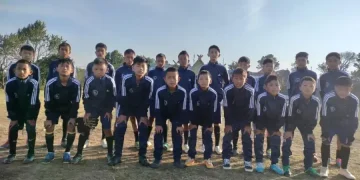
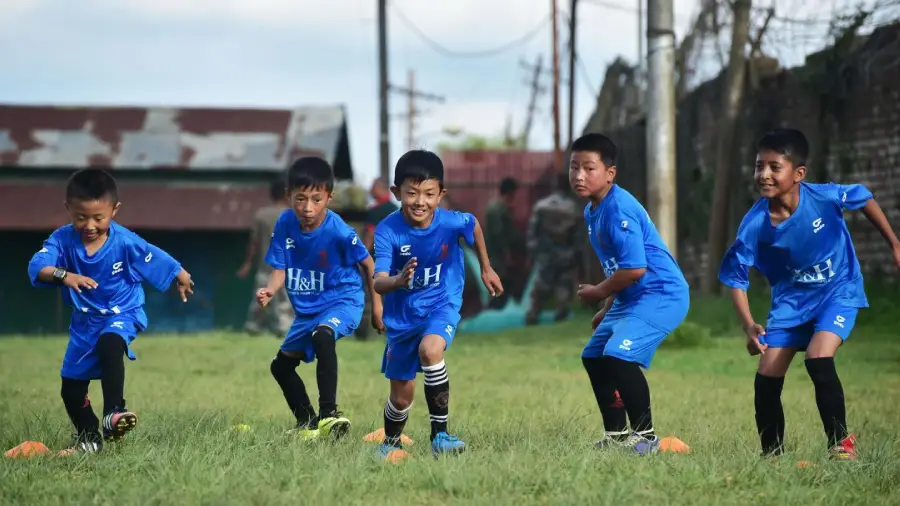
Kasomwoshi played professionally until around 2017. A knee injury suffered towards the end of 2013 forced him to take a year-long break, but it did little to diminish his commitment to the game. Today, he trains 35 aspiring footballers from Ukhrul’s indigenous communities, including girls.
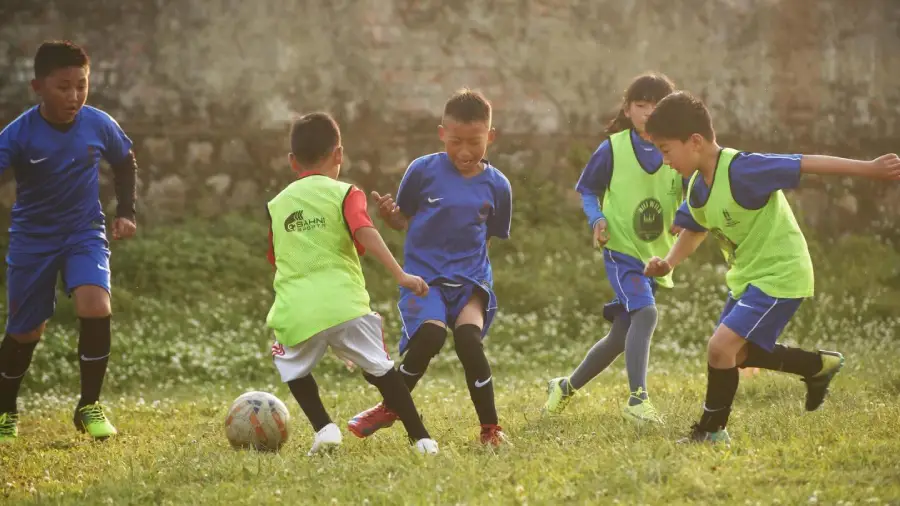
“This year, women aren’t much into it, but sometimes they do drop in for practice,” the former professional told The Indian Tribal.
COMMUNITY-LED GRASSROOTS FOOTBALL
Kasomwoshi is among four football enthusiasts who have come together to nurture young talent through the Ukhrul Basic Soccer Foundation, a grassroots initiative driven entirely by individual commitment.
He acknowledged that football infrastructure in football strongholds such as Goa and Kolkata is significantly better than what exists in Manipur. Yet, he believes indigenous players possess the skill, discipline and determination needed to succeed if provided with the right opportunities.
“I am sure things will improve for tribal (indigenous) players as well as Indian football in the future.”
For now, however, his priority remains coaching young players alongside three friends. “Right now, all of us train these students who come to learn at a playground in Ukhrul. Tribal players are keen to learn, but they also need better facilities,” he said.
The training ground itself reflects the resource constraints. It is an Army ground where football practice is permitted while Army personnel use it for volleyball.
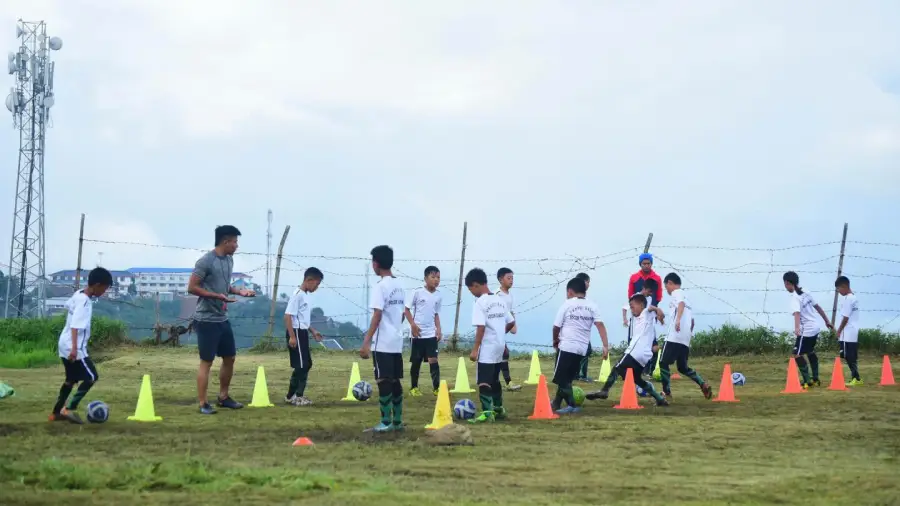
Training sessions are held three times a week for one-and-a-half to two hours after school, beginning around 3 pm. During the monsoon, however, heavy rainfall often disrupts the schedule. “In Ukhrul, there are three to four months of heavy rainfall,” Kasomwoshi said.
The monthly training fee is about Rs 1,000. Sponsors occasionally provide jerseys and football shoes to the trainees. “I never can think of leaving Ukhrul,” he said.
A DREAM BORN FROM EXPERIENCE
For Worngachan Shatsang, football began as a hobby before evolving into a mission to support local talent.
Along with Kasomwoshi, former footballer Yarmipei Shangh and Chukshunhor Kharay, Shatsang runs the Ukhrul Basic Soccer Foundation, which was conceived in 2018. Of the four founders, two are retired professional footballers, while several informal members also contribute to the initiative.
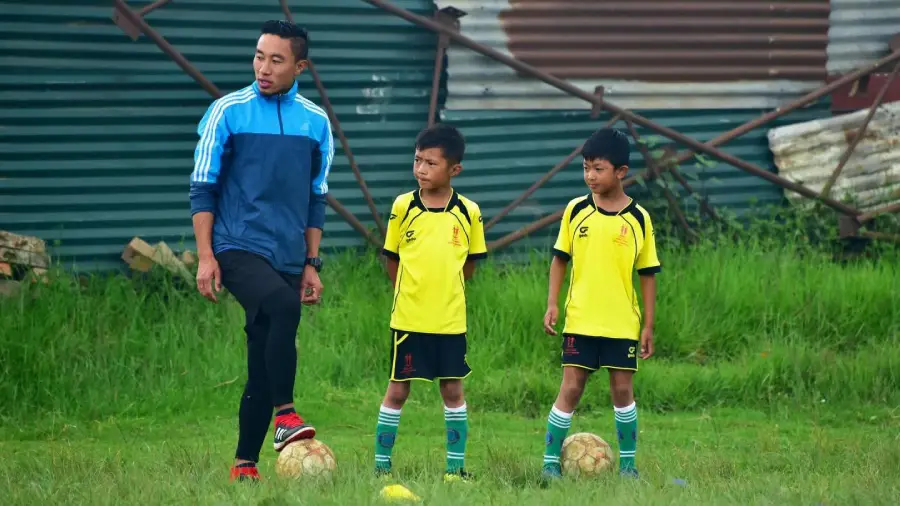
“Basically, the former two professionals, after hanging their boots in their mid-thirties, thought of helping the local players. At that time, I was working as a sports journalist and a social media handler for football clubs like Shillong Lajong FC and Minerva Punjab. That is how I joined the group of four. But I never played as a professional,” Shatsang, who started playing football at around six years of age, said.
The Foundation still does not own a dedicated training facility and depends on access to the Army ground for practice three days a week.
According to Shatsang, one of the biggest obstacles facing Indian football is the absence of a strong sporting ecosystem. “In other countries, the playing season is longer and the players practise (train and play) for 11 months and enjoy a long playing time. In India, players just play for four to five months.”
He believes indigenous athletes possess natural physical stamina, but talent alone is insufficient without sustained competition, proper coaching and adequate infrastructure. State football leagues, he pointed out, generally last only three to four months.
The Foundation charges a modest training fee but reserves 30-40 percent of the collections for scholarships. “Otherwise, we also allow some to play free of cost because in hill districts even basic infrastructure is missing,” he added.
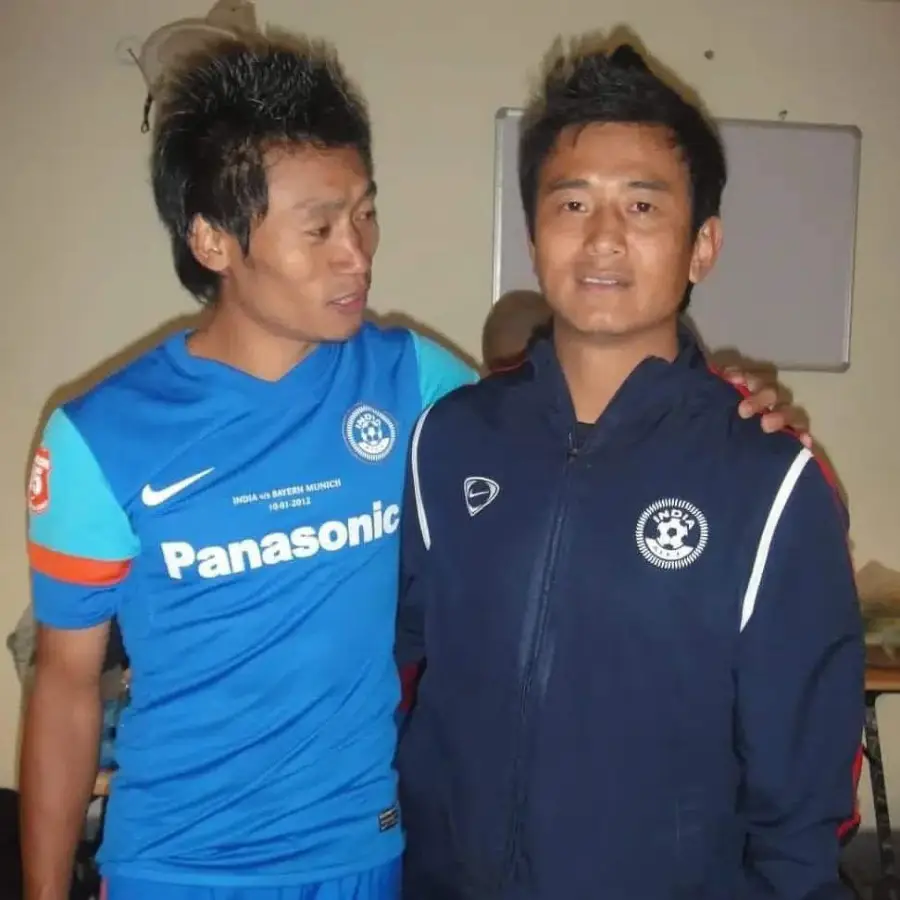
Although Manipur is better known nationally for producing Olympic medallists and world champions in boxing and weightlifting, the state is equally regarded as one of India’s strongest football nurseries. Despite accounting for barely 0.2 per cent of India’s population, Manipur has consistently produced national and international footballers, including Gouramangi Singh, Renedy Singh and Bala Devi, while regularly supplying talent to the Indian Super League, I-League and the national teams.
Predominantly inhabited by the Tangkhul Naga community, Ukhrul has been hit by incidents of violence, of late. The district has historically witnessed periods of insurgency, heavy security deployment and political unrest linked to Naga movements. Its proximity to the India-Myanmar border and its location in the hill areas make it a security-sensitive district.
INFRASTRUCTURE CHALLENGE REMAINS
Former professional footballer Reisangmi Vashum is also working to develop young footballers in Ukhrul under the Khelo India programme, which provides sports equipment, kits and training support. Vashum represented East Bengal from 2010 to 2014 before playing for Churchill Brothers, Mumbai FC and several other clubs.
He believes football enjoys immense popularity across the North-East but says stronger infrastructure is essential to translate that enthusiasm into sustained success. “There is a need to upscale the existing infrastructure and build a strong football culture. A strong grassroots system, community-based football clubs, coach education and residential and non-residential academies that operate throughout the year are vital.”
Vashum currently coaches 38 players, including four girls, all below the age of 14.
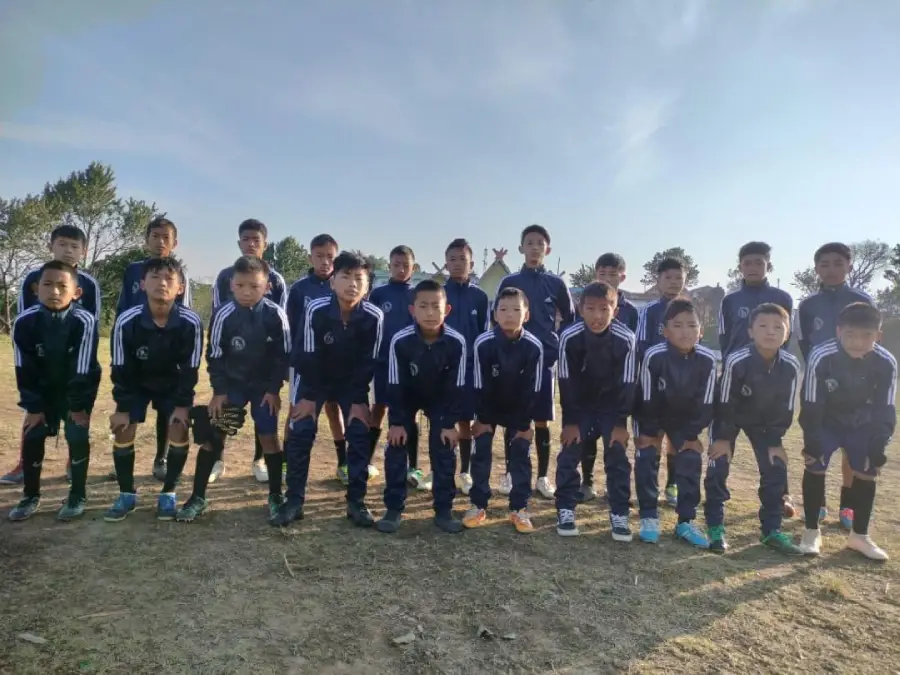
“The condition of the school ground where I train them is not that good, and especially in the monsoon, it becomes almost impossible to play there.” Most training sessions are held on a school ground, while players bring their own kits. Khelo India also supplies playing kits.
Even during the dry season, he says, the ground remains unsuitable. “There is no proper drainage system to let the water out when it rains heavily starting June. The ground is very hard, and ideally it should be soft.”
According to him, indoor stadiums and residential academies would provide much-needed continuity during the monsoon months.
Kasomwoshi echoed similar concerns, pointing to the shortage of sponsors and the difficult economic circumstances faced by many indigenous families. “As it is, the students come for training after classes are over out of pure passion. Training in the muddy ground is very hard in the monsoon. Still, I try and teach these students the basics.”