


• About
  • Contact
  • Sitemap
  • Gallery
No Result
View All Result
Vacancies
Monday, July 13, 2026
The Indian Tribal
  • Home
  • Achievers
    • उपलब्धिकर्ता
  • Cuisine
    • खान पान
  • Health
    • स्वास्थ्य
  • Legal
    • कानूनी
  • Music
    • संगीत
  • News
    • Updates
    • खबरें
  • Sports
    • खेलकूद
  • Variety
    • विविध
  • हिंदी
    • All
    • आदिवासी
    • उपलब्धिकर्ता
    • कला और संस्कृति
    • कानूनी
    • खबरें
    • खान पान
    • खेलकूद
    • जनजाति
    • भारत
    • विविध
    • संगीत
    • संस्कृति
    • स्वास्थ्य
    The Indian Tribal

    उत्तर बंगाल के चाय बागानों का संकट: जलवायु परिवर्तन, पलायन और महिलाओं की असुरक्षा का बढ़ता दुष्चक्र

    The Indian Tribal

    सिदो-कान्हू ने परिणाम की चिंता किये बगैर शोषण के विरुद्ध मोर्चा खोला था: मुख्यमंत्री हेमन्त सोरेन

    The Indian Tribal

    सरना से कोया पुनेम तक: जनगणना 2027 में अलग आदिवासी धर्म श्रेणी की मांग क्यों तेज हुई?

    The Indian Tribal

    किन्नौर की जनजातीय राजनीति में उभरी नई पर्यावरणीय आवाज, युवा नेतृत्व ने बदली विकास की बहस

    The Indian Tribal

    झारखण्ड के 11 नए उत्पादों को मिला जीआई टैग, राष्ट्रीय और वैश्विक बाजार में बढ़ेगी पहचान

    The Indian Tribal

    युवाओं को नशे की गिरफ्त से बचाना सर्वोच्च प्राथमिकता: मुख्यमंत्री हेमन्त सोरेन

    The Indian Tribal

    मध्य प्रदेश के सहरिया आदिवासियों ने भूख से लड़ने के लिए अपनाए पारंपरिक तरीके

    The Indian Tribal

    झारखण्ड में विद्यार्थियों को ई-साइकिल देने की तैयारी, कौशल विकास को भी व्यवहारिक बनाने पर मुख्यमंत्री का ज़ोर

  • Gallery
    • Videos
  • Latest News
The Indian Tribal
  • Home
  • Achievers
    • उपलब्धिकर्ता
  • Cuisine
    • खान पान
  • Health
    • स्वास्थ्य
  • Legal
    • कानूनी
  • Music
    • संगीत
  • News
    • Updates
    • खबरें
  • Sports
    • खेलकूद
  • Variety
    • विविध
  • हिंदी
    • All
    • आदिवासी
    • उपलब्धिकर्ता
    • कला और संस्कृति
    • कानूनी
    • खबरें
    • खान पान
    • खेलकूद
    • जनजाति
    • भारत
    • विविध
    • संगीत
    • संस्कृति
    • स्वास्थ्य
    The Indian Tribal

    उत्तर बंगाल के चाय बागानों का संकट: जलवायु परिवर्तन, पलायन और महिलाओं की असुरक्षा का बढ़ता दुष्चक्र

    The Indian Tribal

    सिदो-कान्हू ने परिणाम की चिंता किये बगैर शोषण के विरुद्ध मोर्चा खोला था: मुख्यमंत्री हेमन्त सोरेन

    The Indian Tribal

    सरना से कोया पुनेम तक: जनगणना 2027 में अलग आदिवासी धर्म श्रेणी की मांग क्यों तेज हुई?

    The Indian Tribal

    किन्नौर की जनजातीय राजनीति में उभरी नई पर्यावरणीय आवाज, युवा नेतृत्व ने बदली विकास की बहस

    The Indian Tribal

    झारखण्ड के 11 नए उत्पादों को मिला जीआई टैग, राष्ट्रीय और वैश्विक बाजार में बढ़ेगी पहचान

    The Indian Tribal

    युवाओं को नशे की गिरफ्त से बचाना सर्वोच्च प्राथमिकता: मुख्यमंत्री हेमन्त सोरेन

    The Indian Tribal

    मध्य प्रदेश के सहरिया आदिवासियों ने भूख से लड़ने के लिए अपनाए पारंपरिक तरीके

    The Indian Tribal

    झारखण्ड में विद्यार्थियों को ई-साइकिल देने की तैयारी, कौशल विकास को भी व्यवहारिक बनाने पर मुख्यमंत्री का ज़ोर

  • Gallery
    • Videos
  • Latest News
No Result
View All Result
The Indian Tribal
No Result
View All Result
  • Home
  • Achievers
  • Cuisine
  • Health
  • Legal
  • Music
  • News
  • Sports
  • Variety
  • हिंदी
  • Gallery
  • Latest News
Vacancies
Home » The Indian Tribal / Variety » Art & Culture » Beyond Awards: What Teejan Bai’s Death Means For Indian Folk Culture

Beyond Awards: What Teejan Bai’s Death Means For Indian Folk Culture

She proved that India's richest traditions live in memory, performance and community. Her passing leaves an irreplaceable void in the country's intangible cultural heritage, writes Shweta Singh. PART-2

July 13, 2026
The Indian Tribal

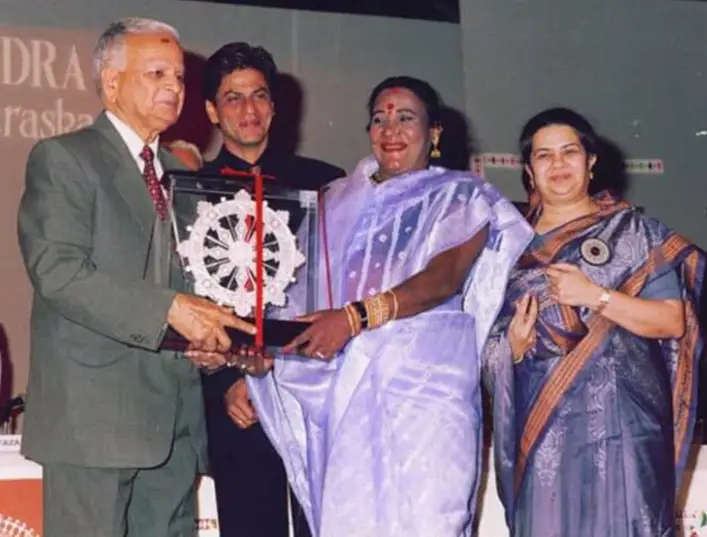
Teejan Bai Being Awarded With Bollywood Star Shahrukh Khan In Background

New Delhi

Recognition came steadily, but Teejan Bai never allowed awards to overshadow the tradition she represented. She often said that she was merely carrying forward what she had learnt from her grandfather. Yet, in doing so, she took Pandavani from village courtyards to the world’s most prestigious cultural platforms. Her performances became a bridge between rural India and international audiences who may never have heard of Chhattisgarh but found themselves enthralled by the timeless drama of the Mahabharata.

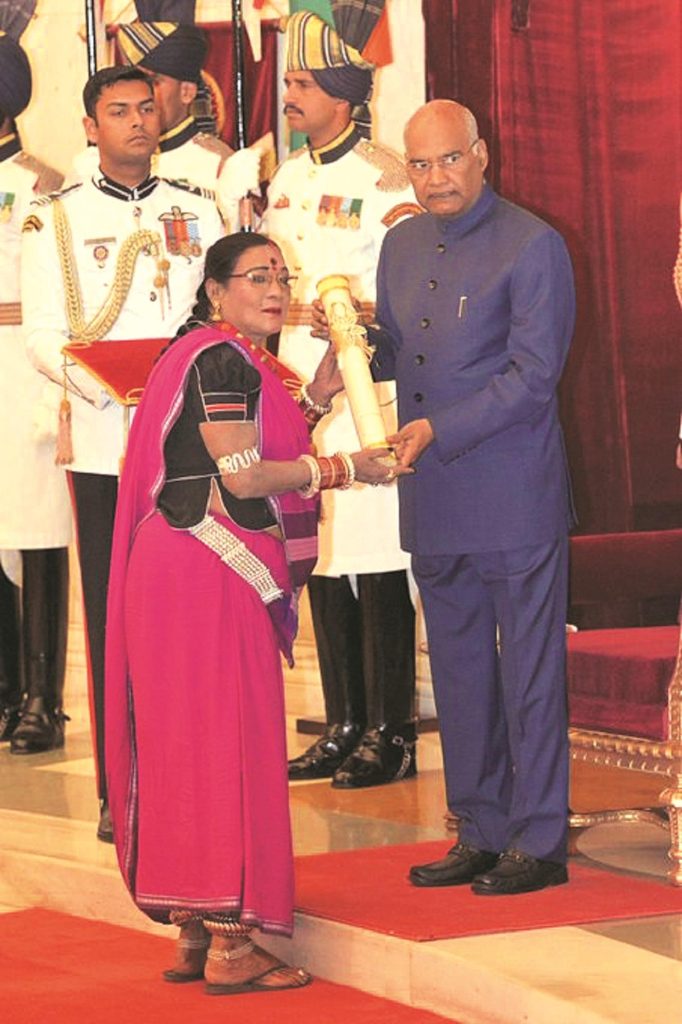
Over the years, the honours reflected the extraordinary arc of her career. She received the Padma Shri in 1988, followed by the Sangeet Natak Akademi Award in 1995, the Padma Bhushan in 2003 and the Padma Vibhushan in 2019, India’s second-highest civilian honour. Universities conferred honorary doctorates upon her, while governments and cultural organisations celebrated her as one of the country’s foremost custodians of intangible cultural heritage. Yet those who interacted with her often remarked that she remained remarkably grounded, speaking with the simplicity of someone who still considered herself a village performer.

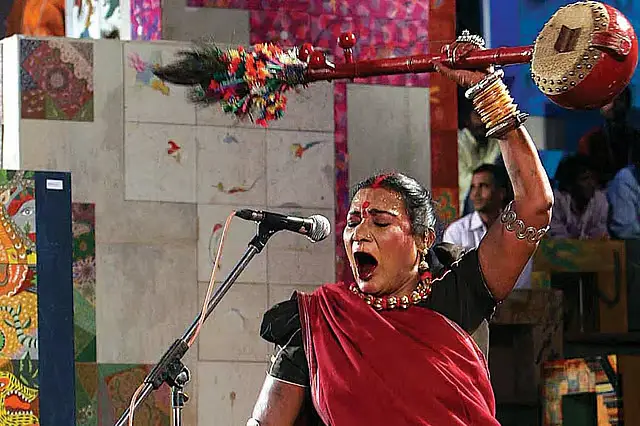
Her international tours further demonstrated the universal appeal of folk traditions when presented with honesty and conviction. Whether performing in Europe, North America, Australia or Asia, she rarely altered her style to suit foreign audiences. She sang in Chhattisgarhi, relying on emotion, gesture and dramatic expression to communicate the story. Remarkably, audiences unfamiliar with the language often responded with standing ovations. She had proved that great storytelling transcends linguistic barriers.

Perhaps the finest tribute to her artistry came from those who watched her live. Theatre directors marvelled at her command over space. Classical musicians admired the precision of her rhythm and voice. Scholars of folklore found in her performances a living archive of oral tradition. Younger artists saw in her a fearless woman who had broken conventions without turning her life into a political slogan.

“I learnt the Mahabharata from my nana,” she would say with characteristic humility, reminding audiences that knowledge often travels through affection, memory and listening rather than formal education.

That humility remained one of her defining qualities. Despite becoming one of India’s most decorated folk artists, she never portrayed herself as larger than the tradition. Instead, she insisted that Pandavani belonged to the people and that every performance was another opportunity to keep the epic alive for future generations.
The Indian Tribal
Teejan Bai Receiving Padma Vibhushan

An incident frequently recalled by cultural historians captures this spirit. During a performance before an international audience, an interpreter reportedly apologised that many in the hall would not understand the language. Teejan Bai is said to have smiled and replied that if the emotions were true, the audience would understand everything that mattered. By the end of the performance, the applause confirmed her faith in the universality of art.

Her career also altered the fortunes of countless folk performers. Before Teejan Bai, many traditional artists struggled to receive the recognition accorded to practitioners of classical music and dance. Folk traditions were often viewed as colourful but secondary, appreciated for their entertainment value rather than their intellectual and artistic depth. Through decades of uncompromising excellence, she challenged that perception. She compelled institutions, critics and audiences alike to acknowledge that India’s folk arts possess their own sophisticated aesthetics, philosophies and performance vocabularies.

For women, her legacy is even more profound. Without delivering speeches on gender equality, she quietly demonstrated what courage looks like. She refused to accept limitations imposed by convention and allowed her work to speak louder than any manifesto. By mastering the physically demanding Kapalik style, she expanded possibilities for future generations of women performers, many of whom now cite her as their greatest inspiration. Today, women performing standing Pandavani no longer appear extraordinary largely because Teejan Bai made it seem natural.

Her influence extended beyond performance into cultural policy as well. At a time when governments and heritage organisations increasingly speak of safeguarding intangible cultural heritage, her life serves as a reminder that traditions survive not through documentation alone but through practitioners. Archives can preserve recordings, museums can display instruments and books can analyse styles, but none of these can substitute for a living performer capable of transmitting knowledge through experience.

That lesson has become particularly relevant in contemporary India. Rapid urbanisation, migration and changing entertainment preferences have placed many oral traditions under pressure. Younger generations often gravitate towards digital media, while opportunities for traditional performers continue to shrink. In such circumstances, the loss of an artist like Teejan Bai is not merely the passing of an individual; it represents the disappearance of a living repository of artistic memory accumulated over decades.

The challenge now extends beyond paying tributes. It lies in ensuring that Pandavani continues to flourish through systematic training, institutional support and sustained patronage. Young performers need platforms, financial security and opportunities to learn directly from senior practitioners if this remarkable storytelling tradition is to remain vibrant. Teejan Bai herself often emphasised the importance of encouraging children to take pride in their cultural roots rather than viewing folk arts as relics of the past.
The Indian Tribal
Teejan Bai Presents An Energetic Performance With Her Tambura

Her life also offers a larger lesson for India’s cultural imagination. She demonstrated that the country’s greatest artistic treasures are often found far from metropolitan centres, nurtured by communities whose knowledge has travelled orally across generations. In an age dominated by technology and rapid communication, her journey reminds us that memory, voice and human presence remain irreplaceable.

There is a temptation, whenever a towering cultural figure passes away, to describe them as the “last of their kind.” That would be an incomplete assessment of Teejan Bai. She never wanted Pandavani to end with her. Everything about her career—from mentoring younger artists to tirelessly performing well into her later years—reflected a desire to leave behind not simply memories but a thriving tradition.

That is perhaps why her passing resonates so deeply across India’s cultural landscape. It is not only because an extraordinary performer is no more, but because she represented a way of preserving knowledge that predates books, universities and recording studios. She embodied an India where stories travelled through voices, where performance served as education, and where communities safeguarded history by telling it again and again.

Future generations will undoubtedly remember the medals, the Padma awards and the international acclaim. But those distinctions, impressive as they are, remain secondary to her greatest achievement. She changed the way India looked at its own folk traditions. She erased artificial boundaries between folk and classical, between village and metropolis, between oral memory and written scholarship. She proved that artistic excellence has no hierarchy.

Teejan Bai did not simply keep Pandavani alive.

She expanded its horizons, reshaped its identity and ensured that an ancient oral tradition could speak confidently to the modern world without sacrificing its soul. That is why she became one of India’s most celebrated folk artists. That is why her voice will continue to echo long after the applause has faded. And that is why Indian folk culture has suffered not merely the loss of a legendary performer, but the departure of one of its greatest interpreters, innovators and torchbearers.


Root Woot | Online Puja Samagri Root Woot | Online Puja Samagri Root Woot | Online Puja Samagri

In Numbers

49.4 %
Female Literacy rate of Scheduled Tribes

Update

Tribal quartet from Jharkhand in Asian Games hockey squad

Hockey India has announced the 20-member Indian women's hockey team for the 20th Asian Games, scheduled to be held in Japan from September 19 to October 4. Four tribal players from Jharkhand—captain Salima Tete, Nikki Pradhan, Beauty Dungdung, and Deepika Soreng, have earned their place in the national squad. While all four have previously represented India at the international level, this will be the first Asian Games appearance for Beauty Dungdung and Deepika Soreng, marking a significant milestone in their careers. Midfielder Salima Tete, who will lead the Indian side, has played more than 150 international matches and has been captaining the team for the past two years. Veteran defender Nikki Pradhan, with over 200 international appearances, continues to be a key pillar of India's defensive unit.
The Indian Tribal
आदिवासी

उत्तर बंगाल के चाय बागानों का संकट: जलवायु परिवर्तन, पलायन और महिलाओं की असुरक्षा का बढ़ता दुष्चक्र

by The Indian Tribal
July 2, 2026

घटते उत्पादन और कम मजदूरी के कारण बड़े पैमाने पर पलायन बढ़ रहा है। विशेषज्ञों का कहना है कि इससे महिलाओं की तस्करी, शोषण और असुरक्षा की आशंका भी बढ़ रही है। दीपान्विता गीता नियोगी की रिपोर्ट

The Indian Tribal

सिदो-कान्हू ने परिणाम की चिंता किये बगैर शोषण के विरुद्ध मोर्चा खोला था: मुख्यमंत्री हेमन्त सोरेन

June 30, 2026
The Indian Tribal

In Palamau Tiger Reserve In Jharkhand, Tribal Traditions Strengthen Big Cat Conservation

June 28, 2026
The Indian Tribal

सरना से कोया पुनेम तक: जनगणना 2027 में अलग आदिवासी धर्म श्रेणी की मांग क्यों तेज हुई?

June 25, 2026
The Indian Tribal

किन्नौर की जनजातीय राजनीति में उभरी नई पर्यावरणीय आवाज, युवा नेतृत्व ने बदली विकास की बहस

June 24, 2026
The Indian Tribal

झारखण्ड के 11 नए उत्पादों को मिला जीआई टैग, राष्ट्रीय और वैश्विक बाजार में बढ़ेगी पहचान

June 17, 2026
Previous Post

Teejan Bai Changed More Than Pandavani, She Redefined India’s Folk Imagination

Top Stories

The Indian Tribal
Achievers

Teejan Bai Changed More Than Pandavani, She Redefined India’s Folk Imagination

July 11, 2026
The Indian Tribal
India

National Stakeholders’ Consultation: Rs One Lakh Crore Investments Pledged For Jharkhand

July 9, 2026
The Indian Tribal
Delhi

Hemant Soren Pitches ‘Minds Over Mines’ As Jharkhand Seeks Industry Inputs On Vision 2050

July 8, 2026
Load More
  • About Us
  • Editor & Writers
  • Contact
  • Redressal
  • Copyright Policy
  • Privacy Policy And Terms Of Use
  • Disclaimer
  • Sitemap

  • Achievers
  • Cuisine
  • Health
  • Hindi Featured
  • India
  • News
  • Legal
  • Music
  • Sports
  • Trending
  • Chhattisgarh
  • Delhi
  • Gujarat
  • Jammu & Kashmir
  • Jharkhand
  • Kerala
  • Madhya Pradesh
  • Maharashtra
  • North East
  • Arunachal Pradesh
  • Assam
  • Manipur
  • Meghalaya
  • Mizoram
  • Nagaland
  • Sikkim
  • Tripura
  • Odisha
  • Telangana
  • West Bengal
  • Political News
  • Variety
  • Art & Culture
  • Entertainment
  • Adivasi
  • Tribal News
  • Scheduled Tribes
  • हिंदी
  • उपलब्धिकर्ता
  • कानूनी
  • खान पान
  • खेलकूद
  • स्वास्थ्य
  • संस्कृति
  • संगीत
  • विविध
  • कला और संस्कृति
  • खबरें
  • असम की ताज़ा ख़बरें
  • अरुणाचल प्रदेश की ताज़ा ख़बरें
  • ओडिशा की ताज़ा ख़बरें
  • केरल की ताज़ा ख़बरें
  • गुजरात की ताज़ा ख़बरें
  • छत्तीसगढ़
  • जम्मू और कश्मीर की ताज़ा ख़बरें
  • झारखंड न्यूज़
  • तेलंगाना की ताज़ा ख़बरें
  • दिल्ली
  • नॉर्थईस्ट की ताज़ा ख़बरें
  • पश्चिम बंगाल की ताज़ा ख़बरें
  • मध्य प्रदेश की ताज़ा ख़बरें
  • महाराष्ट्र की ताज़ा ख़बरें
  • त्रिपुरा की ताज़ा ख़बरें
  • नागालैंड की ताज़ा ख़बरें
  • मणिपुर की ताज़ा ख़बरें
  • मिजोरम की ताज़ा ख़बरें
  • मेघालय की ताज़ा ख़बरें
  • सिक्किम की ताज़ा ख़बरें
  • राजस्थान की ताज़ा ख़बरें

About Us

The Indian Tribal is India’s first bilingual (English & Hindi) digital journalistic venture dedicated exclusively to the Scheduled Tribes. The ambitious, game-changer initiative is brought to you by Madtri Ventures Pvt Ltd (www.madtri.com). From the North East to Gujarat, from Kerala to Jammu and Kashmir — our seasoned journalists bring to the fore life stories from the backyards of the tribal, indigenous communities comprising 10.45 crore members and constituting 8.6 percent of India’s population as per Census 2011. Unsung Adivasi achievers, their lip-smacking cuisines, ancient medicinal systems, centuries-old unique games and sports, ageless arts and crafts, timeless music and traditional musical instruments, we cover the Scheduled Tribes community like never-before, of course, without losing sight of the ailments, shortcomings and negatives like domestic abuse, alcoholism and malnourishment among others plaguing them. Know the unknown, lesser-known tribal life as we bring reader-engaging stories of Adivasis of India.

Follow Us

All Rights Reserved

© 2026 Madtri Ventures [P] Ltd.

No Result
View All Result
  • Home
  • Achievers
  • Cuisine
  • Health
  • Health
  • Legal
  • Music
  • News
  • Sports
  • Variety
  • हिंदी
    • उपलब्धिकर्ता
    • खान पान
    • कानूनी
    • खेलकूद
    • खेलकूद
    • संगीत
    • संगीत
    • स्वास्थ्य
    • स्वास्थ्य
    • विविध
  • Gallery
  • Videos

© 2026 Madtri Ventures [P] Ltd.