


Bhopal/New Delhi
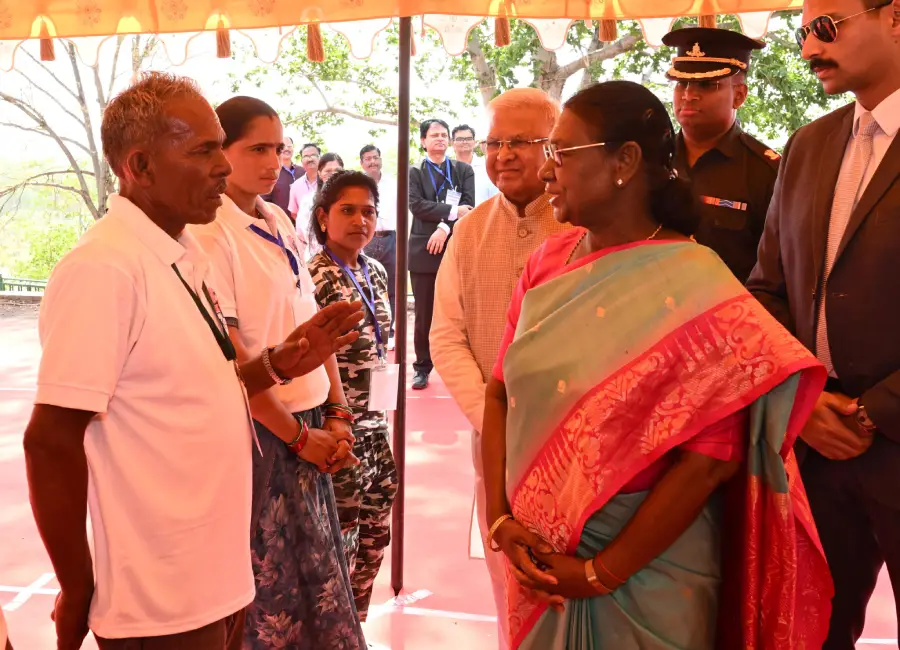
President Droupadi Murmu on Monday interacted with ‘Cheetah Mitras’ and members of the Sahariya tribal community at Kuno National Park (KNP) in Madhya Pradesh’s Sheopur district, underscoring the importance of community participation in India’s landmark cheetah reintroduction programme.
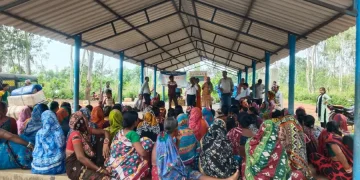
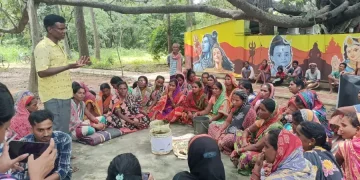
During her visit, the President held one-on-one discussions with the trained volunteers, many of them from the Sahariya tribe, to understand their role in protecting cheetahs and promoting awareness among local communities living around the national park. She was briefed on their efforts to sensitise villagers about the behaviour of cheetahs and the need to coexist with the species, following its return to India after decades of extinction.
News agency PTI quoted unnamed officials as saying that the President appreciated the voluntary contribution of the Cheetah Mitras towards the success of Project Cheetah. The volunteers explained that they are present in all villages adjoining Kuno National Park and act as a crucial link between forest authorities and local residents. Their responsibilities include informing villagers about cheetah movement, discouraging panic during sightings and helping prevent any harm to the animals.
The volunteers told the President that awareness campaigns are regularly conducted in villages to explain that cheetahs generally do not attack humans. Residents are advised to immediately alert the Forest Department whenever a cheetah is sighted in agricultural fields or near settlements so that appropriate monitoring and protection measures can be taken.
The interaction reflected a key feature of Project Cheetah—the integration of local communities into wildlife conservation. More than 450 Cheetah Mitras have reportedly been trained around the Kuno landscape, creating a community-based support system for monitoring, awareness generation and conflict prevention. The initiative has also generated employment opportunities and strengthened eco-tourism-linked livelihoods in the region.
The President’s interaction was attended by Cheetah Mitras from Silori, Hathedi, Sesaipura, Palpur, Para, Karahal and Moravan villages. Principal Secretary, Forest Department, Sandeep Yadav, Head of Forest Force Shubharanjan Sen and other senior officials were also present.
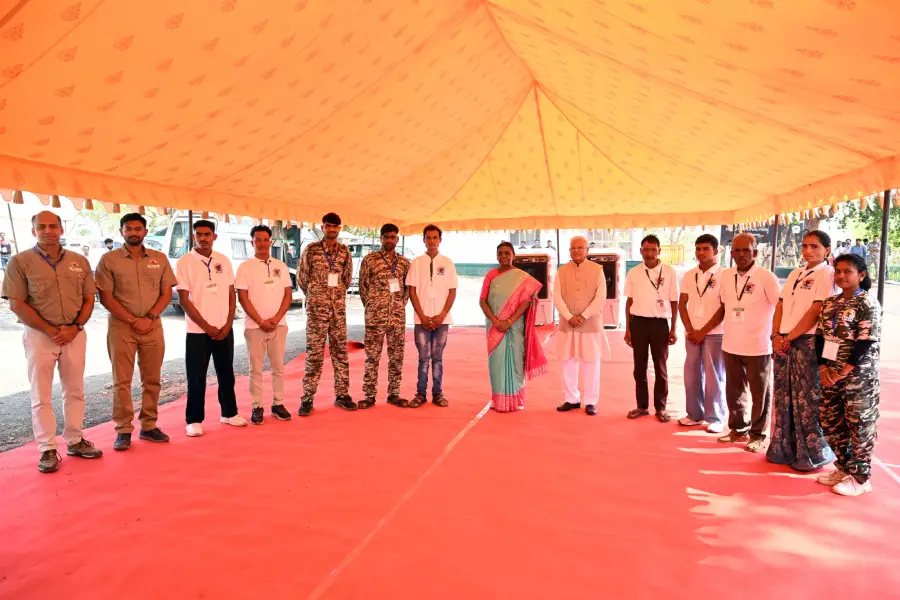
Murmu had arrived at Kuno on Sunday and visited the park’s Cheetah Command and Control Centre, where she was briefed on the monitoring, tracking and management systems used for the big cats. She also viewed an exhibition showcasing the progress achieved under the cheetah reintroduction programme since its launch.
The President’s visit carried special significance because she had witnessed the symbolic donation of eight cheetahs by Botswana during her state visit to that African nation in November 2025. Those cheetahs were subsequently brought to Kuno National Park in February 2026, marking the latest phase of international cooperation under Project Cheetah.
After interacting with the Cheetah Mitras, the President left for Gwalior by helicopter and later departed for Delhi aboard an Indian Air Force aircraft.
Community Conservation At The Heart Of Kuno
The Sahariya tribe, one of the most vulnerable tribal communities in central India, has emerged as a key stakeholder in the conservation programme around Kuno. Besides serving as Cheetah Mitras, members of the community work as trackers, tourist guides and field assistants, helping forest authorities monitor the animals and educate visitors.
The President’s itinerary itself reflected this recognition, with Rashtrapati Bhavan announcing that she would interact with members of the Sahariya tribe, cheetah trackers, tourist guides and the Kuno field team during her visit.
Officials believe that the involvement of local communities has played an important role in reducing potential human-wildlife conflicts and building public support for the ambitious rewilding effort.
Project Cheetah: India’s Historic Wildlife Restoration Programme
Launched on September 17, 2022, Project Cheetah seeks to restore the cheetah—the only large carnivore to become extinct in independent India—to its historical range. The programme began with the translocation of eight cheetahs from Namibia, followed by a second batch from South Africa in February 2023 and a third batch from Botswana in February 2026. It is widely regarded as the world’s first intercontinental translocation of a large carnivore and represents a major biodiversity restoration initiative.
The project aims not only to revive cheetah populations but also to rejuvenate grassland and semi-arid ecosystems and strengthen conservation of associated species.
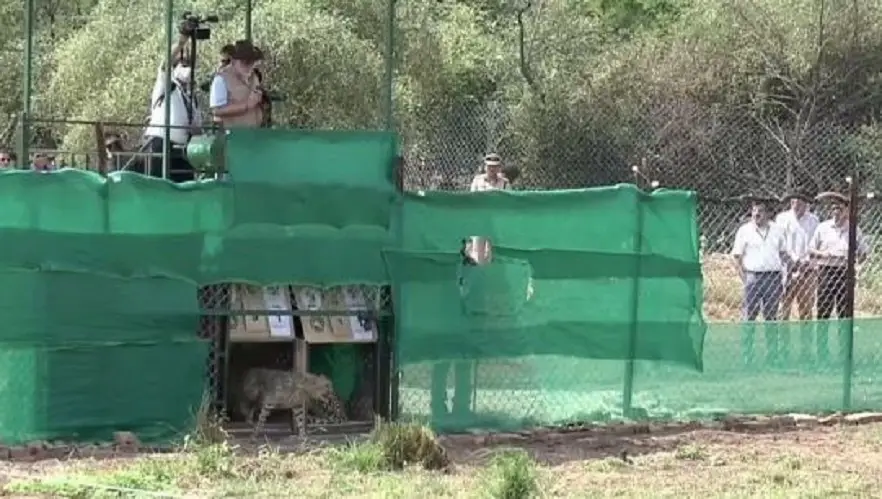
The programme has recorded significant milestones, including the birth of multiple litters on Indian soil and the emergence of a second generation of cheetahs born in the wild. According to information shared during the President’s visit, the total number of cheetahs born in India has reached 32, reflecting steady progress towards establishing a self-sustaining population.
Kuno National Park: Nucleus Of India’s Cheetah Comeback
Kuno National Park in Sheopur district was selected as the first site for cheetah reintroduction because of its suitable habitat, abundant prey base and relatively low levels of human disturbance. Spread across a landscape of dry deciduous forests, grasslands and riverine ecosystems, the park had already undergone extensive habitat restoration and village relocation efforts over the years, making it one of India’s most promising wildlife recovery landscapes.
Today, Kuno stands at the centre of India’s cheetah revival story. Home to cheetahs imported from Namibia, South Africa and Botswana, as well as a growing population of India-born cubs, the park has become a global case study in species reintroduction. Conservation planners ultimately envision a larger cheetah population spread across the Kuno-Gandhi Sagar landscape, with local communities remaining indispensable partners in that long-term endeavour.