





Kolkata/Jabalpur/Leh
A common message resonated across geographically distant venues on the 12th International Day of Yoga: yoga is no longer merely a wellness practice but a transformative force capable of promoting healthy ageing, strengthening social harmony and advancing global well-being.
As President Droupadi Murmu, Vice President C.P. Radhakrishnan and Prime Minister Narendra Modi led the nation in International Yoga Day celebrations in Jabalpur, Leh and Kolkata respectively, they highlighted how the ancient Indian discipline continues to evolve into a modern solution for some of humanity’s most pressing physical, mental and societal challenges.
At the heart of this year’s observance was the theme “Yoga for Healthy Ageing”, which featured prominently in the addresses delivered by all three leaders. Their remarks collectively underscored the importance of integrating yoga into daily life to ensure healthier, more active and dignified lives across generations.
Participating in a mass yoga demonstration at Jabalpur in Madhya Pradesh, President Droupadi Murmu described yoga as one of India’s greatest contributions to humanity. “Today, we are celebrating that great tradition of India, which has shown humanity the path to a healthy, balanced and meaningful life. Yoga is an invaluable gift of our cultural heritage to the global community,” she said adding yoga serves as a bridge connecting individuals with themselves, society with nature and humanity with a larger universal consciousness.
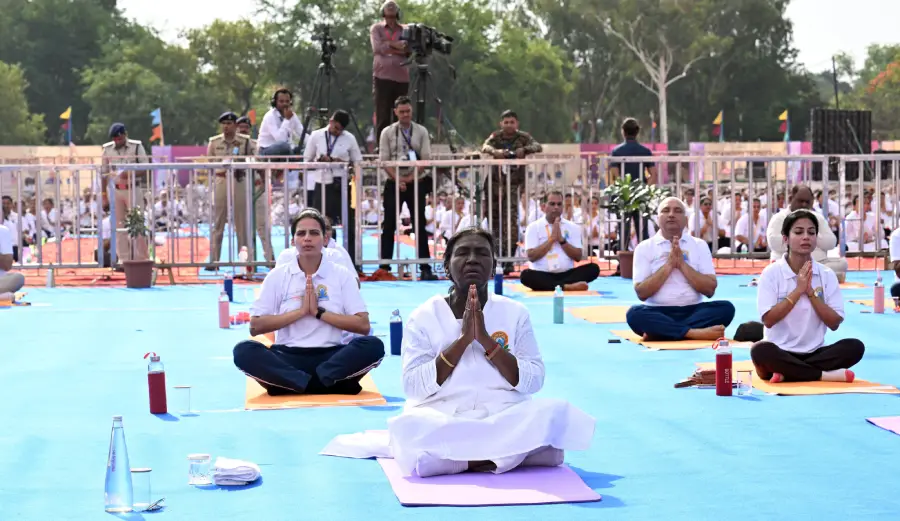
“Yoga is a powerful medium for connecting the individual to self, society to nature, and humanity to the vast universal consciousness. At a time when the world is facing numerous challenges, Yoga can play a significant role in guiding humanity towards peace, balance, harmony and collective well-being,” she said.
Recalling the global recognition accorded to yoga, Murmu noted that the United Nations General Assembly’s decision in 2014 to designate June 21 as the International Day of Yoga was made possible through India’s initiative. According to her, the declaration further strengthened yoga’s acceptance as a tool for global well-being and encouraged millions of people around the world to adopt the practice in their daily lives.
Highlighting the significance of this year’s theme, she said “Yoga for Healthy Ageing” focuses on enabling older citizens to lead healthy, active, self-reliant and dignified lives. She observed that the lifestyle choices individuals make today determine their future health and well-being.
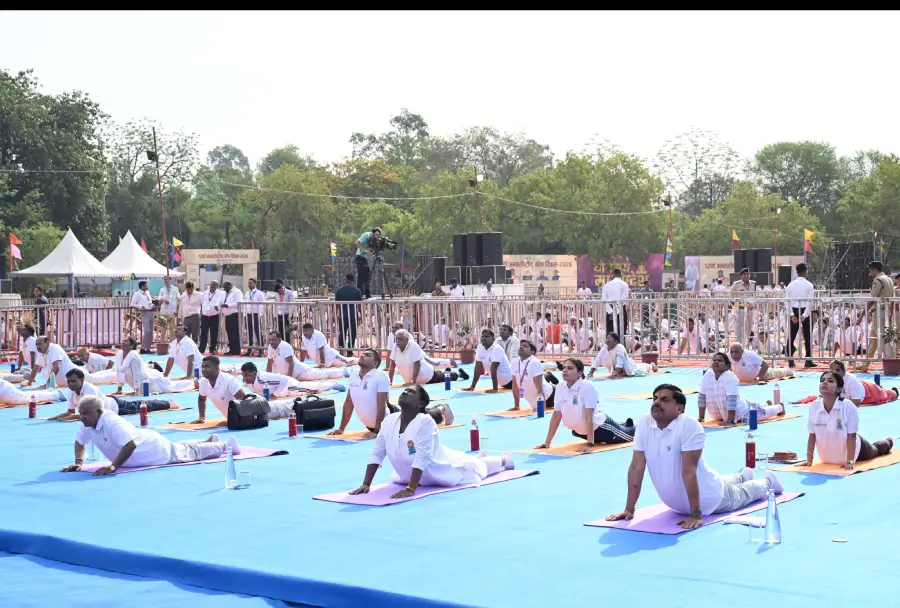
“Yoga helps individuals remain active and self-reliant even as they age. At the same time, it fosters mental peace and emotional balance,” she said.
The President also highlighted the government’s efforts to expand yoga education, research, training and public awareness. Expressing satisfaction over the role of numerous organizations in promoting yoga globally, she said their dedicated work would help yoga reach every individual and become a cornerstone of humanity’s well-being.
Urging citizens to make yoga an integral part of their lives, she said doing so would contribute to building “healthy individuals, healthy families, healthy society, healthy nation and a healthy world.”
In Leh, Vice President C.P. Radhakrishnan joined International Day of Yoga celebrations at Spituk Stadium, where he described yoga as a holistic system developed through centuries of meditation, austerity and spiritual inquiry by India’s sages.
“Yoga is much more than a form of physical exercise and represents an ancient gift from Bharat to humanity,” the Vice President said, noting that it nurtures the body, calms the mind and elevates the soul. Radhakrishnan credited Prime Minister Narendra Modi’s 2014 appeal at the United Nations General Assembly for giving renewed momentum to yoga’s global recognition. He noted that more than 175 member nations supported the proposal that led to June 21 being adopted as the International Day of Yoga.
Drawing attention to demographic trends, the Vice President cited the India Ageing Report 2023 and observed that by 2050 nearly one-fifth of India’s population will be elderly.
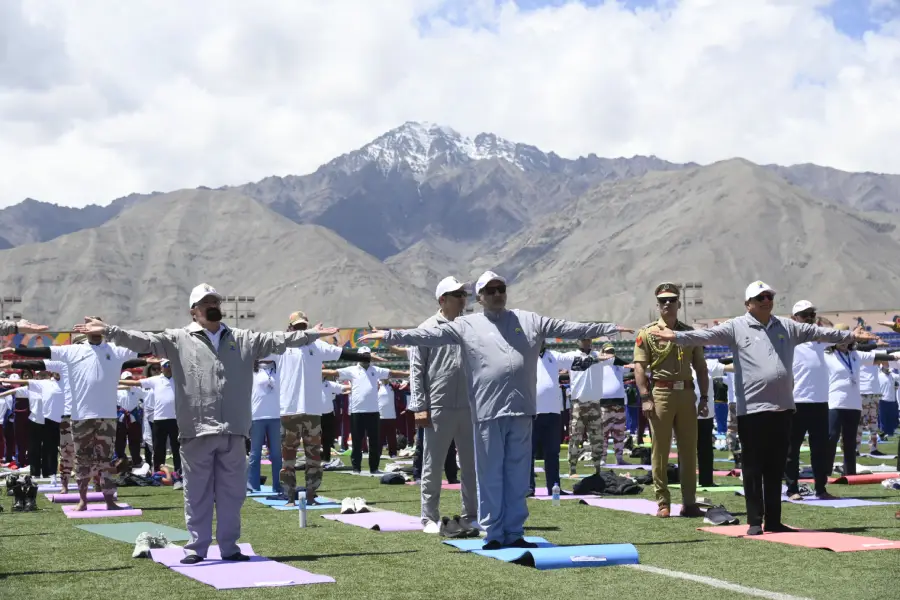
He stressed the importance of ensuring that “added years to life also mean added life to years” and described yoga as a powerful instrument for promoting physical health, mental well-being and active ageing.
Referring to the unique conditions of life in Ladakh, he said the high-altitude region demands endurance, discipline and adaptability—qualities that yoga helps cultivate. He added that the people of Ladakh have long embodied resilience, simplicity and harmony with nature, values deeply aligned with the philosophy of yoga.
Sharing his experiences from interactions with local residents, Radhakrishnan said he found the people of Ladakh calm, peaceful, kind and deeply connected with nature. While they already possessed many qualities associated with healthy living, he said the continued practice of yoga would help sustain their vitality and enable them to realize their fullest human potential.
Among those present were Lieutenant Governor of Ladakh Vinai Kumar Saxena, Lok Sabha MP from Ladakh Mohmad Haneefa, LAHDC Kargil Chief Executive Councillor Mohd Jaffer Akhoon, Chief Secretary Ashish Kundra, senior civil and military officials, yoga practitioners, students and local residents.
Earlier, the Vice President visited the Mahabodhi International Meditation Centre’s Devachan Campus in Leh and appreciated its contribution to education, healthcare, social welfare, environmental sustainability and the promotion of yoga and meditation in Ladakh.
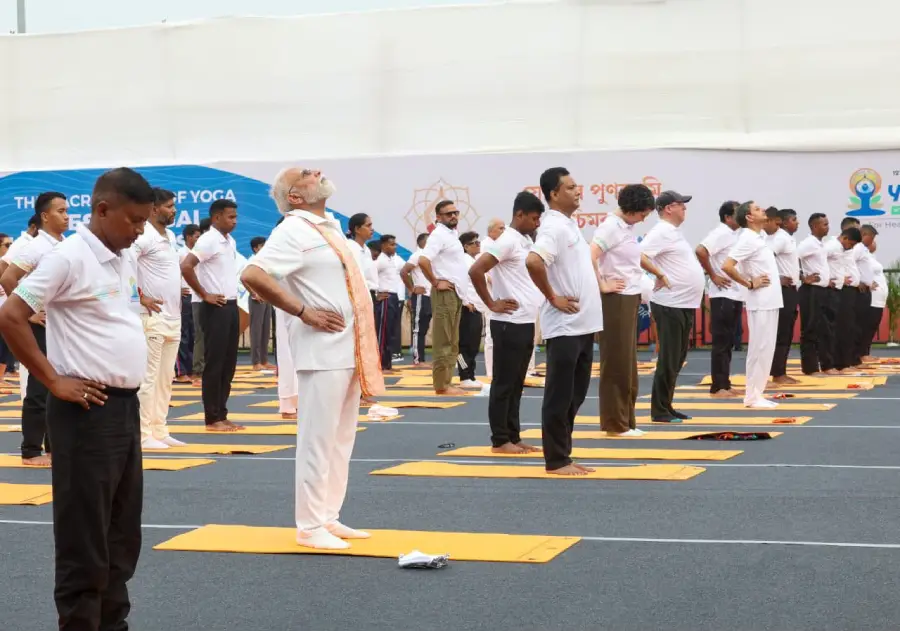
For his part, Prime Minister Narendra Modi led the national observance of the International Day of Yoga from Kolkata’s iconic Red Road, participating in the Common Yoga Protocol session alongside thousands of practitioners.
Greeting people across the world, Modi noted that June 21, the longest day of the year in several parts of the world, has also become one of humanity’s largest collective celebrations through yoga.
Addressing the gathering, the PM said images from across the globe reflected yoga’s unifying spirit. “From the Himalayas to the Indian Ocean, and from Bengal and the Northeast to the western region of Saurashtra, the entire nation appeared energized by the spirit of yoga. The country and the world seemed connected through a shared commitment to wellness and harmony, reflecting the unifying power of yoga,” he remarked.
The Prime Minister also commended the people of Kolkata for their efforts under the “Swachhta Se Swagat” initiative, describing their commitment to cleanliness as an inspiration for the nation.
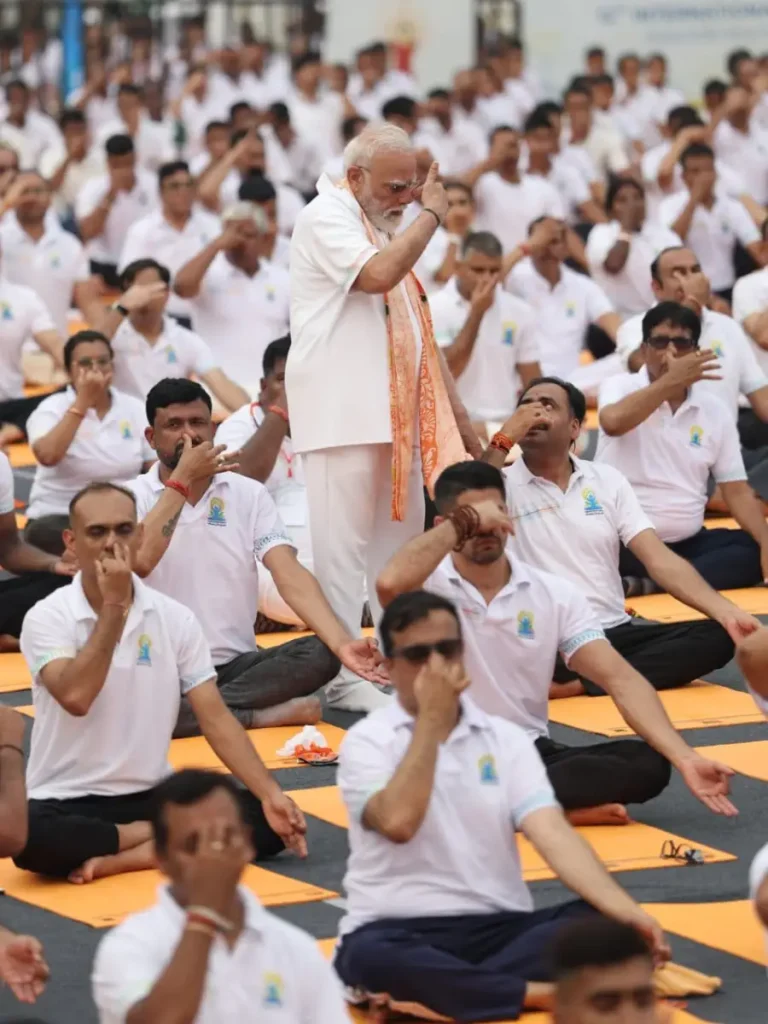
Modi said holding Yoga Day celebrations in West Bengal carried special significance because of the state’s profound spiritual legacy. He recalled the contributions of Ramakrishna Paramahansa, Swami Vivekananda, Maharshi Aurobindo and Lahiri Mahasaya in advancing India’s spiritual and yogic traditions.
Invoking Rabindranath Tagore’s teachings on meaningful connections and Aurobindo’s belief that “the whole of life is yoga,” he emphasized that yoga strengthens the foundation of human unity.
“Yoga is not merely a form of physical exercise and cannot be confined to any particular age group. It is a source of consciousness, vitality and inner illumination that enriches every stage of human life,” Modi said.
Expanding on the theme of healthy ageing, he said growing older should not mean a decline in human potential. Instead, yoga enables continuous self-improvement and lifelong growth.
He expressed the aspiration that people should become more flexible at forty than at twenty, more energetic at fifty than at thirty and more resilient against lifestyle diseases at seventy than at fifty. According to him, yoga improves flexibility, sustains energy levels, reduces stress, enhances mental well-being and helps prevent lifestyle disorders.
“Regular practice of yoga transforms individuals into lifelong learners of their own bodies and minds. Greater self-awareness leads to better self-management and a healthier way of life,” he observed.
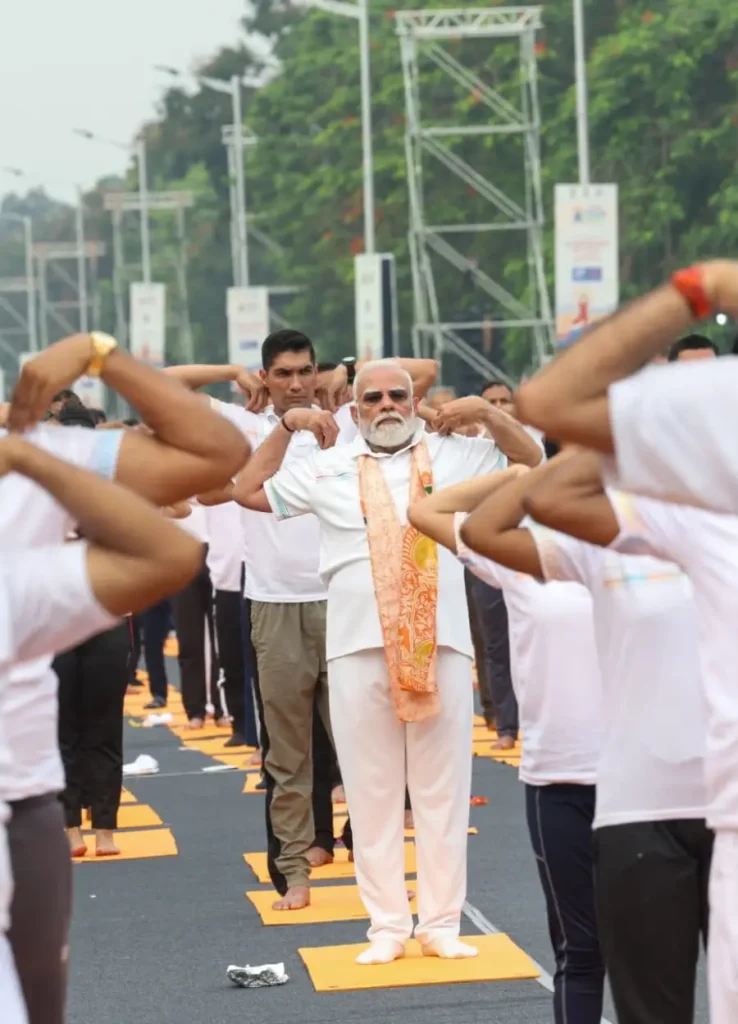
Quoting the Bhagavad Gita, Modi said balanced food habits, recreation, actions and sleep form the basis of yoga’s ability to alleviate suffering. He described balance as the essence of yoga and a prerequisite for a fulfilling life.
The Prime Minister further stressed that yoga extends beyond physical fitness. “Yoga shows the path from mental well-being to physical well-being,” he said, adding that it helps people develop the wisdom to distinguish between right and wrong and fosters inner peace and global harmony. Calling yoga a necessity for building a better future, Modi urged citizens not to restrict yoga to a single day or event but to make it a permanent part of their lives, families and future generations.
He also highlighted the success of the “Yoga 365” initiative, under which a 100-day online yoga programme attracted more than three million participants from 130 countries, demonstrating yoga’s expanding global reach and acceptance.
Concluding his address, Modi said that a healthy society forms the foundation of a stronger, more prosperous and more confident nation. He ended with the ancient prayer: “Sarve Bhavantu Sukhinah, Sarve Santu Niramayah” — may all be happy and free from illness.