


• About
  • Editor & Writers
  • Contact
  • Sitemap
No Result
View All Result
Support Our Mission
Saturday, October 17, 2026
The Indian Tribal
  • Home
  • Achievers
    • उपलब्धिकर्ता
  • Cuisine
    • खान पान
  • Health
    • स्वास्थ्य
  • Legal
    • कानूनी
  • Music
    • संगीत
  • News
    • Updates
    • खबरें
  • Sports
    • खेलकूद
  • Variety
    • विविध
  • हिंदी
    • All
    • आदिवासी
    • उपलब्धिकर्ता
    • कला और संस्कृति
    • कानूनी
    • खबरें
    • खान पान
    • खेलकूद
    • जनजाति
    • भारत
    • विविध
    • संगीत
    • संस्कृति
    • स्वास्थ्य
    The Indian Tribal

    ओडिशा के आदिवासी हाटों से पोषण की नई पहल, स्वस्थ भोजन और स्वच्छता पर जोर

    The Indian Tribal

    भारत के टाइगर रिजर्व के सामने नई चुनौती: संरक्षण, आदिवासी अधिकार और पर्यटन का बढ़ता दबाव

    The Indian Tribal

    मेघालय के आदिवासी समुदाय बचा रहे जंगल और जल स्रोत, बालपाक्रम राष्ट्रीय उद्यान में संरक्षण की नई मिसाल

    The Indian Tribal

    ओडिशा के नबरंगपुर में आदिवासी किसानों की मक्का खेती ने कैसे बदली तस्वीर

    The Indian Tribal

    छत्तीसगढ़ में आदिवासी ट्रैकर्स और AI मिलकर बचा रहें हैं दुर्लभ वन्यजीव

    The Indian Tribal

    हाशिए से राष्ट्रीय केंद्र तक: बदल रही है भारत के आदिवासी समुदायों की कहानी

    The Indian Tribal

    शिक्षा, वन उपज में मूल्य संवर्धन से आदिवासी समुदायों के आर्थिक सशक्तीकरण की नई राह

    The Indian Tribal

    मणिपुर में संघर्ष के बीच आदिवासी कोचों ने संभाली नई पीढ़ी के खिलाड़ियों की कमान

  • Gallery
    • Videos
  • Latest News
The Indian Tribal
  • Home
  • Achievers
    • उपलब्धिकर्ता
  • Cuisine
    • खान पान
  • Health
    • स्वास्थ्य
  • Legal
    • कानूनी
  • Music
    • संगीत
  • News
    • Updates
    • खबरें
  • Sports
    • खेलकूद
  • Variety
    • विविध
  • हिंदी
    • All
    • आदिवासी
    • उपलब्धिकर्ता
    • कला और संस्कृति
    • कानूनी
    • खबरें
    • खान पान
    • खेलकूद
    • जनजाति
    • भारत
    • विविध
    • संगीत
    • संस्कृति
    • स्वास्थ्य
    The Indian Tribal

    ओडिशा के आदिवासी हाटों से पोषण की नई पहल, स्वस्थ भोजन और स्वच्छता पर जोर

    The Indian Tribal

    भारत के टाइगर रिजर्व के सामने नई चुनौती: संरक्षण, आदिवासी अधिकार और पर्यटन का बढ़ता दबाव

    The Indian Tribal

    मेघालय के आदिवासी समुदाय बचा रहे जंगल और जल स्रोत, बालपाक्रम राष्ट्रीय उद्यान में संरक्षण की नई मिसाल

    The Indian Tribal

    ओडिशा के नबरंगपुर में आदिवासी किसानों की मक्का खेती ने कैसे बदली तस्वीर

    The Indian Tribal

    छत्तीसगढ़ में आदिवासी ट्रैकर्स और AI मिलकर बचा रहें हैं दुर्लभ वन्यजीव

    The Indian Tribal

    हाशिए से राष्ट्रीय केंद्र तक: बदल रही है भारत के आदिवासी समुदायों की कहानी

    The Indian Tribal

    शिक्षा, वन उपज में मूल्य संवर्धन से आदिवासी समुदायों के आर्थिक सशक्तीकरण की नई राह

    The Indian Tribal

    मणिपुर में संघर्ष के बीच आदिवासी कोचों ने संभाली नई पीढ़ी के खिलाड़ियों की कमान

  • Gallery
    • Videos
  • Latest News
No Result
View All Result
The Indian Tribal
No Result
View All Result
  • Home
  • Achievers
  • Cuisine
  • Health
  • Legal
  • Music
  • News
  • Sports
  • Variety
  • हिंदी
  • Gallery
  • Latest News
Support Our Mission
Home » The Indian Tribal / Variety » Art & Culture » Jeypore Dussehra: How Tribal Communities Keep The Sacred Lathi-Worship Tradition Alive

Jeypore Dussehra: How Tribal Communities Keep The Sacred Lathi-Worship Tradition Alive

Revived in its present form after a period of decline, the tradition continues to connect contemporary celebrations with the history of the former Jeypore kingdom. The Indian Tribal reports

October 17, 2026
The Indian Tribal

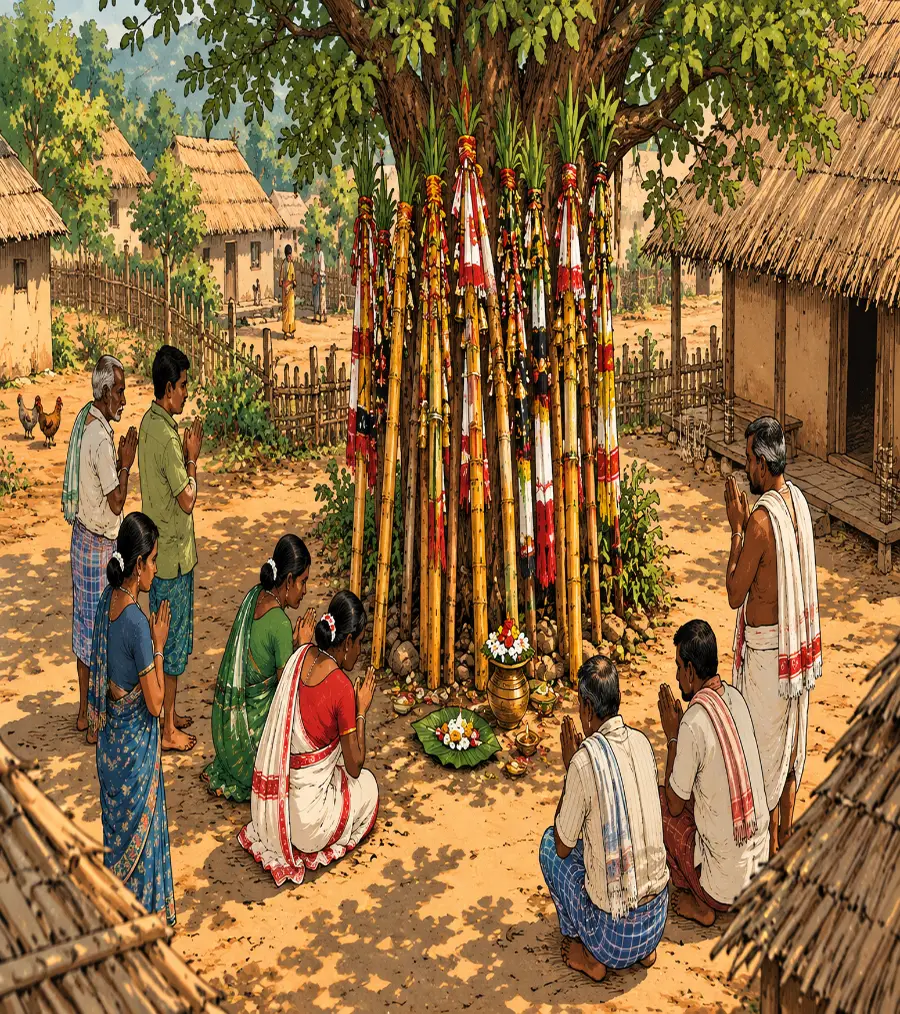
Villagers Worshipping The Sacred lathis At A Village Altar

New Delhi/Jeypore

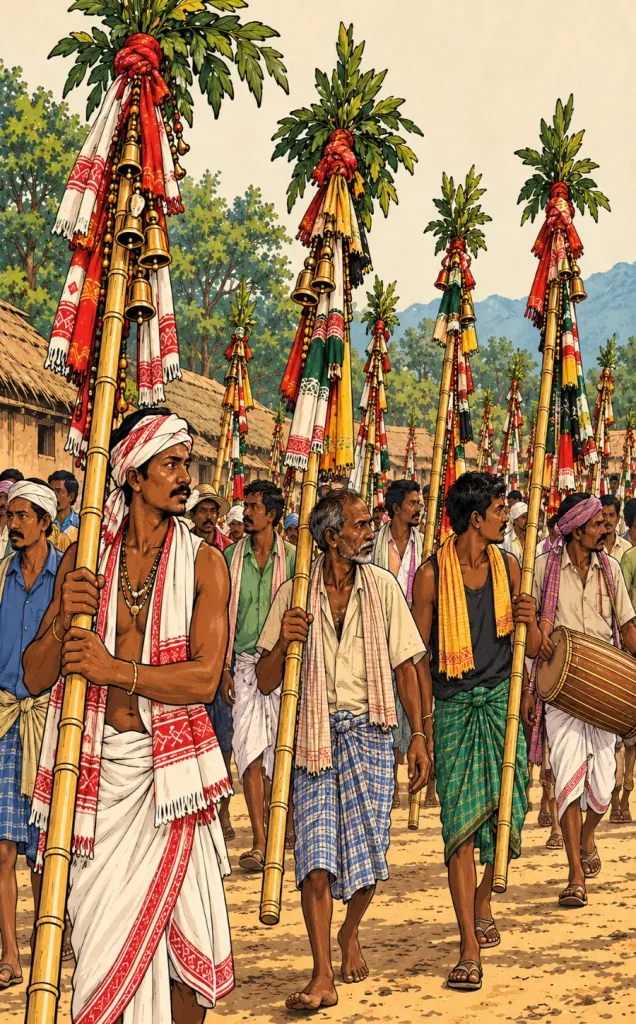
As Dussehra approaches in southern Odisha, sacred bamboo staffs make their way from tribal villages to Jeypore, carrying a tradition that has survived the disappearance of the former royal establishment.

Known locally as lathis, these staffs are not merely ceremonial objects. They are revered in their home villages as symbols associated with village deities and prosperity, and their annual journey to Jeypore preserves a distinctive link between indigenous religious practices and the region’s historical institutions.

The tradition is one of the defining features of Jeypore’s Dussehra, setting the celebration apart from many other regional festivities. While Goddess worship remains central, the participation of tribal communities and the arrival of sacred lathis give the festival a particular cultural and historical significance.

More than 60 tribal groups are expected to participate in this year’s celebrations.

Sacred staffs and the village deity

The lathis are kept at village altars throughout the year and are associated with the communities’ local deities. Their movement to Jeypore during Dussehra is therefore a religious act as well as a public procession.

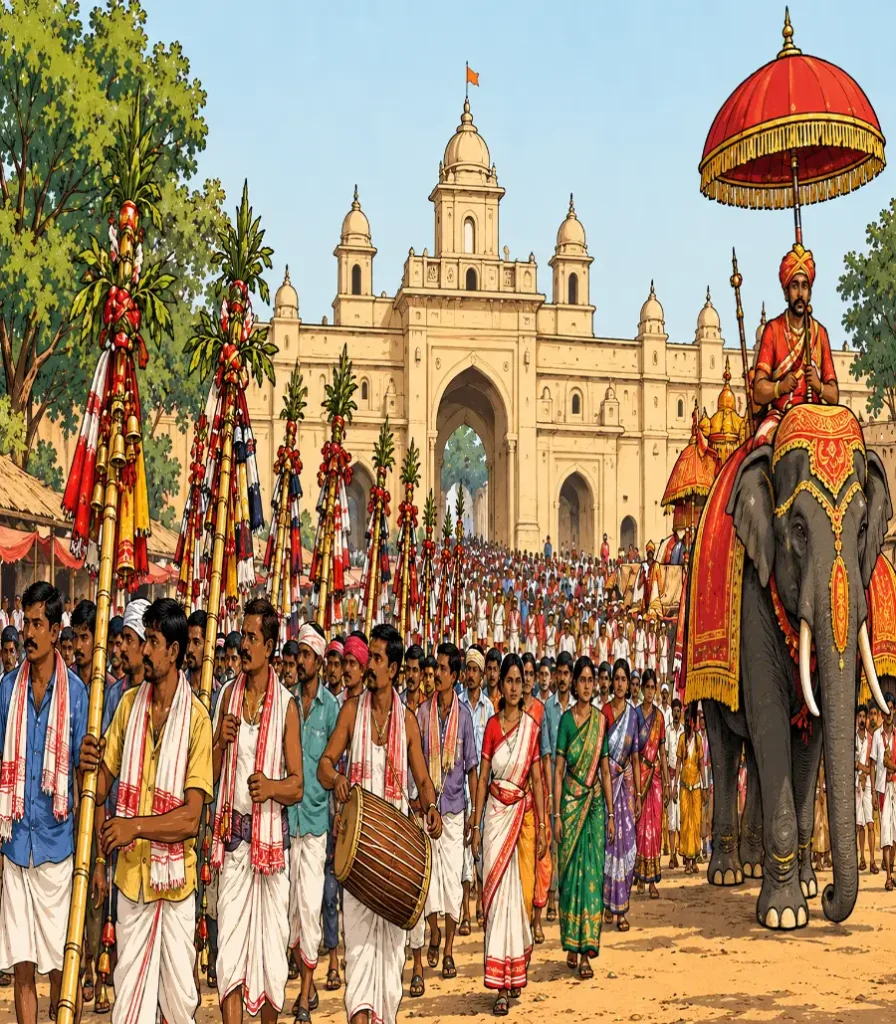
Historical accounts describe the staffs as sacred objects brought by tribal chiefs and village headmen from different parts of the former Jeypore kingdom. The participants travelled to the royal centre to pay homage to Goddess Durga and take part in the ceremonies.

The Odisha District Gazetteer records the importance of the lathi tradition in the former Jeypore kingdom’s Dussehra celebrations. The staffs were associated with the village mother deity, and their arrival formed part of a wider ceremonial relationship between the king and the tribal communities of the region.

The procession brought together local worship, community leadership and the royal festival. Tribal headmen were historically associated with village administration and the collection of land and forest revenue, while the king honoured them with ceremonial gifts.

These practices must be understood in their historical context. The former royal establishment operated within a political and social order that differs from contemporary administration, but its ceremonies helped shape the traditions through which communities interacted with the royal centre.

The former kingdom’s Dussehra

Jeypore’s Dussehra was historically a major event in the former kingdom. Reports describe a festival lasting 16 days, with the scale of the celebration once compared with Mysuru’s Dasara.
The Indian Tribal
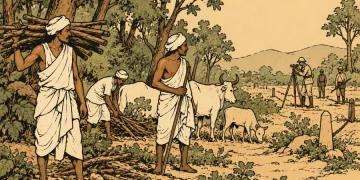
Procession approaching the former royal centre (Pics – AI Generated)

The royal family worshipped its family deity, Maa Kanka Durga, also referred to as Kanaka Durga in published accounts. Historical narratives associate the establishment of the goddess’s worship with the former ruling dynasty and its links with the Gajapati rulers of Puri.

During the royal celebrations, the king would reportedly proceed through the town on a decorated elephant after offering prayers at the temple. Tribal headmen carrying sacred lathis accompanied the ceremonies, with processions culminating at the Dussehra grounds.

The rituals included the performance of a yagna as part of the Aparajita Puja observances. Historical accounts also describe the occasion as an opportunity for villagers to bring grievances before the ruler.

Tribal communities from across the region travelled to participate. Published accounts identify communities including the Bhumiya, Gadaba, Paraja, Soura, Bhatra, Gond, Didai, Durua, Kondh, Bonda and Koya among those associated with the tradition. Some accounts describe arduous journeys on foot through the hilly terrain, accompanied by traditional music, dances and religious objects.

The participation of these communities was thus not incidental to the royal festival. It formed an important part of the ceremonial relationship between the former kingdom and its surrounding villages.

What changed after the end of the royal order?

The abolition of the zamindari system in 1951 marked a turning point in Jeypore’s traditional Dussehra celebrations. With the end of the former political arrangement, the scale of the royal festivities declined, and tribal participation in the earlier form gradually diminished.

The tradition of bringing sacred lathis, however, did not disappear permanently. It was revived in 2006, with villages once again bringing their sacred bamboo staffs to Jeypore during Dussehra.

The revival represents an important distinction between the survival of a cultural practice and the survival of the institution that once organised it. The former royal order no longer governs the festival, but the lathi tradition continues to provide a connection with its history.

Today, the celebration is organised through contemporary festival committees and local institutions. Tribal communities continue to participate, although the scale and organisation differ from the royal ceremonies described in historical accounts.

The sacred lathis retain their association with village deities and prosperity. Their journey to Jeypore also serves as a reminder of the customary relationships between communities, their places of worship and the town’s historical role as a regional centre.

A tradition that is more than a procession

The significance of Jeypore’s lathi worship lies in the meanings attached to the staffs and the communities that bring them to the festival.

They represent local religious traditions that continue to be observed in village settings, even as the larger public celebration has changed. The procession creates a shared space in which tribal customs and regional Goddess worship intersect.
The Indian Tribal
Tribal representatives carrying sacred bamboo lathis

It is important, however, not to treat all participating tribal communities as culturally identical. The groups associated with the Jeypore tradition have their own histories, languages and customary practices. Their participation in a common festival does not erase those distinctions.

Nor should Jeypore’s Dussehra be confused with Bastar Dussehra in Chhattisgarh. Both have distinctive indigenous and historical dimensions, but their rituals and institutional histories differ. Jeypore’s celebrations include Goddess worship and have also featured Ravana Podi, or the burning of Ravana’s effigy, unlike Bastar’s festival, where Ravana’s effigy is not burnt.

That contrast underlines the diversity of India’s regional Dussehra traditions. The presence of tribal customs does not make all such festivals identical; each must be understood through its own history and community practices.

Keeping the cultural connection alive

Jeypore’s sacred lathi tradition demonstrates how indigenous customs can outlast the political institutions with which they were once associated. The royal ceremonies have changed, the organisation of the festival has evolved, and participation has passed through periods of decline and revival.

Yet the staffs continue to travel from village altars to the festival, carrying their religious significance into a public celebration.

The story of Jeypore Dussehra is therefore not simply about preserving an old procession. It is about the continued presence of village deities, customary practices and tribal participation in a festival shaped by centuries of regional history.

As the celebration evolves, documenting the voices of the communities that bring the lathis remains essential. Their accounts can help establish how the tradition is understood today, how it has changed across generations and what its preservation means to the people who sustain it.


Root Woot | Online Puja Samagri Root Woot | Online Puja Samagri Root Woot | Online Puja Samagri

Support Our Mission

The Indian Tribal

For the past four-and-a-half years, we have travelled across India to bring to our readers the ‘Unknown, Lesser-Known Tribal Life’, which rarely finds space in the mainstream media.

We have done this without external funding, driven only by our conviction that India’s tribal heritage deserves to be documented with dignity, depth and authenticity.

If you like our work, and if it has informed, inspired or helped you understand India’s tribal/indigenous communities better, we invite you to become a part of this mission.

Your contribution will not merely fund a news platform. It will help preserve voices, traditions, histories and aspirations that form an invaluable part of India’s identity.

Because when an untold story is documented, a piece of India’s heritage is preserved forever.

Thanks
Editor

In Numbers

49.4 %
Female Literacy rate of Scheduled Tribes

Update

MoTA, Karmayogi Bharat join hands to empower tribals

The Ministry of Tribal Affairs (MoTA) and Karmayogi Bharat have signed a Memorandum of Understanding (MoU) to develop and operate the Tribal Affairs Capacity Building Platform under the iGOT Karmayogi framework. The MoU extends the capacity-building framework of Mission Karmayogi, hitherto focused on civil servants, to Adi Karmayogi Volunteers (AKVs) and functionaries responsible for implementing tribal development schemes at the grassroots level. The initiative is part of the Adi Karmayogi Abhiyan, under which the Ministry is institutionalising over 76,000 Adi Sewa Kendras (ASKs) and a network of over 1,54,000 AKVs as sustainable village-level platforms for facilitation, citizen engagement and last-mile convergence. According to data reported by States on the portal, 60,507 ASKs and 1,22,072 AKVs have been registered so far.
The Indian Tribal
Achievers

Meet Rajasthan’s ‘Seed Mother’ Reviving Traditional Millets And Tribal Farming

by The Indian Tribal
October 12, 2026

For this Bhil woman, known as Beej Mata, seeds are more than a farming resource—they carry generations of knowledge, identity and tradition. As climate uncertainty grows, her simple practice of saving, sowing and sharing indigenous seeds offers important lessons for farmers and policymakers alike, writes Vikas Meshram

The Indian Tribal

भारत के टाइगर रिजर्व के सामने नई चुनौती: संरक्षण, आदिवासी अधिकार और पर्यटन का बढ़ता दबाव

October 7, 2026
The Indian Tribal

Maoists Gone, Chhattisgarh Turns Former Security Base Into Tribal Hostels

October 5, 2026
The Indian Tribal

Discover The Treasures Of Odisha’s Purvasha Folk And Tribal Art Museum

October 3, 2026
The Indian Tribal

Tana Bhagat Movement, Gandhi And Congress: The Nationalist Story Behind The History

September 30, 2026
The Indian Tribal

The Story Of Tana Bhagats  Hidden Between Colonial Records And Tribal Memory

September 29, 2026
Previous Post

Union Tribal Affairs Minister Jual Oram Plays Nishadraj, Brings Adivasi Heritage To Delhi’s Iconic Ramlila Stage

Top Stories

The Indian Tribal
Adivasi

Union Tribal Affairs Minister Jual Oram Plays Nishadraj, Brings Adivasi Heritage To Delhi’s Iconic Ramlila Stage

October 16, 2026
The Indian Tribal
आदिवासी

ओडिशा के आदिवासी हाटों से पोषण की नई पहल, स्वस्थ भोजन और स्वच्छता पर जोर

October 15, 2026
The Indian Tribal
Achievers

Meet Rajasthan’s ‘Seed Mother’ Reviving Traditional Millets And Tribal Farming

October 12, 2026
Load More
  • About Us
  • Editor & Writers
  • Contact
  • Redressal
  • Copyright Policy
  • Privacy Policy And Terms Of Use
  • Disclaimer
  • Sitemap

  • Achievers
  • Cuisine
  • Health
  • India
  • News
  • Legal
  • Music
  • Sports
  • Trending
  • Chhattisgarh
  • Delhi
  • Gujarat
  • Jammu & Kashmir
  • Jharkhand
  • Kerala
  • Madhya Pradesh
  • Maharashtra
  • North East
  • Arunachal Pradesh
  • Assam
  • Manipur
  • Meghalaya
  • Mizoram
  • Nagaland
  • Sikkim
  • Tripura
  • Odisha
  • Telangana
  • West Bengal
  • Political News
  • Variety
  • Art & Culture
  • Entertainment
  • Adivasi
  • Tribal News
  • Scheduled Tribes
  • हिंदी
  • उपलब्धिकर्ता
  • कानूनी
  • खान पान
  • खेलकूद
  • स्वास्थ्य
  • संस्कृति
  • संगीत
  • विविध
  • कला और संस्कृति
  • खबरें
  • असम
  • अरुणाचल प्रदेश की ताज़ा ख़बरें
  • ओडिशा
  • केरल
  • गुजरात
  • छत्तीसगढ़
  • जम्मू और कश्मीर
  • झारखंड
  • तेलंगाना
  • दिल्ली
  • नॉर्थईस्ट
  • पश्चिम बंगाल
  • मध्य प्रदेश
  • महाराष्ट्र
  • त्रिपुरा
  • नागालैंड
  • मणिपुर
  • मिजोरम की ताज़ा ख़बरें
  • मेघालय
  • सिक्किम की ताज़ा ख़बरें
  • राजस्थान

About Us

The Indian Tribal is India’s first bilingual (English & Hindi) digital journalistic venture dedicated exclusively to the Scheduled Tribes. The ambitious, game-changer initiative is brought to you by Madtri Ventures Pvt Ltd (www.madtri.com). From the North East to Gujarat, from Kerala to Jammu and Kashmir — our seasoned journalists bring to the fore life stories from the backyards of the tribal, indigenous communities comprising 10.45 crore members and constituting 8.6 percent of India’s population as per Census 2011. Unsung Adivasi achievers, their lip-smacking cuisines, ancient medicinal systems, centuries-old unique games and sports, ageless arts and crafts, timeless music and traditional musical instruments, we cover the Scheduled Tribes community like never-before, of course, without losing sight of the ailments, shortcomings and negatives like domestic abuse, alcoholism and malnourishment among others plaguing them. Know the unknown, lesser-known tribal life as we bring reader-engaging stories of Adivasis of India.

Follow Us

All Rights Reserved

© 2026 Madtri Ventures [P] Ltd.

No Result
View All Result
  • Home
  • Achievers
  • Cuisine
  • Health
  • Health
  • Legal
  • Music
  • News
  • Sports
  • Variety
  • हिंदी
    • उपलब्धिकर्ता
    • खान पान
    • कानूनी
    • खेलकूद
    • खेलकूद
    • संगीत
    • संगीत
    • स्वास्थ्य
    • स्वास्थ्य
    • विविध
  • Gallery
  • Videos

© 2026 Madtri Ventures [P] Ltd.