





New Delhi
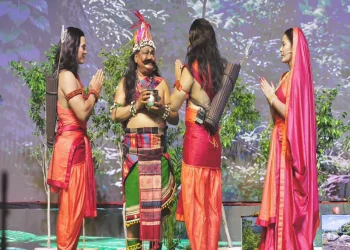
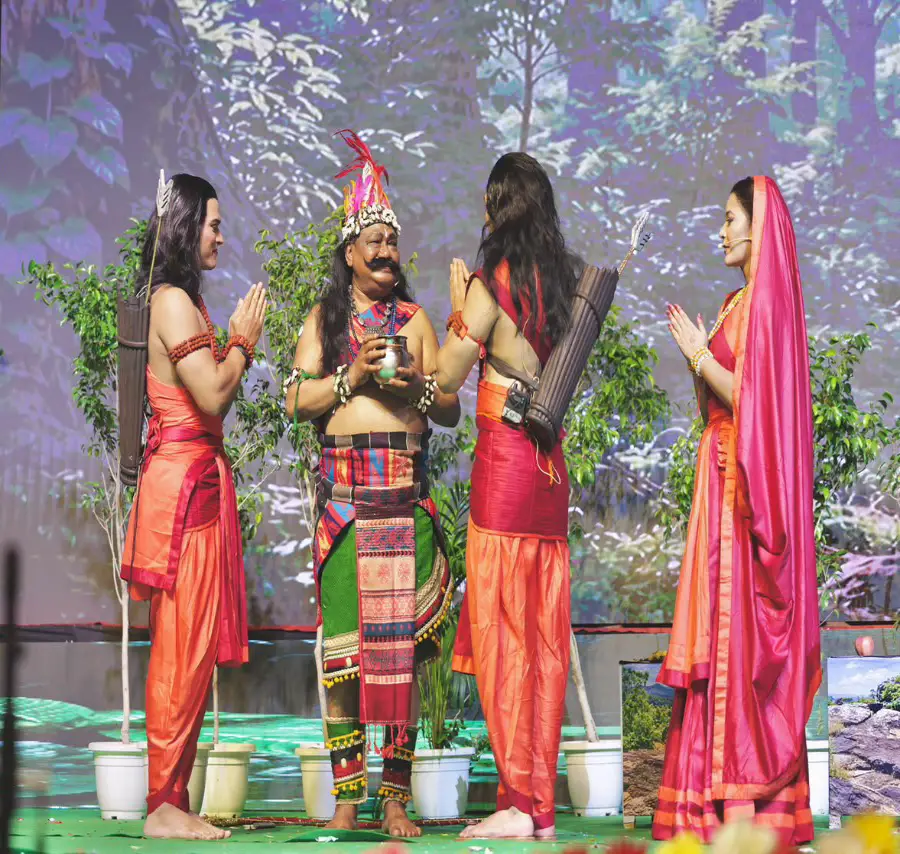
For a few moments on Wednesday night, the responsibilities of national politics gave way to the emotions of the epic Ramayana as Union Tribal Affairs Minister Jual Oram stepped onto the grand stage of Delhi’s celebrated Luv Kush Ramlila at Lal Qila Maidan to portray Nishadraj Guha, the king of Shringaverpur and a revered friend of Lord Ram.
Away from the policy discussions and parliamentary responsibilities that define his public life, the senior BJP leader took on a character whose story revolves around friendship, hospitality and human dignity. His appearance brought a distinctive dimension to the annual theatrical celebration, placing a figure associated with India’s tribal heritage at the centre of one of the capital’s most prominent Ramlila productions.
The episode depicts a defining moment during Ram’s exile, when Nishadraj welcomes Ram, Sita and Lakshman to his territory near the Ganga. The encounter is remembered not for royal grandeur or political power, but for the warmth of a host receiving a dear friend during a difficult period in his life.
For Oram, the opportunity was more than a brief appearance in a celebrated religious and cultural production. It offered a personal connection with a character whose identity and values, he believes, resonate with his own tribal roots.
“Last night, at the renowned Lav-Kush Ramlila stage in Lal Qila Maidan, Delhi, I had the good fortune not as a Union Minister, but of portraying the role of Lord Shri Ram’s supreme friend and the King of Shringverpur, Nishadraj,” Oram wrote in a post on X, reflecting on the experience.
He added that the portrayal was an intensely emotional, proud and spiritual experience, underscoring the significance of bringing the legendary king to life on a historic stage.
A role rooted in personal identity
The choice of Nishadraj carried particular significance for Oram, who saw in the character a connection to his community and its cultural inheritance.
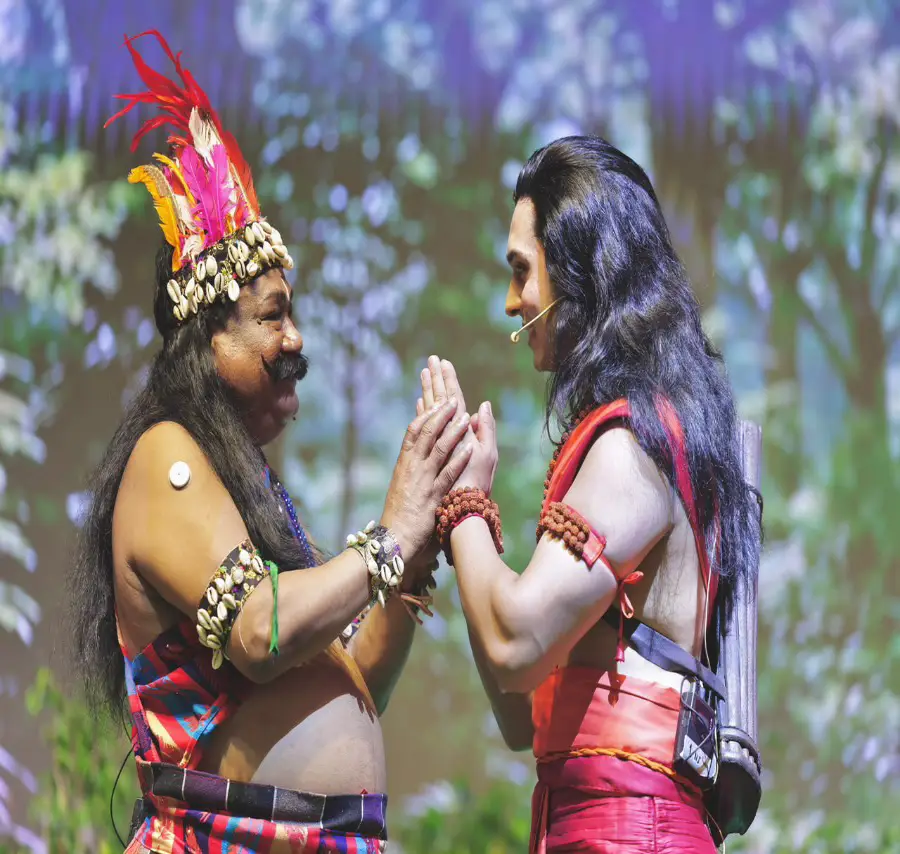
“I belong to that community and as a descendant of king Nishadraj, I feel some of his elements must be in me. It was a great experience to be part of the programme,” he said.
In another reflection, the minister expressed gratitude to the Luv Kush Ramlila Committee for inviting him to portray a king remembered for his association with tribal and backward communities.
“I sincerely thank all the office-bearers and members of the Luv Kush Ramlila Committee for giving me the opportunity to play the role of Nishad Raj, who was the king of the forest and a leader of tribal and backward communities,” he said.
The role, he explained, was not entirely unfamiliar in spirit. His identification with Nishadraj’s heritage gave him a sense of personal responsibility towards the portrayal.
“Since I belong to that community, as a descendant of Nishad Raj, coming from that tradition, some of his elements must be in me. Therefore, I will try, and I am confident that I will succeed,” Oram said.
According to people close to the minister, the organisers approached him around 10 days before the performance and invited him to play Nishadraj. Oram accepted the invitation, recognising an opportunity to participate in a cultural tradition while connecting with a character he considers significant to his own background.
The part involves welcoming Ram, Sita and Lakshman during their exile and seeing them off the following morning. Its limited stage duration belies the character’s importance in the larger narrative, where personal loyalty and hospitality take precedence over differences in social position.
Nishadraj and the enduring idea of social harmony
In the Ramayana tradition, Nishadraj’s friendship with Ram is remembered as an expression of affection and loyalty that transcends social distinctions. His welcome to the exiled prince is an act of friendship, not a transaction shaped by rank, privilege or expectation.
Oram drew attention to precisely this dimension of the story, describing the relationship as an enduring symbol of social harmony.
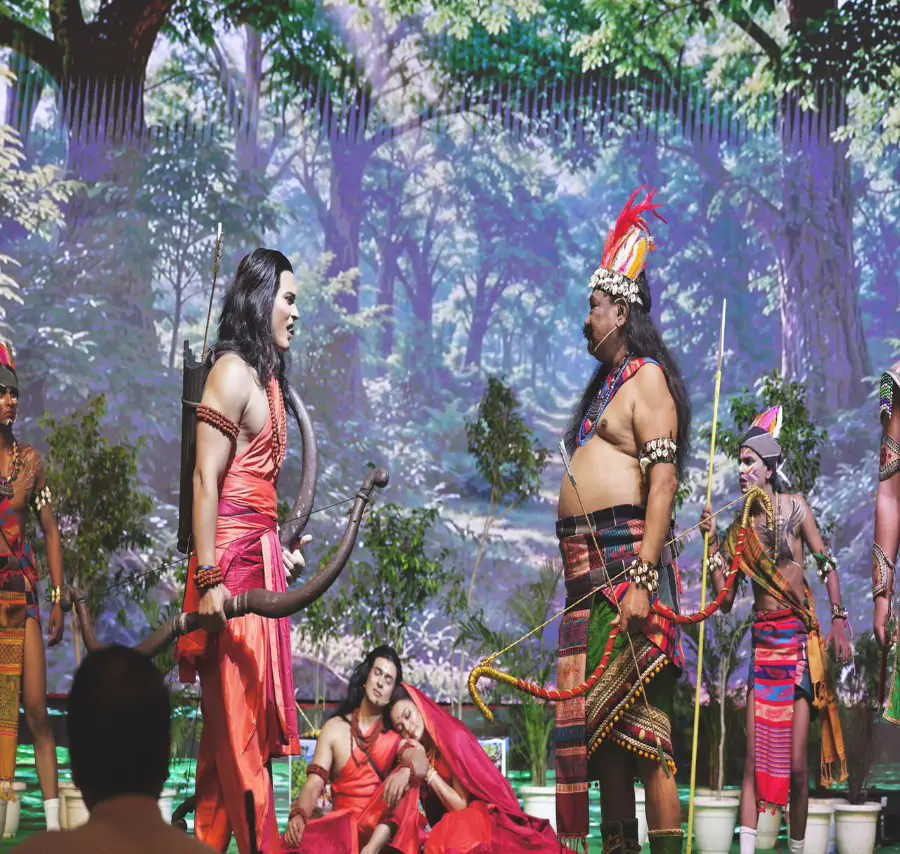
“The friendship between Lord Shri Ram and Nishadraj is a symbol of love, harmony, and equality. Portraying the role of Nishadraj in the Ramlila at the Red Fort has been a matter of pride and fortune for me,” he wrote.
The episode also brings into focus a figure whose place in the epic offers a perspective on the diversity of India’s cultural traditions. Nishadraj is remembered as a king in his own right, extending hospitality to Ram at a time when the latter is living away from his kingdom. The encounter gives prominence to the dignity of the host and the strength of a friendship sustained through adversity.
For a Union Minister responsible for tribal affairs, the portrayal inevitably acquires an additional contemporary resonance. Yet Oram’s own reflections suggest that his motivation was personal as much as public: he saw an opportunity to inhabit a character whose story he associates with his community’s heritage.
His appearance on the Ramlila stage thus brought together two aspects of his public identity — a political leader representing Sundargarh in Odisha and a member of a tribal community who found meaning in a character from one of India’s best-known epics.
From public life to the theatrical stage
Oram’s participation also reflects the long-standing intersection of public life and the Ramlila tradition, in which political leaders and public figures occasionally take on roles from the Ramayana.
People close to the minister said Nishadraj had previously been portrayed by at least three Union ministers, including Faggan Singh Kulaste. Oram’s participation continued that tradition, while adding a personal dimension through his stated connection with the character.
The Luv Kush Ramlila at Lal Qila Maidan is among Delhi’s prominent annual cultural events, drawing audiences during the festive season and bringing together theatre, religious storytelling and public participation. Its expansive setting and high-profile performers make it a distinctive platform for retelling episodes from the Ramayana.
For Oram, however, the significance of the evening lay beyond the scale of the production. His message after the performance returned to the values he associated with Nishadraj: friendship, equality, harmony and respect for human relationships.
The minister’s appearance was brief, but the character he portrayed occupies a lasting place in the epic tradition. By stepping away from his ministerial identity and into the role of Nishadraj, Oram used the occasion to express a connection between personal heritage and a story that continues to speak to audiences across generations.
His own words captured the spirit of the occasion: for one night at the Red Fort, he was on stage not as a Union minister, but as Nishadraj, the king of Shringaverpur and the friend of Ram. “Jai Shri Ram,” he concluded in his post on X.