







New Delhi
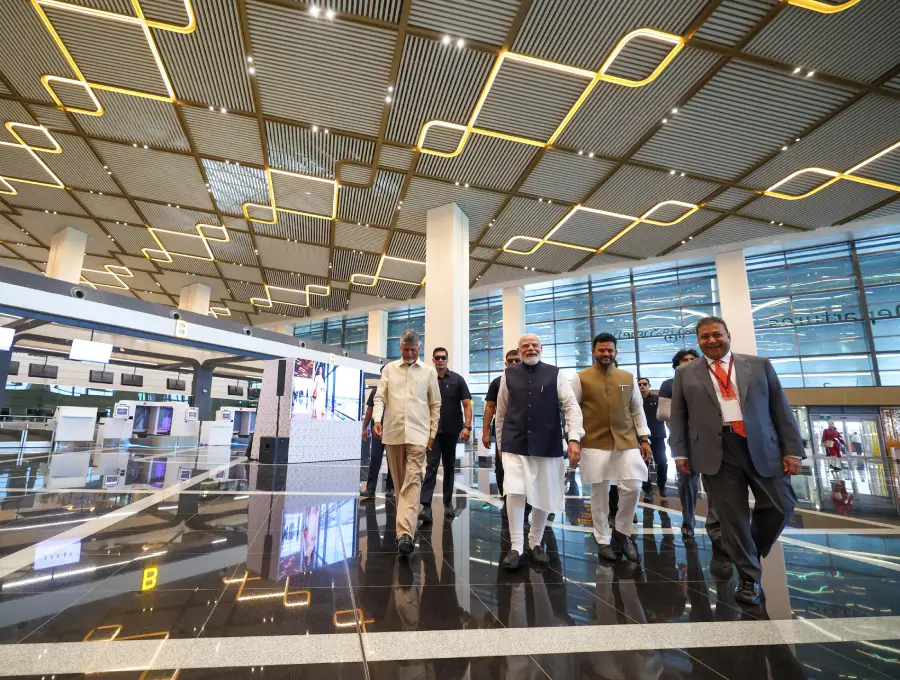
Prime Minister Narendra Modi on Saturday inaugurated the Alluri Sitarama Raju International Airport at Bhogapuram and launched and dedicated projects worth over Rs 17,900 crore in Andhra Pradesh. It is the 167th airport of India.
The visit is significant not only for the scale of infrastructure investments but also because the state’s newest international airport has been named after legendary tribal freedom fighter Alluri Sitarama Raju, whose armed resistance against British rule remains one of the most celebrated chapters in India’s tribal freedom movement.
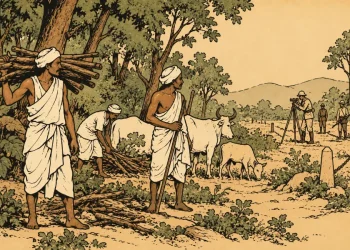
Born in 1897, Alluri Sitarama Raju emerged as the charismatic leader of the Rampa Rebellion (1922-24) in the hilly tribal tracts of the Eastern Ghats, mobilising Koya and other tribal communities against oppressive British forest laws, forced labour and colonial exploitation. He led daring guerrilla attacks on police stations, seized arms from the British and inspired tribal communities to challenge imperial authority. Although captured and executed by the British in 1924 at the age of just 27, his courage transformed him into an enduring symbol of tribal resistance and sacrifice in India’s freedom struggle.
“This land is the land of Alluri Sitarama Raju. On the land where Alluri Sitarama Raju ji dedicated his life to tribal interests, today a new airport of Andhra Pradesh is starting on that very land. Earlier, when airports were built, the names of the airports used to be attributed to a single family. We changed this tradition.
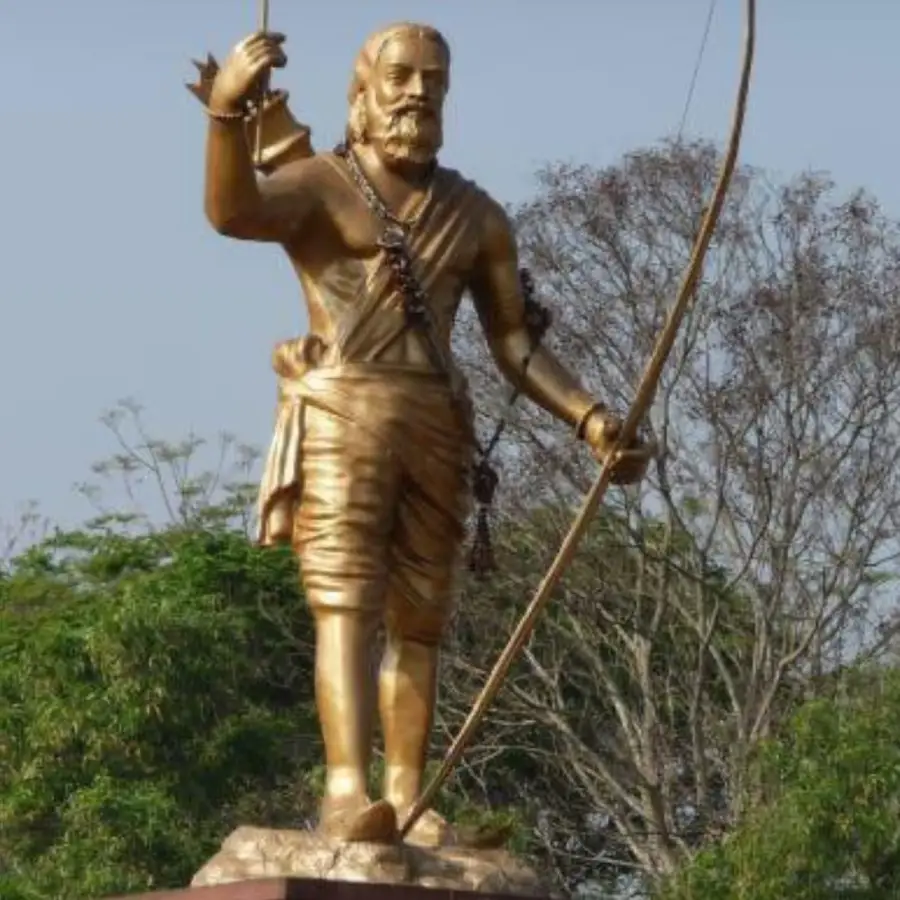
“We linked the name of the airport in Ayodhya with Valmiki, we linked the name of the airport in Punjab with Sant Ravidas Ji. The Central NDA Government has taken the decision that the name of this new airport will be after Sri Alluri Sitarama Raju. Whichever citizen of Andhra Pradesh travels from this airport, whichever citizen of the country and the world travels from this airport, will get inspiration for public service and national service in the name of Alluri Sitarama Raju ji,” the PM said.
Independent India has increasingly recognised Alluri Sitarama Raju’s contribution to the national movement. The Union Government celebrated his 125th birth anniversary in 2022 with year-long commemorative programmes, while his birthplace and memorial sites have been developed as heritage destinations. His life has been included in educational and cultural initiatives, statues have been installed across Andhra Pradesh, and the newly created Alluri Sitarama Raju district bears his name. Naming Andhra Pradesh’s newest international airport after the revolutionary further elevates his legacy, placing a tribal freedom fighter at the centre of one of the state’s most ambitious infrastructure projects.
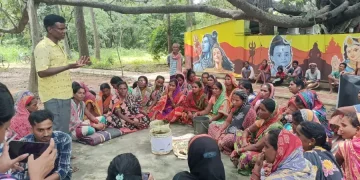
“Naming this airport after Alluri Sitarama Raju is also in line with our resolve to recognize and honour the inspiring services of the great luminaries in our glorious history,” the PM said adding “Today’s event is also about creating new history, new records. On one side, the construction of an airport – a system touching the high sky – and on the other side, the creation of a world record of Dhimsa dance by my tribal sisters here; I especially appreciate this vision of Chandrababu.”
Developed in the Public-Private Partnership mode at a cost of Rs 5,640 crore, the Greenfield airport has been designed to handle six million passengers annually and is expected to become a major aviation gateway for north coastal Andhra Pradesh. The terminal blends modern technology with regional identity, drawing architectural inspiration from Andhra Pradesh’s traditional Chuttilu cottages, the scenic Araku Valley, and the graceful movement of a flying fish.
Equipped with Artificial Intelligence-enabled systems, biometric passenger processing, automated baggage handling, predictive operations technology, a 5 MW solar power plant, rainwater harvesting and green building features, the airport is expected to boost tourism, trade, investment and employment while strengthening regional connectivity.
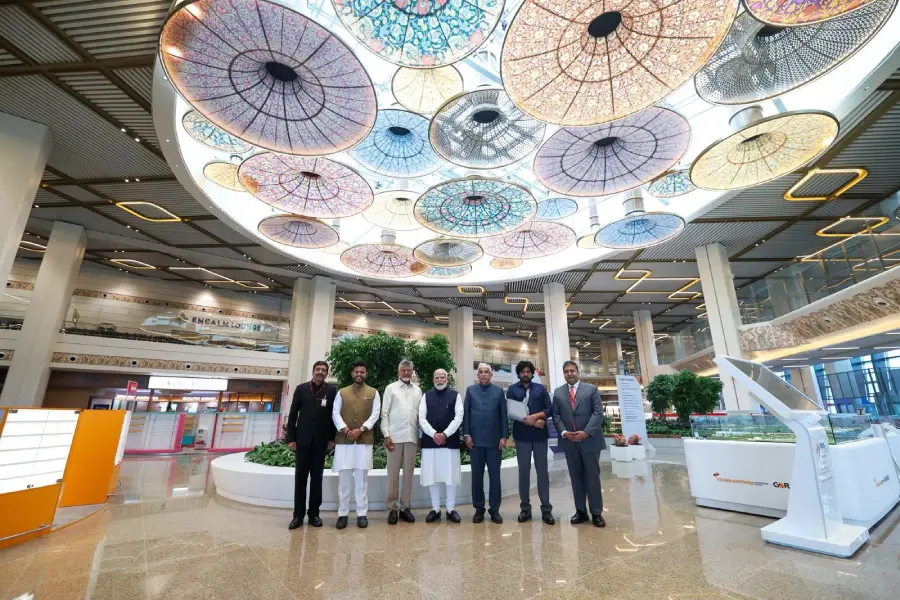
Bhogapuram, located in Vizianagaram district close to Visakhapatnam, has emerged as a strategic growth corridor because of its proximity to one of India’s busiest ports, industrial clusters and tourism destinations along the Bay of Bengal. The airport is expected to complement the economic expansion of the Visakhapatnam metropolitan region, improve international connectivity for north Andhra, and attract investments into manufacturing, logistics, information technology and hospitality. Improved access to nearby tribal regions, including the Araku Valley, is also expected to support eco-tourism and create new livelihood opportunities.
Besides inaugurating the airport, the Prime Minister also laid the foundation stone of Andhra Pradesh’s first semiconductor manufacturing facility at Visakhapatnam, being developed under the India Semiconductor Mission with an investment of over Rs 460 crore in collaboration with a South Korean partner. The plant is expected to manufacture around 96 million semiconductor chips annually while creating high-skilled employment and supporting a broader electronics ecosystem.
Modi also launched and dedicated major renewable energy transmission projects, national highway works and power infrastructure aimed at accelerating clean energy integration, improving road connectivity and reducing travel time across Andhra Pradesh.
The Prime Minister later travelled to Mysuru, Karnataka, to inaugurate the Swami Vivekananda Cultural Youth Centre (Viveka Smaraka) at the Sri Ramakrishna Ashrama. Built at the historic Niranjana Math where Swami Vivekananda stayed during his 1892 visit to Mysuru, the centre includes a 4-D experience facility, exhibition galleries, library, meditation hall, classrooms and an amphitheatre.
Designed to promote value-based education, leadership and personality development among young people, it is expected to benefit more than 10,000 students. Vivekananda’s message of social inclusion, education and empowerment has long resonated with organisations working among tribal and other marginalised communities across the country.