


• About
  • Editor & Writers
  • Contact
  • Sitemap
No Result
View All Result
Support Our Mission
Thursday, August 20, 2026
The Indian Tribal
  • Home
  • Achievers
    • उपलब्धिकर्ता
  • Cuisine
    • खान पान
  • Health
    • स्वास्थ्य
  • Legal
    • कानूनी
  • Music
    • संगीत
  • News
    • Updates
    • खबरें
  • Sports
    • खेलकूद
  • Variety
    • विविध
  • हिंदी
    • All
    • आदिवासी
    • उपलब्धिकर्ता
    • कला और संस्कृति
    • कानूनी
    • खबरें
    • खान पान
    • खेलकूद
    • जनजाति
    • भारत
    • विविध
    • संगीत
    • संस्कृति
    • स्वास्थ्य
    The Indian Tribal

    ओडिशा के विशेष रूप से कमजोर जनजातीय समूहों की सदियों पुरानी विवाह संस्कृति एवं परंपराएँ बदलाव के दौर में भी कायम

    The Indian Tribal

    आदिवासी महोत्सव में झारखंड के विद्यार्थियों को मिलेगा फिल्म निर्माण सीखने का अवसर

    The Indian Tribal

    ‘ट्री ऑफ लाइफ’ सखुआ: पत्तों से रोजगार, बीजों से उद्योग, राल से औषधि और संरक्षण में छिपा भविष्य

    The Indian Tribal

    रांची से उठेगी सखुआ क्रांति: क्यों है सखुआ झारखंड की संस्कृति, आस्था और प्रकृति का प्रहरी?

    The Indian Tribal

    दिशोम गुरु शिबू सोरेन की विरासत ही झारखंड की दिशा: पहली पुण्यतिथि पर बोले हेमंत

    The Indian Tribal

    ओडिशा के PVTGs की अनूठी विवाह व्यवस्था: वधू मूल्य नहीं, सामाजिक साझेदारी का प्रतीक

    The Indian Tribal

    झारखंड के पलामू टाइगर रिजर्व में आदिवासी परंपराएं बनीं बाघ संरक्षण की नई ताकत

    The Indian Tribal

    झारखंड को मिलेगा अपना फिल्म एंड टेलीविजन इंस्टीट्यूट, SRFTI के साथ हुआ समझौता

  • Gallery
    • Videos
  • Latest News
The Indian Tribal
  • Home
  • Achievers
    • उपलब्धिकर्ता
  • Cuisine
    • खान पान
  • Health
    • स्वास्थ्य
  • Legal
    • कानूनी
  • Music
    • संगीत
  • News
    • Updates
    • खबरें
  • Sports
    • खेलकूद
  • Variety
    • विविध
  • हिंदी
    • All
    • आदिवासी
    • उपलब्धिकर्ता
    • कला और संस्कृति
    • कानूनी
    • खबरें
    • खान पान
    • खेलकूद
    • जनजाति
    • भारत
    • विविध
    • संगीत
    • संस्कृति
    • स्वास्थ्य
    The Indian Tribal

    ओडिशा के विशेष रूप से कमजोर जनजातीय समूहों की सदियों पुरानी विवाह संस्कृति एवं परंपराएँ बदलाव के दौर में भी कायम

    The Indian Tribal

    आदिवासी महोत्सव में झारखंड के विद्यार्थियों को मिलेगा फिल्म निर्माण सीखने का अवसर

    The Indian Tribal

    ‘ट्री ऑफ लाइफ’ सखुआ: पत्तों से रोजगार, बीजों से उद्योग, राल से औषधि और संरक्षण में छिपा भविष्य

    The Indian Tribal

    रांची से उठेगी सखुआ क्रांति: क्यों है सखुआ झारखंड की संस्कृति, आस्था और प्रकृति का प्रहरी?

    The Indian Tribal

    दिशोम गुरु शिबू सोरेन की विरासत ही झारखंड की दिशा: पहली पुण्यतिथि पर बोले हेमंत

    The Indian Tribal

    ओडिशा के PVTGs की अनूठी विवाह व्यवस्था: वधू मूल्य नहीं, सामाजिक साझेदारी का प्रतीक

    The Indian Tribal

    झारखंड के पलामू टाइगर रिजर्व में आदिवासी परंपराएं बनीं बाघ संरक्षण की नई ताकत

    The Indian Tribal

    झारखंड को मिलेगा अपना फिल्म एंड टेलीविजन इंस्टीट्यूट, SRFTI के साथ हुआ समझौता

  • Gallery
    • Videos
  • Latest News
No Result
View All Result
The Indian Tribal
No Result
View All Result
  • Home
  • Achievers
  • Cuisine
  • Health
  • Legal
  • Music
  • News
  • Sports
  • Variety
  • हिंदी
  • Gallery
  • Latest News
Support Our Mission
Home » The Indian Tribal / Variety » Nabarangpur’s Tribal Farmers Drive Odisha’s Maize Boom With FPO Support

Nabarangpur’s Tribal Farmers Drive Odisha’s Maize Boom With FPO Support

Maize is cultivated across nearly 65,000 hectares in this district, producing around 7.8 lakh metric tonnes annually but low market prices, limited awareness of MSP and quality-linked pricing remain challenges for growers, finds out Niroj Ranjan Misra

August 20, 2026
The Indian Tribal

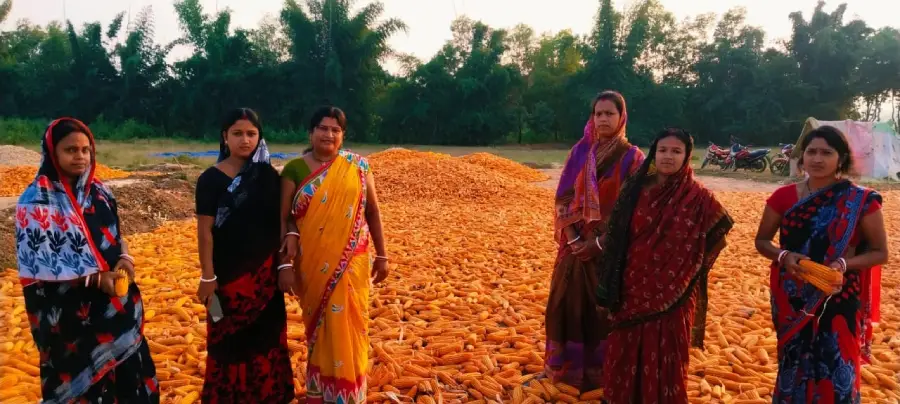
Female Farmers With The Heap Of Their Maize Seeds

Bhubaneswar

Maize farming is the mainstay of the agricultural landscape of tribal-dominated Nabarangpur district of Odisha. Both tribals and non-tribals of the district grow maize on about 65,000 hectares, yielding nearly 7.8 lakh metric tonnes annually. It comprises around 30 per cent of the total maize production in the state, earning the district the sobriquet ‘maize basket’ of Odisha.

The significant spurt in maize production was brought about after the formation of about 15 farmer producer companies (FPOs), like Nabarangi Farmer Producer Company (NFPO) and Mata Dongri Farmer Producer Company (MDFPO), under Odisha Rural Development and Marketing (ORMAS) in the district.

“Most farmers now grow hybrid varieties like ADV 759, DKC9126 and CP333. This has helped maize production register a growth of more than 50 per cent. The success in maize farming in Nabarangpur inspired the state government to launch Mukhyamantri Maka Mission (MMM) in 2023 to establish maize as a major cereal crop to cover about 45 blocks of 15 districts in the first phase,” former Chief District Agriculture Officer Sudhir Behera, who is now Joint Director (Agriculture) in the state capital Bhubaneswar, told The Indian Tribal.

Farmers, mostly from the Gond, Bhathra, Santhal, Pujari and Saunta tribal communities, yield 40 to 45 quintals of maize per acre during the Rabi season (October-December) every year. On the other hand, about 12 years ago, they used to harvest a maximum of up to 30 quintals per acre during Rabi. Similarly, they now produce 25 to 35 quintals per acre during the Kharif season (June-October) annually. In contrast, old-timers used to harvest up to 20 quintals per acre during Kharif. Another reason for the ‘low yield’ in the past was farmers’ lack of knowledge about the proper plantation process and fertiliser and pest/insect management.
The Indian Tribal
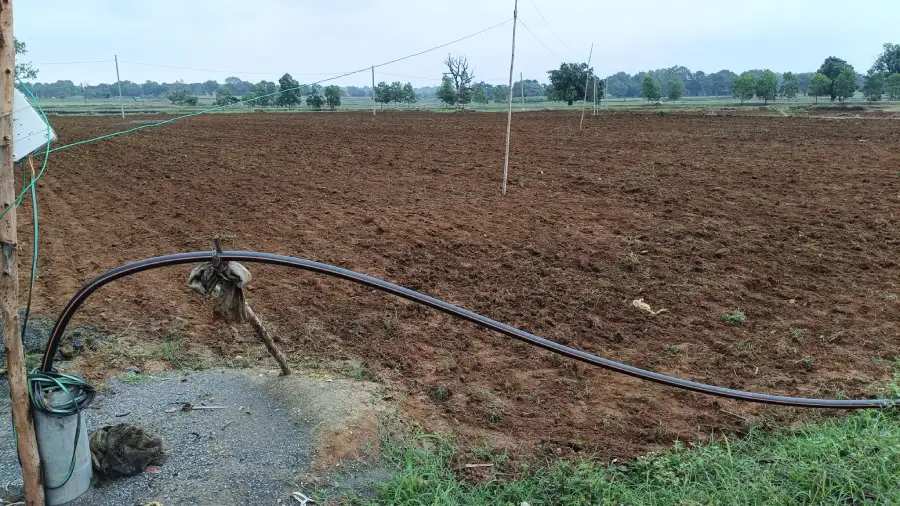
A Maize Field Being Irrigated

Maize cultivation then picked up pace with government finance released to FPOs through ORMAS. However, different FPOs were provided varying amounts of assistance. The performance and number of farmer shareholders of FPOs were the yardsticks that determined the amount of assistance. Assistance was provided to boost the production not only of maize, but also of other crops like millets.

For example, NFPO received nearly Rs 61.5 lakh, while MDFPO got about Rs 45 lakh. The assistance was used to meet expenditure incurred on several components, including the purchase of seeds, fertiliser and pesticides, salary payments, administrative management, operational procedures, farmer training, and the establishment of ‘agri malls’ and other marketing channels.

Those tribals who have forked out Rs 1,000 each to become shareholders of different FPOs get high-quality hybrid seeds, fertilisers, pesticides and agricultural necessities from their ‘agri malls’ as interest-free loans. They, who have now learnt the techniques of modern plantation processes and fertiliser and pest/insect management under their FPOs, pay it off after harvest.

“Formed in 2021, our FPO, which clocks an annual turnover of up to Rs 4 crore from maize, has 700 farmers as its shareholders. Out of them, 350 grow maize. We sell seeds to them at about Rs 1,500 to Rs 1,700 per quintal by keeping Rs 10 as our profit margin. On the other hand, traders sell at Rs 2,200 to Rs 2,300 by keeping a profit margin of a minimum of 20 per cent. The seeds are provided in packets. Each of them contains three kilograms of seeds, and a farmer uses two packets per acre,” said Dipankar Mistry, the NFPO’s Chief Executive Officer (CEO).

“Maize cultivation by our shareholders was promoted under Deendayal Antyodaya Yojana-National Rural Development Mission launched in 2011 by the Union Ministry of Rural Development. Launched in 2023, MMM of the state government took other FPOs into its ambit,” he added, lending credence to Sudhir’s statement.
The Indian Tribal
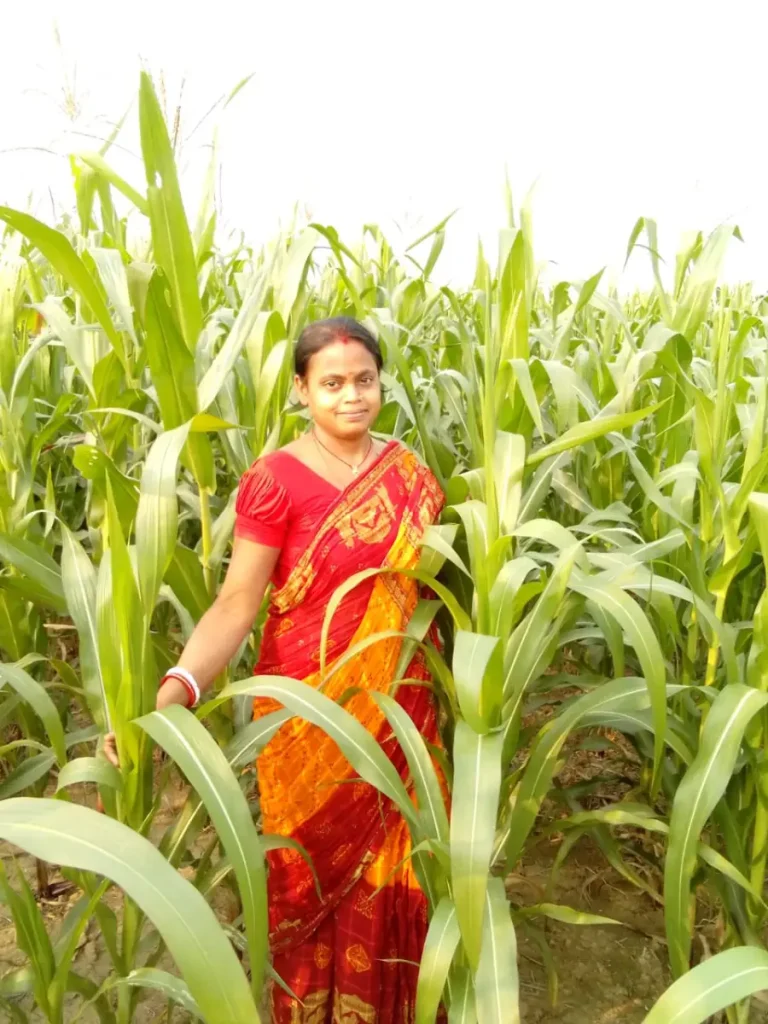
A Female Farmer In Her Maize Field

Dipankar’s NFPO provides fertilisers like urea and DAP (Diammonium Phosphate). While it sells a packet of 45 kilograms of urea at Rs 280, its selling price for a packet of DAP (45 kilograms) is Rs 1,350. Similarly, it sells nano urea (liquid) of 500 ml at Rs 225 and nano DAP of the same quantity at Rs 550, with a profit margin of Rs 10 per packet and per bottle of nano fertilisers.

On the contrary, vendors are claimed to sell each packet of urea of the same quantity at Rs 350 and that of DAP at Rs 1,600.

Farmers had no knowledge about nano urea and nano DAP till NFPO introduced the liquid fertilisers to them. Farmers under the guidance of FPOs used 150 kilograms of urea per acre and 50 kilograms of DAP. On the other hand, they use 500 ml each of nano urea and nano DAP per acre. They keep a distance of about nine centimetres between two saplings and a distance of nearly eight feet between their two lines.

They also use fungicides, herbicides and pesticides/insecticides to protect plants from damage. For example, they use a certain quantity of insecticide like ‘Dabang’ to deal with harmful ‘Stem Borer’ and ‘Leaf Folder’, while ‘Blast’ is used to nullify the spread of fungus and grass is weeded out with herbicide ‘Amidol’, as per the instructions of FPOs.

Besides, farmers have set up drip irrigation systems and borewells. They have to cough up Rs 35,000 to Rs 40,000 per acre on drip irrigation setups after availing themselves of a 70 per cent government subsidy.

The cereal crops planted during Rabi are harvested in November. Those planted during Kharif are harvested in April. Maize grown during Kharif roughly fetches a profit of up to Rs 40,000 per acre, while crops grown during Rabi roughly earn a profit of up to Rs 50,000 per acre. Farmers usually save from their earnings to re-invest during the next Rabi and Kharif seasons. They invest up to about Rs 25,000 per acre to grow maize during Rabi and up to around Rs 20,000 during Kharif.

Those who exhaust their income usually take loans from local ‘mahajans’ (moneylenders) at an interest rate of around five per cent.

“I grow maize of ADV759 and CP509 on seven acres that yield nearly 350 quintals annually. I sell it at Rs 1,900 to Rs 1,920 per quintal. However, the price fluctuates in proportion to maize yield and market demand,” said female farmer Laxmi Saunta, who belongs to Kopena village under Umerkote block.

The minimum support price (MSP) of maize fixed by the Union Government for 2025-26 was Rs 2,400, which increased to Rs 2,410 for 2026-27. However, farmers usually sell it for a maximum of up to Rs 2,200. One of the reasons for the ‘low’ selling price is attributed to farmers’ ignorance about the MSP. Besides, the quality and ‘size’ of the seeds determine their selling price. A seed ought to measure 9 to 12 mm in length, 3 to 4.5 mm in thickness and 6 to 9 mm in width to fetch the market price.

“I have sold my seeds at Rs 1,900 per quintal this year, while it was sold at Rs 2,200 last year. The price slumped because the size of my seeds was less than the recommended one,” said female farmer Suati Bhatra of Semla village under Umerkote block. She grows DKC9126 on three acres that yield around 150 quintals annually.
The Indian Tribal
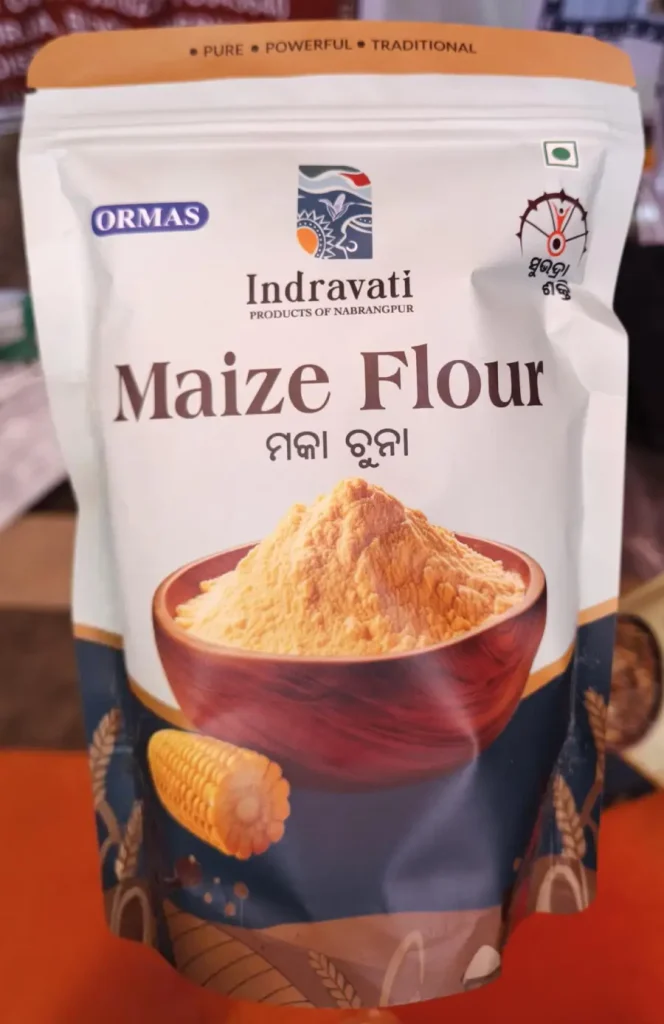
A Packet Of Maize Flour

The shareholders of FPOs also sell flour and ladoos made out of maize seeds in packets under the brand name ‘Indravati’. A packet of 500 grams of flour sells for Rs 60, while a packet of four ladoos sells for Rs 40.

“We also sell seeds to the companies that make cattle and chicken feed by using them as a major ingredient,” said Dhanurjaya Naidu of the MDFPO in Dongoriguda village under Bikrampur gram panchayat. “Constituted in 2024, our FPO, which clocks an annual turnover of about Rs 1.8 lakh, has 842 farmers as our shareholders. They all grow maize along with other crops,” he added.

“We have another major outlet, ‘Nabarangi Bazar’, at Nabarangpur district headquarters, where we sell maize flour and ladoos along with handicrafts, handloom and other products made in Nabarangpur and other districts. On the other hand, our agri mall deals in seeds, fertilisers, pesticides/insecticides and other necessities used in farming,” said Dipankar.

“We also prepared cornflakes in 2023-24. Each packet of 250 grams of cornflakes is sold for Rs 80. But preparation of this product had to be wound up because it did not have the requisite quality. However, we are planning to revive its production, maintaining all quality standards,” he added.


Root Woot | Online Puja Samagri Root Woot | Online Puja Samagri Root Woot | Online Puja Samagri

Support Our Mission

The Indian Tribal

For the past four-and-a-half years, we have travelled across India to bring to our readers the ‘Unknown, Lesser-Known Tribal Life’, which rarely finds space in the mainstream media.

We have done this without external funding, driven only by our conviction that India’s tribal heritage deserves to be documented with dignity, depth and authenticity.

If you like our work, and if it has informed, inspired or helped you understand India’s tribal/indigenous communities better, we invite you to become a part of this mission.

Your contribution will not merely fund a news platform. It will help preserve voices, traditions, histories and aspirations that form an invaluable part of India’s identity.

Because when an untold story is documented, a piece of India’s heritage is preserved forever.

Thanks
Editor

In Numbers

49.4 %
Female Literacy rate of Scheduled Tribes

Update

Centre notifies Act mandating political reservation for tribals in Goa Assembly

The Centre has notified the Act that grants political reservation for the Scheduled Tribe (ST) community in the 40-member Goa legislative Assembly. The Act passed earlier by Parliament mandates reservation of four seats for tribal candidates in the Goa Assembly for the first time. Goa Chief Minister Pramod Sawant recently met Union Home Minister Amit Shah urging him to expedite the process of reservation for the ST community in the Assembly, which will go to polls early next year. Sawant expressed his “deep gratitude” to Prime Minister Narendra Modi and Home Minister Amit Shah. Tribal leader and BJP MLA Govind Gaude called it a big victory of social justice movement.
The Indian Tribal
India

JSSC-CGL Cancellation Triggers Fresh Crisis: Now Affected Staffers Start Protest; Aspirants Too Keep CBI Demand Alive

by The Indian Tribal
August 18, 2026

The first phase of the student agitation may have achieved its biggest demand, but Tuesday's counter-protest by CGL-pass employees and the unresolved CBI demand show that Jharkhand's recruitment crisis is far from over. The Indian Tribal reports

The Indian Tribal

ओडिशा के विशेष रूप से कमजोर जनजातीय समूहों की सदियों पुरानी विवाह संस्कृति एवं परंपराएँ बदलाव के दौर में भी कायम

August 16, 2026
The Indian Tribal

Forests, Indigenous Midwives And Tribal Rights Sustain The Bhils Of Rajasthan

August 13, 2026
The Indian Tribal

How Bhil Midwives Keep Rajasthan’s Tribal Childbirth Traditions Alive

August 12, 2026
The Indian Tribal

आदिवासी महोत्सव में झारखंड के विद्यार्थियों को मिलेगा फिल्म निर्माण सीखने का अवसर

August 8, 2026
The Indian Tribal

Why Tribal Midwives Still Lead Childbirths Despite Push For Institutional Deliveries

August 8, 2026
Previous Post

JPSC-JSSC Aspirants Suspend 26-Day Stir, Give Soren Govt Two Months; CGL-Pass Staffers Step Up Protest

Top Stories

The Indian Tribal
India

JPSC-JSSC Aspirants Suspend 26-Day Stir, Give Soren Govt Two Months; CGL-Pass Staffers Step Up Protest

August 19, 2026
The Indian Tribal
India

JSSC-CGL Cancellation Triggers Fresh Crisis: Now Affected Staffers Start Protest; Aspirants Too Keep CBI Demand Alive

August 18, 2026
The Indian Tribal
News

Battle ‘Half Won’ for Aspirants: JSSC-CGL, TDPL Exams Cancelled, But Silence Of Soren Govt On CBI Probe Keeps Student Agitation Alive

August 17, 2026
Load More
  • About Us
  • Editor & Writers
  • Contact
  • Redressal
  • Copyright Policy
  • Privacy Policy And Terms Of Use
  • Disclaimer
  • Sitemap

  • Achievers
  • Cuisine
  • Health
  • India
  • News
  • Legal
  • Music
  • Sports
  • Trending
  • Chhattisgarh
  • Delhi
  • Gujarat
  • Jammu & Kashmir
  • Jharkhand
  • Kerala
  • Madhya Pradesh
  • Maharashtra
  • North East
  • Arunachal Pradesh
  • Assam
  • Manipur
  • Meghalaya
  • Mizoram
  • Nagaland
  • Sikkim
  • Tripura
  • Odisha
  • Telangana
  • West Bengal
  • Political News
  • Variety
  • Art & Culture
  • Entertainment
  • Adivasi
  • Tribal News
  • Scheduled Tribes
  • हिंदी
  • उपलब्धिकर्ता
  • कानूनी
  • खान पान
  • खेलकूद
  • स्वास्थ्य
  • संस्कृति
  • संगीत
  • विविध
  • कला और संस्कृति
  • खबरें
  • असम
  • अरुणाचल प्रदेश की ताज़ा ख़बरें
  • ओडिशा
  • केरल
  • गुजरात
  • छत्तीसगढ़
  • जम्मू और कश्मीर
  • झारखंड
  • तेलंगाना
  • दिल्ली
  • नॉर्थईस्ट
  • पश्चिम बंगाल
  • मध्य प्रदेश
  • महाराष्ट्र
  • त्रिपुरा
  • नागालैंड
  • मणिपुर
  • मिजोरम की ताज़ा ख़बरें
  • मेघालय
  • सिक्किम की ताज़ा ख़बरें
  • राजस्थान

About Us

The Indian Tribal is India’s first bilingual (English & Hindi) digital journalistic venture dedicated exclusively to the Scheduled Tribes. The ambitious, game-changer initiative is brought to you by Madtri Ventures Pvt Ltd (www.madtri.com). From the North East to Gujarat, from Kerala to Jammu and Kashmir — our seasoned journalists bring to the fore life stories from the backyards of the tribal, indigenous communities comprising 10.45 crore members and constituting 8.6 percent of India’s population as per Census 2011. Unsung Adivasi achievers, their lip-smacking cuisines, ancient medicinal systems, centuries-old unique games and sports, ageless arts and crafts, timeless music and traditional musical instruments, we cover the Scheduled Tribes community like never-before, of course, without losing sight of the ailments, shortcomings and negatives like domestic abuse, alcoholism and malnourishment among others plaguing them. Know the unknown, lesser-known tribal life as we bring reader-engaging stories of Adivasis of India.

Follow Us

All Rights Reserved

© 2026 Madtri Ventures [P] Ltd.

No Result
View All Result
  • Home
  • Achievers
  • Cuisine
  • Health
  • Health
  • Legal
  • Music
  • News
  • Sports
  • Variety
  • हिंदी
    • उपलब्धिकर्ता
    • खान पान
    • कानूनी
    • खेलकूद
    • खेलकूद
    • संगीत
    • संगीत
    • स्वास्थ्य
    • स्वास्थ्य
    • विविध
  • Gallery
  • Videos

© 2026 Madtri Ventures [P] Ltd.