





New Delhi
The push for tiger protection in India, mostly based on the Western conservation model, is alienating tribal communities and forest dwellers while, at the same time, fuelling unprecedented tiger tourism in the country.
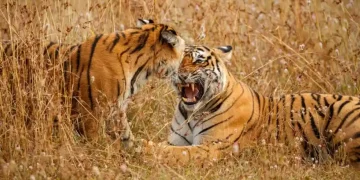
India has over 70 percent of the global tiger population and 58 tiger reserves, but not all reserves hold tigers. In recent times, the Palamau Tiger Reserve in Jharkhand has plans to augment its falling tiger population through the introduction of tigers from tiger state Madhya Pradesh. Amid such measures, there have been reports of stress on India’s tigers due to aggressive tourism.
Tiger conservation in India became possible after the Indian government launched Project Tiger in 1973. Prior to this, indiscriminate hunting had wiped out a considerable number of tigers. Project Tiger, which completed 50 years in 2023, therefore became imperative to save the species. India now has an estimated 3,682 tigers.
Relocation Of Forest Dwellers, Indigenous Communities
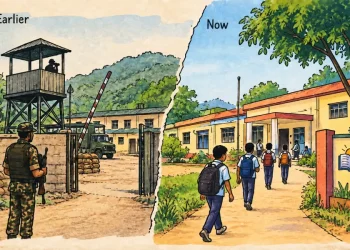
While it is necessary to protect and conserve the tiger, India’s national animal, tribals and forest dwellers have been relocated over the years to make way for tigers and other wildlife. At present, people living inside forests are being relocated in huge numbers, which treats the symptom rather than the underlying conflict.
While conservationists argue that they are given adequate compensation and land, the truth is that people often get poor-quality farmland. Most importantly, people’s vital link with the forest is forever broken.
There is often a social and cultural loss that is not always accounted for, including the loss of sacred groves and spaces. For instance, in the Kanha Tiger Reserve in Madhya Pradesh, the Baiga tribals had to leave behind their sacred grove when they were relocated out of the core area to make way for the conservation of the barasingha, or swamp deer.
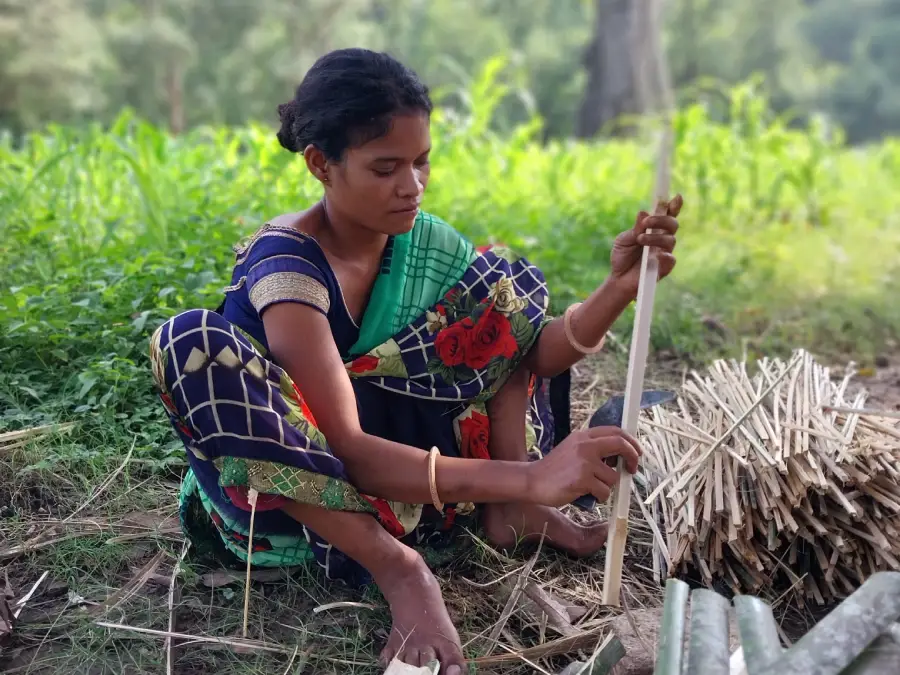
In many places, displaced people have to start life all over again. For instance, pastoralists in Sariska had been given land for wheat cultivation, which was difficult for them as they were not traditionally engaged in agriculture.
While experts argue that relocation serves the conservation of tigers best, an increasing number of tigers outside tiger reserves are giving rise to human-tiger conflict, with frequent attacks leading to grave injuries and deaths. There have been deaths due to tiger attacks in places such as Pench in Madhya Pradesh, Ranthambore in Rajasthan and Pilibhit in Uttar Pradesh.
Social activist Rajan, who is associated with CNAPA (Community Networks Against Protected Areas), claimed that in many places where relocation took place, some elderly people died within a few years. This, he added, was due to the underlying trauma. He also cited the case of a woman in her 30s who suffered mental stress after relocation and walked a long distance to reach her original village. “I have seen such things in Karnataka,” he said.
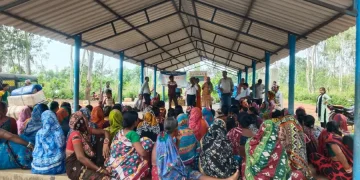
Many such people who have been put on the relocation radar in the Nagarhole Tiger Reserve are working for their rights through gram sabhas, or village councils.
“The government feels that people can be sent off, but it isn’t going to be easy,” Rajan added.
The Shadow Of Tourism
Tiger tourism is now a key driver of conservation strategy in India. Reserves such as Tadoba in Maharashtra, Corbett in Uttarakhand and several reserves in Madhya Pradesh draw large numbers of tourists, especially foreigners.
Conservationist and wildlife photographer Jonathan Scott argues that tourism has become a rationale for conservation because of the money it can raise to support protected-area management, particularly where governments do not wish to fund conservation and instead outsource the cost to visitors.
“It would be nice to think that society and governments put sufficient importance on protecting nature for its own sake, and for our good health, but greed, making money, not costing environmental inputs into the equation of doing business seem to be the norm. Sadly, there is an apparent upsurge in aggressive tourism and a lack of empathy for the things that people come to see, whether wildlife or antiquities. Today everything seems to be measured by entertainment value.”
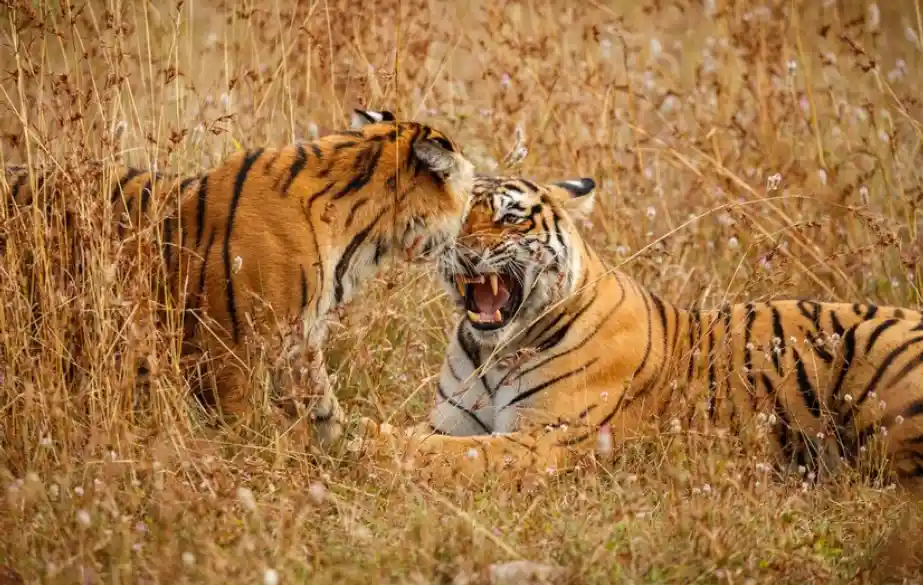
With increasing tourism and the influx of tourists, hotels and resorts have come up under the luxury tourism segment. In places like Kaziranga, there is fortress conservation in place where guards are ordered to shoot poachers at sight.
Often, as Survival International points out, innocent villagers pay the price of conservation. In Corbett, one of India’s most famous tiger reserves, named after Jim Corbett, 29,126 foreign tourists visited from 2021-22 to 2025-26. The revenue earned amounted to Rs 721.95 lakh, or Rs 7.2195 crore (USD 749,633.17), during the same period. In Pench Tiger Reserve, 8,22,477 tourists visited from 2020-21 to 2024-25.
Rajan, who works with the Jenu Kurubas, said there is a lot of money involved as a result of tiger conservation, and tourism is a way of deflecting attention. He questioned the rationale behind relocation.
“Tigers will always move and enter new territories. But will we go on declaring all these areas as protected areas and throw people out? It is not possible.”
According to Rajan, there are still over 40 villages in Nagarhole and there is pressure on them to relocate. He feels that the focus has shifted to tourism as a lot of money is coming in.
Mohammad Meer Hamja, a pastoralist and activist from Uttarakhand, agrees. “If we talk about rescuing tigers and living alongside them, there is a need to understand that conservation isn’t only about the animals. It is also crucial to include the voices of people who live in and depend on the forest, and they are the forest dwellers,” said Hamja, the president of Van Gujjar Tribal Yuva Sangathan, a youth collective for Van Gujjar rights, education, conservation and livelihood support.
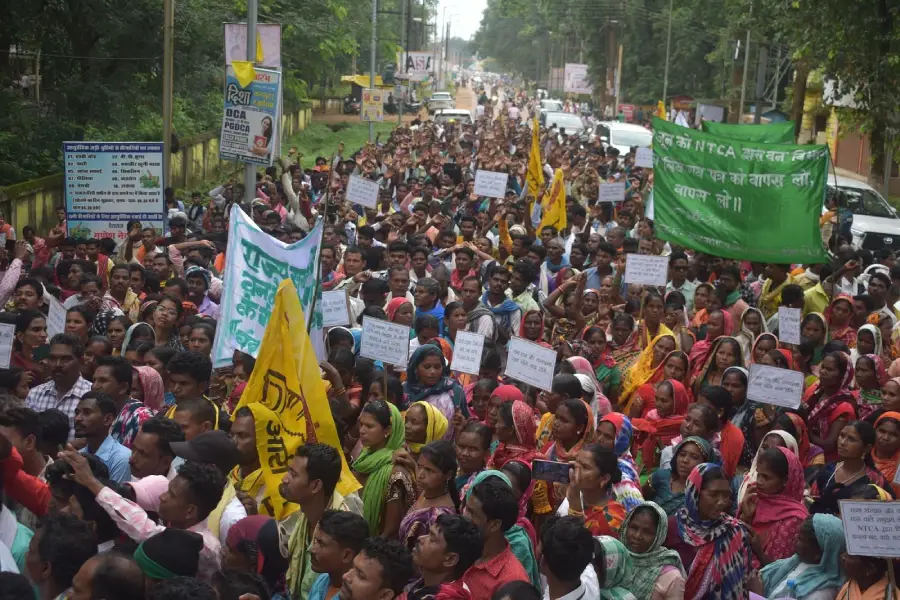
He added that to plan relocations around tiger habitats, there is a need to listen to forest communities, protect their livelihoods and craft solutions that reduce conflict where human and wildlife spaces often overlap.
In Chhattisgarh’s Achanakmar Tiger Reserve, which plans to increase its tiger population, Tilaidabra village is on the relocation radar. Right now, people from the village are constructing houses in a place called Sawantpur, some 65-70 km away outside the reserve, said forest beat guard Brijbhushan Manikpuri.
Protecting People’s Rights
The 2026 Nagarahole Declaration, issued by the Nagarahole Adivasi Jamma Paale Hakku Sthapana Samiti (Kodagu and Mysuru), a tribal-led federation, aims to protect people’s rights.
Sophie Grig, research and advocacy director at international non-profit Survival International, says that India has added more tiger reserves in recent years because it, along with large conservation organisations and international funders, is stuck in what she describes as a colonial mindset of conservation. According to her, this approach views creating a reserve that removes people while welcoming tourists as the only way to protect tigers.
“But, in fact, the opposite is true. The best way to protect the tiger and the forest is to respect the rights of the tribals who know the forest best. The irony of kicking out the best conservationists while letting tourist jeeps in is not lost on tribal people who have been evicted from their homes in the name of tiger conservation, or continue to face the threat of eviction.”
Grig shares that studies have shown that recognising tribal people’s land rights can be as effective, or more so, than creating protected areas. Tiger reserves with safaris, where jeeps pursue tigers for the pleasure of tourists and around which resorts grow, have little to do with conservation or climate-change mitigation, she argues. These, she says, are for profits.
She also quotes Jenu Kuruba youth leader JA Shivu as saying: “How are tourists taken into forests while we are forcefully evicted and our rights arbitrarily rejected? This isn’t conservation but money-making under the mask of conservation. People come from different cities and countries to see tigers here (Nagarhole), and infrastructure is set up for them. So, our land is being stolen and we are being named as encroachers. This is the biggest lie of conservation.”
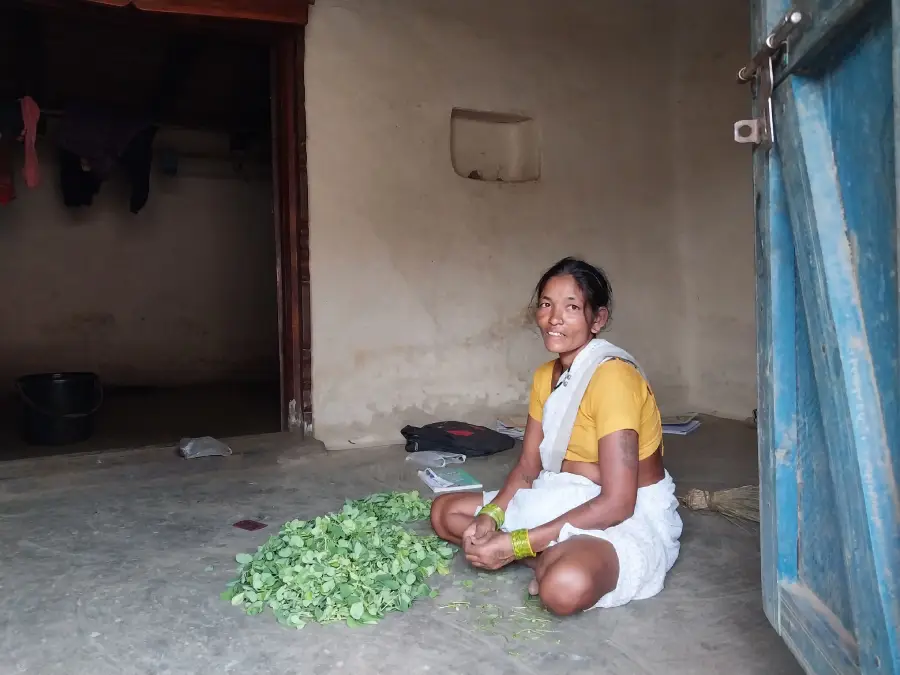
According to Grig, the Soliga tribe in the BRT Hills Tiger Reserve of Karnataka is an example of coexistence between tigers and tribals, who have had their forest rights recognised.
In the first tiger census after the Soligas achieved the unprecedented step of having their community forest rights recognised inside a tiger reserve, the number of tigers in BRT Hills Tiger Reserve increased above the national average.
“In the rest of India tiger numbers had increased by 30 percent, but in the Soliga-dominated forests the increase was more than double. The best way to protect India’s forests and tigers is to recognise the rights of tribals.”
BRT has 37 tigers, while around 60 tigers utilise the reserve.
Despite the contentious issue of relocation, tiger reserves have addressed climate change, increased biodiversity and opened up livelihood options for local people. India’s tiger success has also inspired other countries such as Cambodia to import tigers from India.
The Asian country is preparing to reintroduce tigers after nearly two decades without a confirmed wild population. Even neighbouring Bangladesh has plans to translocate tigers in the tribal-dominated Chittagong Hill Tracts in the near future. At present, there are no tigers in this rugged, hilly area, and all its tigers are confined to the Sundarbans.
In places such as Sariska Tiger Reserve and the Nagarjunasagar-Srisailam Tiger Reserve, engagement with local youths has paid off. In Nagarjunasagar-Srisailam Tiger Reserve, which is India’s largest tiger reserve, 250 youths from the Chenchu tribe are an integral part of anti-poaching operations and tiger-tracking efforts.
There were 63 tigers in Nagarjunasagar-Srisailam, according to the 2022 All-India Tiger Estimation report. The tiger population has now reached 87, according to media reports.
This shows how working with communities can help in long-term conservation efforts.