



• About
  • Editor & Writers
  • Contact
  • Sitemap
No Result
View All Result
Support Our Mission
Saturday, October 17, 2026
The Indian Tribal
  • Home
  • Achievers
    • उपलब्धिकर्ता
  • Cuisine
    • खान पान
  • Health
    • स्वास्थ्य
  • Legal
    • कानूनी
  • Music
    • संगीत
  • News
    • Updates
    • खबरें
  • Sports
    • खेलकूद
  • Variety
    • विविध
  • हिंदी
    • All
    • आदिवासी
    • उपलब्धिकर्ता
    • कला और संस्कृति
    • कानूनी
    • खबरें
    • खान पान
    • खेलकूद
    • जनजाति
    • भारत
    • विविध
    • संगीत
    • संस्कृति
    • स्वास्थ्य
    The Indian Tribal

    ओडिशा के आदिवासी हाटों से पोषण की नई पहल, स्वस्थ भोजन और स्वच्छता पर जोर

    The Indian Tribal

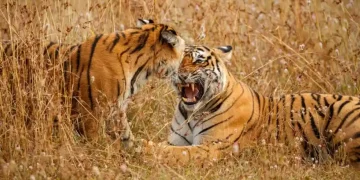
    भारत के टाइगर रिजर्व के सामने नई चुनौती: संरक्षण, आदिवासी अधिकार और पर्यटन का बढ़ता दबाव

    The Indian Tribal

    मेघालय के आदिवासी समुदाय बचा रहे जंगल और जल स्रोत, बालपाक्रम राष्ट्रीय उद्यान में संरक्षण की नई मिसाल

    The Indian Tribal

    ओडिशा के नबरंगपुर में आदिवासी किसानों की मक्का खेती ने कैसे बदली तस्वीर

    The Indian Tribal

    छत्तीसगढ़ में आदिवासी ट्रैकर्स और AI मिलकर बचा रहें हैं दुर्लभ वन्यजीव

    The Indian Tribal

    हाशिए से राष्ट्रीय केंद्र तक: बदल रही है भारत के आदिवासी समुदायों की कहानी

    The Indian Tribal

    शिक्षा, वन उपज में मूल्य संवर्धन से आदिवासी समुदायों के आर्थिक सशक्तीकरण की नई राह

    The Indian Tribal

    मणिपुर में संघर्ष के बीच आदिवासी कोचों ने संभाली नई पीढ़ी के खिलाड़ियों की कमान

  • Gallery
    • Videos
  • Latest News
The Indian Tribal
  • Home
  • Achievers
    • उपलब्धिकर्ता
  • Cuisine
    • खान पान
  • Health
    • स्वास्थ्य
  • Legal
    • कानूनी
  • Music
    • संगीत
  • News
    • Updates
    • खबरें
  • Sports
    • खेलकूद
  • Variety
    • विविध
  • हिंदी
    • All
    • आदिवासी
    • उपलब्धिकर्ता
    • कला और संस्कृति
    • कानूनी
    • खबरें
    • खान पान
    • खेलकूद
    • जनजाति
    • भारत
    • विविध
    • संगीत
    • संस्कृति
    • स्वास्थ्य
    The Indian Tribal

    ओडिशा के आदिवासी हाटों से पोषण की नई पहल, स्वस्थ भोजन और स्वच्छता पर जोर

    The Indian Tribal

    भारत के टाइगर रिजर्व के सामने नई चुनौती: संरक्षण, आदिवासी अधिकार और पर्यटन का बढ़ता दबाव

    The Indian Tribal

    मेघालय के आदिवासी समुदाय बचा रहे जंगल और जल स्रोत, बालपाक्रम राष्ट्रीय उद्यान में संरक्षण की नई मिसाल

    The Indian Tribal

    ओडिशा के नबरंगपुर में आदिवासी किसानों की मक्का खेती ने कैसे बदली तस्वीर

    The Indian Tribal

    छत्तीसगढ़ में आदिवासी ट्रैकर्स और AI मिलकर बचा रहें हैं दुर्लभ वन्यजीव

    The Indian Tribal

    हाशिए से राष्ट्रीय केंद्र तक: बदल रही है भारत के आदिवासी समुदायों की कहानी

    The Indian Tribal

    शिक्षा, वन उपज में मूल्य संवर्धन से आदिवासी समुदायों के आर्थिक सशक्तीकरण की नई राह

    The Indian Tribal

    मणिपुर में संघर्ष के बीच आदिवासी कोचों ने संभाली नई पीढ़ी के खिलाड़ियों की कमान

  • Gallery
    • Videos
  • Latest News
No Result
View All Result
The Indian Tribal
No Result
View All Result
  • Home
  • Achievers
  • Cuisine
  • Health
  • Legal
  • Music
  • News
  • Sports
  • Variety
  • हिंदी
  • Gallery
  • Latest News
Support Our Mission
Home » The Indian Tribal / News » The Supreme Court Ruling That Led To Bharat Bandh

The Supreme Court Ruling That Led To Bharat Bandh

The National Confederation of Dalit and Adivasi Organisations (NACDAOR) called for the Bandh and mainline parties like the Congress, RJD, BSP, SP, JMM lost no time in backing it. The Indian Tribal gives you a lowdown on the whole issue which has its genesis some 49 years ago

August 21, 2024
Bharat Bandh

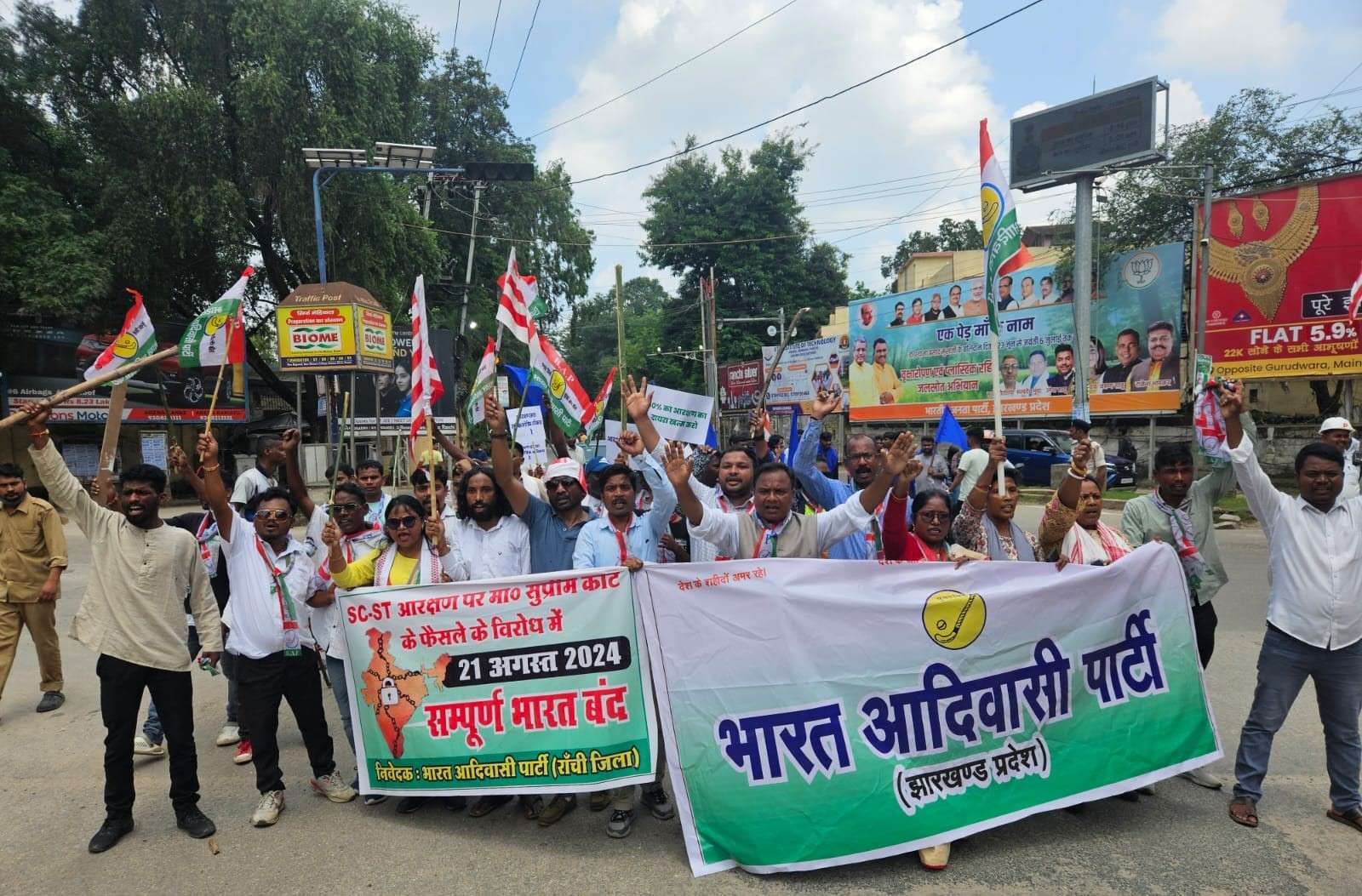
Bharat Bandh Supporters In Jharkhand

New Delhi

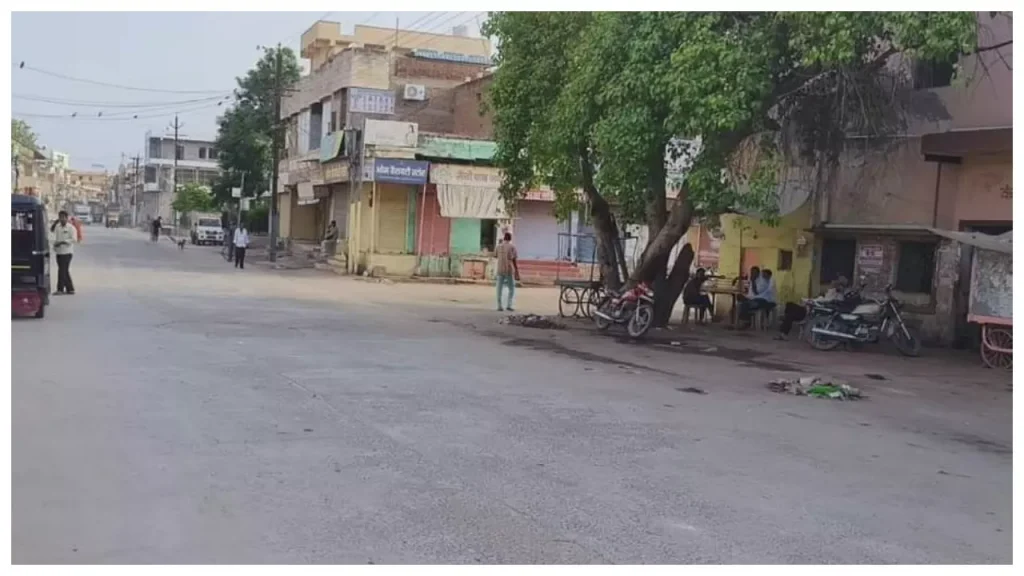
The day-long Bharat Bandh, on the call of the National Confederation of Dalit and Adivasi Organisations (NACDAOR), on Wednesday evoked a strong response in several States with rail and road traffic also severely affected in some regions.

The Bandh was called as a mark of protest against the recent Supreme Court ruling by a seven-judge bench led by Chief Justice DY Chandrachud allowing States to make further sub-classifications within the Scheduled Castes and Scheduled Tribes to ensure that the benefits of reservation reach the last mile.

THE SUPREME COURT RULING IN SHORT

On August 1, a seven-judge bench of the Supreme Court headed by Chief Justice of India, in a 6:1 ruling, permitted States to create sub-classifications within the Scheduled Caste (SC) and Scheduled Tribe (ST) categories for the purpose of according wider protections, through fixed sub-quotas, to the most backward communities within these categories.

The sub-classification is for reservation in educational institutions and public employment.

The Supreme Court also called for exclusion of the creamy layer from the ambit of Scheduled Caste/Scheduled Tribe reservation.

NACDAOR’s KEY DEMANDS:

1) The Centre should reject the Supreme Court’s August 1 judgement, claiming that it threatens the constitutional rights of the SCs and STs.

2) Enact a new Act of Parliament to address reservations for SCs, STs and OBCs. Rhis Act should be included in the Ninth Schedule of the Constitution to shield these provisions from judicial interference.

3)  Immediate release of caste-based data on SC/ST/OBC employees in Government services to ensure their accurate representation.

4) Recruit judicial officers and judges from all sections of society to achieve 50 per cent representation of marginalised communities in the higher judiciary.

5) Address and fil all backlog vacancies in Central, State government departments and PSUs.
Bharat Bandh
A Deserted Road In Bihar Due To Bharat Bandh

CENTRE’S STAND

The Union Cabinet discussed the issue and rejected the Supreme Court’s call for exclusion of the creamy layer from the ambit of Scheduled Caste/Scheduled Tribe reservation. Following the Cabinet meeting, Union Minister Ashwini Vaishnaw said, “According to the Constitution given by B R Ambedkar, there is no provision for a creamy layer in the SC/ST reservation.” He said the provision for SC/ST reservation should be in accordance with the Constitution.

Earlier, the BJP’s SC/ST MPs also met Prime Minister Narendra Modi and apprised him of their concern regarding the creamy layer. The PM assured them that the Government would not take any step in this direction.

THE GENESIS

The Supreme Court’s latest ruling has roots dating back to 1975 when the then Punjab Government issued a notification giving first preference in SC reservations to two of the most backward communities in the State namely Balmiki and Mazhabi Sikh.

This was challenged in 2004 after the Supreme Court struck down a similar law in Andhra Pradesh in E V Chinnnaiah.

The apex court had held that any attempts to create a differentiation within the SC list would essentially amount to tinkering with it, for which the Constitution did not empower States. Article 341 only empowers the President to issue such a notification, and Parliament to make additions or deletions to the list. The court also said that sub-classifying SCs violates the right to equality under Article 14.

Based on this ruling, in 2006, the Punjab & Haryana High Court in Dr. Kishan Pal v State of Punjab struck down the 1975 notification. However, the very same year, the Punjab government again passed the Punjab Scheduled Caste and Backward Classes (Reservation in Services) Act, 2006, reintroducing the first preference in reservations for the Balmiki and Mazhabi Sikhs.

This Act was then challenged by Davinder Singh, a member of a non-Balmiki, non-Mazhabi Sikh SC community. The HC, in 2010, struck down the Act and this led to an appeal in the Supreme Court.

In 2014, the case was referred to a five-judge Constitution Bench to determine if the E V Chinnaiah decision had to be reconsidered.
Supreme court of India
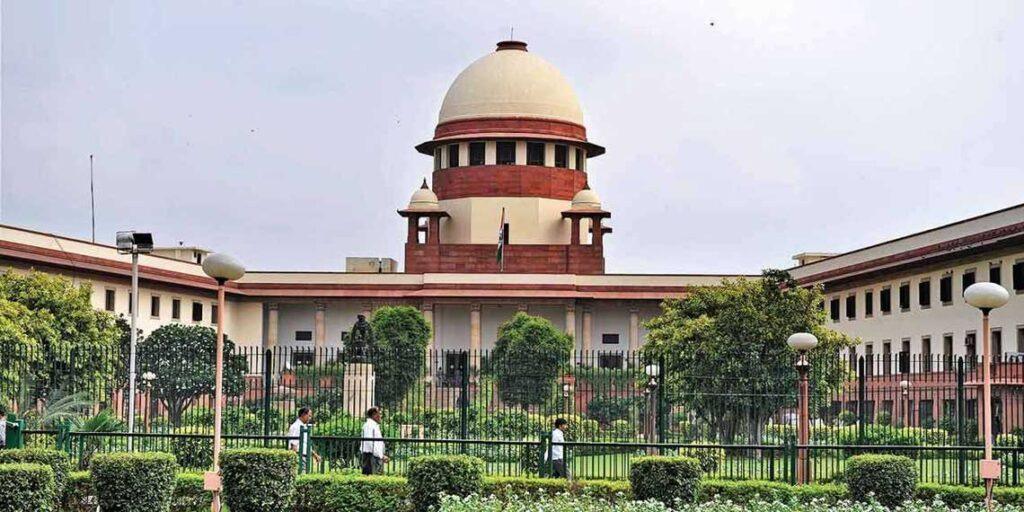
Supreme Court Of India

In July 2020, the Constitution bench began hearings. But since a bench of a constitutional court cannot overrule a previous judgment by a bench of the same strength, the five-judge bench referred the matter to a seven-judge bench.

On August 1, the seven-judge bench, in a 6:1 ruling, delivered its verdict.

The lone dissenter, Justice Bela Trivedi, upheld the correctness of the Supreme Court’s 2004 judgment and noted that the Scheduled Castes and Scheduled Tribes lists could not be changed by States

POLITICAL IMPLICATIONS

While no Government would dare tinker with the existing reservation system in India, knowing fully well the adverse implications and ramifications it has, a sub-classification move too is fraught with grave perils.

With a verdict in the recent Lok Sabha polls that greatly diminished its overwhelming stature, the BJP has already signalled its intent of not going by the SC ruling vis a vis the creamy layer, though it is yet to officially declare its position on the sub-classification.

In its 10 years of rule, the Modi government has been successful in its Dalits, Tribals, OBCs’ outreach and is unlikely to risk losing them with any move along the SC ruling.

Moreover, there is the impending elections in States like Jharkhand, Maharashtra and the UT of Jammu and Kashmir where there is a considerable tribal population.

Then again, the INDIA Alliance has successfully dented the BJP’s electoral fortunes by projecting it as a threat to the Constitution and put it on the backfoot with its unrelenting demand for a caste-census.

The SC ruling is more focused on reservation to the Scheduled Castes, which have a considerable sway across almost all the States in the country. There are divergent views on the sub-classification issue among the Dalits, some groupings supporting the ruling, but overall it has presented yet another opportunity for the Opposition to put the Government in a tight spot and reap political dividends.


Root Woot | Online Puja Samagri Root Woot | Online Puja Samagri Root Woot | Online Puja Samagri

Support Our Mission

The Indian Tribal

For the past four-and-a-half years, we have travelled across India to bring to our readers the ‘Unknown, Lesser-Known Tribal Life’, which rarely finds space in the mainstream media.

We have done this without external funding, driven only by our conviction that India’s tribal heritage deserves to be documented with dignity, depth and authenticity.

If you like our work, and if it has informed, inspired or helped you understand India’s tribal/indigenous communities better, we invite you to become a part of this mission.

Your contribution will not merely fund a news platform. It will help preserve voices, traditions, histories and aspirations that form an invaluable part of India’s identity.

Because when an untold story is documented, a piece of India’s heritage is preserved forever.

Thanks
Editor

In Numbers

49.4 %
Female Literacy rate of Scheduled Tribes

Update

MoTA, Karmayogi Bharat join hands to empower tribals

The Ministry of Tribal Affairs (MoTA) and Karmayogi Bharat have signed a Memorandum of Understanding (MoU) to develop and operate the Tribal Affairs Capacity Building Platform under the iGOT Karmayogi framework. The MoU extends the capacity-building framework of Mission Karmayogi, hitherto focused on civil servants, to Adi Karmayogi Volunteers (AKVs) and functionaries responsible for implementing tribal development schemes at the grassroots level. The initiative is part of the Adi Karmayogi Abhiyan, under which the Ministry is institutionalising over 76,000 Adi Sewa Kendras (ASKs) and a network of over 1,54,000 AKVs as sustainable village-level platforms for facilitation, citizen engagement and last-mile convergence. According to data reported by States on the portal, 60,507 ASKs and 1,22,072 AKVs have been registered so far.
The Indian Tribal
आदिवासी

भारत के टाइगर रिजर्व के सामने नई चुनौती: संरक्षण, आदिवासी अधिकार और पर्यटन का बढ़ता दबाव

by The Indian Tribal
October 7, 2026

भारत में बाघ संरक्षण की मुहिम ने आदिवासी समुदायों और वनवासियों के विस्थापन के सवाल को भी सामने ला दिया है। वहीं, टाइगर रिजर्व में बढ़ता पर्यटन संरक्षण, वन अधिकार और स्थानीय समुदायों की भूमिका को लेकर नई बहस को जन्म दे रहा है, विश्लेषण किया है दीपन्विता [...]

The Indian Tribal

Maoists Gone, Chhattisgarh Turns Former Security Base Into Tribal Hostels

October 5, 2026
The Indian Tribal

Discover The Treasures Of Odisha’s Purvasha Folk And Tribal Art Museum

October 3, 2026
The Indian Tribal

Tana Bhagat Movement, Gandhi And Congress: The Nationalist Story Behind The History

September 30, 2026
The Indian Tribal

The Story Of Tana Bhagats  Hidden Between Colonial Records And Tribal Memory

September 29, 2026
The Indian Tribal

Tana Bhagat Movement: How A Tribal Resistance Challenged Colonial Rule And Social Hierarchies

September 28, 2026
Previous Post

Non-Tribal Engineer Makes Tourists Explore Adivasi Culture

Next Post

आधुनिक खेलों की चमक में गुम हुआ यह दिलचस्प आदिवासी खेल

Top Stories

The Indian Tribal
आदिवासी

ओडिशा के आदिवासी हाटों से पोषण की नई पहल, स्वस्थ भोजन और स्वच्छता पर जोर

October 15, 2026
The Indian Tribal
Achievers

Meet Rajasthan’s ‘Seed Mother’ Reviving Traditional Millets And Tribal Farming

October 12, 2026
The Indian Tribal
Adivasi

Over 11 Lakh Forest Rights Claims Pending Across India, States Told To Fast-Track Disposal

October 10, 2026
Load More
  • About Us
  • Editor & Writers
  • Contact
  • Redressal
  • Copyright Policy
  • Privacy Policy And Terms Of Use
  • Disclaimer
  • Sitemap

  • Achievers
  • Cuisine
  • Health
  • India
  • News
  • Legal
  • Music
  • Sports
  • Trending
  • Chhattisgarh
  • Delhi
  • Gujarat
  • Jammu & Kashmir
  • Jharkhand
  • Kerala
  • Madhya Pradesh
  • Maharashtra
  • North East
  • Arunachal Pradesh
  • Assam
  • Manipur
  • Meghalaya
  • Mizoram
  • Nagaland
  • Sikkim
  • Tripura
  • Odisha
  • Telangana
  • West Bengal
  • Political News
  • Variety
  • Art & Culture
  • Entertainment
  • Adivasi
  • Tribal News
  • Scheduled Tribes
  • हिंदी
  • उपलब्धिकर्ता
  • कानूनी
  • खान पान
  • खेलकूद
  • स्वास्थ्य
  • संस्कृति
  • संगीत
  • विविध
  • कला और संस्कृति
  • खबरें
  • असम
  • अरुणाचल प्रदेश की ताज़ा ख़बरें
  • ओडिशा
  • केरल
  • गुजरात
  • छत्तीसगढ़
  • जम्मू और कश्मीर
  • झारखंड
  • तेलंगाना
  • दिल्ली
  • नॉर्थईस्ट
  • पश्चिम बंगाल
  • मध्य प्रदेश
  • महाराष्ट्र
  • त्रिपुरा
  • नागालैंड
  • मणिपुर
  • मिजोरम की ताज़ा ख़बरें
  • मेघालय
  • सिक्किम की ताज़ा ख़बरें
  • राजस्थान

About Us

The Indian Tribal is India’s first bilingual (English & Hindi) digital journalistic venture dedicated exclusively to the Scheduled Tribes. The ambitious, game-changer initiative is brought to you by Madtri Ventures Pvt Ltd (www.madtri.com). From the North East to Gujarat, from Kerala to Jammu and Kashmir — our seasoned journalists bring to the fore life stories from the backyards of the tribal, indigenous communities comprising 10.45 crore members and constituting 8.6 percent of India’s population as per Census 2011. Unsung Adivasi achievers, their lip-smacking cuisines, ancient medicinal systems, centuries-old unique games and sports, ageless arts and crafts, timeless music and traditional musical instruments, we cover the Scheduled Tribes community like never-before, of course, without losing sight of the ailments, shortcomings and negatives like domestic abuse, alcoholism and malnourishment among others plaguing them. Know the unknown, lesser-known tribal life as we bring reader-engaging stories of Adivasis of India.

Follow Us

All Rights Reserved

© 2026 Madtri Ventures [P] Ltd.

No Result
View All Result
  • Home
  • Achievers
  • Cuisine
  • Health
  • Health
  • Legal
  • Music
  • News
  • Sports
  • Variety
  • हिंदी
    • उपलब्धिकर्ता
    • खान पान
    • कानूनी
    • खेलकूद
    • खेलकूद
    • संगीत
    • संगीत
    • स्वास्थ्य
    • स्वास्थ्य
    • विविध
  • Gallery
  • Videos

© 2026 Madtri Ventures [P] Ltd.