







NEW DELHI
When Birsa Munda challenged colonial authority in the closing years of the 19th century, the central issue was the loss of Adivasi control over ancestral land and traditional resources. More than a century later, the conflict has assumed new forms. Mining leases, forest diversion, infrastructure projects and competing claims over natural resources have brought communities across India’s tribal regions into disputes over the future of their territories.
The question is no longer confined to who owns an agricultural plot. It increasingly concerns who controls forests, hills, minerals, water sources and community spaces, and whether the people whose lives are rooted in these landscapes have a meaningful voice in decisions affecting them.
Two developments illustrate the continuing national significance of this issue: the Dongria Kondh community’s struggle over Odisha’s Niyamgiri hills and the continuing controversy surrounding coal mining in Chhattisgarh’s Hasdeo Arand forest.
Niyamgiri: When A Sacred Landscape Became A National Land-Rights Issue
Vedanta’s proposed bauxite mining project in the Niyamgiri hills of Odisha became one of India’s most important cases involving tribal rights, forest protection and industrial development.
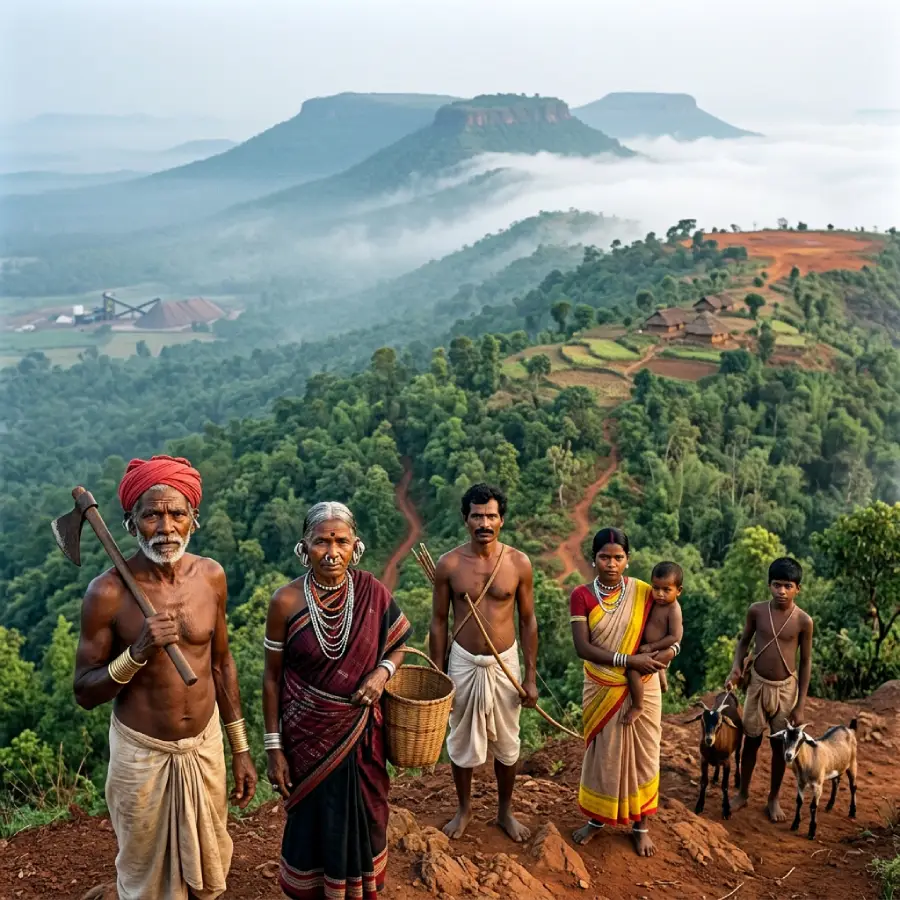
The hills are central to the cultural and religious life of the Dongria Kondh, a Particularly Vulnerable Tribal Group. Their relationship with the landscape extends beyond agriculture and forest-based livelihoods to customary practices and religious beliefs associated with Niyam Raja.
The proposed mining project involving the Odisha Mining Corporation and Vedanta-related operations raised questions about the diversion of forest land, community rights and the impact of mining on the traditional habitat of the Dongria Kondh and other forest-dwelling communities.
The dispute reached the Supreme Court in Orissa Mining Corporation Ltd v. Ministry of Environment and Forests, decided on April 18, 2013.
The Court directed that Gram Sabhas in the affected region determine whether the proposed mining would affect the religious, cultural and community rights of the Dongria Kondh, Kutia Kondh and other forest dwellers. The judgment recognised that the relationship between Adivasi communities and their traditional territories could not be reduced to conventional property rights. The Court observed that Scheduled Tribes and other traditional forest dwellers have a right to maintain their “distinctive spiritual relationship” with lands traditionally owned, occupied or used by them.
The Court also recognised the role of Gram Sabhas under the Forest Rights Act and PESA in safeguarding customary and religious rights.
Following the judgment, 12 Gram Sabhas were held in five villages in Kalahandi district and seven in Rayagada district. All 12 unanimously rejected the proposed mining activity on Niyamgiri.
The Ministry of Environment and Forests subsequently did not grant the Stage-II forest clearance required for the proposed bauxite mining project. Niyamgiri became an important demonstration of how statutory forest rights, community institutions and judicial intervention could influence decisions concerning tribal territories.
It also established an important distinction: the question was not simply whether a mining project could generate revenue, but whether the rights of the people whose cultural and religious existence was connected to the landscape had been properly recognised.
Hasdeo: The Cost Of India’s Mineral And Energy Requirements
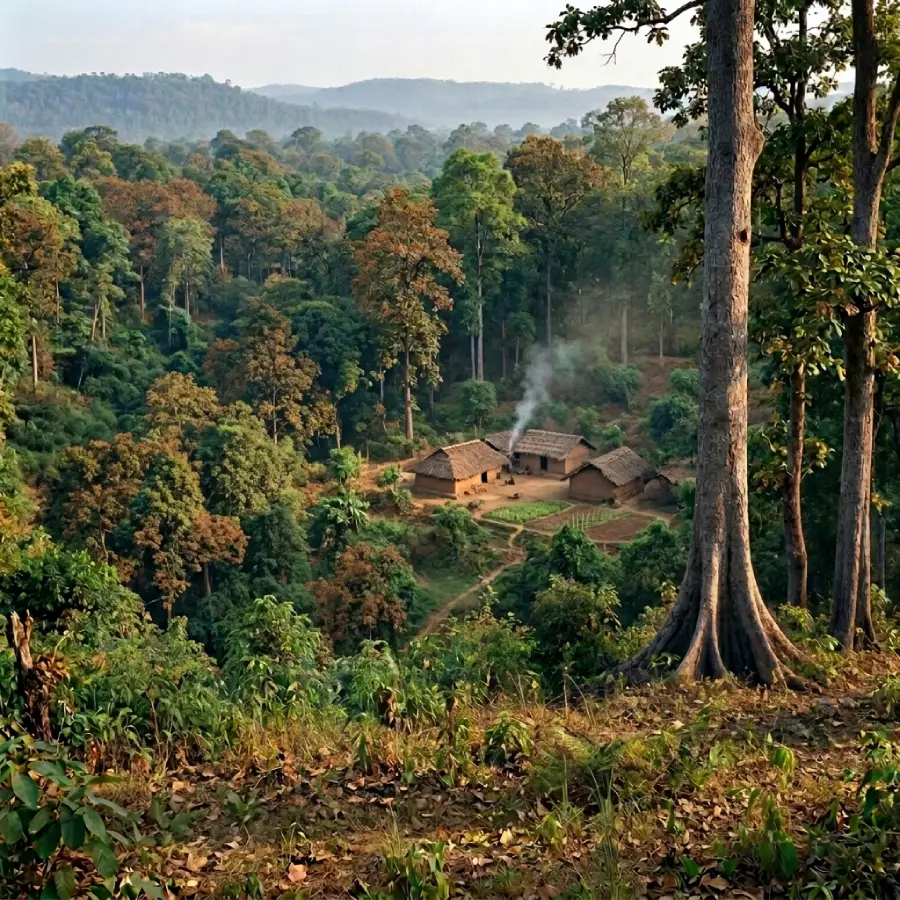
The Hasdeo Arand forest region in Chhattisgarh presents a different but equally significant dimension of the land question. Located in northern Chhattisgarh, Hasdeo Arand is a large forest landscape with ecological significance and Adivasi settlements dependent on agriculture and forest resources.
The region has been at the centre of a prolonged debate over coal extraction, biodiversity conservation, forest diversion and the rights of local communities.
In May 2026, the Forest Advisory Committee granted in-principle, or Stage-I, approval for the diversion of 1,742.6 hectares of forest land for the Kente Extension coal block.
The proposal involves the phased felling of 4,48,874 trees, according to the official forest appraisal documents. The project is proposed by Rajasthan Rajya Vidyut Utpadan Nigam Limited, which was allotted the coal block for captive coal requirements. Adani Group has been identified as the mine developer and operator in the project reporting.
The project documents classify the proposed forest area within a high-conservation-value category under the government’s decision-support assessment. The proposed diversion has raised concerns among environmental groups and local communities over forest loss, wildlife movement, livelihoods and the implications for the wider Hasdeo landscape.
The authorities and project proponents point to the country’s energy requirements and the conditions attached to forest approvals. Opponents have questioned the ecological and social consequences of opening another mining area in the forest region.
It is important to distinguish the in-principle Stage-I approval from final forest diversion permission. The former does not, by itself, establish that every subsequent statutory requirement has been completed or that mining operations have been authorised to commence.
Hasdeo, therefore, illustrates a continuing policy challenge: how should India balance its energy requirements with forest conservation, tribal rights and the long-term interests of communities living in mineral-rich regions?
Samatha Judgment: A Judicial Safeguard Against Tribal Land Alienation
In 1997, the Supreme Court delivered a significant judgment in Samatha v. State of Andhra Pradesh, concerning mining leases in Scheduled Areas of Andhra Pradesh. The case involved the grant of mining leases to non-tribal private entities in Scheduled Areas and the interpretation of the Andhra Pradesh Scheduled Areas Land Transfer Regulation, 1959, as amended in 1970.
The Supreme Court upheld the restrictions under the applicable Andhra Pradesh regulation against transfers of land in Scheduled Areas to non-tribals, including the government-land leasing issue involved in the case.
The judgment emphasised the constitutional objective of protecting tribal communities from losing possession and enjoyment of their land.
It also addressed the competing claims of mineral development and tribal welfare, stressing that exploitation of natural resources must be consistent with the constitutional responsibility to protect and empower tribal communities.
The decision is important, but its legal application must be understood in context. It interpreted the specific Andhra Pradesh Scheduled Areas land-transfer regulation and should not be presented as a blanket prohibition governing every mining project in every tribal area of India.
Together, the Samatha and Niyamgiri judgments demonstrate that tribal land protection is not merely an administrative policy concern. It has been examined as a matter of constitutional obligations, statutory rights and judicially enforceable safeguards.
Common Thread: Development Without Dispossession
The examples from Odisha, Chhattisgarh and Andhra Pradesh reflect different legal and geographical circumstances. Yet, they raise a common question about the distribution of development’s benefits and costs.
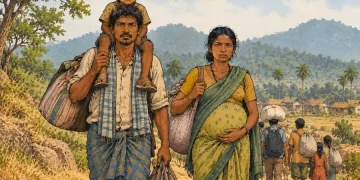
Mining projects may supply minerals, generate electricity, create infrastructure and contribute to industrial production. But communities living in the affected areas may face loss of farmland, forest access, traditional occupations and social networks. The consequences of displacement can extend beyond the immediate family receiving compensation. A village may lose access to grazing land, minor forest produce, water sources, sacred groves, burial grounds and other community resources.
For forest-dependent households, such losses can undermine livelihood security even when some financial compensation is paid.
This is why land acquisition and forest diversion cannot be evaluated solely through the value of the land or the amount of compensation distributed.
A meaningful assessment must also examine whether customary rights have been recognised, whether the affected communities have been consulted in accordance with applicable laws, whether rehabilitation restores sustainable livelihoods and whether the community retains access to essential resources.
The question of women’s rights also deserves attention. Women often depend directly on forests, agriculture and common resources, but their names may not appear in formal land records or compensation arrangements. Their participation in Gram Sabha decisions is therefore essential to a fair assessment of community interests.
Not An Identical Conflict Everywhere
In Scheduled Areas under the Fifth Schedule, land transfers and local governance are governed by specific constitutional and state-level safeguards. In areas covered by the Sixth Schedule, autonomous district and regional councils exercise powers under a different constitutional framework.
Other tribal communities depend on customary landholding systems or forest rights that may not be fully reflected in conventional revenue records. The legal position of a Dongria Kondh village in Odisha, a community in a coal-bearing forest in Chhattisgarh and a tribal village in a northeastern autonomous district is therefore not necessarily the same. What connects these experiences is the need to recognise the relationship between land, community identity, livelihood and self-governance.
Birsa Munda’s Ulgulan was a struggle against the loss of that relationship. The contemporary examples show why the question has not disappeared with the end of colonial rule.
But the existence of protective judgments and legislation raises another question: if the law recognises community rights, why do so many communities still struggle to establish, secure and exercise them?
Continued…