





Daltonganj/New Delhi
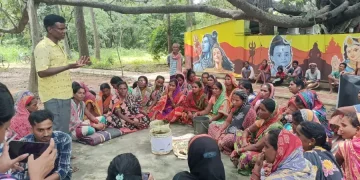
As the Palamau Tiger Reserve in Jharkhand prepares to introduce females from Madhya Pradesh to increase its tiger population, following approval from the National Tiger Conservation Authority, the State Forest Department has wooed the Reserve’s residents to participate in the conservation story.
To achieve this step, a collaboration has been launched with tribal residents to conserve sacred groves, and link these biodiverse areas of faith to the Wagh Devta or the tiger deity, already popular in folklore.
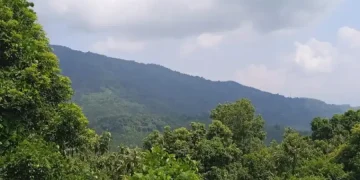
Spread across Palamau and Latehar districts of Jharkhand, the 1,130 sq km tiger reserve, established in 1960, is one of the oldest in India and has inspired filmmakers and writers.
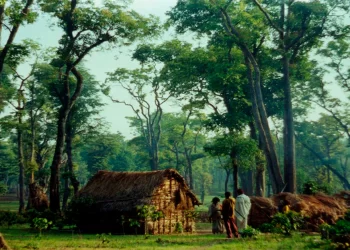
The Kechki forest rest house, which lies in the village by the same name at the confluence of the North Koel and the Auranga rivers in the buffer zone of the reserve, was used as the setting in Satyajit Ray’s 1970 film Aranyer Din Ratri (Days and Night in the Forest). The film’s 4K-restored version was showcased at the Cannes Film Festival last year.
DS Srivastava, who has worked for many years in and around the Palamau Tiger Reserve, and runs the NGO Nature Conservation Society, shared that sacred groves are present in almost every village in the region. Srivastava is also a well-known expert on India’s human-elephant conflict.
Reviving Sacred Groves And The Tiger Deity
According to the tiger reserve’s deputy director Prajesh Kanta Jena, it has about 60 percent of tribal population, and as a result, the conservation of the sarnas or sacred groves is important. While the critical habitat area has 33 villages, there are 150 others outside in the buffer zone. Of the 33, seven are on the relocation radar this year.
“The tribals always take part in nature worship. In my division, every festival starts with certain rituals in the sarnas. As people had already taken care of them through generations, these remain more or less protected. But the Forest Department has started the Parab Bhagidari concept, under which forest staff and local residents jointly celebrate rituals and festivals as part of a shared participation,” the Indian Forest Service officer explained to The Indian Tribal.
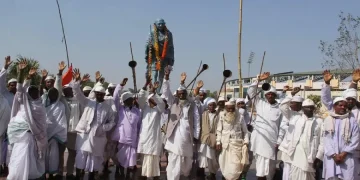
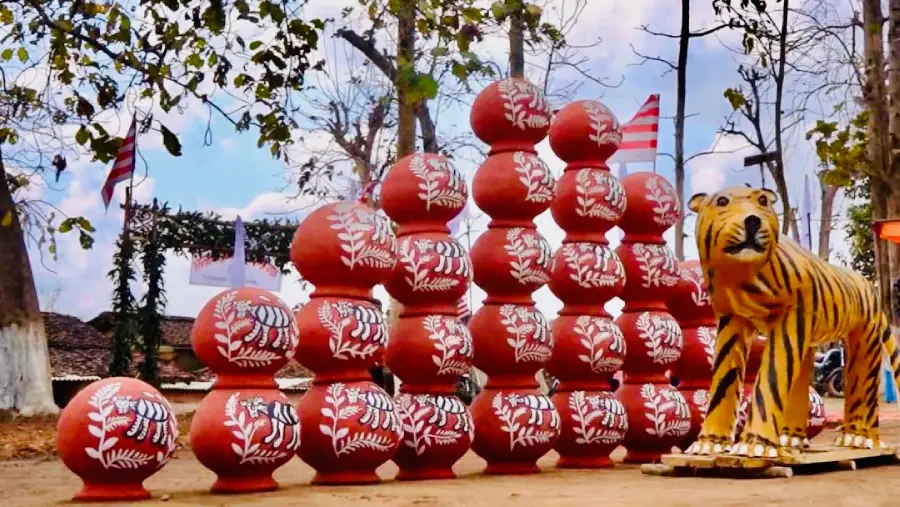
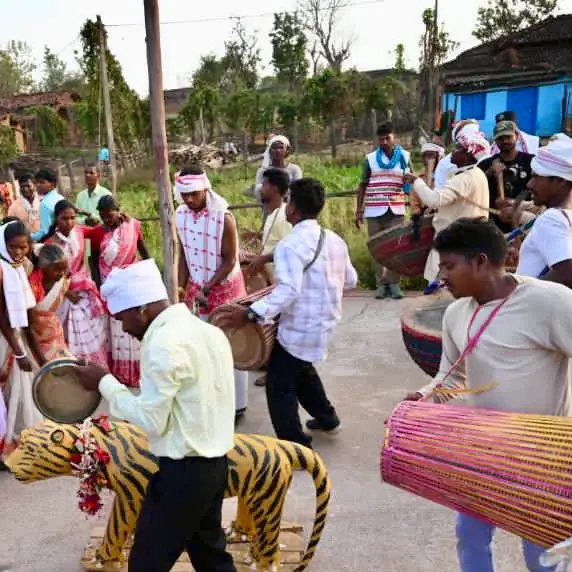
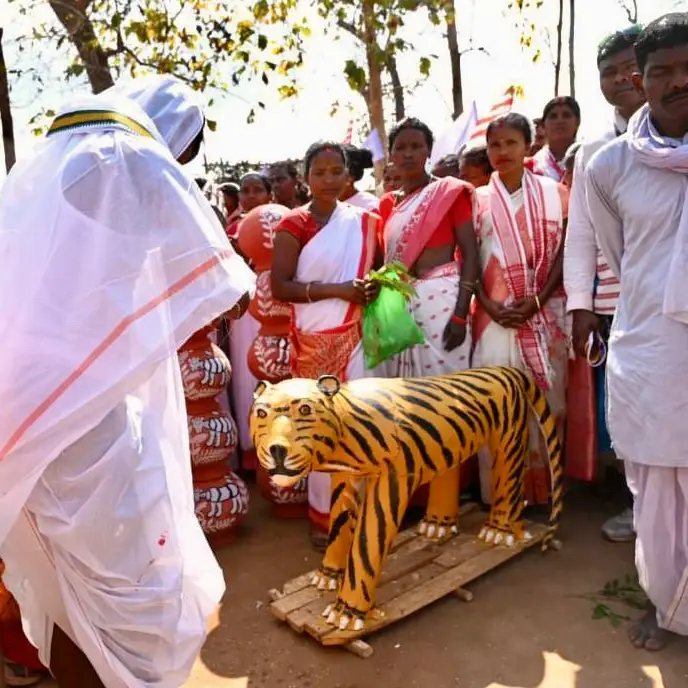
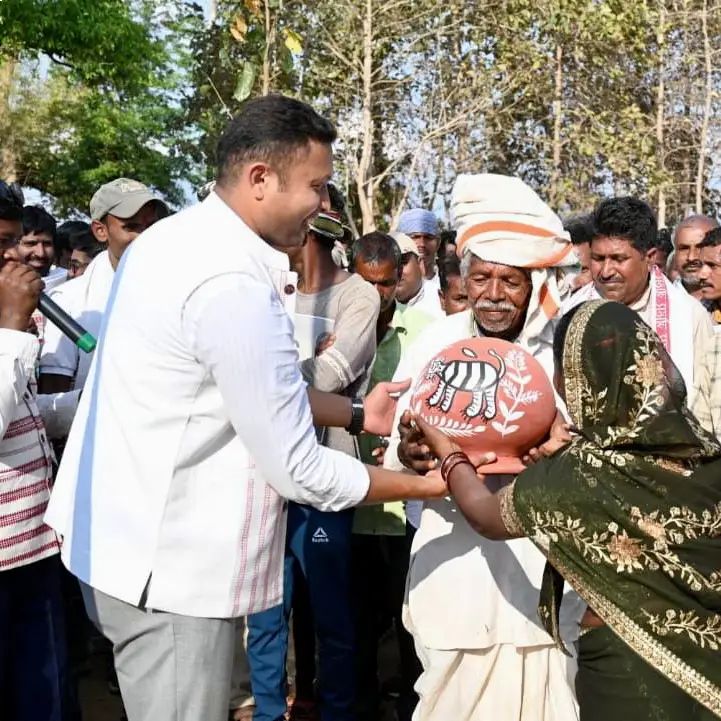
As tiger conservation is an important objective, and with Palamau trying to increase its numbers, the tribal residents worked together with the Forest Department on the occasion of Sarhul festival in March. During that time, they placed clay pots with hand-painted tiger images to pay respect to the Wagh Devta in the sarna at Lat gram panchayat which acts as a vital tiger corridor, informed ranger Ajay Toppo posted in the Palamau Tiger Reserve North Division. The people accept tigers as an integral part of the ecosystem.
Jena explained that this was an important step: The tiger was always a part of the folklore, but gradually disappeared from village narratives, as the population of the big cat plummeted over the years in Palamau.
“The Department wanted to bring these tiger stories back once more through the collective memory and oral tradition of the elderly people. The new generation knows much less about tigers and their place in folklore,” he said.
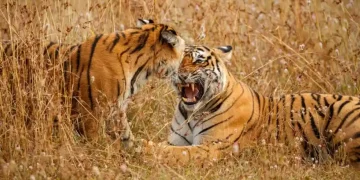
Interestingly, tigers have reappeared on the scene once more. Though the 2023 All-India Tiger Estimation Report lists only one tiger in Palamau, currently seven animals are utilising the reserve.
The forest officer shared that these tigers came to Palamau after 2022, possibly from Madhya Pradesh, to utilise the reserve through the corridor which is active and links Bandhavgarh and Guru Ghasidas-Tamor Pingla tiger reserves in central India to Jharkhand. Jena feels it is a good sign.
“Unlike Panna and Sariska where tigers had to be reintroduced from scratch after they were wiped out, tigers are coming to Palamau naturally. This is because males go outside and explore and establish new territories. To augment the population, two females and one male from Bandhavgarh will be introduced in the monsoon or post-monsoon season due to a similarity in the landscapes.”
Gherabandi Scheme Of Protecting Sacred Groves
Around 2019-2020, the Jharkhand government started the gherabandi scheme, as part of which boundary walls and gates were added to sarnas to offer protection from encroachment. But till now, all sarnas have not been covered under the scheme.
Satish Chandra Biruli, a resident of Barkundia village in West Singhbhum district, acts as the deuri or the priest in the village desauli or jaherthan. In the Ho-dominated West Singbhum, sarnas are known by these two names. In every sarna across Jharkhand, the Sing Bonga, the tribal deity, who resides in the Sal tree, is invoked.
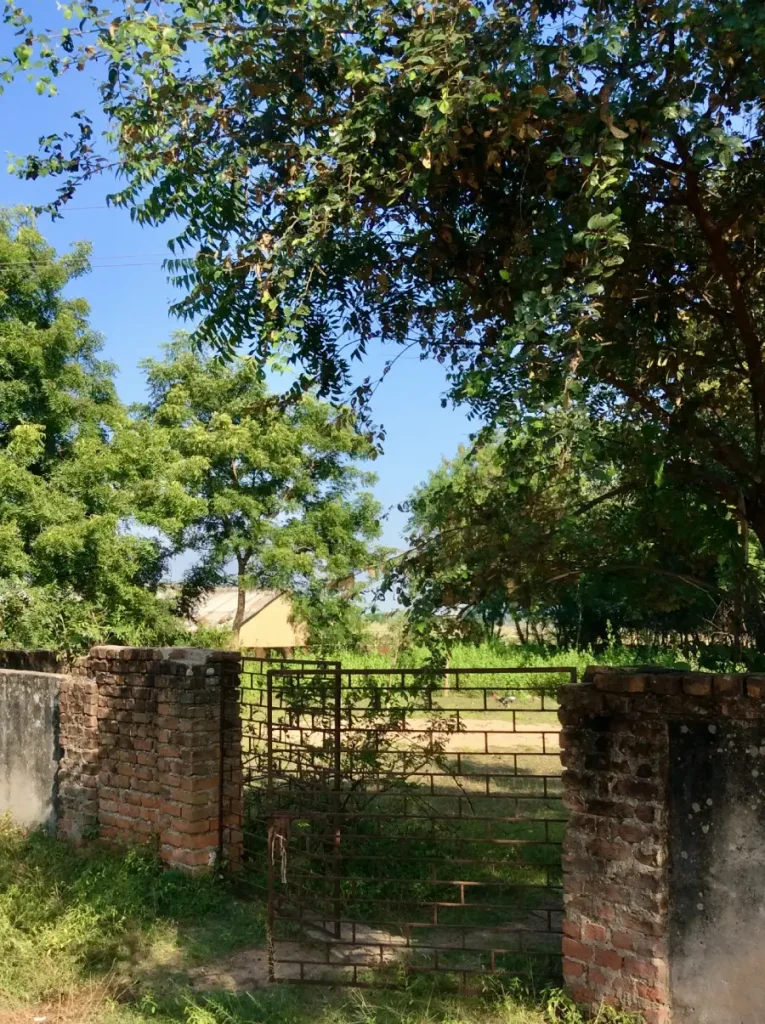
Though Biruli feels that walls can offer protection to the sacred site in his village, a meeting has to be conducted for approval of the gherabandi scheme and also divine permission sought for the move.
Biruli, who is the third-generation priest in his family after his grandfather and father, said that many years ago, a deuri was given land for cultivation in the village, but gradually it expanded towards the sacred grove. This is one of the reasons why he feels that walls can offer some degree of protection against encroachment.
Retired teacher Bagan Bodra, who lives in Tambo in West Singhbhum, informed that in his village the gherabandi work had been completed. “Earlier, people used to make the sacred grove area dirty. But now, it is safe and clean. The village offers worship during the Maghe and the Baha festivals.”
Dobro Buriuli, who works in the All India Radio, Chaibasa, West Singhbhum, feels that boundary walls and gates offer protection against land grab which is rampant everywhere.
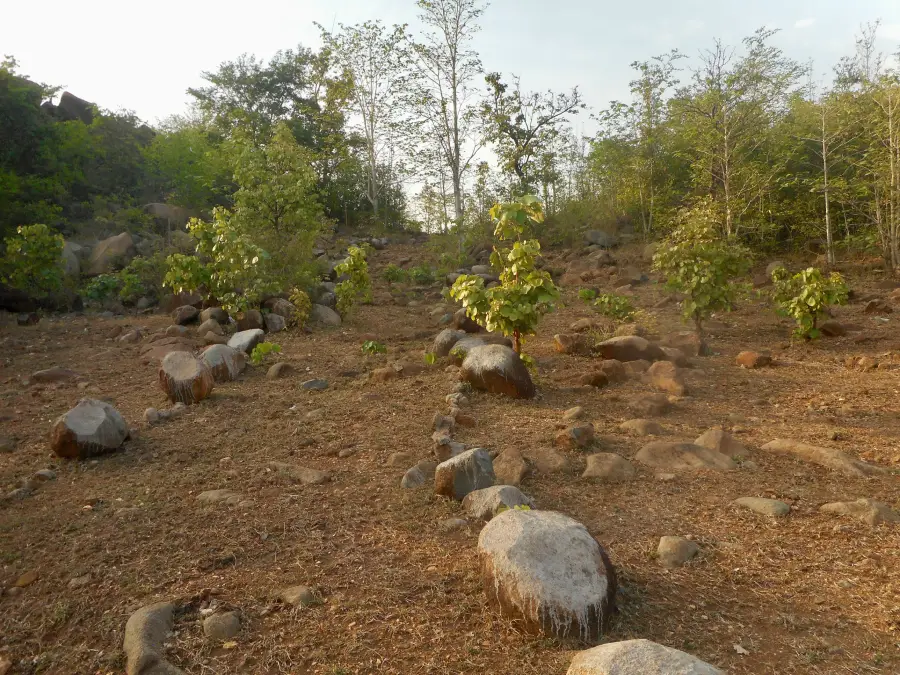
As a result of mines, security camps and developmental work, many sacred groves in Jharkhand have almost vanished or severely impacted.
Ashutosh Gope, a resident of Datobera village in East Singhbhum district, protested when a stone quarry company sought to establish operations in his village. For this, charges were pressed against him and six others, and even now Gope has to appear in the Jamshedpur civil court.
“The company made us suffer. It came to the village time and again and as a result some of the residents got angry. But a few others took its side. When I and my friends protested, charges were slapped against us,” Gope had shared with this reporter a few years ago. The sarna in Datobera is called the Buru Bonga and it is situated in a hilly forested patch.
Apart from public participation, documentation is also in progress in some of the forest divisions of Jharkhand, as per divisional forest officer Mukesh Kumar of Chatra South.
Ranchi-based social activist Deepak Bara pointed out that with walls and gates, the sarnas now resemble closed and structured places. He feels that the non-maintenance of open spaces for these biodiverse sacred places is a way to disconnect people from forests and their immediate natural surroundings.
The sarnas not only conserve wildlife, but also protect forests in the vicinity. “With the construction of boundary walls, some people may still fell trees which are just outside.”
Back in Palamau where history and heritage meet in Jharkhand’s sole tiger reserve, insurgency is on the wane, throwing open previously inaccessible areas to conservation.
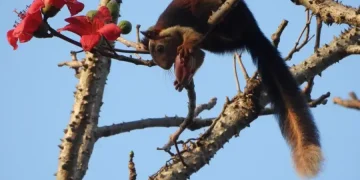
As the reserve awaits a tiger turnaround, the Wagh Devta stories reinforce the theme of community participation in conservation. Respecting the tiger signifies that the tribal tradition of gathering Mahua flowers and offering worship in the sacred groves will continue.