


• About
  • Editor & Writers
  • Contact
  • Sitemap
No Result
View All Result
Support Our Mission
Wednesday, September 23, 2026
The Indian Tribal
  • Home
  • Achievers
    • उपलब्धिकर्ता
  • Cuisine
    • खान पान
  • Health
    • स्वास्थ्य
  • Legal
    • कानूनी
  • Music
    • संगीत
  • News
    • Updates
    • खबरें
  • Sports
    • खेलकूद
  • Variety
    • विविध
  • हिंदी
    • All
    • आदिवासी
    • उपलब्धिकर्ता
    • कला और संस्कृति
    • कानूनी
    • खबरें
    • खान पान
    • खेलकूद
    • जनजाति
    • भारत
    • विविध
    • संगीत
    • संस्कृति
    • स्वास्थ्य
    The Indian Tribal

    ओडिशा के नबरंगपुर में आदिवासी किसानों की मक्का खेती ने कैसे बदली तस्वीर

    The Indian Tribal

    छत्तीसगढ़ में आदिवासी ट्रैकर्स और AI मिलकर बचा रहें हैं दुर्लभ वन्यजीव

    The Indian Tribal

    हाशिए से राष्ट्रीय केंद्र तक: बदल रही है भारत के आदिवासी समुदायों की कहानी

    The Indian Tribal

    शिक्षा, वन उपज में मूल्य संवर्धन से आदिवासी समुदायों के आर्थिक सशक्तीकरण की नई राह

    The Indian Tribal

    मणिपुर में संघर्ष के बीच आदिवासी कोचों ने संभाली नई पीढ़ी के खिलाड़ियों की कमान

    The Indian Tribal

    ओडिशा के आदिवासी किसान ने 10 सालों में बचाईं धान की 100 से ज्यादा देशी किस्में

    The Indian Tribal

    आदिवासी समुदायों में पारंपरिक दाइयों की भूमिका क्यों अब भी कायम है, जब सरकार संस्थागत प्रसव पर दे रही है जोर?

    The Indian Tribal

    ओडिशा के विशेष रूप से कमजोर जनजातीय समूहों की सदियों पुरानी विवाह संस्कृति एवं परंपराएँ बदलाव के दौर में भी कायम

  • Gallery
    • Videos
  • Latest News
The Indian Tribal
  • Home
  • Achievers
    • उपलब्धिकर्ता
  • Cuisine
    • खान पान
  • Health
    • स्वास्थ्य
  • Legal
    • कानूनी
  • Music
    • संगीत
  • News
    • Updates
    • खबरें
  • Sports
    • खेलकूद
  • Variety
    • विविध
  • हिंदी
    • All
    • आदिवासी
    • उपलब्धिकर्ता
    • कला और संस्कृति
    • कानूनी
    • खबरें
    • खान पान
    • खेलकूद
    • जनजाति
    • भारत
    • विविध
    • संगीत
    • संस्कृति
    • स्वास्थ्य
    The Indian Tribal

    ओडिशा के नबरंगपुर में आदिवासी किसानों की मक्का खेती ने कैसे बदली तस्वीर

    The Indian Tribal

    छत्तीसगढ़ में आदिवासी ट्रैकर्स और AI मिलकर बचा रहें हैं दुर्लभ वन्यजीव

    The Indian Tribal

    हाशिए से राष्ट्रीय केंद्र तक: बदल रही है भारत के आदिवासी समुदायों की कहानी

    The Indian Tribal

    शिक्षा, वन उपज में मूल्य संवर्धन से आदिवासी समुदायों के आर्थिक सशक्तीकरण की नई राह

    The Indian Tribal

    मणिपुर में संघर्ष के बीच आदिवासी कोचों ने संभाली नई पीढ़ी के खिलाड़ियों की कमान

    The Indian Tribal

    ओडिशा के आदिवासी किसान ने 10 सालों में बचाईं धान की 100 से ज्यादा देशी किस्में

    The Indian Tribal

    आदिवासी समुदायों में पारंपरिक दाइयों की भूमिका क्यों अब भी कायम है, जब सरकार संस्थागत प्रसव पर दे रही है जोर?

    The Indian Tribal

    ओडिशा के विशेष रूप से कमजोर जनजातीय समूहों की सदियों पुरानी विवाह संस्कृति एवं परंपराएँ बदलाव के दौर में भी कायम

  • Gallery
    • Videos
  • Latest News
No Result
View All Result
The Indian Tribal
No Result
View All Result
  • Home
  • Achievers
  • Cuisine
  • Health
  • Legal
  • Music
  • News
  • Sports
  • Variety
  • हिंदी
  • Gallery
  • Latest News
Support Our Mission
Home » The Indian Tribal / Achievers » Anganwadi Worker Stops Five Child Marriages, Becomes Shield For Girls’ Education In Rajasthan

Anganwadi Worker Stops Five Child Marriages, Becomes Shield For Girls’ Education In Rajasthan

Challenging the deeply rooted traditions of child marriage and untouchability in Rajasthan’s Bhil tribal community, this Anganwadi worker has become a guardian of education, nutrition, and dignity for girls. Vikas Meshram reports. PART-2

March 14, 2026
The Indian Tribal

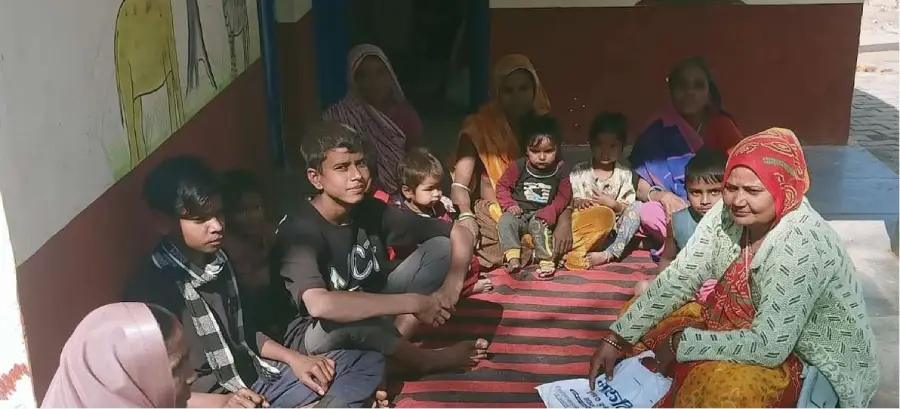
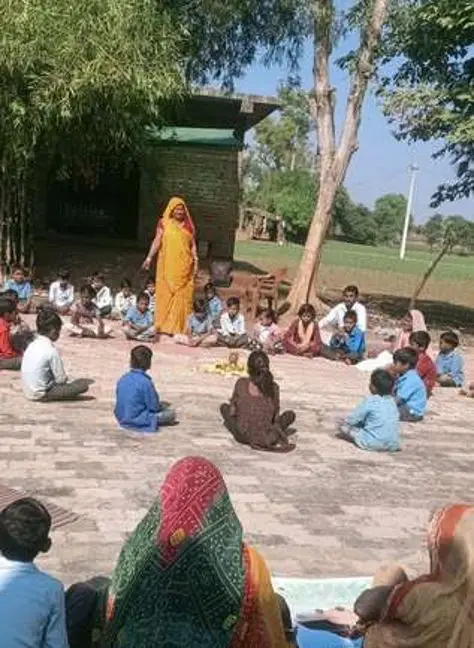
Mani Devi With Children

Banswara

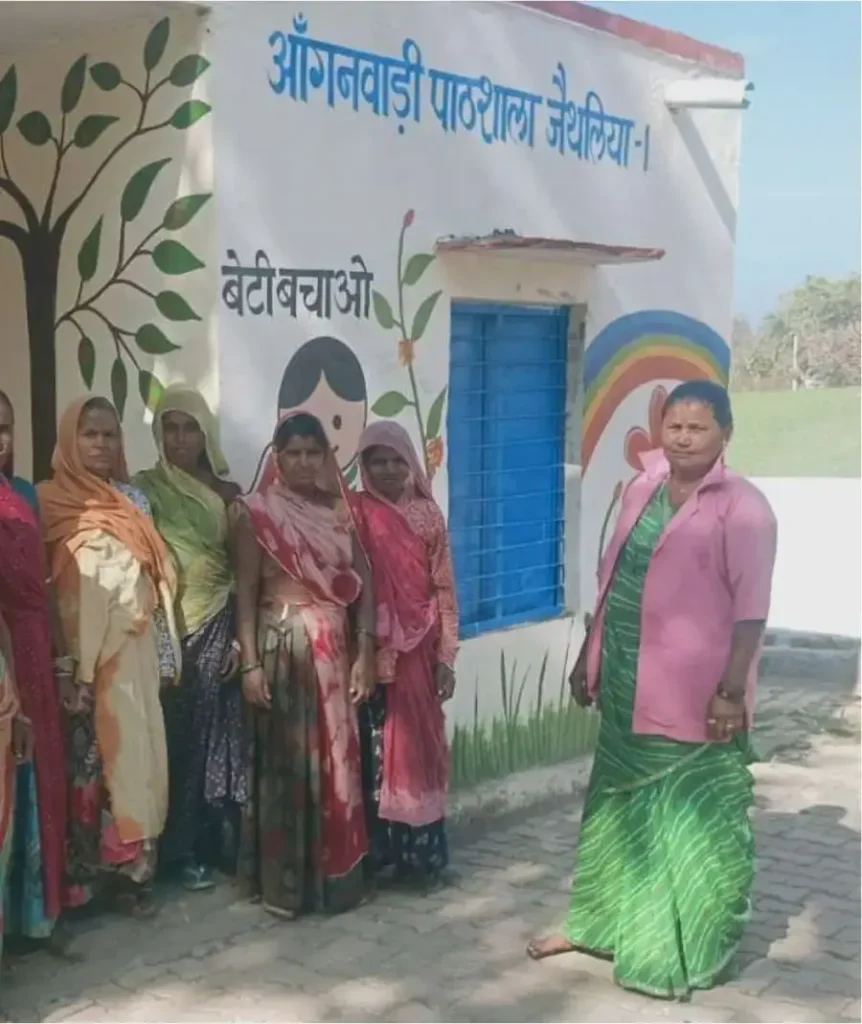
Mani Devi’s story is one of courage and social transformation. She spent her childhood in Jaithaliya village, where the future of girls was decided very early. Most girls were married before reaching adulthood, withdrawn from school, and burdened with responsibilities they had never chosen. For years, this was considered normal, but Mani decided to challenge it.

Her journey began when she joined Vagadhaara and started participating in meetings of the Kisan and Adivasi Swaraj Organization. There, she gained confidence to speak openly about child rights, laws against child marriage, and social issues. Listening to women from other villages, she realized that change was possible—even within her own community.

When Mani first raised her voice against child marriage and untouchability, villagers and relatives reacted with disbelief and resistance. But she continued her efforts calmly and persistently. Gradually, her confident voice began influencing others.

A significant turning point came when she learned that a thirteen-year-old girl in her village was about to be married. Mani went directly to the family and explained the legal, health, and social consequences of child marriage. When the family refused to listen, she sought support from the Panchayat and informed Childline. The marriage was stopped, marking the first successful intervention of its kind in the village. After that, Mani did not step back.

She intervened in other cases as well, physically stopping wedding ceremonies when necessary and contacting the police with the support of Vagadhaara. So far, she has successfully prevented more than five child marriages. Gradually, her efforts have built a collective understanding in the village that child marriage is harmful and illegal.

Mani Devi says, “When I first spoke about stopping child marriage, people laughed and tried to intimidate me. But when the first girl’s marriage was stopped and she returned to school, I realized that change is greater than fear.”
The Indian Tribal
Mani Devi Engaging Children In A Game
The Indian Tribal
At Her Anganwadi Centre

Mani soon understood that preventing child marriage required keeping girls in school. She went door-to-door in her village and nearby areas, especially meeting families whose daughters had dropped out due to migration or economic pressure. She encouraged parents to send their daughters back to school, explaining that educated girls would secure a better future not only for themselves but also for the village.

Many families agreed. Several girls returned to school, and some families even stopped migrating for work. Today, parents openly acknowledge her role, saying their daughters are studying again because of Mani. Kirpa Vasudev Ninama from Mani Devi’s village said, “She made us understand that if a daughter studies, the family becomes stronger. If she had not been there, my daughter would also have been married as a child.”

Using her role as an Anganwadi worker, Mani also strengthened health and nutrition services in Jaithaliya. With the support of Vagadhaara, she ensured timely care for pregnant women and newborns, organized vaccination and nutrition check-up camps, and promoted nutrition gardens with indigenous plants.

She personally monitored the Anganwadi kitchen to ensure children received clean and nutritious meals and conducted regular awareness sessions for mothers. From challenging deep-rooted social norms to ensuring education, health, and dignity for girls, Mani’s journey shows how a determined woman, with collective support, can transform an entire community.

(Vikas Meshram is a social development worker and writer)

Root Woot | Online Puja Samagri Root Woot | Online Puja Samagri Root Woot | Online Puja Samagri

Support Our Mission

The Indian Tribal

For the past four-and-a-half years, we have travelled across India to bring to our readers the ‘Unknown, Lesser-Known Tribal Life’, which rarely finds space in the mainstream media.

We have done this without external funding, driven only by our conviction that India’s tribal heritage deserves to be documented with dignity, depth and authenticity.

If you like our work, and if it has informed, inspired or helped you understand India’s tribal/indigenous communities better, we invite you to become a part of this mission.

Your contribution will not merely fund a news platform. It will help preserve voices, traditions, histories and aspirations that form an invaluable part of India’s identity.

Because when an untold story is documented, a piece of India’s heritage is preserved forever.

Thanks
Editor

In Numbers

49.4 %
Female Literacy rate of Scheduled Tribes

Update

NSTDFC, HPCL sign MoU

The National Scheduled Tribes Finance and Development Corporation (NSTFDC) and Hindustan Petroleum Corporation Limited (HPCL) have signed a Memorandum of Understanding (MoU) for establishment of integrated Computer Lab-cum-Smart Classroom facilities in 29 functional Eklavya Model Residential Schools (EMRS) across 11 districts of Rajasthan. The project, with a total budget of ₹16.01 crore approved by the HPCL Board, is planned to be completed within six months from the date of signing of the MoU. Under the project, each school will have four smart classrooms equipped with 86-inch interactive flat panels, pre-loaded licensed software, curated open educational resources and audio-visual equipment, including speakers and webcams. Each school will also have a fully networked computer laboratory with desktops and UPS backup, structured LAN, multi-function printer, furniture, air-conditioning, electrical refurbishment and safety systems. In addition, 10 tablets pre-loaded with coaching material for competitive examinations will be provided in each school. Internet connectivity, including wiring, installation and a one-year subscription, will also be provided.
The Indian Tribal
Adivasi

Tiger Conservation In India: How Tribal Displacement And Tourism Are Reshaping The Debate

by The Indian Tribal
September 17, 2026

Deepanwita Gita Niyogi and Aliya Bashir analyse the link between the Western-supported idea of conservation and the displacement of forest dwellers and tribals in India’s tiger reserves due to tourism pressure

The Indian Tribal

ओडिशा के नबरंगपुर में आदिवासी किसानों की मक्का खेती ने कैसे बदली तस्वीर

September 15, 2026
The Indian Tribal

The Ganesha We Know, The Stories We Miss

September 14, 2026
The Indian Tribal

छत्तीसगढ़ में आदिवासी ट्रैकर्स और AI मिलकर बचा रहें हैं दुर्लभ वन्यजीव

September 12, 2026
The Indian Tribal

हाशिए से राष्ट्रीय केंद्र तक: बदल रही है भारत के आदिवासी समुदायों की कहानी

September 11, 2026
The Indian Tribal

शिक्षा, वन उपज में मूल्य संवर्धन से आदिवासी समुदायों के आर्थिक सशक्तीकरण की नई राह

September 10, 2026
Previous Post

Tribal Art Fest 2026 Ends: Whopping 28-Fold Hike In Income For Some

Next Post

Election Commission Announces Assembly Polls: 824 Seats At Stake, 39 Are For STs

Top Stories

The Indian Tribal
Adivasi

Karam Parab: The Sacred Tree, Two Brothers And A Festival Connecting Forest, Farm, Community

September 20, 2026
The Indian Tribal
Adivasi

Tiger Conservation In India: How Tribal Displacement And Tourism Are Reshaping The Debate

September 17, 2026
The Indian Tribal
आदिवासी

ओडिशा के नबरंगपुर में आदिवासी किसानों की मक्का खेती ने कैसे बदली तस्वीर

September 15, 2026
Load More
  • About Us
  • Editor & Writers
  • Contact
  • Redressal
  • Copyright Policy
  • Privacy Policy And Terms Of Use
  • Disclaimer
  • Sitemap

  • Achievers
  • Cuisine
  • Health
  • India
  • News
  • Legal
  • Music
  • Sports
  • Trending
  • Chhattisgarh
  • Delhi
  • Gujarat
  • Jammu & Kashmir
  • Jharkhand
  • Kerala
  • Madhya Pradesh
  • Maharashtra
  • North East
  • Arunachal Pradesh
  • Assam
  • Manipur
  • Meghalaya
  • Mizoram
  • Nagaland
  • Sikkim
  • Tripura
  • Odisha
  • Telangana
  • West Bengal
  • Political News
  • Variety
  • Art & Culture
  • Entertainment
  • Adivasi
  • Tribal News
  • Scheduled Tribes
  • हिंदी
  • उपलब्धिकर्ता
  • कानूनी
  • खान पान
  • खेलकूद
  • स्वास्थ्य
  • संस्कृति
  • संगीत
  • विविध
  • कला और संस्कृति
  • खबरें
  • असम
  • अरुणाचल प्रदेश की ताज़ा ख़बरें
  • ओडिशा
  • केरल
  • गुजरात
  • छत्तीसगढ़
  • जम्मू और कश्मीर
  • झारखंड
  • तेलंगाना
  • दिल्ली
  • नॉर्थईस्ट
  • पश्चिम बंगाल
  • मध्य प्रदेश
  • महाराष्ट्र
  • त्रिपुरा
  • नागालैंड
  • मणिपुर
  • मिजोरम की ताज़ा ख़बरें
  • मेघालय
  • सिक्किम की ताज़ा ख़बरें
  • राजस्थान

About Us

The Indian Tribal is India’s first bilingual (English & Hindi) digital journalistic venture dedicated exclusively to the Scheduled Tribes. The ambitious, game-changer initiative is brought to you by Madtri Ventures Pvt Ltd (www.madtri.com). From the North East to Gujarat, from Kerala to Jammu and Kashmir — our seasoned journalists bring to the fore life stories from the backyards of the tribal, indigenous communities comprising 10.45 crore members and constituting 8.6 percent of India’s population as per Census 2011. Unsung Adivasi achievers, their lip-smacking cuisines, ancient medicinal systems, centuries-old unique games and sports, ageless arts and crafts, timeless music and traditional musical instruments, we cover the Scheduled Tribes community like never-before, of course, without losing sight of the ailments, shortcomings and negatives like domestic abuse, alcoholism and malnourishment among others plaguing them. Know the unknown, lesser-known tribal life as we bring reader-engaging stories of Adivasis of India.

Follow Us

All Rights Reserved

© 2026 Madtri Ventures [P] Ltd.

No Result
View All Result
  • Home
  • Achievers
  • Cuisine
  • Health
  • Health
  • Legal
  • Music
  • News
  • Sports
  • Variety
  • हिंदी
    • उपलब्धिकर्ता
    • खान पान
    • कानूनी
    • खेलकूद
    • खेलकूद
    • संगीत
    • संगीत
    • स्वास्थ्य
    • स्वास्थ्य
    • विविध
  • Gallery
  • Videos

© 2026 Madtri Ventures [P] Ltd.