
New Delhi
President Droupadi Murmu on Thursday urged meritorious students of Eklavya Model Residential Schools (EMRS) to pursue excellence in education and professional careers without losing touch with their tribal identity, cultural heritage and communities. She emphasised that students who achieve success through education must use their knowledge and professional capabilities to contribute to the development of their villages and fellow community members.
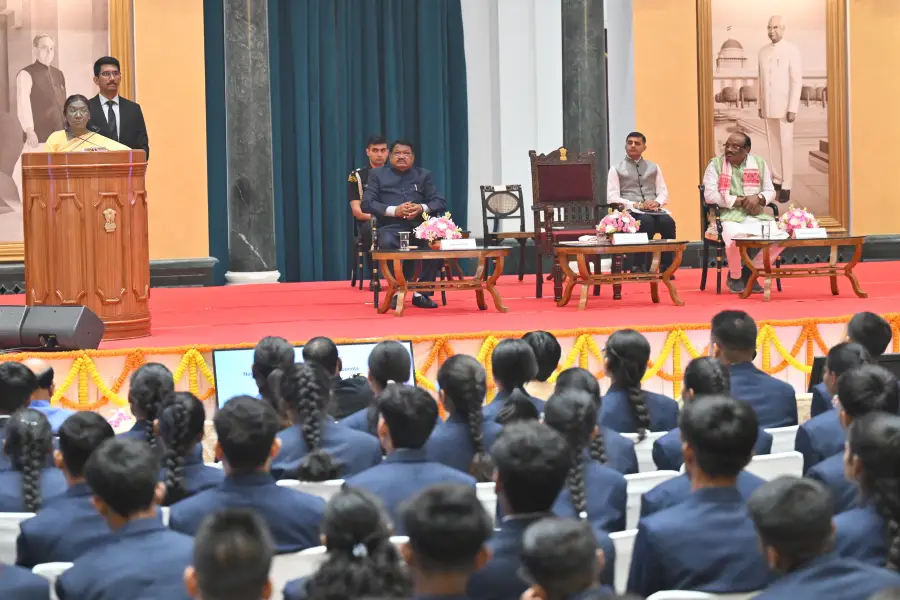
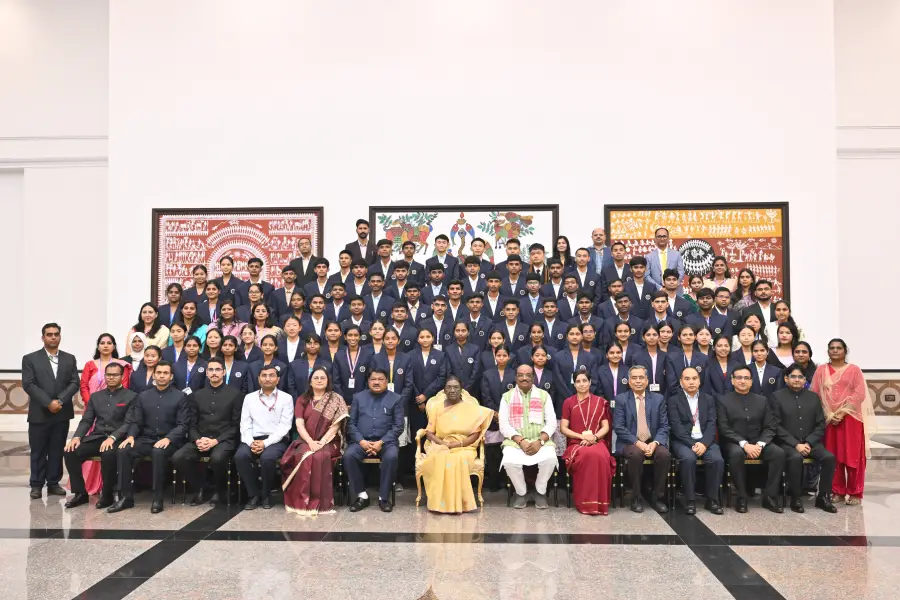
Interacting with 146 meritorious EMRS students and alumni from across the country at the Rashtrapati Bhavan Cultural Centre in New Delhi, the President said education would have greater significance when its benefits reached the people and regions from where students originated.
Encouraging students to take pride in their tribal heritage, Murmu stressed the importance of remaining connected with their roots, identity, villages and cultural traditions even after moving to cities or pursuing professional careers. She urged them to draw inspiration from their communities and ensure that their achievements translated into meaningful contributions to society.
Referring to Eklavya, whose life and values hold particular significance in the context of tribal education, the President encouraged students to understand and draw inspiration from his example. She observed that EMRS were providing tribal students with opportunities to identify and develop their abilities and talents. She also noted that equal representation of boys and girls in these schools reflected progress towards inclusive development.
The President advised students to aspire to become doctors, engineers, administrators and professionals in different fields, while keeping the welfare of their communities in mind. She underlined that higher education and individual accomplishments should ultimately contribute to improving the lives of people in their native villages.
The 146 participants included Class X and XII toppers as well as students who had secured admission to premier institutions, including the Indian Institutes of Technology (IITs), National Institutes of Technology (NITs), National Law Universities (NLUs), the National Institute of Fashion Technology (NIFT) and government medical colleges. Their participation showcased the growing academic and professional aspirations of tribal students and the opportunities emerging through the EMRS network.
Union Tribal Affairs Minister Jual Oram, who delivered the welcome address, also encouraged students to aim high and pursue their aspirations with dedication, discipline, hard work and self-confidence.
Organised by the National Education Society for Tribal Students (NESTS), under the Ministry of Tribal Affairs, the interaction was part of Janjatiya Gaurav Pakhwada 2026, commemorating the 151st birth anniversary of tribal freedom fighter Birsa Munda.
During the programme, students shared their educational journeys, achievements and aspirations with the President, highlighting the role of EMRS in providing a supportive learning environment, academic opportunities, exposure and facilities that have contributed to their personal and academic development.
NESTS also screened a five-minute film showcasing success stories of EMRS students and their journeys from school education to the realisation of their professional and academic ambitions.
The programme also recognised the contributions of officials and institutions involved in implementing the EMRS initiative. The President felicitated Secretaries and Principal Secretaries of Tribal Welfare Departments from Himachal Pradesh, Madhya Pradesh, Maharashtra and Odisha, five District Magistrates and principals of five best-performing EMRS. Awards were also conferred on best-performing tribal startups for their contributions to entrepreneurship and innovation.
The interaction underscored the importance of quality education, equal opportunities and institutional support in enabling tribal students to pursue higher education and professional careers. It also highlighted the larger objective of EMRS: nurturing academic excellence and leadership among tribal youth while ensuring that educational advancement does not come at the cost of their cultural identity and connection with their communities.