




Banswara
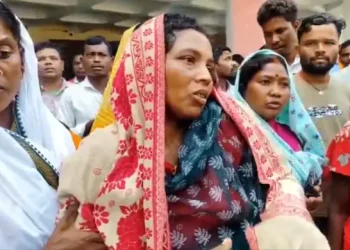
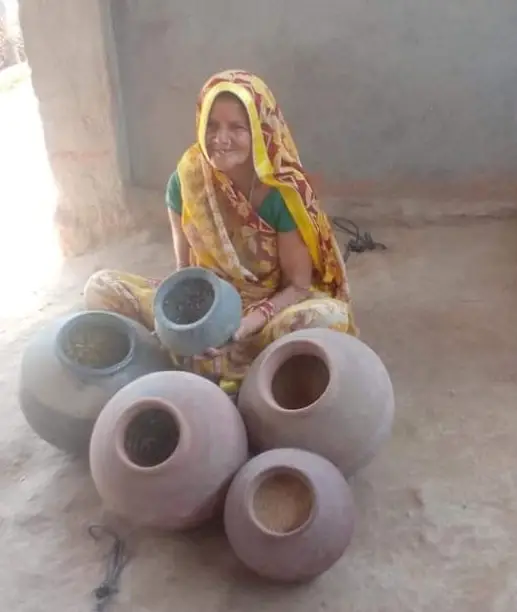
In Seranagla village, nestled in Anandpuri tehsil of Rajasthan’s Banswara district, mornings begin with smoke rising from household hearths, small fields stretching across the slopes and earthen pots resting inside homes. One of these homes belongs to 65-year-old Kankudevi Kama Damor, affectionately known in the area as Beej Mata, or the Seed Mother.
For years, Kankudevi has quietly preserved a precious inheritance: the indigenous seeds that sustained her community, shaped its food traditions and helped families withstand uncertain harvests. By saving, nurturing and sharing these seeds, she is attempting to restore a farming system that once offered both diversity and security to the Bhil community.
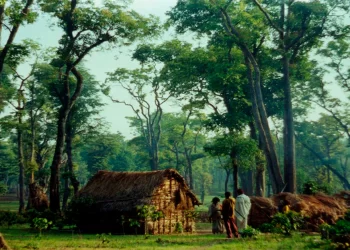
Looking back on her childhood, Kankudevi remembers the hills covered in dense forests. Those landscapes have changed, and so have the fields and food habits of the people who live there. Seranagla’s Bhil families depend largely on rain-fed agriculture, making the choice of crops and seeds especially important. As a child, she would accompany her parents and two brothers to fields on the hill slopes. Their food came from home: lapsi, a porridge made from ragi and kuri, along with boiled vegetables. Such meals, once part of everyday life, have gradually disappeared from local diets.
What she remembers most vividly is the diversity of the traditional farming system. Her father sowed seeds before the monsoon and cultivated more than 30 varieties across 16 kinds of crops. Since the crops ripened at different times, harvesting continued in stages. If one crop failed, another could provide food. This diversity was a practical safeguard against hunger.
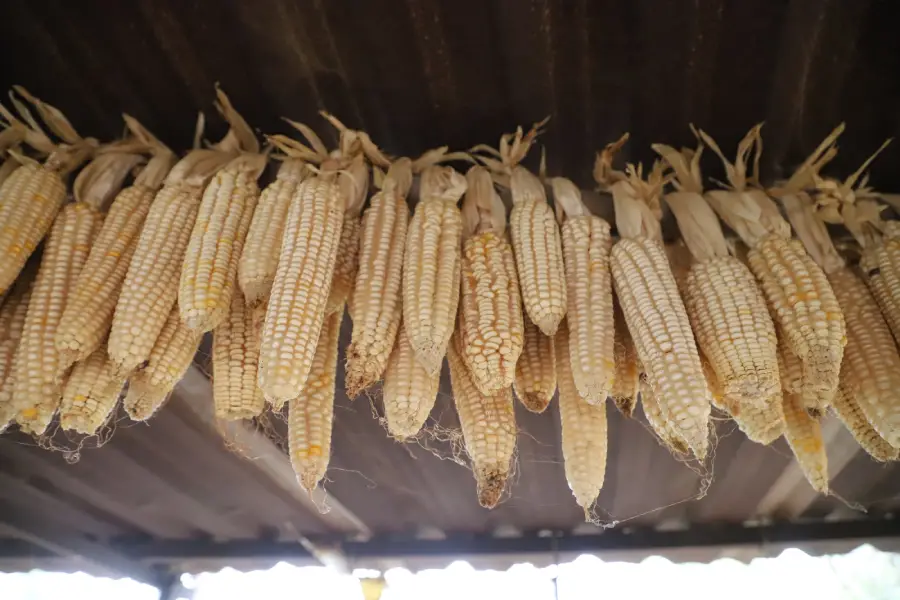
Millets such as ragi, kuri and kangni formed the backbone of the system. Kankudevi recalls eating ragi three or four times a day and relying on it for the strength needed to work in the fields. These traditional grains are valued for their nutritional content, including calcium, fibre and minerals. Their ability to grow with limited water and in relatively poor soil has helped sustain farming communities in dry and hilly regions for generations.
When Traditional Seeds Began To Disappear
Over time, however, the diversity that once defined local agriculture began to shrink. Kankudevi says she previously maintained ten varieties of millets and 15 varieties of pulses, but many traditional seeds have been lost in recent years.
“I was worried that we were losing our traditional seeds, which are precious,” she recalls.
The reasons, she explains, are both social and economic. As joint families broke into smaller households, fewer people were available to work on farms. With less labour, time and land, many farmers turned to high-yielding hybrid seeds.
Market and procurement policies also influence what farmers choose to grow. According to Kankudevi, government procurement centres do not accept every crop variety because some fail to meet the prescribed Fair Average Quality standards. When farmers cannot be sure of selling their produce, growing traditional varieties becomes a risky proposition.
The broader trend is reflected in a World Food Programme policy report cited in the source material. It records a decline in India’s millet cultivation area from approximately 36.9 million hectares in 1965–66 to 14.7 million hectares in 2016–17, a fall of nearly 60 per cent. The report also highlights the limited minimum support price protection available to smaller millets, apart from ragi, as one of the factors behind their declining cultivation.
For Kankudevi, the consequences are visible in her own village. The loss of a seed variety is not merely a change in agricultural practice; it can also mean losing a food, a taste and a piece of community memory.
From Dependence On Markets To Control Over Seeds
Hybrid seeds have brought their own challenges for small farmers, Kankudevi says. They can be expensive and may require costly fertilisers and pesticides. Farmers who must purchase fresh seeds every season can become increasingly dependent on the market.
Traditional seeds, by contrast, can be stored for long periods and, in her experience, produce good yields with limited water and cow-dung manure. Their value lies not only in their adaptability but also in the independence they offer farming households.
“A farmer who has to buy new seed every season gradually becomes a hostage of the market. One who has his own seed remains the master of his field,” is the principle underlying her approach. Kankudevi does not regard seed conservation as an extraordinary undertaking. In her community, she says, saving seeds has traditionally been women’s responsibility. She sees her work as a continuation of that inherited role.
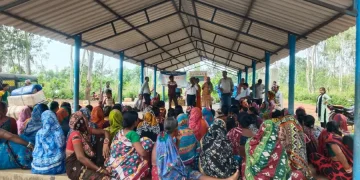
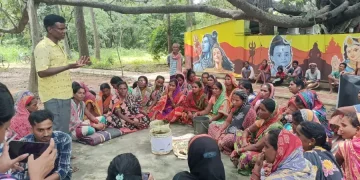
With this conviction, she joined the Saksham Mahila Samuh, or Capable Women’s Group, formed by Vaagdhara, and encouraged other women to preserve indigenous seeds. The organisation provided her with a matka kit, a traditional seed-storage arrangement using earthen pots.
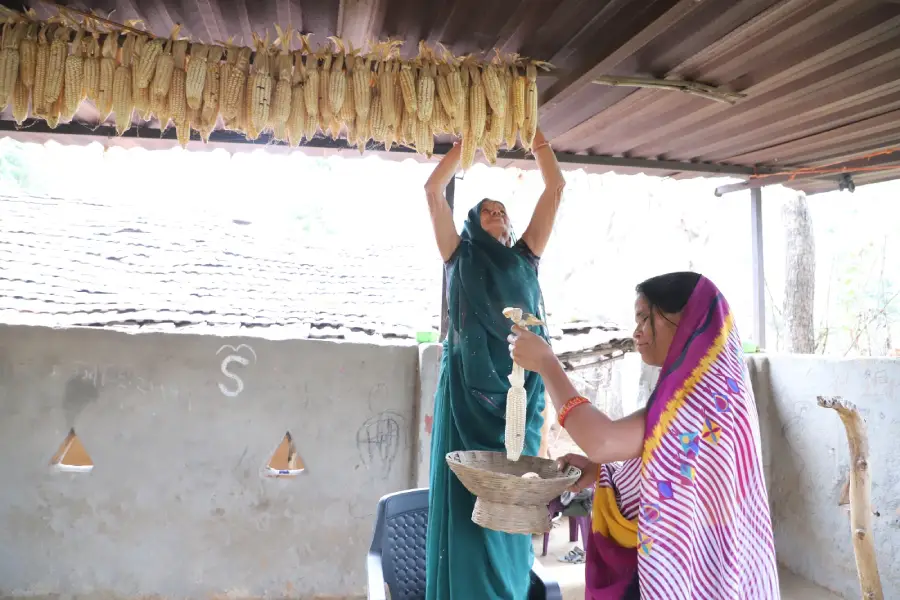
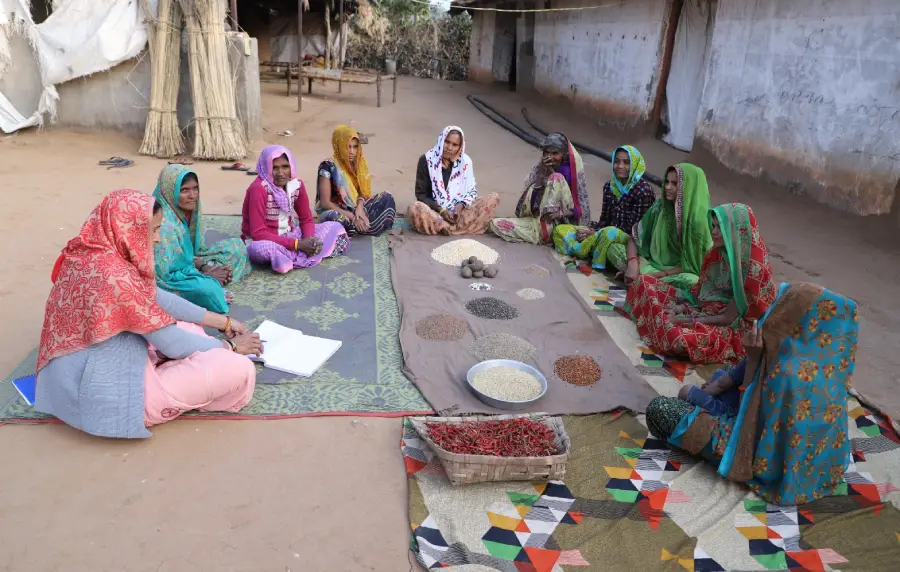
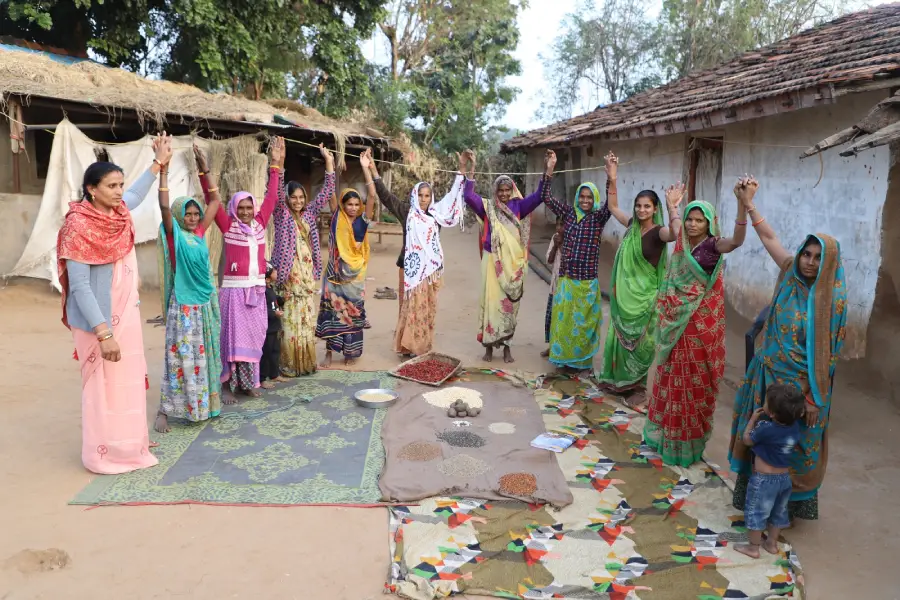
The method is simple, but its strength lies in collective participation. Women in the group exchange seeds so that if one household loses a variety, another may still have it. Kankudevi particularly values this sharing process. If her seeds are lost, she says, they may survive in someone else’s home.
This is what makes the community’s seed bank different from a storehouse where seeds remain locked away. The seeds are kept alive through cultivation, exchange and repeated use.
A Seed Bank Built On Trust
Seranagla’s seed-sharing system follows a principle of reciprocity. Kankudevi and the women working with her provide indigenous seeds free of charge to farmers who need them. In return, recipients are asked to share one of their own varieties. If they have no variety to exchange, or have lost their own seeds, they are encouraged to return twice the quantity they received.
The arrangement is built on trust rather than commercial transactions. It allows seeds to circulate between households, increases the chances of preserving rare varieties and reinforces the idea that agricultural knowledge belongs to a community rather than a single individual.
The approach also reflects the spirit of India’s Protection of Plant Varieties and Farmers’ Rights Act, 2001, which recognises farmers’ roles in conserving and developing plant varieties. Kankudevi may not use the language of legislation, but her work demonstrates how farmers can act as custodians and breeders of the seeds on which agriculture depends.
For her, conservation will succeed only if traditional varieties continue to be cultivated season after season. Seeds cannot survive simply by being stored; they must return to the soil.
When Millets Make Economic Sense Again
Preserving indigenous seeds also requires making their cultivation economically viable. Kankudevi says millets were long dismissed as food for tribal communities or poorer households and fetched low prices in local markets. She has therefore worked to make people more aware of their nutritional value and their cultural and spiritual significance.
That perception is beginning to change. Farmers are increasingly recognising that crops such as bajra and ragi can provide nutritious food and a source of income.
According to Kankudevi, farmers in the area recently sold ragi for Rs 3,700 per quintal, compared with around Rs 2,000 per quintal for maize. The difference has strengthened the economic case for returning to traditional crops, although actual returns will depend on market access, yields and cultivation costs.
Government policy has also begun to give millets greater attention. For the 2025–26 Kharif marketing season, the source material reports an increase of Rs 596 per quintal in the minimum support price for ragi. It places the resulting price at approximately Rs 4,886 per quintal, using the previous year’s figure of Rs 4,290. The gap between this benchmark and the price farmers receive in local markets raises an important question: how effectively does official price support reach small and remote farming communities?
India’s millet production remains substantial. Government figures cited in the source material put national production at around 180 lakh tonnes in 2024–25, with Rajasthan leading, followed by Maharashtra and Karnataka. However, Rajasthan’s leading position is largely driven by bajra, while ragi accounts for only about half a per cent of the country’s total cropped area and is concentrated mainly in Karnataka, Tamil Nadu and Maharashtra.
Reviving ragi in tribal areas such as Banswara is therefore significant. It represents an effort to restore a crop to a place where it has traditionally sustained people, even as wider agricultural patterns have moved away from it. Government initiatives such as the Nutri-Cereals Sub-Mission support seed production, demonstrations and training, but their impact ultimately depends on whether assistance reaches farmers like Kankudevi.
More Than A Crop: The Identity Of A Community
For Kankudevi, the importance of this work extends beyond income. Restoring traditional crops, she says, restores pride in her community’s identity.
Farming is not simply a livelihood. It is connected to songs, festivals, deities, relationships and memories. Different grains are associated with different seasons and dishes, while particular foods are prepared for specific festivals. When a crop disappears, some of this knowledge can disappear with it.
Her work also highlights the often-overlooked role of tribal women in conserving agricultural biodiversity. The knowledge required to select seeds, store them, identify suitable growing conditions and pass them to the next generation has frequently been maintained through everyday household and farming practices.
Kankudevi acknowledges that this effort cannot succeed through individual initiative alone. Training and support from Vaagdhara have helped her promote millet cultivation, but she also wants the government to do more to protect indigenous seed varieties and ensure their survival for future generations.
Her appeal is ultimately one for partnership: communities can preserve their agricultural heritage, but they need institutions and policies that support rather than undermine their efforts.
An Old Lesson For An Uncertain Climate
As climate change intensifies the risks associated with erratic rainfall, drought and rising temperatures, indigenous seeds are attracting renewed attention for their history of adaptation to local conditions. Crops capable of growing with limited water and in difficult soils may offer useful options for farmers facing increasingly uncertain seasons.
India’s initiative helped secure the United Nations’ declaration of 2023 as the International Year of Millets, bringing renewed international attention to these traditional grains. Yet recognition at the global level is only a beginning. The real test lies in whether public support, market access and agricultural programmes reach the villages where indigenous seeds are still being saved.
Kankudevi’s journey shows that tradition and modernity need not be opposing forces. Traditional crops can find a place in contemporary markets, provided their nutritional, ecological and cultural value is recognised and farmers receive a fair opportunity to grow and sell them.
At the end of her story, she returns to the lesson taught by her father: “Seeds are living beings. They are our ancient roots. We need to nurture and protect our traditional seeds, because they keep our customs alive.” Then she explains, simply, what she is doing: “And that is what I am doing.”
When the next rains bring ragi back to the slopes of Seranagla, the crop will represent more than a harvest. It will carry the labour of a woman determined to protect her community’s seeds, the knowledge of generations of farmers and the hope that a living tradition can survive by being sown, shared and saved.
(Vikas Meshram is a social development worker and writer.)