







Ranchi
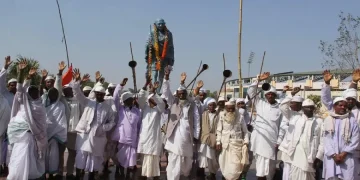
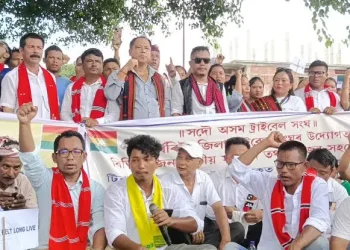
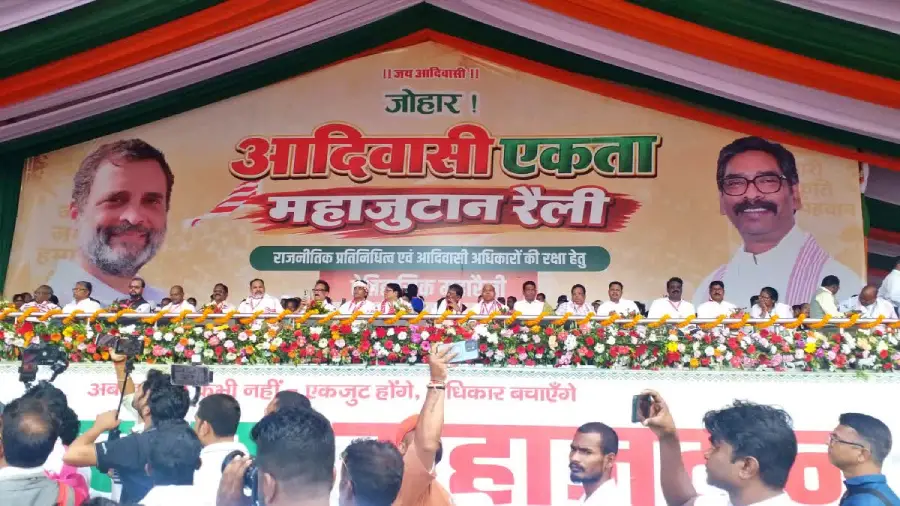
Thousands of tribals from different parts of Jharkhand congregated here at Morhabadi Maidan on Sunday for the Adivasi Ekta Mahajutaan, turning opposition to the proposed delimitation of Lok Sabha and Assembly constituencies into a wider mobilisation around Adivasi political representation, land rights, constitutional safeguards and control over natural resources.
Organised under the leadership of former minister and Congress leader Bandhu Tirkey, the gathering drew tribal men, women, youth and elderly people from several districts.
The proposed delimitation was the central issue at the rally. Speakers argued that restructuring constituencies solely on the basis of population could adversely affect the political representation of Scheduled Tribes and called for Jharkhand’s distinctive demographic, geographical and historical circumstances to be considered.
A written message from Congress leader Rahul Gandhi was read out at the gathering by MP Sukhdeo Bhagat. Extending his support, Rahul remembered tribal icon Jaipal Singh Munda and his role in voicing tribal rights in the Constituent Assembly. He emphasized the necessity of protecting tribal land, forests, and water resources, while opposing displacement in the name of development without the community’s consent. He also highlighted key protections including the Fifth Schedule, PESA (Provisions of the Panchayats Extension to Scheduled Areas) Act, and the Forest Rights Act.
Jharkhand Congress president Keshav Mahato Kamlesh, state in-charge K Raju, Rameshwar Oraon, Minister Shilpi Neha Tirkey, Subodh Kant Sahay, MLAs Rajesh Kachhap, Naman Vixal Kongari and Bhushan Bara, and All India Adivasi Congress president Vikrant Bhuria were among those present.
K Raju said the Congress would raise the issue in Parliament and claimed that the party had decided that delimitation should not take place in Jharkhand for the next 25 years.
Why delimitation has become a tribal concern
For the organisers, the issue goes beyond the number or boundaries of parliamentary and Assembly constituencies. They contend that any change in political representation must take account of Jharkhand’s tribal-majority regions, Fifth Schedule areas, historical displacement and migration.
Shilpi Neha Tirkey said the issue was not merely about the number of Lok Sabha and Assembly seats but about the political representation and constitutional rights of tribal communities. Tribal organisations supporting the mobilisation similarly argued that population should not be the sole consideration in determining constituencies.
The argument reflects a longstanding anxiety among sections of Jharkhand’s tribal leadership that demographic changes, migration and displacement could alter the political weight of tribal communities. The rally sought to make the case that electoral boundaries cannot be considered in isolation from these historical and social factors.
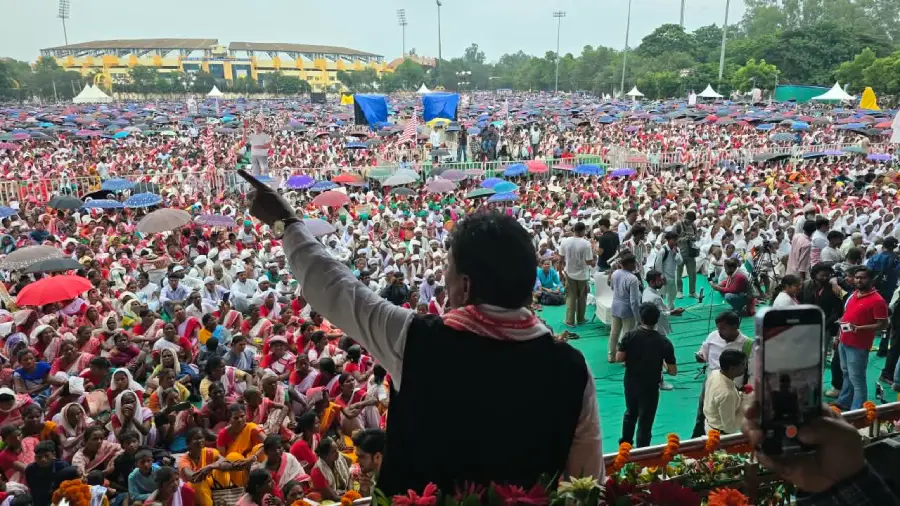
Bandhu Tirkey put the political stakes bluntly. “Today, we must pledge to fight the proposed delimitation. This state was created for tribals, and we will not tolerate any attempt at snatching tribal rights,” he said. He added that if delimitation was carried out on the basis of the 2007-08 report, “we will not tolerate it”, while alleging that the BJP and RSS wanted to reduce tribal seats. He also accused them of seeking to weaken the Fifth Schedule and PESA and alleged that attempts were being made to divide society in the name of religion.
Congress MP Sukhdeo Bhagat linked the delimitation debate with displacement caused by mining, industries, major projects and dams. “Due to mining, setting up industries, large projects, or building big dams, the tribals saw the highest displacements at 70 per cent. Thirteen per cent of our population has decreased,” he said.
The allegations were made from the political platform and represent the Congress and rally organisers’ interpretation of the possible consequences of delimitation.
Five key demands
The Mahajutaan adopted five principal demands, placing delimitation within a broader agenda of tribal rights.
The first was that ST-reserved seats in the Lok Sabha and state Assembly should not decline as a consequence of delimitation. If the total number of seats increases, the number of seats reserved for STs should also rise proportionately. The gathering further demanded that Fifth Schedule areas, tribal-majority regions, historical displacement and migration be considered while redrawing constituencies.
The second was opposition to the Mines and Minerals (Development and Regulation) Amendment framework. Speakers argued that the changes could affect states’ fiscal and legislative powers and the principle of cooperative federalism.
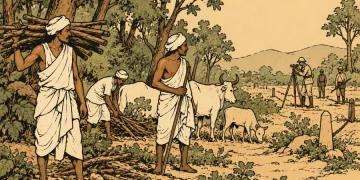
The third demand concerned tribal land. The gathering called for a halt to illegal transfer, occupation and sale of tribal land in violation of the Chotanagpur Tenancy and Santhal Pargana Tenancy laws, along with restoration of illegally transferred land to its original raiyats.
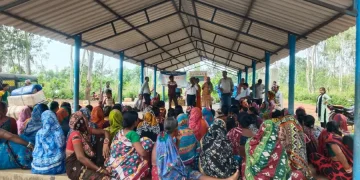
The fourth demand was that mining, land acquisition and displacement in Fifth Schedule areas should not take place without Gram Sabha consent. The rally also called for effective implementation of PESA, 1996 and the Forest Rights Act, 2006.
The fifth was the longstanding demand for a separate Sarna religion code in the Census, with organisers seeking a separate column to recognise the religious identity of tribal communities.
A report on delimitation was also presented at the rally. Bandhu Tirkey asked advocate Sushish Soren to hand over the report, saying it would be sent to Rahul Gandhi through Congress in-charge K Raju so that the concerns raised by tribal communities could be taken up nationally.
JMM presence adds political significance
Although Chief Minister Hemant Soren had been invited, he did not attend the gathering. JMM MLA Vikas Kumar Munda participated as his representative.
Presence of CM’s representative was politically significant because the Mahajutaan was organised under the leadership of a Congress leader, while the JMM is the dominant tribal political force in Jharkhand. The participation of a JMM representative allowed the party to register its presence at a major tribal mobilisation without the Chief Minister himself appearing at a Congress-led programme.
For the Congress, meanwhile, the mobilisation offered an opportunity to consolidate its position on issues that resonate strongly with Jharkhand’s tribal electorate and to frame the BJP-led Centre’s policies as a challenge to tribal political and constitutional rights.
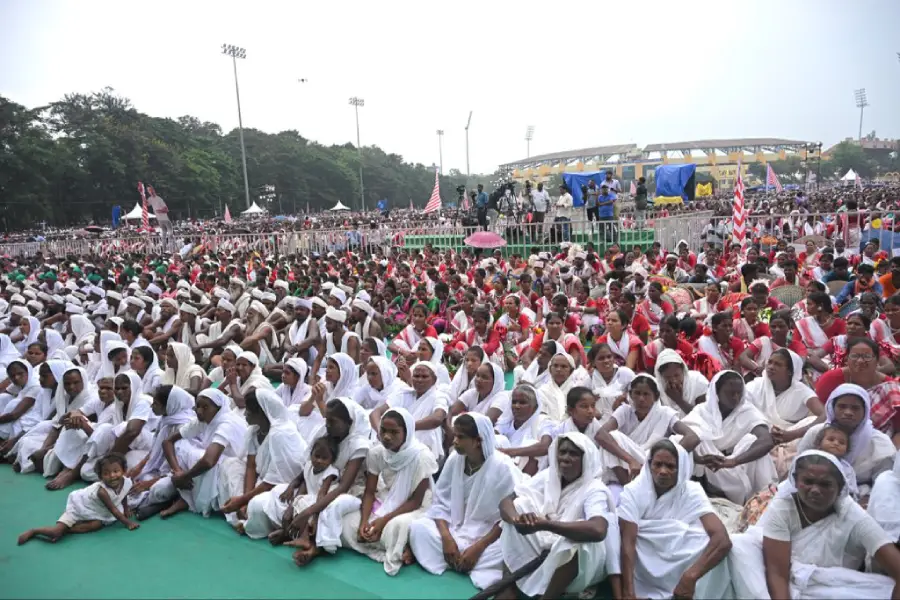
The rally therefore carried two dimensions: a social mobilisation around concerns over representation and tribal rights, and a political contest over who can most credibly represent those concerns.
What the Centre’s delimitation plan means
The political argument in Jharkhand comes amid the national debate over delimitation following the constitutional freeze on readjustment of Lok Sabha seats.
The Centre has proposed a new delimitation framework, with the process linked to the Census and the constitutional provisions governing readjustment of constituencies. The Union government’s position is that the exercise should address the imbalance in representation while also accommodating the increase in the size of the Lok Sabha.
The government has also sought to assure states that the proposed exercise will not affect elections through 2029. The eventual impact on individual states, including Jharkhand, and on ST-reserved constituencies will depend on the final legislative framework, Census data and the recommendations of the Delimitation Commission.
This is where the political disagreement becomes particularly important.
The Mahajutaan’s concern is that population-based delimitation could reduce the relative political weight of Jharkhand’s tribal population and potentially alter the number or composition of ST-reserved constituencies. The government’s broader argument is that delimitation need not result in a simple redistribution of existing seats and that an expanded Lok Sabha can accommodate increased representation.
For Jharkhand’s tribal organisations, however, the issue is not merely whether the total number of seats rises. They want safeguards ensuring that tribal-majority areas and communities do not lose political representation because of demographic changes resulting from displacement, migration or other historical factors.
From delimitation to Jharkhand’s larger tribal politics
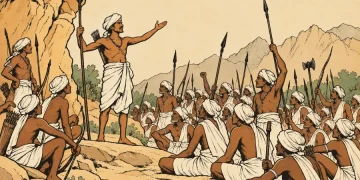
The Mahajutaan consequently brought together several issues that have traditionally shaped Jharkhand’s tribal politics — land protection under the CNT and SPT laws, Fifth Schedule governance, PESA, Gram Sabha rights, mining, displacement, migration and tribal religious identity. Bandhu Tirkey linked the mobilisation to what he described as a wider attempt to alter Jharkhand’s identity.
He also raised concerns over declining tribal populations and migration, citing the Pahariya community as an example and linking population decline to employment, displacement and development policies.
The immediate political outcome of Sunday’s mobilisation will depend on whether the Congress and tribal organisations can convert the rally’s demands into a sustained movement and whether the JMM’s participation develops into a broader political position on delimitation.