


New Delhi
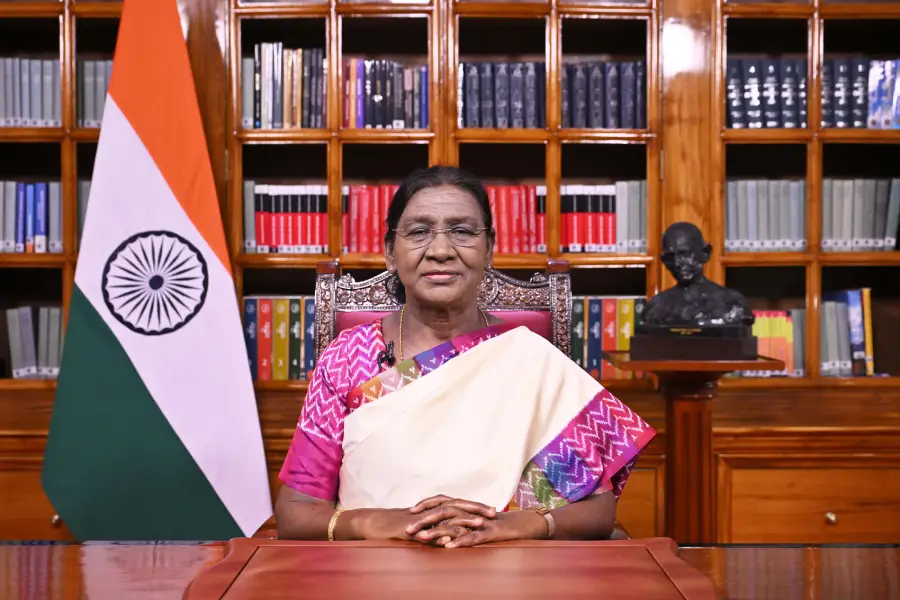
President Droupadi Murmu on Saturday placed India’s tribal heritage, indigenous wisdom and the Santali tradition of reverence for nature at the centre of her Independence Day-eve address. She invoked a song in the Santali language written by Pandit Raghunath Murmu to drive home the need to protect the environment and human values.
Addressing the nation on the eve of the 80th Independence Day, Murmu said India’s commitment to conserving the environment was an integral part of its tradition. She cited the Santali song that describes an inconsolable parrot grieving over a tree that has dried up and asks why human beings do not similarly grieve when the “tree of human culture” is destroyed.
“The message of this song is that all people must remain committed to preserving nature and human values,” the President said, explaining that a lush green tree symbolises the moral ideals and wellbeing of human society. She linked the message to campaigns such as ‘Ek Ped Maa Ke Naam’ and Lifestyle for Environment (LiFE), calling for individual and collective efforts to protect the environment.
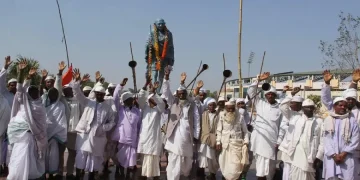
The reference to Raghunath Murmu, a towering figure associated with the development of the Ol Chiki script for Santali, brought indigenous cultural knowledge and language into the President’s national address. Her invocation of Santali literary tradition also came in the context of her larger call for India to harmonise its rich heritage with modern development, while ensuring that future generations inherit natural resources in no lesser measure than those available to the present generation.
Murmu returned to the experience of tribal-majority regions later in her address while speaking about the government’s efforts to make India Naxal-free. She said the end of Naxalism had brought enthusiasm to areas that were once affected by the insurgency and that all-inclusive development was underway there. Referring specifically to Chhattisgarh, she noted that a large number of players participated in the Bastar Olympics, while artists showcased their talent at Bastar Pandum, both attracting large public participation.
The President’s emphasis on tribal cultural expression and indigenous environmental wisdom formed part of a wider argument that India’s development must remain rooted in its cultural identity. She said history had shown that development rooted in a strong sense of cultural identity was both rapid and sustainable, and stressed that India was moving forward by harmonising its heritage with development.
The President also said the country was pursuing the goal of Viksit Bharat by 2047 with the spirit of Antyodaya, seeking to ensure that the fruits of development reach every individual. Referring to the Constitution, she stressed equality of status and opportunity and said deprived sections of society should have equal access to timely justice with dignity.
She highlighted government claims that more than 25 crore people had been lifted out of poverty, nearly 59 crore people had joined the banking system through Jan Dhan Yojana, more than 80 crore people were receiving free rations and 60 crore people had access to free healthcare coverage of up to Rs 5 lakh annually under Ayushman Bharat.
Murmu also spoke about India’s digital and physical infrastructure, economic growth, renewable energy and its expanding role in global affairs. She said India remained the world’s fastest-growing major economy despite global instability and emphasised Atmanirbhar Bharat, environmental protection, renewable energy and India’s engagement with the Global South.
Women, youth and sports featured prominently in the address. Murmu highlighted the growing participation of women in education, economic activity and leadership, noting that more than 10 crore women are members of Self Help Groups and that the target of creating three crore Lakhpati Didis had been achieved, with another three crore being targeted. She said 65 per cent of India’s population is below the age of 35 and praised young people for innovation, entrepreneurship and their contribution to the start-up ecosystem.
On students and examinations amid much hullabaloo, the President said public examinations were gateways to opportunities and that the government was taking comprehensive steps to curb unfair means and make examinations more transparent, secure and trustworthy. She also highlighted the expansion of the Khelo India ecosystem and the growing achievements of Indian sportspersons.
The President paid tribute to the Armed Forces in the context of Kargil Vijay Diwas and Operation Sindoor, saying the latter demonstrated India’s ability to act with precision against terrorism and sent a clear message to terrorists and those supporting them that they would face consequences.
On the Indus Waters Treaty, she India’s decision to suspend the treaty with Pakistan was a “decisive step” in the national interest, particularly in the interest of farmers. She also spoke of the need to protect the rights of future generations over natural resources and emphasised peace, cooperation, dialogue and the principle of Vasudhaiva Kutumbakam in India’s foreign policy.
Concluding her address, Murmu said the development and wellbeing of every Indian was the real objective of building Viksit Bharat. Quoting Telugu writer Gurajada Apparao, she summed up her vision with the message that a nation is not merely its land but its people — a sentiment that echoed her larger emphasis on inclusive development, cultural identity, environmental responsibility and the participation of every citizen in nation-building.