


• About
  • Editor & Writers
  • Contact
  • Sitemap
No Result
View All Result
Support Our Mission
Wednesday, September 23, 2026
The Indian Tribal
  • Home
  • Achievers
    • उपलब्धिकर्ता
  • Cuisine
    • खान पान
  • Health
    • स्वास्थ्य
  • Legal
    • कानूनी
  • Music
    • संगीत
  • News
    • Updates
    • खबरें
  • Sports
    • खेलकूद
  • Variety
    • विविध
  • हिंदी
    • All
    • आदिवासी
    • उपलब्धिकर्ता
    • कला और संस्कृति
    • कानूनी
    • खबरें
    • खान पान
    • खेलकूद
    • जनजाति
    • भारत
    • विविध
    • संगीत
    • संस्कृति
    • स्वास्थ्य
    The Indian Tribal

    ओडिशा के नबरंगपुर में आदिवासी किसानों की मक्का खेती ने कैसे बदली तस्वीर

    The Indian Tribal

    छत्तीसगढ़ में आदिवासी ट्रैकर्स और AI मिलकर बचा रहें हैं दुर्लभ वन्यजीव

    The Indian Tribal

    हाशिए से राष्ट्रीय केंद्र तक: बदल रही है भारत के आदिवासी समुदायों की कहानी

    The Indian Tribal

    शिक्षा, वन उपज में मूल्य संवर्धन से आदिवासी समुदायों के आर्थिक सशक्तीकरण की नई राह

    The Indian Tribal

    मणिपुर में संघर्ष के बीच आदिवासी कोचों ने संभाली नई पीढ़ी के खिलाड़ियों की कमान

    The Indian Tribal

    ओडिशा के आदिवासी किसान ने 10 सालों में बचाईं धान की 100 से ज्यादा देशी किस्में

    The Indian Tribal

    आदिवासी समुदायों में पारंपरिक दाइयों की भूमिका क्यों अब भी कायम है, जब सरकार संस्थागत प्रसव पर दे रही है जोर?

    The Indian Tribal

    ओडिशा के विशेष रूप से कमजोर जनजातीय समूहों की सदियों पुरानी विवाह संस्कृति एवं परंपराएँ बदलाव के दौर में भी कायम

  • Gallery
    • Videos
  • Latest News
The Indian Tribal
  • Home
  • Achievers
    • उपलब्धिकर्ता
  • Cuisine
    • खान पान
  • Health
    • स्वास्थ्य
  • Legal
    • कानूनी
  • Music
    • संगीत
  • News
    • Updates
    • खबरें
  • Sports
    • खेलकूद
  • Variety
    • विविध
  • हिंदी
    • All
    • आदिवासी
    • उपलब्धिकर्ता
    • कला और संस्कृति
    • कानूनी
    • खबरें
    • खान पान
    • खेलकूद
    • जनजाति
    • भारत
    • विविध
    • संगीत
    • संस्कृति
    • स्वास्थ्य
    The Indian Tribal

    ओडिशा के नबरंगपुर में आदिवासी किसानों की मक्का खेती ने कैसे बदली तस्वीर

    The Indian Tribal

    छत्तीसगढ़ में आदिवासी ट्रैकर्स और AI मिलकर बचा रहें हैं दुर्लभ वन्यजीव

    The Indian Tribal

    हाशिए से राष्ट्रीय केंद्र तक: बदल रही है भारत के आदिवासी समुदायों की कहानी

    The Indian Tribal

    शिक्षा, वन उपज में मूल्य संवर्धन से आदिवासी समुदायों के आर्थिक सशक्तीकरण की नई राह

    The Indian Tribal

    मणिपुर में संघर्ष के बीच आदिवासी कोचों ने संभाली नई पीढ़ी के खिलाड़ियों की कमान

    The Indian Tribal

    ओडिशा के आदिवासी किसान ने 10 सालों में बचाईं धान की 100 से ज्यादा देशी किस्में

    The Indian Tribal

    आदिवासी समुदायों में पारंपरिक दाइयों की भूमिका क्यों अब भी कायम है, जब सरकार संस्थागत प्रसव पर दे रही है जोर?

    The Indian Tribal

    ओडिशा के विशेष रूप से कमजोर जनजातीय समूहों की सदियों पुरानी विवाह संस्कृति एवं परंपराएँ बदलाव के दौर में भी कायम

  • Gallery
    • Videos
  • Latest News
No Result
View All Result
The Indian Tribal
No Result
View All Result
  • Home
  • Achievers
  • Cuisine
  • Health
  • Legal
  • Music
  • News
  • Sports
  • Variety
  • हिंदी
  • Gallery
  • Latest News
Support Our Mission
Home » The Indian Tribal / Variety » Know All About Hul Diwas, India’s ‘First Tribal Uprising’ Against British, Zamindars

Know All About Hul Diwas, India’s ‘First Tribal Uprising’ Against British, Zamindars

Even before the Sepoy Mutiny of 1857 it was the Santhal tribals who had first sounded the bugle of revolt against British, and Zamindari, oppression with women playing a key role. June 30 is observed as Hul Diwas. The Indian Tribal brings to you its historical, cultural, and contemporary context

June 29, 2025
The Indian Tribal

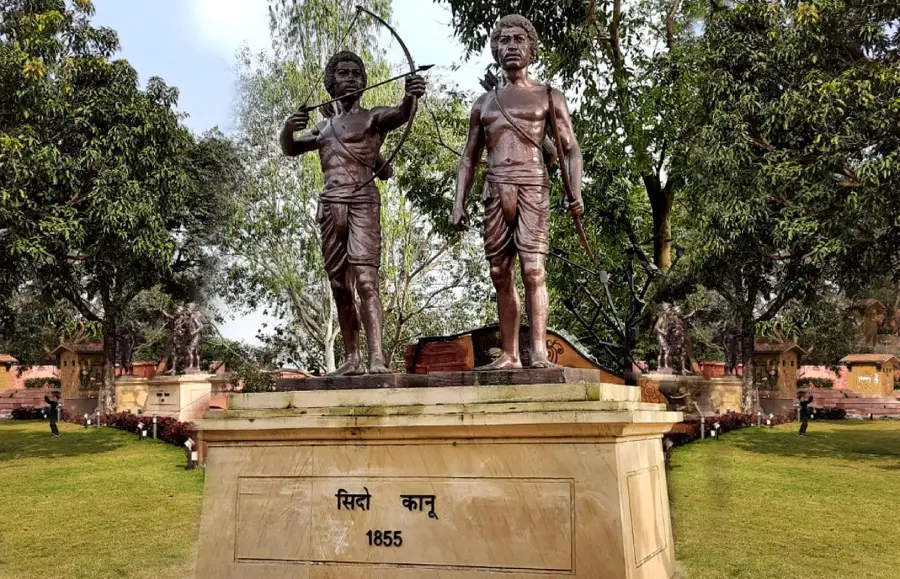
Statues Of Sidho And Kanho At Birsa Memorial Museum And Park In Ranchi

Q: What is Hul Diwas?

A: Hul Diwas is observed every year on 30th June to commemorate the Santhal Rebellion of 1855, one of the first tribal uprisings against British colonial rule and the feudal-zamindari system. The movement was initiated by the Santhal tribe, primarily led by Sidho Murmu and Kanhu Murmu, with the support of thousands of tribal men and women. It is a day of cultural pride, remembrance, and resistance for the tribal communities of Jharkhand, West Bengal, Odisha, Assam, and Bihar.

Q: What does “Hul” mean?

A: In the Santhali language, the term “Hul” means revolution, uprising, or resistance. It symbolizes a collective fight against injustice, not only against the British colonial authorities but also against local landlords and exploitative moneylenders (mahajans).

Q: When and where did the Santhal Hul take place?

A: The rebellion began on 30th June 1855 in Bhognadih village, located in present-day Sahibganj district of Jharkhand. It quickly spread across parts of present-day Jharkhand, Bihar, and West Bengal. The rebellion lasted until January 3, 1856. 

Q: Who were the leaders and key figures of the Hul?

A: The rebellion was led by:

  • Brothers Sidho Murmu and Kanhu Murmu (main leaders)
  • Their brothers: Chand Murmu and Bhairav Murmu
  • Their sisters: Phulo Murmu and Jhano Murmu, who also took part in armed resistance
    These leaders are revered as martyrs and heroes in tribal history.

Q: What is the role of women in Hul Diwas history?

A: Women like Phulo Murmu and Jhano Murmu played crucial roles in the rebellion, fighting alongside men. Their bravery is increasingly acknowledged and celebrated today, inspiring tribal women and girls.
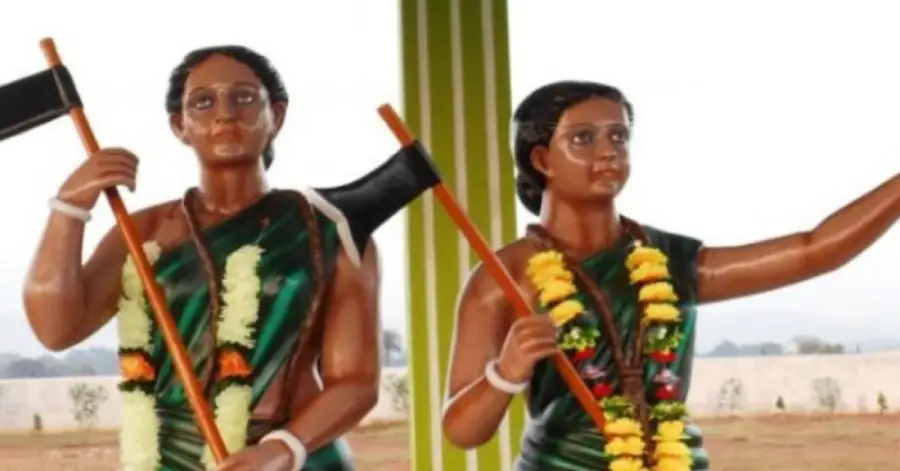
The Indian Tribal
Phulo And Jhano Murmu

Q: What were the causes of the Santhal Rebellion?

A: The rebellion arose due to multiple reasons:

  • Land alienation: Santhals were displaced from their ancestral lands by outsiders.
  • Economic exploitation: Local moneylenders, zamindars, and British agents imposed harsh taxes and usurious loans.
  • Forced labour: Santhals were made to work without fair wages.
  • Loss of tribal autonomy and interference in their traditional governance and justice systems.
  • British apathy to tribal grievances and increasing oppression.

Q: How was the rebellion carried out?

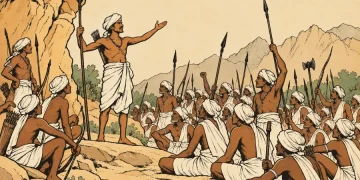
A: Around 60,000 Santhals rose in rebellion, with bows, arrows, axes, and spears. They formed their own administration, judicial system, and declared independence from British rule. Initially successful, the movement eventually faced brutal suppression by British forces, resulting in the death of thousands of tribals. Leaders like Sidho and Kanhu were captured and executed.

Q: What is the legacy of the Hul rebellion?

A: Though militarily crushed, the Hul Rebellion was:

  • A precursor to the 1857 Sepoy Mutiny
  • A symbol of tribal assertion, bravery, and sacrifice
  • An early expression of the freedom struggle
    It also led to some administrative reforms, including the formation of the Santhal Pargana district in 1855.
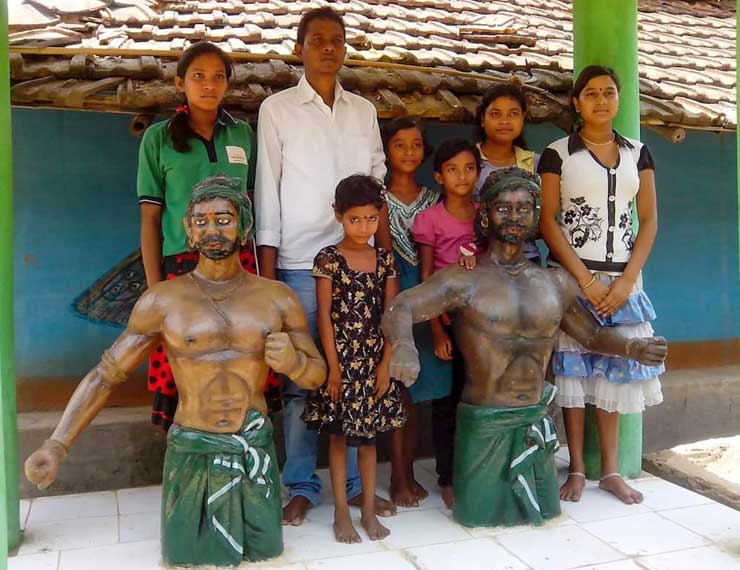
Sidhu Kanu's family at Bhognadih in Dumka
Freedom fighters Sidho, Kanu’s family at Bhognadih in Sahibganj

Q: How is Hul Diwas celebrated today?

A: Hul Diwas is celebrated through:

  • Tributes and garlanding of statues of Sidho-Kanhu and other martyrs
  • Cultural programs with tribal songs (especially Santhali music) and traditional dances
  • Speeches and seminars on tribal rights and history
  • Rallies and processions by tribal organizations
  • Government-organized events in places like Bhognadih and Ranchi

Q: Is Hul Diwas recognized at the state or national level?

A: Hul Diwas is officially celebrated by the Government of Jharkhand, which declares it as a State holiday. While not a national holiday, its importance is increasingly being recognized at the central level, especially under initiatives promoting tribal welfare and history.

Q: What is the relevance of Hul Diwas in contemporary India?

A: Hul Diwas remains deeply relevant as:

  • A reminder of indigenous resistance and contributions to Indian freedom
  • A call to protect tribal land rights, language, and culture
  • A way to highlight the ongoing challenges faced by tribal communities—displacement, marginalization, environmental degradation, and lack of access to education and healthcare
  • A platform to assert tribal identity and demand justice and equity

Q: Are there memorials dedicated to the Hul leaders?

A: Yes. Important memorials include:

  • Sidho-Kanhu Memorial Park in Bhognadih, Sahibganj
  • Statues in Ranchi, Dumka, and other parts of Jharkhand
  • Sidho-Kanhu University in Dumka, named in their honour
  • Streets, schools, and public institutions named after Santhal heroes

Root Woot | Online Puja Samagri Root Woot | Online Puja Samagri Root Woot | Online Puja Samagri

Support Our Mission

The Indian Tribal

For the past four-and-a-half years, we have travelled across India to bring to our readers the ‘Unknown, Lesser-Known Tribal Life’, which rarely finds space in the mainstream media.

We have done this without external funding, driven only by our conviction that India’s tribal heritage deserves to be documented with dignity, depth and authenticity.

If you like our work, and if it has informed, inspired or helped you understand India’s tribal/indigenous communities better, we invite you to become a part of this mission.

Your contribution will not merely fund a news platform. It will help preserve voices, traditions, histories and aspirations that form an invaluable part of India’s identity.

Because when an untold story is documented, a piece of India’s heritage is preserved forever.

Thanks
Editor

In Numbers

49.4 %
Female Literacy rate of Scheduled Tribes

Update

NSTDFC, HPCL sign MoU

The National Scheduled Tribes Finance and Development Corporation (NSTFDC) and Hindustan Petroleum Corporation Limited (HPCL) have signed a Memorandum of Understanding (MoU) for establishment of integrated Computer Lab-cum-Smart Classroom facilities in 29 functional Eklavya Model Residential Schools (EMRS) across 11 districts of Rajasthan. The project, with a total budget of ₹16.01 crore approved by the HPCL Board, is planned to be completed within six months from the date of signing of the MoU. Under the project, each school will have four smart classrooms equipped with 86-inch interactive flat panels, pre-loaded licensed software, curated open educational resources and audio-visual equipment, including speakers and webcams. Each school will also have a fully networked computer laboratory with desktops and UPS backup, structured LAN, multi-function printer, furniture, air-conditioning, electrical refurbishment and safety systems. In addition, 10 tablets pre-loaded with coaching material for competitive examinations will be provided in each school. Internet connectivity, including wiring, installation and a one-year subscription, will also be provided.
The Indian Tribal
Adivasi

Tiger Conservation In India: How Tribal Displacement And Tourism Are Reshaping The Debate

by The Indian Tribal
September 17, 2026

Deepanwita Gita Niyogi and Aliya Bashir analyse the link between the Western-supported idea of conservation and the displacement of forest dwellers and tribals in India’s tiger reserves due to tourism pressure

The Indian Tribal

ओडिशा के नबरंगपुर में आदिवासी किसानों की मक्का खेती ने कैसे बदली तस्वीर

September 15, 2026
The Indian Tribal

The Ganesha We Know, The Stories We Miss

September 14, 2026
The Indian Tribal

छत्तीसगढ़ में आदिवासी ट्रैकर्स और AI मिलकर बचा रहें हैं दुर्लभ वन्यजीव

September 12, 2026
The Indian Tribal

हाशिए से राष्ट्रीय केंद्र तक: बदल रही है भारत के आदिवासी समुदायों की कहानी

September 11, 2026
The Indian Tribal

शिक्षा, वन उपज में मूल्य संवर्धन से आदिवासी समुदायों के आर्थिक सशक्तीकरण की नई राह

September 10, 2026
Previous Post

ग्रीष्म ऋतु, आदिवासी और महुआ की कहानी

Next Post

From Despair To Confidence: Tale Of Two Physically-Challenged Tribals

Top Stories

The Indian Tribal
Adivasi

Karam Parab: The Sacred Tree, Two Brothers And A Festival Connecting Forest, Farm, Community

September 20, 2026
The Indian Tribal
Adivasi

Tiger Conservation In India: How Tribal Displacement And Tourism Are Reshaping The Debate

September 17, 2026
The Indian Tribal
आदिवासी

ओडिशा के नबरंगपुर में आदिवासी किसानों की मक्का खेती ने कैसे बदली तस्वीर

September 15, 2026
Load More
  • About Us
  • Editor & Writers
  • Contact
  • Redressal
  • Copyright Policy
  • Privacy Policy And Terms Of Use
  • Disclaimer
  • Sitemap

  • Achievers
  • Cuisine
  • Health
  • India
  • News
  • Legal
  • Music
  • Sports
  • Trending
  • Chhattisgarh
  • Delhi
  • Gujarat
  • Jammu & Kashmir
  • Jharkhand
  • Kerala
  • Madhya Pradesh
  • Maharashtra
  • North East
  • Arunachal Pradesh
  • Assam
  • Manipur
  • Meghalaya
  • Mizoram
  • Nagaland
  • Sikkim
  • Tripura
  • Odisha
  • Telangana
  • West Bengal
  • Political News
  • Variety
  • Art & Culture
  • Entertainment
  • Adivasi
  • Tribal News
  • Scheduled Tribes
  • हिंदी
  • उपलब्धिकर्ता
  • कानूनी
  • खान पान
  • खेलकूद
  • स्वास्थ्य
  • संस्कृति
  • संगीत
  • विविध
  • कला और संस्कृति
  • खबरें
  • असम
  • अरुणाचल प्रदेश की ताज़ा ख़बरें
  • ओडिशा
  • केरल
  • गुजरात
  • छत्तीसगढ़
  • जम्मू और कश्मीर
  • झारखंड
  • तेलंगाना
  • दिल्ली
  • नॉर्थईस्ट
  • पश्चिम बंगाल
  • मध्य प्रदेश
  • महाराष्ट्र
  • त्रिपुरा
  • नागालैंड
  • मणिपुर
  • मिजोरम की ताज़ा ख़बरें
  • मेघालय
  • सिक्किम की ताज़ा ख़बरें
  • राजस्थान

About Us

The Indian Tribal is India’s first bilingual (English & Hindi) digital journalistic venture dedicated exclusively to the Scheduled Tribes. The ambitious, game-changer initiative is brought to you by Madtri Ventures Pvt Ltd (www.madtri.com). From the North East to Gujarat, from Kerala to Jammu and Kashmir — our seasoned journalists bring to the fore life stories from the backyards of the tribal, indigenous communities comprising 10.45 crore members and constituting 8.6 percent of India’s population as per Census 2011. Unsung Adivasi achievers, their lip-smacking cuisines, ancient medicinal systems, centuries-old unique games and sports, ageless arts and crafts, timeless music and traditional musical instruments, we cover the Scheduled Tribes community like never-before, of course, without losing sight of the ailments, shortcomings and negatives like domestic abuse, alcoholism and malnourishment among others plaguing them. Know the unknown, lesser-known tribal life as we bring reader-engaging stories of Adivasis of India.

Follow Us

All Rights Reserved

© 2026 Madtri Ventures [P] Ltd.

No Result
View All Result
  • Home
  • Achievers
  • Cuisine
  • Health
  • Health
  • Legal
  • Music
  • News
  • Sports
  • Variety
  • हिंदी
    • उपलब्धिकर्ता
    • खान पान
    • कानूनी
    • खेलकूद
    • खेलकूद
    • संगीत
    • संगीत
    • स्वास्थ्य
    • स्वास्थ्य
    • विविध
  • Gallery
  • Videos

© 2026 Madtri Ventures [P] Ltd.