






New Delhi
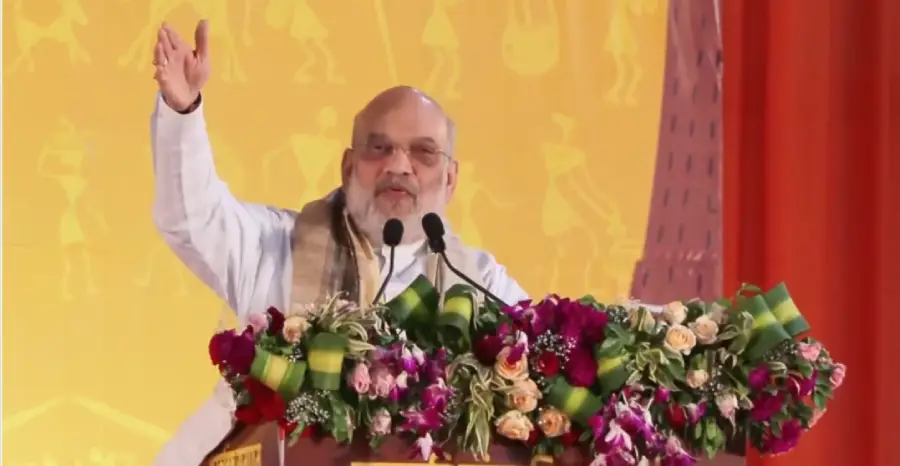
Union Home Minister Amit Shah on Sunday used the platform of the “Janjati Sanskritik Samagam” at Delhi’s Red Fort to deliver a strong political message linking tribal identity, religious conversion, infiltration and internal security, while declaring that India had effectively overcome the decades-old Naxalite insurgency.
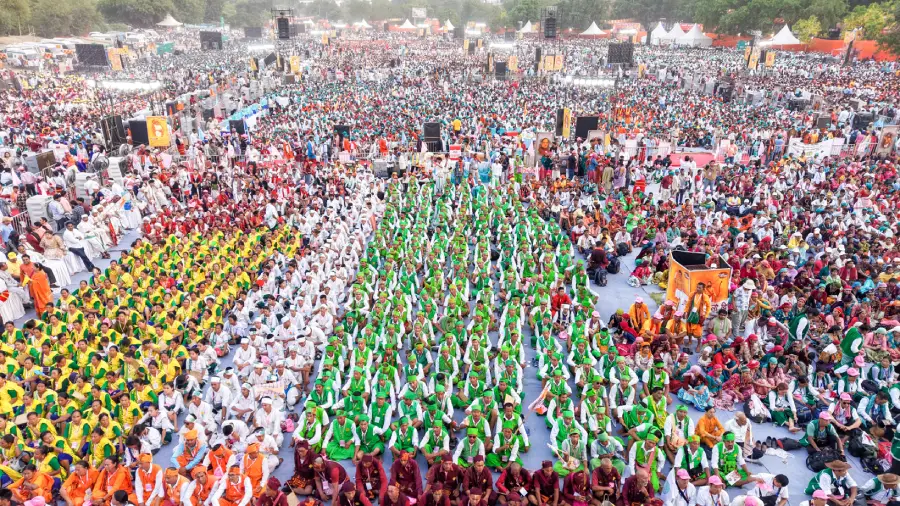
The massive gathering, organised by the RSS-linked Janajati Suraksha Manch during the 150th birth anniversary year of tribal icon Birsa Munda, drew participants from more than 550 tribal communities across the country.
Organisers claimed that nearly 1.5 lakh tribal representatives attended the programme, which also revived the long-standing demand to remove converted tribals from the Scheduled Tribe category through a constitutional amendment under Article 342.
The event combined cultural symbolism with sharp political messaging around identity, indigenous traditions and national security, emerging as one of the most significant tribal mobilisations held in the national capital in recent years.
Shah Targets Conversion And Infiltration
In his address, Shah asserted that the Constitution guarantees every individual the right to practise their “original religion” with dignity and said tribal communities should resist attempts at religious conversion carried out through inducements.
Calling upon participants to protect their faith and traditions, he said preserving tribal religion was essential to safeguarding both cultural identity and national belonging. His remarks came against the backdrop of the Samagam’s central demand for “de-listing” — the removal of Scheduled Tribe benefits from tribals who convert to Christianity or Islam.
The demand, championed for decades by the Janajati Suraksha Manch and allied groups, is rooted in the argument that constitutional protections meant for tribal communities should apply only to those who continue practising traditional tribal customs, belief systems and cultural practices.
Shah also shifted focus to the issue of illegal infiltration, stating that the government had already initiated a nationwide process to identify infiltrators and remove them from the country.
“The process to identify every infiltrator has begun,” he said, adding that meetings with the chief ministers of West Bengal, Assam and Tripura would soon be held on the matter.
Referring to border management, Shah said the government would soon announce a “High Power Demography Mission” aimed at strengthening coordination and infrastructure for the Border Security Force in infiltration-prone areas. Drawing parallels with the anti-Naxal campaign, he said the same determination shown in combating Left Wing Extremism would now be directed toward tackling infiltration.
‘India Has Become Naxal-Free’
Shah also showcased how the country had effectively ended the five-decade-old Naxalite insurgency.
He recalled that several retired police officers had earlier advised the government against pursuing an aggressive anti-Naxal campaign, warning that the problem was too deeply entrenched to be eliminated. However, he said the Narendra Modi government remained firm in its resolve.
“Today, in this Kumbh of tribal communities, I can proudly say that our country is completely free from the Naxalite problem,” Shah told the gathering.
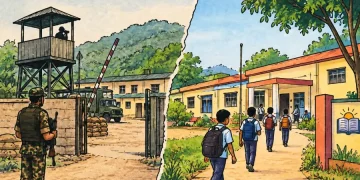
Shah pointed out that camps once established by security forces to combat Naxalites had now been converted into public service centres named after tribal freedom fighter Veer Gundadhur, symbolising what he described as a transition from conflict to development in tribal regions.
The Home Minister framed the end of Naxalism as a turning point for tribal development, saying remote forest and hill areas affected by insurgency would now enter a new phase focused on welfare, infrastructure and governance.
Tribal Identity, Culture And Political Messaging
The Janjati Sanskritik Samagam unfolded as both a cultural celebration and an ideological assertion centred on tribal identity.
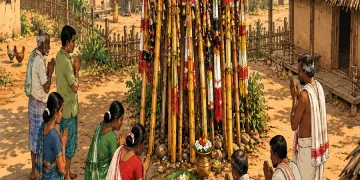
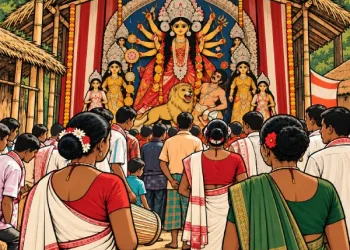
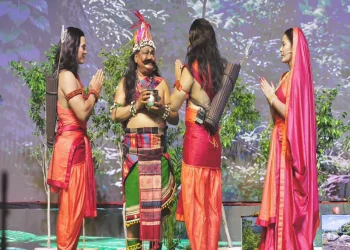
Thousands of participants arrived in traditional attire carrying drums, tribal flags and indigenous musical instruments. Folk dances, cultural performances and exhibitions showcasing tribal traditions from different parts of India formed a major part of the programme.
The gathering began with large processions from Rajghat Chowk, Ramlila Maidan, Ajmeri Gate, Qudsia Bagh and Shyamgiri Temple before converging at the Red Fort grounds.
Invoking the legacy of Birsa Munda, Shah described tribal communities as custodians of the world’s most sustainable model of coexistence with nature. He said forests, rivers and mountains were not merely resources for tribal communities but also the foundation of their cultural identity.
At the same time, Shah sought to counter apprehensions over the Uniform Civil Code (UCC), which some tribal groups fear could undermine customary tribal practices. He said no provision of the UCC would be imposed on tribal communities and claimed that BJP governments had already ensured exemptions for tribal populations in states where the code had been implemented.
He also highlighted the government’s initiatives under the PESA Act, including the creation of a dedicated PESA cell, training programmes and the translation of rules into tribal languages such as Santali, Gondi, Bhili and Mundari.
Revival Of Delisting Debate
At the core of the Samagam was the revival of the politically sensitive “de-listing” demand first prominently raised by former Congress MP Kartik Oraon in the late 1960s.
Oraon had argued that tribals who converted to Christianity or Islam after abandoning traditional tribal customs and belief systems should no longer remain eligible for Scheduled Tribe status. He had also submitted a memorandum backed by 235 Members of Parliament along with a draft Scheduled Tribes Amendment Bill to then Prime Minister Indira Gandhi, though the proposal was never acted upon.
Leaders associated with the Janajati Suraksha Manch said the Red Fort mobilisation was intended to build national momentum for a constitutional amendment under Article 342.
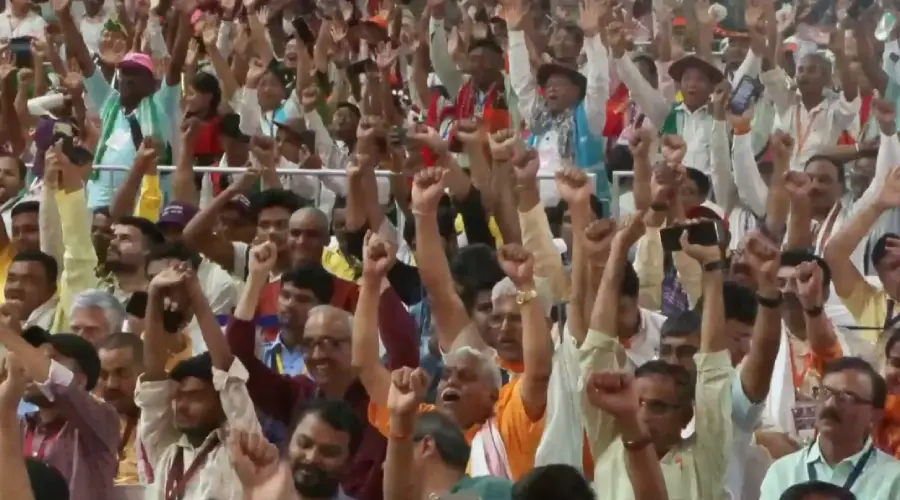
For supporters of the campaign, the issue is closely tied to preserving indigenous faith systems and preventing what they describe as the erosion of tribal culture through conversion.
Opposition From Adivasi Organisations
Even as organisers projected the Samagam as a celebration of tribal unity and cultural pride, the event triggered sharp criticism from several Adivasi and Moolvasi organisations, particularly in Jharkhand.
More than 100 tribal and indigenous organisations appealed for a boycott, alleging that the ideological orientation of the programme was anti-tribal and aimed at weakening the independent cultural and religious identity of Adivasis.
They accused the Janajati Suraksha Manch and allied organisations of attempting to integrate tribal communities into a broader Hindu social framework. They also objected to the use of the term “Vanvasi” instead of “Adivasi”, arguing that it undermines the historical and indigenous identity of tribals.
For many opposing groups, the debate extends beyond reservation benefits into larger questions of self-identification, religious freedom and constitutional recognition of tribal distinctiveness.